

Bacterium causing mysterious starfish disease identified
The Vibrio pectenicida bacterium has been identified as the culprit behind "starfish wasting disease," which has led to mass die-offs of starfish.



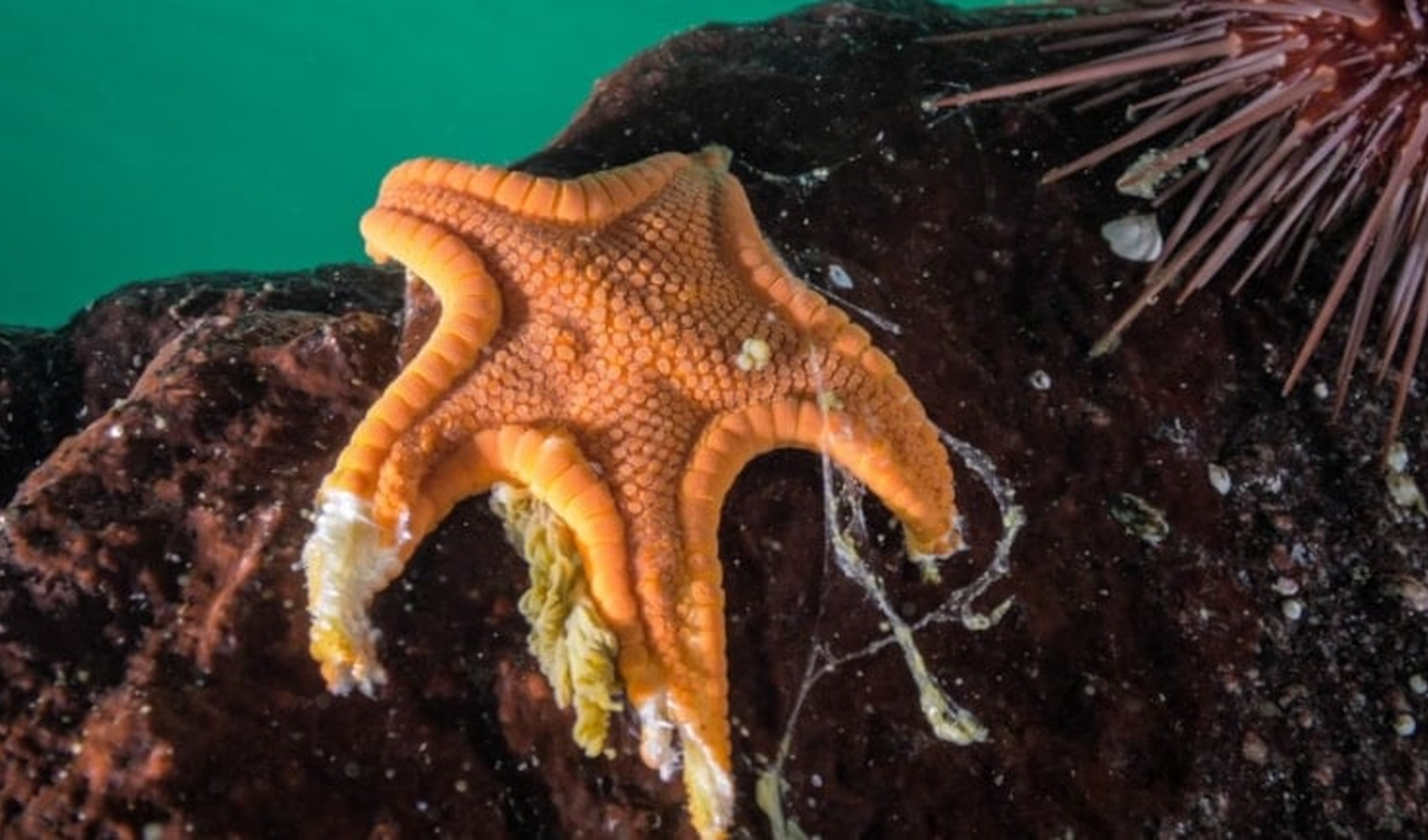
In recent years, a mysterious disease that began on the west coast of North America and has affected more than 40 species of starfish worldwide has caused them to vanish rapidly. This disease creates lesions on the starfish's bodies, leading to the dissolution of their muscles and the detachment of their arms. This process results in the death of the starfish within a few days.
The absence of starfish has had serious impacts on the ecosystem. Sea urchins, as natural prey of starfish, have multiplied uncontrollably and destroyed kelp forests. These forests provide habitats for many marine creatures while also playing an important role in combating climate change by absorbing carbon dioxide.
IDENTIFICATION OF THE BACTERIUM
Drew Harvell, a marine ecologist at the University of Washington, stated that the Vibrio pectenicida bacterium is different from other pathogens, making it difficult to detect. Initially thought to be a virus, it was revealed that this agent actually belongs to a common group of bacteria. This discovery was made as a result of four years of gene sequencing and laboratory experiments.
The team, led by Melanie Prentice, confirmed that the disease is bacterial by conducting experiments on starfish raised in quarantine. Healthy starfish exposed to infected tissue or fluid became ill rapidly, while those that came into contact with filtered and heated material survived.
THE ROLE OF CLIMATE CHANGE
Researchers believe that climate change may also be a factor in the spread of this disease. Vibrio bacteria multiply faster in warmer waters. For this reason, some starfish populations are trying to survive in regions cold enough that the bacteria cannot take hold.
Jono Wilson from The Nature Conservancy emphasized that understanding the cause of this disease is critical for the recovery of species and the protection of kelp forests. The research team plans to examine the role of temperature changes in the spread of the disease more closely.
News Source: 12punto
Most Read

Striking picture for Özgür Özel's 'New Party'

The PKK opening and Özgür Özel’s path!..

How did the newspapers view Özgür Özel's farewell to the CHP?

He killed his wife by slitting her throat: Their children witnessed the moments

What did the CHP do?

Özel’s new party move in the world press

Fire at TUSAŞ engine factory in Eskişehir under control

The New CHP, against CEHAPE

From self-efficacy to despair

Kılıçdaroğlu's first message on Özgür Özel's new party announcement