

Electricity generation with solar energy: fundamentals, applications, and environmental impacts
From the scientific infrastructure of solar electricity generation to its residential use and environmental impacts, we cover all the details you are curious about.



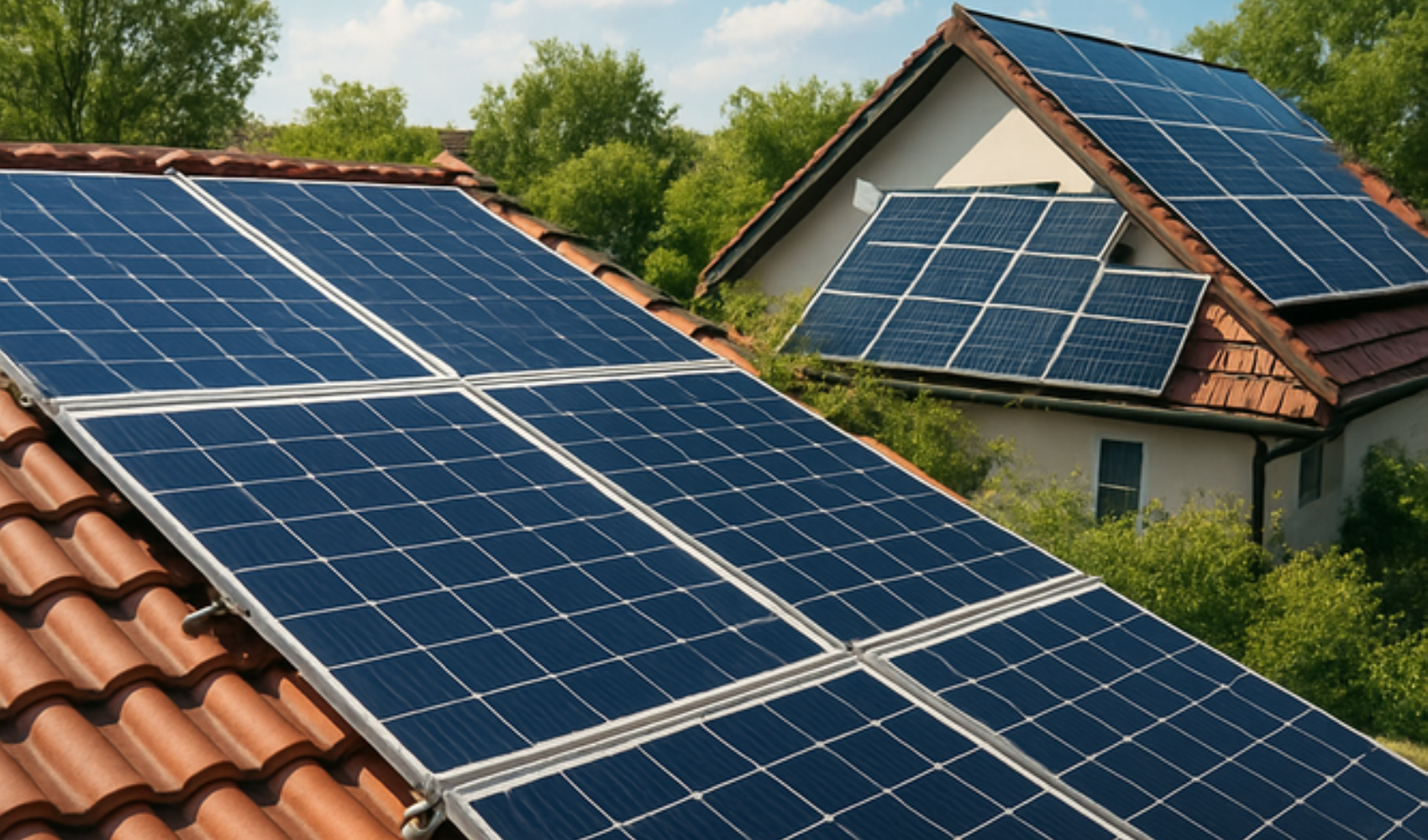
Solar energy offers an environmentally friendly and sustainable solution to the rapidly increasing energy demand. Both globally and in Turkey, the environmental damage caused by fossil fuels and the rise in energy costs are increasingly making solar energy more attractive. Experts view the sun's potential as a key element in the transformation of the energy sector.
Today, the technology behind generating electricity from the sun is becoming more accessible every day. Furthermore, residential solar energy installations are becoming increasingly common, and users are achieving long-term savings through eco-friendly energy production. However, this transformation must also be evaluated in all its aspects from an environmental perspective.
THE TECHNOLOGICAL FOUNDATION OF SOLAR ENERGY
The most common method for converting solar energy into electricity is the use of photovoltaic (PV) panels. These panels are made of semiconductor materials that convert the sunlight falling on them directly into an electric current. These panels, which are generally silicon-based, stand out with their high efficiency rates.
The direct current (DC) produced by PV modules is converted into alternating current (AC) with the help of inverters so that it can be used in homes. Inverters, which are the heart of the system, are equipped with smart electronic circuits that also ensure safety. This entire process ensures that electricity production continues as long as there is daylight. Scientifically speaking, electrons released when sunlight excites photons on the semiconductor surface cause an electric current to form.
Thanks to developing technology, while the efficiency and lifespan of the panels are increasing, costs are also falling rapidly. In parallel, innovations are taking place in storage technologies; lithium-ion batteries and smart energy management systems allow solar energy to be used 24 hours a day.
RESIDENTIAL SOLAR ENERGY INSTALLATION
Residential solar energy systems generally consist of roof-mounted PV panels, an inverter, an energy meter, and optionally, battery systems. During the installation process, the first step is to calculate roof layout and solar potential. Afterward, panels with the appropriate capacity are selected and installed.
For the system to work efficiently, the panels need to be placed in a location that is shadow-free and faces south as much as possible. After installation, the inverter and connection equipment are also set up to commission the system. According to the regulations determined by the Energy Market Regulatory Authority (EPDK) in Turkey, the right to unlicensed electricity generation is granted for systems below a certain capacity.
Although installation costs have fallen significantly in recent years, the initial investment usually pays for itself within a few years. While users save a significant amount on their electricity bills, they can also sell the excess electricity they produce to the grid. Experts state that with regular maintenance, the service life of solar energy systems can reach up to 25-30 years.
ENVIRONMENTAL BENEFITS AND RISKS
The greatest advantage of solar energy is that it significantly reduces carbon emissions, preventing the release of greenhouse gases that harm the atmosphere. Thanks to its renewable nature, electricity obtained from the sun can be produced with minimal impact on the environment. Additionally, reducing the consumption of water resources and minimizing air pollution stand out as significant advantages.
However, the pressure of waste generated during the production of solar panels and at the end of their lifespan is an issue that needs attention from an environmental perspective. If some of the heavy metals and chemicals used in panel production are released into nature in an uncontrolled manner, the environment can be harmed. Furthermore, the lack of standardized and widely used methods for recycling panels remains a problem that needs to be solved in this field.
In Turkey and around the world, with the increase in incentives for renewable energy, the speed at which solar energy is becoming widespread is increasing every year. Germany in Europe, and China and Japan in Asia, lead in installed solar energy capacity. Turkey, meanwhile, has been implementing significant projects in recent years to utilize its own solar potential and is expected to continue its growth in this field in the coming period.
In conclusion, solar energy is a candidate to be one of the most important energy sources of the future, both technologically and environmentally. As a sustainable, clean, and accessible energy solution, the interest of individuals and societies is steadily increasing.
News Source: 12punto
Most Read

Striking picture for Özgür Özel's 'New Party'

Özgür Özel gives a dated response regarding the number of resignations

The PKK opening and Özgür Özel’s path!..

Forest fire in Antalya brought under control

How did the newspapers view Özgür Özel's farewell to the CHP?

He killed his wife by slitting her throat: Their children witnessed the moments

What did the CHP do?

Özel’s new party move in the world press

The New CHP, against CEHAPE

Fire at TUSAŞ engine factory in Eskişehir under control