

Everything has been graphed: Are we living inside a black hole?
Astrophysicists have prepared graphs that provide an overview of the universe's past and the objects that condensed in the background as the universe expanded and cooled.



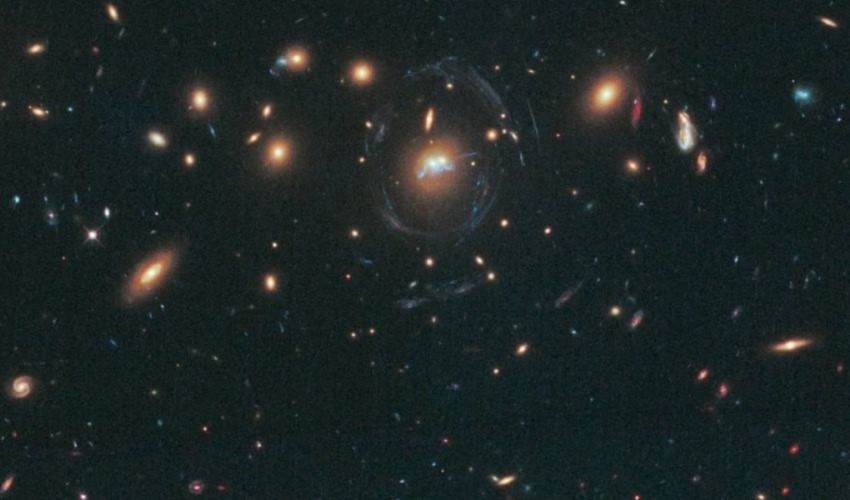
This study, described as a "graph of all objects," also brings to mind the idea that the known universe, which includes the Solar System and therefore Earth, could be a black hole.
Dr. Charley Lineweaver, lead author of the study published in the peer-reviewed scientific journal American Journal of Physics, said, "We set out to understand where all the objects in the universe came from."
THE LARGER THE MASS OF A BLACK HOLE, THE LOWER ITS DENSITY
In a report covered by Independent Türkçe, it is noted that during the Big Bang, which is assumed to have brought the universe into existence 13.8 billion years ago, there were no protons, atoms, stars, galaxies, planets, and therefore no humans. However, Lineweaver states that the universe is now full of such objects.
The scientist added, "There is a relatively simple answer to where they came from: As the universe cooled, all these objects condensed against a hot background."
Lineweaver and his team prepared two graphs to explain this condensation process in the simplest way possible.
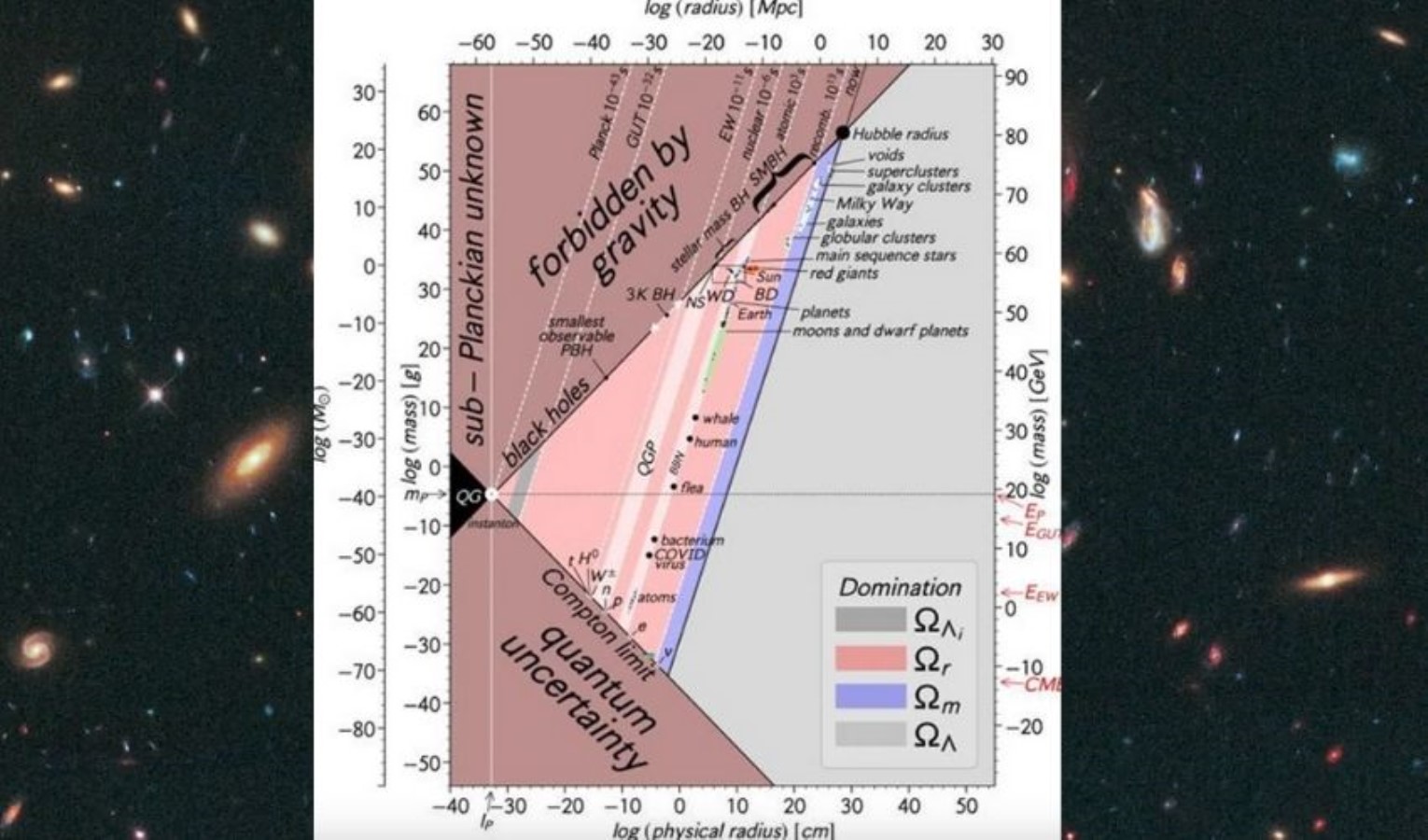
The first shows how the temperature and density of the universe changed as it expanded and cooled. The second includes the mass and size of all objects in the universe.
According to the team, these graphs are the most comprehensive table of all objects in the observable universe ever created.
The team also emphasizes that the larger the mass of a black hole, the lower its density will be.
Moreover, according to calculations based on these graphs, if a black hole were as large as the known universe, it would have the same density as the universe.
This gives rise to the thought that it is theoretically possible for the known universe we live in to be a black hole.
The scientist also emphasized that they are not the first to examine the question of whether the entire universe could be a black hole. According to him, many scientists had reached this idea before through different paths.
Lineweaver argued that, just like around a black hole, there is a kind of event horizon around the observable universe, and that this is only one of the parallels between them.
In general relativity, the event horizon is the boundary at the edge of a black hole that marks the region from which light and matter can no longer escape the gravitational force.
On the other hand, there is an important factor that prevents testing whether this theory is true: Scientists do not know what is inside a black hole.
Underlining that this idea seems impossible at least for now, the scientist says, "Isn't it likely that the center of a black hole is denser than the black hole itself? Yet we know nothing about the center":
Let's look at it from a wide angle: If there were nothing beyond the observable universe, our universe would be a large, low-density black hole. This idea is a bit scary, but we have good reasons to believe that this is not the case.
News Source: 12punto
Related News
Most Read

Striking picture for Özgür Özel's 'New Party'

Özgür Özel gives a dated response regarding the number of resignations

The PKK opening and Özgür Özel’s path!..
Forest fire in Antalya brought under control

How did the newspapers view Özgür Özel's farewell to the CHP?

He killed his wife by slitting her throat: Their children witnessed the moments

What did the CHP do?

Özel’s new party move in the world press

The New CHP, against CEHAPE

Fire at TUSAŞ engine factory in Eskişehir under control