

Exciting discovery on Mars: Are there signs of life?
At the 55th Lunar and Planetary Science Conference held in the US, scientists announced the discovery of a massive volcano on Mars. Scientists stated that the giant volcano might harbor signs of life.




It has been announced that a "hidden" massive volcano discovered by scientists on Mars might harbor signs of life.
According to a report on the "Livescience" website, scientists announced at the 55th Lunar and Planetary Science Conference held in the US state of Texas that they had discovered a massive volcano on Mars.
Scientists stated that this location had "remained hidden" because it had not been recognized as a volcano on Mars for over 50 years.
Stating that the volcano is approximately 450 kilometers wide and 9,022 meters high, scientists reported that it is located in the eastern part of the Tharsis volcanic region near Mars' equator.
Scientists reported that they detected remnants of a glacier layer near the base of the volcano, and that this situation makes the volcano an important site for searching for signs of life in space.
Dr. Pascal Lee, a planetary scientist at the SETI Institute and the Mars Institute affiliated with the NASA Ames Research Center and the lead author of the study, stated in his explanation, "We were examining the geology of an area where we had found a glacial remnant last year when we realized we were inside a massive and deeply eroded volcano."
On the other hand, it was stated that the study used data obtained from the US National Aeronautics and Space Administration's (NASA) "Mariner 9", "Viking 1 and 2", Mars Global Surveyor, Mars Odyssey, and Mars Reconnaissance Orbiter missions, as well as the European Space Agency's (ESA) Mars Express mission.

News Source: AA
Most Read

Striking picture for Özgür Özel's 'New Party'

Özgür Özel gives a dated response regarding the number of resignations
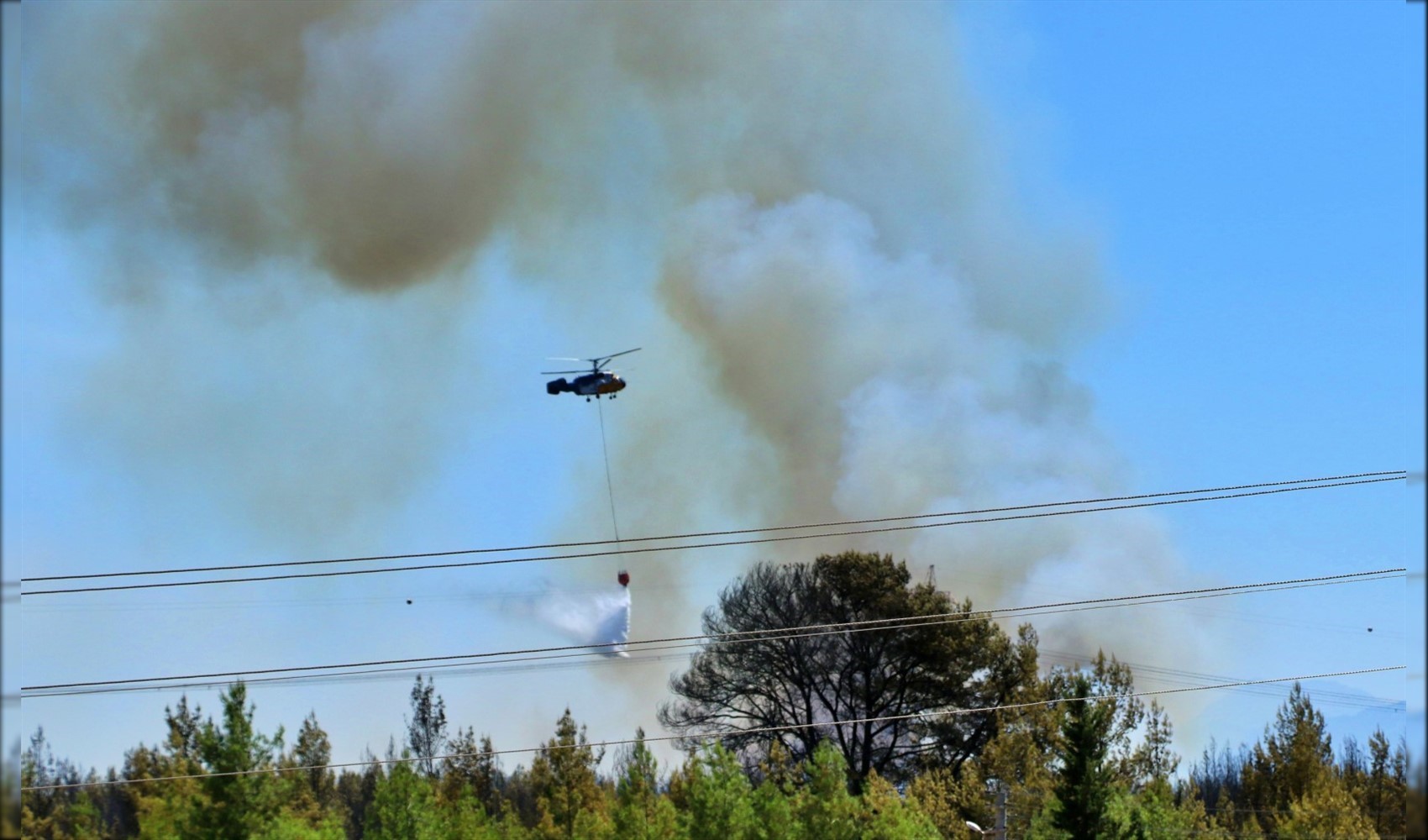
Forest fire in Antalya brought under control

The PKK opening and Özgür Özel’s path!..

Houthis strike Saudi-owned tanker

How did the newspapers view Özgür Özel's farewell to the CHP?

What did the CHP do?

Özel’s new party move in the world press

The New CHP, against CEHAPE

From self-efficacy to despair