

First concrete clue for dark matter
Research conducted at the University of Tokyo suggests that gamma-ray emissions at the center of the Milky Way may be related to dark matter. While the findings are considered the first evidence of the invisible structure's existence, the importance of an independent verification process was emphasized.



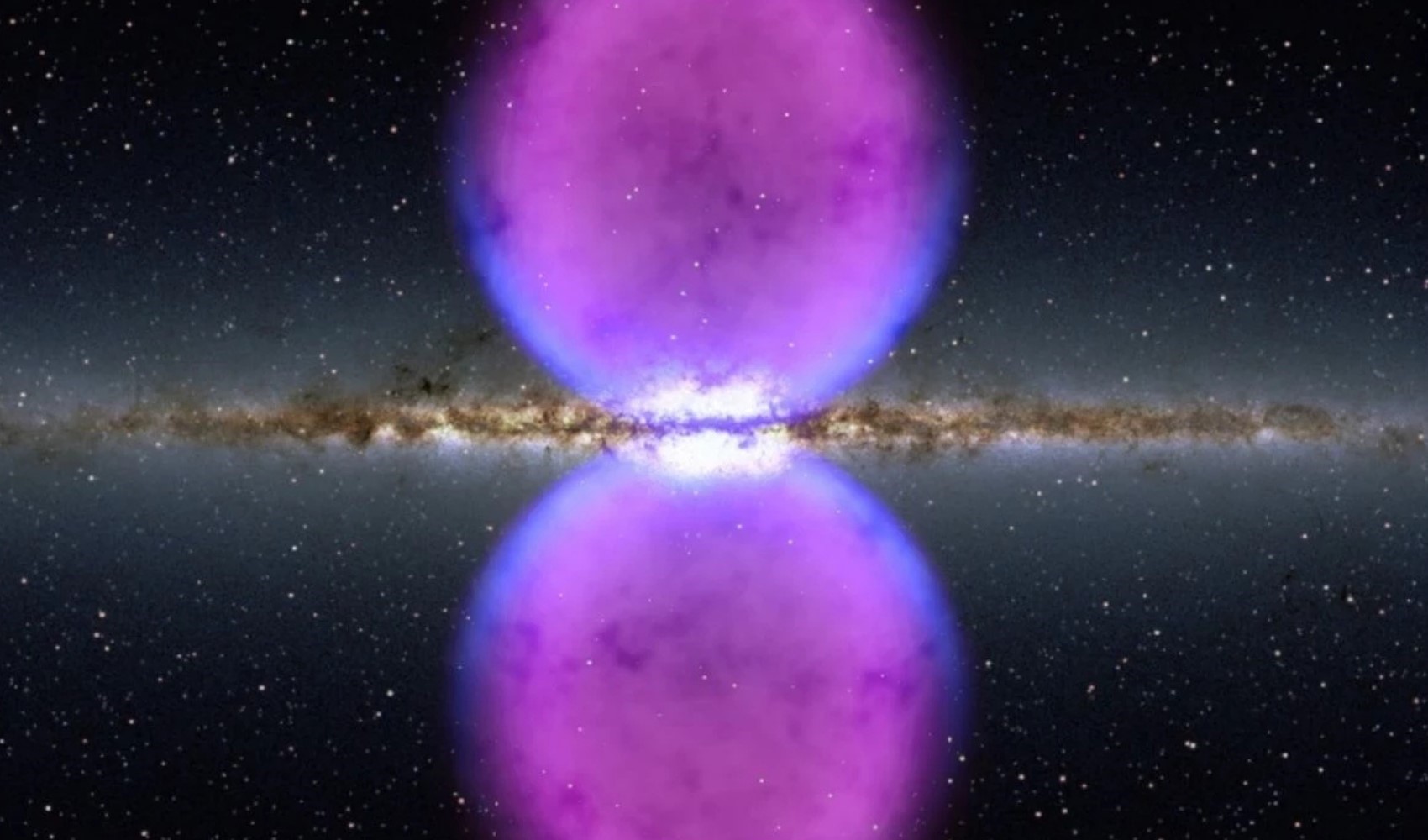
A study conducted by scientists in Tokyo has announced that results providing the first evidence of dark matter, which is thought to hold galaxies together, have been reached.
In an announcement made by the University of Tokyo, it was reported that researchers examined regions where dark matter is thought to be concentrated using telescope data. It was noted that signals pointing to dark matter were investigated in specific areas of outer space.
Focus on gamma-ray emissions
In the study, it was determined that gamma-ray emissions observed near the center of the Milky Way Galaxy may have emerged from the annihilation of dark matter particles. It was stated that these signals carry potential traces of the existence of the invisible structure.
While it was recalled that the concept of dark matter was proposed in the early 1930s as an invisible structure holding galaxies together, it was stated that the findings reached could be the first evidence in a search that has been ongoing for nearly a century.
The researchers emphasized that the results obtained must be independently examined by other scientists. It was stated that it is mandatory to prove that the gamma-ray emission does not originate from a formation other than dark matter.
Journal where the results were published
All results of the research were published in the journal titled Journal of Cosmology and Astroparticle Physics.
News Source: 12punto
Most Read

Striking picture for Özgür Özel's 'New Party'

Özgür Özel gives a dated response regarding the number of resignations

Forest fire in Antalya brought under control

The PKK opening and Özgür Özel’s path!..

How did the newspapers view Özgür Özel's farewell to the CHP?

He killed his wife by slitting her throat: Their children witnessed the moments

What did the CHP do?

Özel’s new party move in the world press

The New CHP, against CEHAPE

Fire at TUSAŞ engine factory in Eskişehir under control