

Mysterious object thought to be of interstellar origin observed
The scientific community has intensified its studies on a mysterious celestial object passing through our solar system, which is suggested to be an interstellar traveler. It is reported that the object is drawing attention due to its high speed.



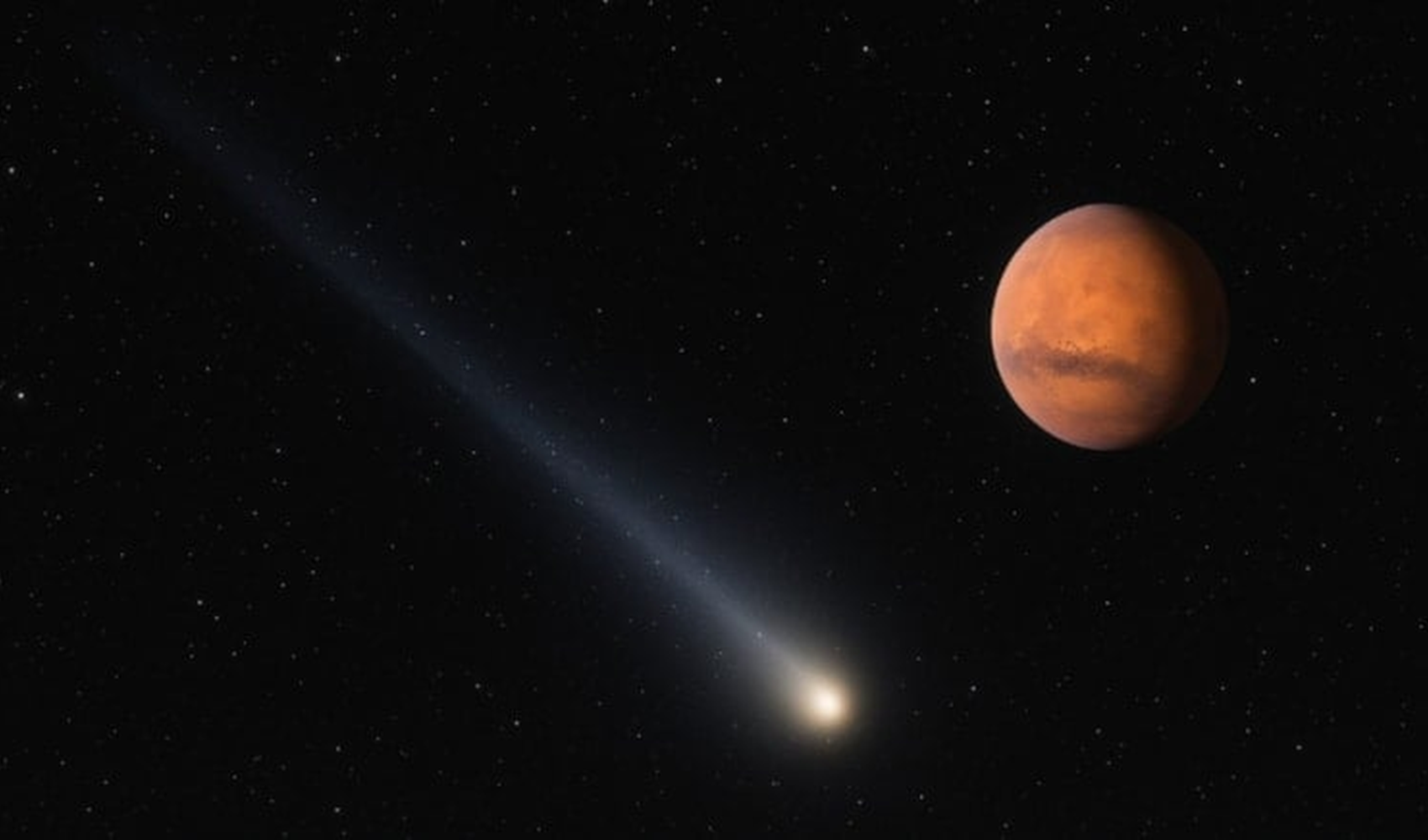
Discovered during observations on Tuesday by the Asteroid Terrestrial-impact Last Alert System (ATLAS) telescope in Chile, the celestial object, initially recorded as A11pl3Z, was soon named 3I/Atlas. Experts have begun examining the object's trajectory and characteristics in light of information shared by NASA. According to the latest data, this object has been under observation since June 14.
Currently detected at a distance of approximately 416 million miles from the sun, the mysterious object is traveling from the direction of the Sagittarius constellation at an impressive speed of 60 kilometers per second relative to the sun. Experts state that the object's highly eccentric and hyperbolic orbit is the primary factor distinguishing it from ordinary celestial bodies.
Dr. Mark Norris from the University of Central Lancashire commented on the matter: “This discovery could be the third recorded celestial object to come from outside the solar system, and it shows that these types of interstellar travelers are actually more common in the galaxy than we thought.”
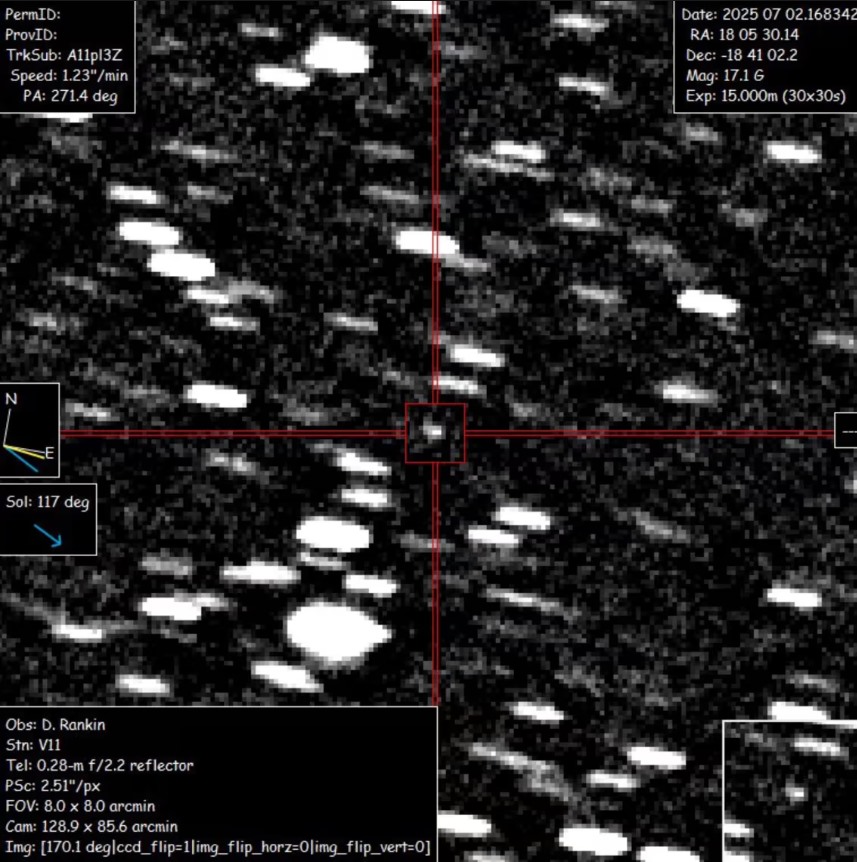
In a preliminary assessment by the Minor Planet Center, it was stated that the object shows cometary activity due to having a small coma and a short tail. For this reason, the object was also recorded under the name C/2025 N1. However, studies on the exact nature of the object are ongoing.
According to some researchers, the object is estimated to be approximately 20 kilometers in diameter. NASA, meanwhile, emphasized that it poses no risk of collision with Earth and that the object will remain at a distance of at least 1.6 astronomical units (approximately 150 million miles) from our planet. Additionally, it is expected to reach its closest point to the sun around October 30 and pass near the orbit of Mars. After this point, the object is projected to leave the solar system and continue its journey.
Dr. Norris explained that the object's brightness could increase as it approaches the sun, and if it is confirmed to be a comet, it could become an easy target for amateur observers. Jake Foster from the Royal Observatory Greenwich emphasized that while this object will not be visible to the naked eye, it could be tracked with amateur telescopes towards the end of 2025 and in early 2026.
News Source: 12punto
Most Read

Striking picture for Özgür Özel's 'New Party'

Özgür Özel gives a dated response regarding the number of resignations

Forest fire in Antalya brought under control

The PKK opening and Özgür Özel’s path!..

How did the newspapers view Özgür Özel's farewell to the CHP?

He killed his wife by slitting her throat: Their children witnessed the moments

What did the CHP do?

Özel’s new party move in the world press

The New CHP, against CEHAPE

Fire at TUSAŞ engine factory in Eskişehir under control