

Roman statue found in Aztec temple in Mexico sparks debate over transoceanic contact
A 2,000-year-old Roman statue found during an archaeological excavation in Mexico is forcing a re-examination of known history between the Americas and the Old World. Was an ancient transatlantic voyage possible?



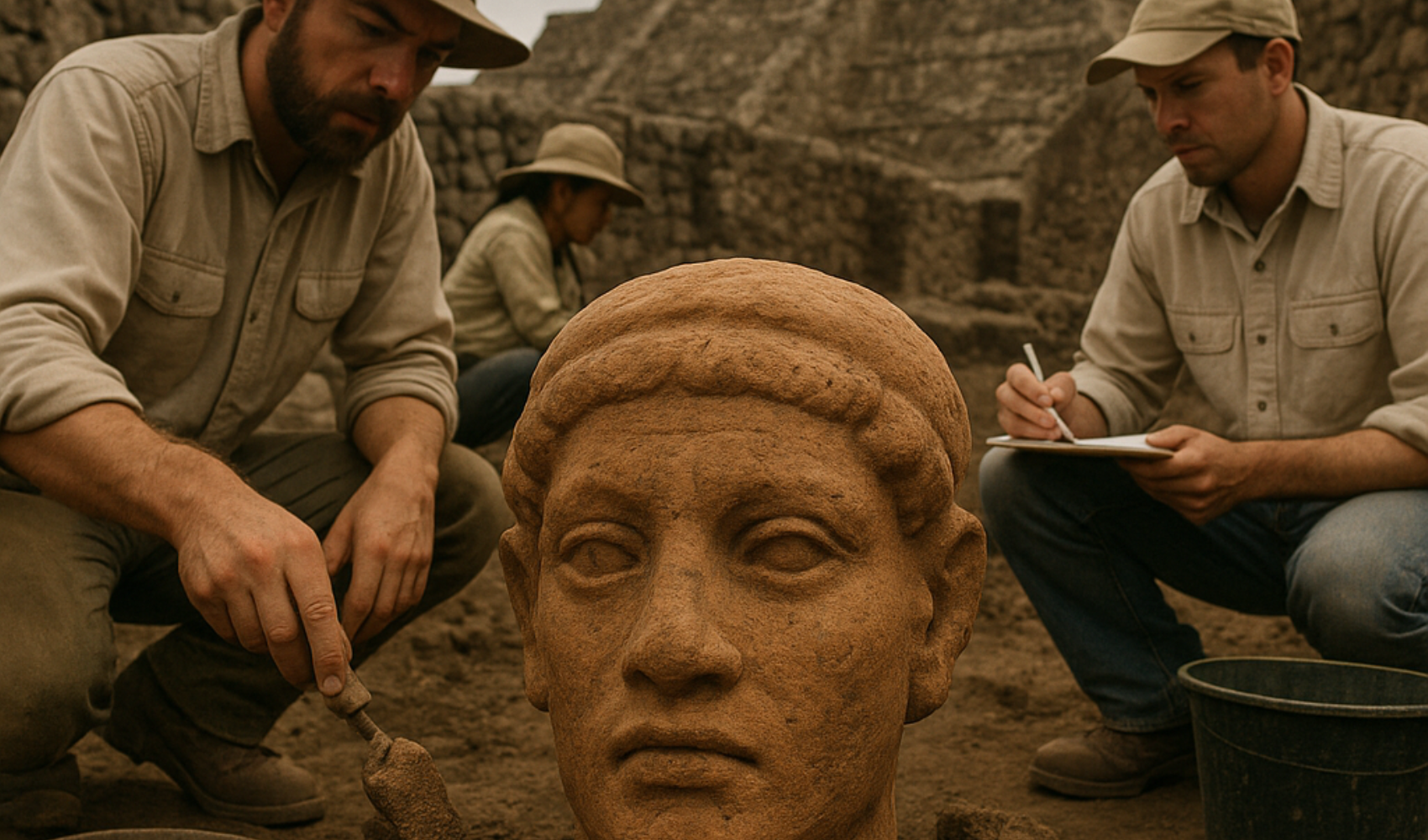
Excavations at the ancient city of Calixtlahuaca in Mexico's Toluca Valley have left historians stunned. A terracotta head unearthed among the ruins of an Aztec pyramid bears the characteristic marks of the Roman Empire. Experts emphasize that this intriguing find raises the possibility of pre-Columbian transoceanic contact in the Americas.
The head, discovered during excavations led by archaeologist José García Payón in 1933, was kept in museum archives for years. However, its true significance emerged following re-examinations by Dr. Romeo Hristov of the University of New Mexico. Scientifically analyzed by Dr. Hristov and his team in the 1990s, the find was dated to the Roman period, approximately 200 AD, and was described as a discovery capable of changing the course of history.
The dating, clarified by thermoluminescence tests, proved that the statue was at least two thousand years old. When combined with the fact that the Aztec layer where the artifact was found dates to approximately 1476-1510 AD, a new mystery emerged. While some in academic circles suggest the possibility that the statue may have reached the region during colonial times, Dr. Hristov disputes this view. Stating that "the statue was found in an undisturbed pre-Columbian layer," Hristov notes that the find could be one of the strongest physical indicators of contact between the Americas and Europe.
The striking bearded structure and hair of the head bear artistic details unique to the Roman Empire. According to experts, it is likely that the Aztecs kept this piece as a valuable and exotic object, perhaps even as a sacred relic.
Dr. Hristov's work, presented to the journal "Ancient Mesoamerica," shows that this find is important not only for archaeology but also for our perspective on human history. A possible ancient sea voyage also fuels debates over whether Mediterranean sailors reached the American coasts. According to Dr. Hristov, "the possibility of a Roman ship losing its way in a storm and reaching the American continent" is not out of the question.
This mysterious discovery is not just a statue; it also opens the door to many questions that could shed light on the unknowns of the past. While 1492 is remembered for Columbus setting foot in the Americas, this 2,000-year-old head emerging from the depths of the Toluca Valley suggests that intercontinental contacts may date back much further than previously thought.
News Source: 12punto
Most Read

Striking picture for Özgür Özel's 'New Party'

The PKK opening and Özgür Özel’s path!..

How did the newspapers view Özgür Özel's farewell to the CHP?

He killed his wife by slitting her throat: Their children witnessed the moments

What did the CHP do?

Özel’s new party move in the world press

The New CHP, against CEHAPE

Fire at TUSAŞ engine factory in Eskişehir under control

From self-efficacy to despair

Kılıçdaroğlu's first message on Özgür Özel's new party announcement