

The origin of the four main blood types: The human species' evolutionary defense against disease
The differences that divide blood into four main groups emerged as a genetic reflection of humanity's historical battle against disease. The A, B, AB, and 0 groups are not merely biological coincidences, but survival strategies shaped by evolution.



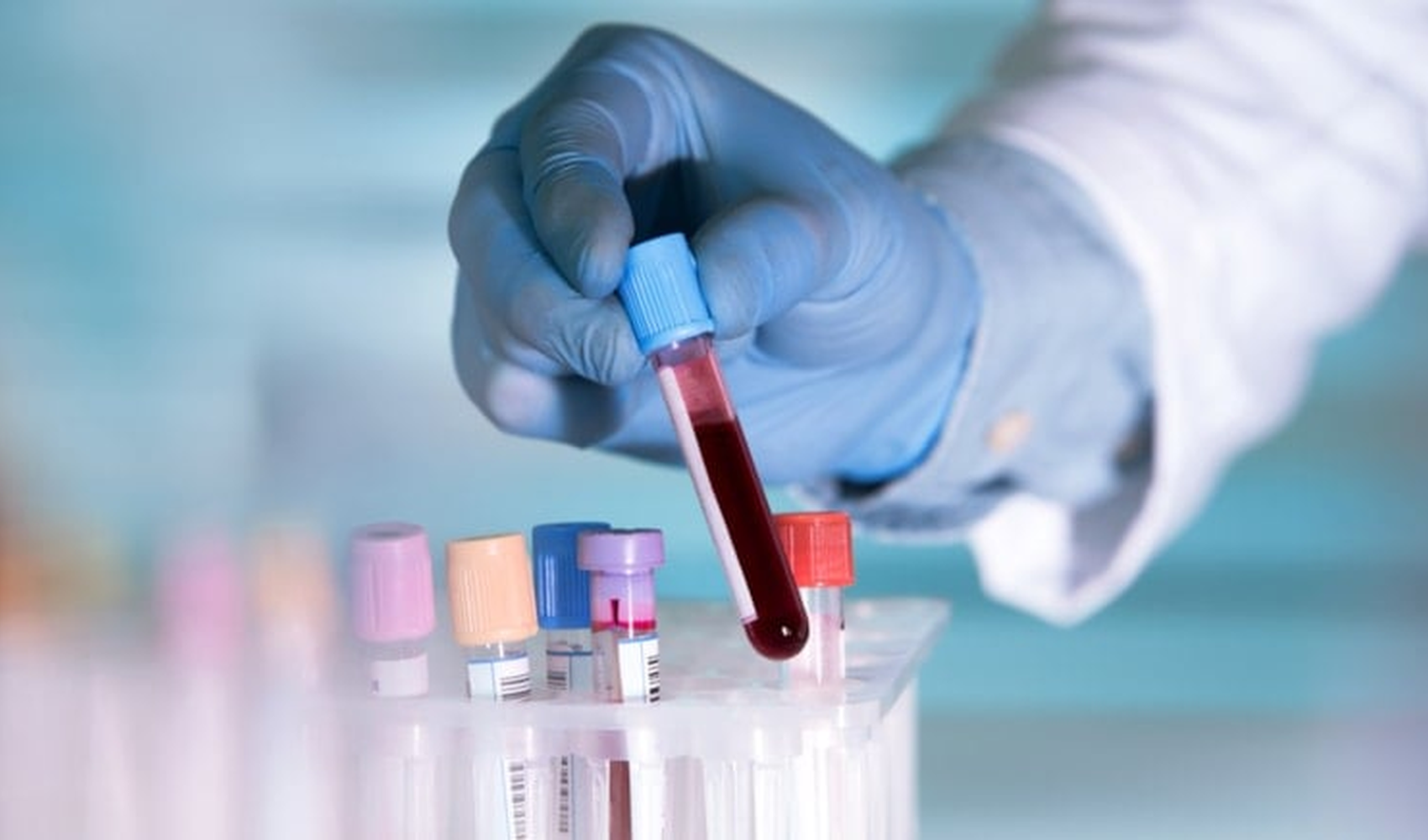
Although the blood we all carry looks the same from the outside, a unique story flows through each of our veins. The origin of the question that has intrigued people for centuries, "Why do humans have different blood types?", lies in the biological adaptations humanity developed to cope with major disease threats.
In the past, blood transfusions carried serious risks. While some people regained their health with new blood, others faced unexpected complications. However, scientific developments at the beginning of the 20th century shed light on this mystery; the existence of different blood types and the reasons for their incompatibilities began to be understood.
In 1900, Austrian researcher Karl Landsteiner revealed the source of the differences in human blood. The presence of unique antigen structures on the surface of red blood cells allowed for the identification of the four basic blood groups classified today as A, B, AB, and 0. This made blood transfusions safe, and Landsteiner was awarded the Nobel Prize for his work.
However, it also emerged that blood groups were not limited to laboratory discoveries. Scientists have demonstrated that different blood types played a key role in humanity's survival throughout the evolutionary process.
Various epidemics—such as malaria and the plague—threatened populations throughout history. These microbes were able to enter the body by attaching themselves to different antigen types found in the blood. The development of different antigen structures provided a protective diversity that prevented the same disease from affecting the entire human race. This biological diversity acted as a shield in human history.
The 0 blood group, which has been determined to be resistant to malaria, is commonly found in regions where malaria is prevalent, such as Africa. This situation shows how environmental pressures are effective in the distribution of blood groups. Experts state that the blood group we possess is a genetic record of which epidemics our ancestors fought against and survived.
The basic building blocks of blood have been known for more than 100 years: Antigens in the form of sugars on the surface of red cells determine the blood group. There is A in group A, B in group B, both in AB, and no antigens in group 0 blood. The immune system creates a defense against antigens it perceives as 'foreign' to the body. For this reason, group 0 is known as the universal donor, and group AB as the universal recipient.
In short, these four groups circulating in our blood are one of the living proofs of humanity's evolutionary struggle against countless epidemics and diseases. The blood flowing through our veins is not just a vital carrier; it is also a genetic legacy silently passed down through human history.
News Source: 12punto
Most Read

Striking picture for Özgür Özel's 'New Party'

Özgür Özel gives a dated response regarding the number of resignations

Forest fire in Antalya brought under control

The PKK opening and Özgür Özel’s path!..

Houthis strike Saudi-owned tanker

How did the newspapers view Özgür Özel's farewell to the CHP?

What did the CHP do?

Özel’s new party move in the world press

The New CHP, against CEHAPE

4 drones shot down near US Consulate General in Erbil