

Whale language decoded: It resembles Morse code
Scientists have used artificial intelligence to analyze the clicking sounds whales use to communicate, revealing that these sounds possess characteristics similar to human language.



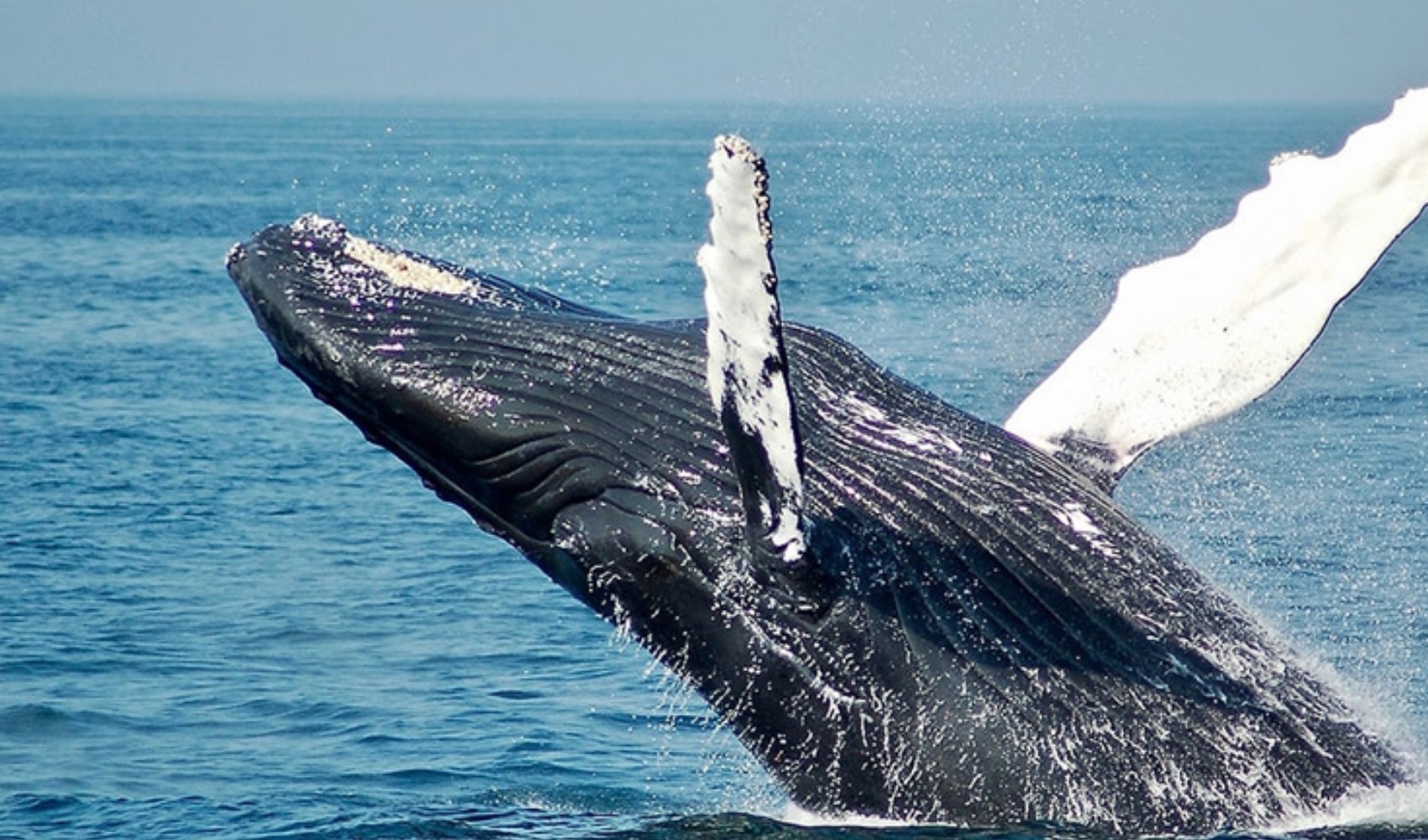
The sequences of clicks that whales living in the depths of the oceans use to communicate with one another have been examined by researchers from Project CETI. Analyses conducted with the support of artificial intelligence have shown that these sounds are surprisingly close to human language.
The rhythmic clicks used in whale communication, known as "codas," have a structure similar to Morse code. These clicks are divided into two basic vowel-like elements: the a-coda, which resembles an "ah" sound, and the i-coda, which resembles an "ee" sound. Researchers stated that whales consciously control these sounds and alter their acoustic properties to form different "words."
These complex sounds play a significant role in the social interactions of whales. The CETI team determined that these codes strengthen social bonds among whale family groups, such as facilitating recognition, maintaining group cohesion, and providing coordination during hunting.
Project CETI's linguistics lead, Gašper Beguš, emphasized the similarity of this communication system to human language:
"We realized that this system, which we initially compared to Morse code, is actually much more human-like. This shows that even in a completely different world, communication systems can resemble our own."
Researchers collected more than 4 thousand coda recordings between 2014 and 2018 by attaching suction-cup microphones to 15 sperm whales living in the Caribbean. Because the initial recordings were slow, the sounds were sped up for analysis, and it was understood that the codas were divided into A and I categories, similar to human vowels.
In the study, it was observed that the number of clicks, the pauses between them, and the speed created distinct rhythms. It was determined that "ah" codas lasted longer, while "ee" codas were divided into short and long versions. Artificial intelligence analyses confirmed that these sounds were not coincidental and that whales consciously control the timing, volume, and quality of the clicks.
News Source: 12punto
Most Read

Striking picture for Özgür Özel's 'New Party'

The PKK opening and Özgür Özel’s path!..

How did the newspapers view Özgür Özel's farewell to the CHP?

He killed his wife by slitting her throat: Their children witnessed the moments

What did the CHP do?

Özel’s new party move in the world press

Fire at TUSAŞ engine factory in Eskişehir under control

The New CHP, against CEHAPE

From self-efficacy to despair

Kılıçdaroğlu's first message on Özgür Özel's new party announcement