

A giant step for Germany in defense! Military transformation accelerated at Bremerhaven port
Germany is taking one of the biggest steps in its history in the field of defense by transforming the Bremerhaven port on the North Sea coast into a military logistics base with an investment of 1.35 billion Euros. As the city shifts from automotive transport to the shipment of heavy armor, cooperation with the private sector is coming to the fore.



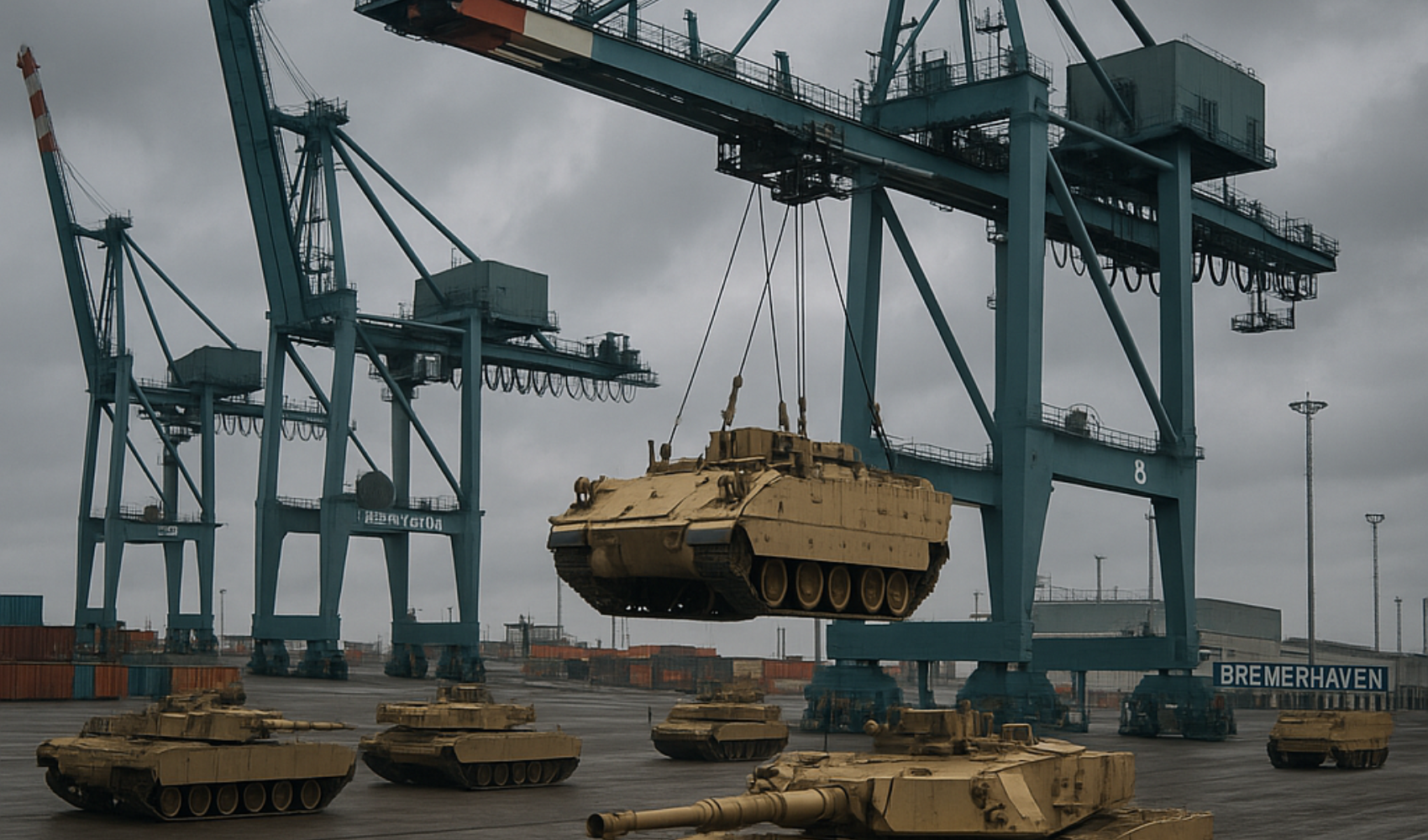
The port of Bremerhaven, one of the most critical points in Europe for automotive exports, is now becoming a hub not only for cars but also for tanks and armored vehicles.
The German government aims to completely renovate the infrastructure at the port, particularly for the shipment of Leopard tanks. This massive investment, included in the 2026 budget, aims to strengthen the country's readiness against potential military threats and its role within NATO.
Germany's geographical advantage and economic power fuel its vision of making the country one of the key logistics hubs in European defense. In this new era, the government is prioritizing increasing cooperation between civilian and military structures.
THE PRIVATE SECTOR TAKES ON NEW TASKS
The German Armed Forces have turned to close cooperation with the private sector in the process of increasing Bremerhaven's military capacity. BLG Logistics, which has a significant role in port operations, has stepped in to fill the gaps in capacity. The company's CEO, Matthias Magnor, emphasized the importance they place on the port's transformation, stating, “We are currently in very positive discussions and hope to be able to make the first major investments by the end of this year.”
However, some problems in the infrastructure are noticeable during this process. Approximately 5 thousand bridges need to be repaired at the national level, and difficulties in the railway line pose an obstacle to the rapid organization of heavy military logistics. Furthermore, the rigid bureaucracy established after World War II makes it difficult for civilian firms to fully integrate into processes in the defense sector.
Defense Minister Boris Pistorius, in his speech introducing the new military strategy, said, “We have set in motion processes that represent a real paradigm shift. We must all face the reality that peace and freedom, prosperity and tolerance can no longer be taken for granted and must be defended.”
BUREAUCRATIC OBSTACLES AND NEW APPROACHES IN GERMANY
Logistics companies are struggling to play an active role in the system due to the army's complex tender procedures and hesitation regarding access to information. The German Army's procurement agency, BAAINBw, prefers to share information through closed platforms rather than communicating directly with companies. This situation makes it difficult for firms to make effective preparations.
Even though the Operational Plan prepared by the government in 2024 outlines the framework for civil-military cooperation, the confidentiality of the document prevents companies from making long-term plans. Niels Beuck, a representative of the German Logistics Association, expresses that there is a need for open information flow and direct points of contact for stronger collaborations in the sector.
For Germany, which downsized its army after the Cold War and suspended mandatory military service in 2011, this new military restructuring is seen as a significant turnaround in the country's history. Following Russia's attack on Ukraine, German logistics and industrial companies are reshaping their organizations to develop military services.
In this context, the company Fiege, known for its 22 thousand employees and large warehouse network, has established a new company called Celerox that focuses on military services. Company executive Michael Quaden underlined that storing military equipment in the same environment as civilian products (for example, gummy candies) does not make sense from an operational perspective.
With the steps it has taken at the port of Bremerhaven, Germany aims to both increase its military deterrence and assume a leading role in the security of Europe.
News Source: 12punto
Most Read

Striking picture for Özgür Özel's 'New Party'

Özgür Özel gives a dated response regarding the number of resignations

Forest fire in Antalya brought under control

The PKK opening and Özgür Özel’s path!..

How did the newspapers view Özgür Özel's farewell to the CHP?
Houthis strike Saudi-owned tanker

What did the CHP do?

Özel’s new party move in the world press

The New CHP, against CEHAPE

From self-efficacy to despair