

Armenia officially recognizes Palestine: Which countries recognize Palestine as a state and which do not?
The Armenian Ministry of Foreign Affairs has issued a statement regarding the recognition of the State of Palestine.



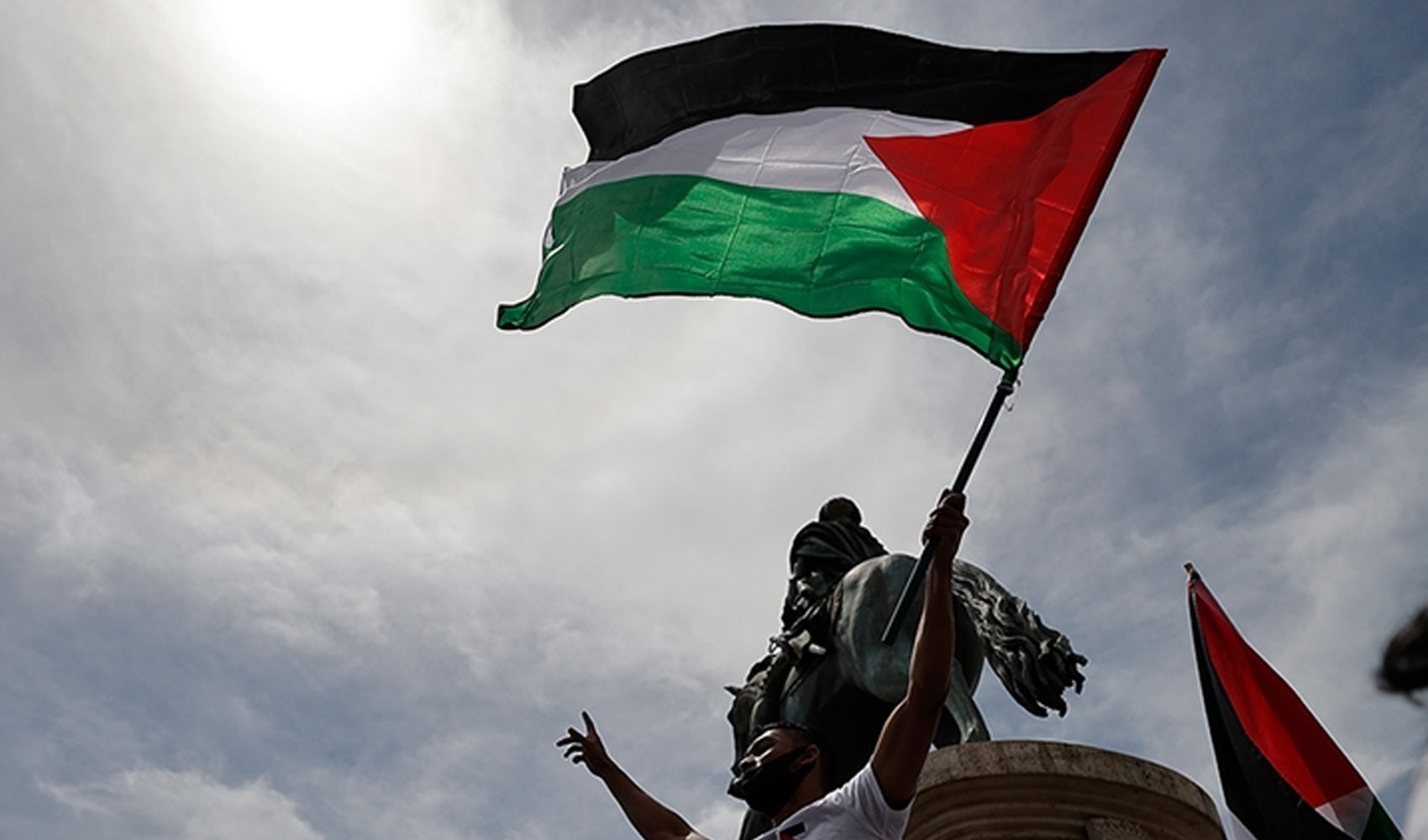
Russia's official news agency TASS has announced that Armenia has officially recognized Palestine.
ARMENIA OFFICIALLY RECOGNIZES PALESTINE
The Armenian Ministry of Foreign Affairs has issued a statement regarding the recognition of the State of Palestine. The statement noted that "Armenia has always advocated for a peaceful and comprehensive solution to the Palestinian issue on various international platforms and supports the 'two-state' principle in resolving the Israeli-Palestinian conflict."
The statement from the Armenian Ministry of Foreign Affairs said, "We believe this is the only way to ensure that the legitimate aspirations of Palestinians and Israelis are realized. Based on the above and reaffirming its commitment to international law and the principles of equality, sovereignty, and peaceful coexistence of peoples, the Republic of Armenia recognizes the State of Palestine."
MANY COUNTRIES HAD DECIDED TO RECOGNIZE PALESTINE
Following the attack by the Qassam Brigades, the armed wing of Hamas, on October 7, 2023, reactions against Israel, which has been targeting civilians in Palestine, are growing day by day. After Israel's attacks on Palestine, many countries, including Spain, Norway, and Ireland, had decided to recognize the Palestinian state.
THOSE WHO RECOGNIZE PALESTINE AND THOSE WHO DO NOT
Out of 193 United Nations (UN) member states, 145 recognize Palestine as a state.
According to BBC Turkish, these include the 22-member Arab Group at the UN, the 57-member Organization of Islamic Cooperation, and the 120-member Non-Aligned Movement.
More than 40 states, including the US, UK, Germany, France, Canada, Australia, the Netherlands, Italy, Portugal, Finland, Denmark, Switzerland, Belgium, Greece, Japan, South Korea, Myanmar, Eritrea, Taiwan, New Zealand, Panama, and Cameroon, do not recognize Palestine as a state.
In a statement made this past May, Australia announced that it could recognize Palestine as a state "to pave the way for a two-state solution."
In March, the leaders of Spain, Ireland, Malta, and Slovenia announced that they were working toward recognizing Palestine as a state "when appropriate conditions are met."
Before this announcement, only nine European countries recognized Palestine as a state. Most of these had made the decision in 1988, during the period when they were part of the Soviet Bloc.
Weeks before the move by Spain, Norway, and Ireland, the United Nations General Assembly had adopted a resolution recommending the reconsideration of Palestine's UN membership and granting Palestine broader rights and privileges.
In April, the US used its veto in the Security Council during a vote on a proposal for the UN to recognize the Palestinian state, blocking full membership for Palestinians in the organization. However, 12 countries, including US allies such as France, Japan, and South Korea, gave the green light to the resolution.
If this proposal submitted by Algeria had been accepted by the Security Council, the UN General Assembly could have voted on it, and it could have been adopted with a two-thirds majority.
Drafts brought to the UN Security Council can only be approved if none of the five permanent members veto them. These five countries are the US, UK, France, Russia, and China.
Palestinian Authority leader Mahmoud Abbas described the US veto as "unethical," while Israel defined the resolution as "shameful."
In a statement made by the US after the vote, it was said, "The US remains a strong supporter of a two-state solution. This veto does not represent opposition to the recognition of Palestine as a state, but is an acknowledgment that this can only happen as a result of direct negotiations between the parties."
WHAT IS THE 'JUSTIFICATION' OF THOSE WHO DO NOT RECOGNIZE PALESTINE?
Countries that do not recognize Palestine as a state usually explain this stance by citing "the lack of an agreement reached as a result of negotiations with Israel."
Prof. Fawaz Gerges from the London School of Economics (LSE) says, "Although the US pretends to support the establishment of a Palestinian state, by insisting on direct negotiations between Israel and Palestine, it is actually granting Israel the right to veto Palestinian autonomy."
In the peace talks that began in the 1990s, a two-state solution was set as a goal. According to this, Israelis and Palestinians would continue on their paths as two countries.
However, talks slowed down in the 2000s and came to a standstill in 2014.
Difficult issues such as borders, the structure of the Palestinian state, the status of Jerusalem, and the fate of Palestinian refugees after the 1948-49 war remained unresolved on the table.
Israel stands firmly against Palestine's request for UN membership.
Israel's UN Ambassador Gilad Erdan said today that approving this request "would be rewarding terrorism after the October 7 Hamas attacks."
Countries that are allies of Israel know that their relations would be damaged if they were to recognize Palestine as a state.
Some countries that support Israel argue that Palestine does not meet the criteria for statehood established in the 1933 Montevideo Convention.
HOW ARE PALESTINIANS REPRESENTED AT THE UN?
In 2011, Palestine applied for full membership to the UN. However, this application did not receive the necessary support in the UN Security Council and was not put to a vote.
In 2012, the application for non-member observer state status for the Palestinian Authority was accepted in a vote at the UN General Assembly.
This status grants Palestine the right to participate in debates in the General Assembly. However, the Palestinian Authority does not have voting rights.
With this decision, which was welcomed in both the West Bank and the Gaza Strip in 2012, the way was paved for Palestinians to join other international organizations. These include the International Criminal Court.
Khaled Elgindy from the Middle East Institute in Washington comments, "Becoming a full member of the UN could elevate the diplomatic status of Palestinians and pave the way for rights such as submitting resolutions and voting in the General Assembly. But none of these will bring about a two-state solution. This can only happen with the end of the Israeli occupation."
Gilbert Achcar, a professor of development studies at SOAS University of London, notes that full membership in the UN would remain a symbolic victory. Achcar argues that under the existence of a "weak Palestinian Authority" and occupied territories, "an independent and sovereign Palestinian state would still be very far off."
News Source: 12punto
Most Read

Striking picture for Özgür Özel's 'New Party'

The PKK opening and Özgür Özel’s path!..

How did the newspapers view Özgür Özel's farewell to the CHP?

He killed his wife by slitting her throat: Their children witnessed the moments

What did the CHP do?

Özel’s new party move in the world press

Fire at TUSAŞ engine factory in Eskişehir under control

The New CHP, against CEHAPE

From self-efficacy to despair

Kılıçdaroğlu's first message on Özgür Özel's new party announcement