

Comprehensive naval blockade on Iranian ports by the US: Preparing for a new era in trade and energy markets
The US military's decision to implement a naval blockade on Iranian ports is expected to have significant impacts on international trade and energy markets. This situation could reshape maritime traffic passing through the Strait of Hormuz and the economic balances in the region.



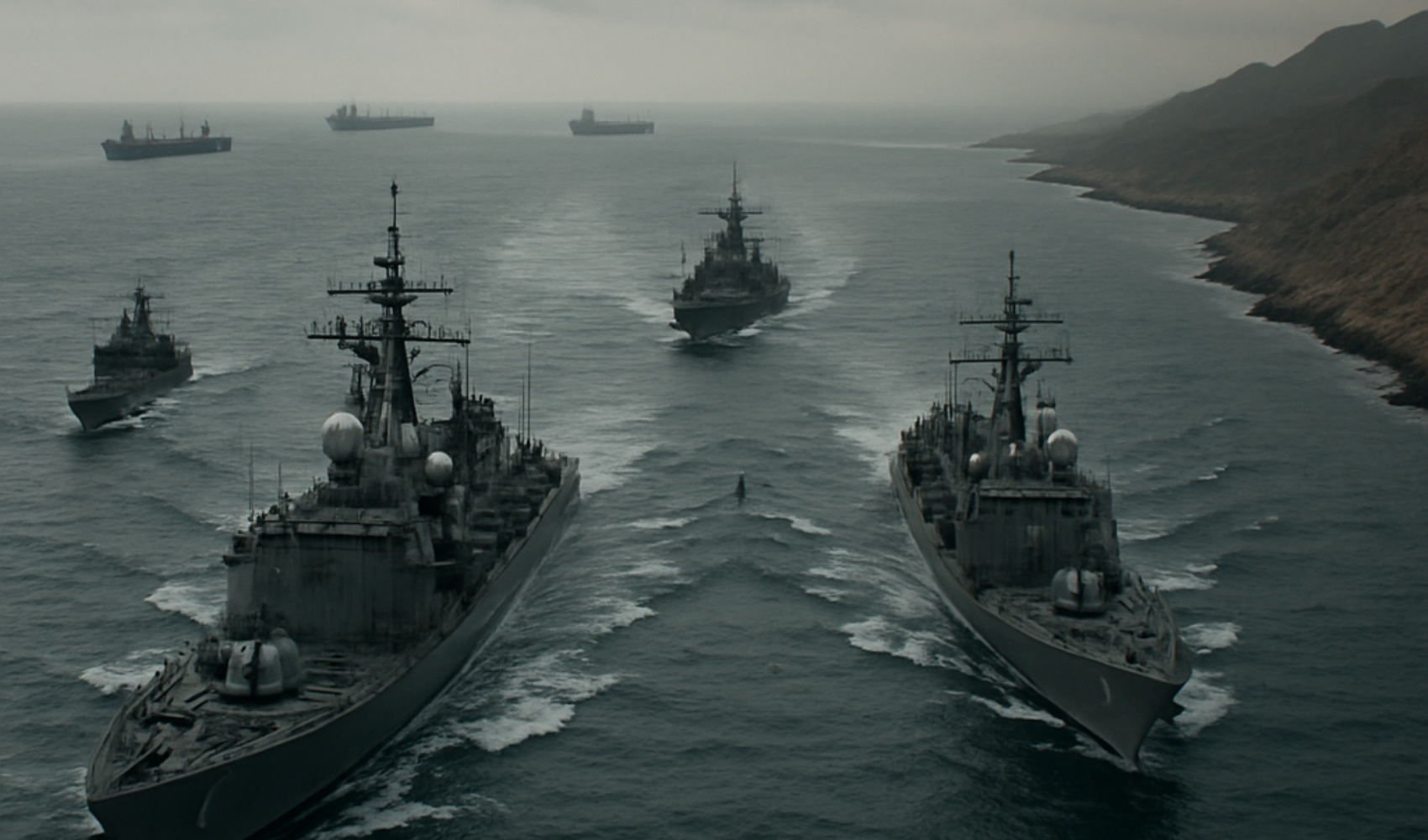
According to a statement from the US administration, a large-scale naval blockade has been implemented as of April 13, targeting all vessels entering or leaving Iranian ports. The US Central Command (CENTCOM) shared information that this operation would cover all ships entering or exiting ports and coastal areas, regardless of the country they are flagged to. On the other hand, it was stated that traffic directed toward ports outside of Iran would not be obstructed.
This step follows recent unsuccessful negotiations between the US and Iran. US President Donald Trump had drawn attention with his threatening statements regarding the Strait of Hormuz, posting a message on social media stating, "Entry and exit to the Strait will now be under US control." The subsequent CENTCOM announcement ignited a new geopolitical tension in the region.
WHAT IS A NAVAL BLOCKADE AND FOR WHAT PURPOSES IS IT USED?
A naval blockade, as a type of military operation, aims to prevent the entry and exit of all state vessels to specific ports or coastal regions. According to the US Navy's Commander's Handbook on the Law of Naval Operations, such measures are implemented to control maritime or air traffic in an enemy territory.
International maritime law experts point out that a state implementing such a blockade using military force pushes the boundaries of international maritime law. Some experts warn that military tension could escalate alongside the blockade under conditions where a temporary ceasefire is in effect.
The reason for the implementation of the blockade is cited as Iran gaining an advantage for itself in the geographically critical Strait of Hormuz. The Tehran administration was demanding high transit fees from ships passing through this narrow waterway. The US, while targeting this critical source of revenue, also aims to limit Iran's oil sales and increase pressure. In President Trump's statement, the phrase "We will not allow Iran to make money by selling oil to those it loves and not selling to those it dislikes" had drawn attention.
POTENTIAL IMPACTS AND EXPECTED CHANGES IN TRADE
According to industry experts, the number of ships that will be affected by the blockade in the first stage is already quite limited. Lars Jensen, CEO of Vespucci Maritime, underscores that most tankers currently passing through the region are already subject to US sanctions because they make payments to Iran.
However, this development in the Strait of Hormuz could lead to further increases in oil and natural gas prices. If a lasting environment of peace cannot be established in the region, it is predicted that there could be a long-term decline or uncertainty in maritime trade. Experts state that shipping companies will be cautious against the new decision and may enter a waiting period for a possible solution.
Within the scope of the temporary ceasefire reached between the US and Iran on April 7, it was based on guaranteeing safe passage through the Strait. However, after the ceasefire, ships moving in the region were warned that they could become targets if they passed without permission. According to maritime traffic analyses, only 19 ships passed through the Strait of Hormuz between April 7 and 10. A quarter of these were carrying oil or chemicals; the majority were recorded as cargo and container ships.
Compared to the pre-war period, it was observed that an average of 138 ships passed through the Strait per day. Now, this figure has dropped significantly, and some ships prefer to travel by hiding their locations.
In the near term, trade and energy security in the region are expected to be reshaped. Experts emphasize that it is likely for the international community to closely monitor developments and for diplomatic initiatives between the parties to accelerate.
News Source: 12punto
Most Read

Striking picture for Özgür Özel's 'New Party'

The PKK opening and Özgür Özel’s path!..

How did the newspapers view Özgür Özel's farewell to the CHP?

He killed his wife by slitting her throat: Their children witnessed the moments

What did the CHP do?

Özel’s new party move in the world press

Fire at TUSAŞ engine factory in Eskişehir under control

The New CHP, against CEHAPE

From self-efficacy to despair

Kılıçdaroğlu's first message on Özgür Özel's new party announcement