

Critical talks between the US and Iran have begun! What topics are on the table?
Delegations from the US, Iran, Qatar, and Pakistan have begun critical contacts in Switzerland. In the talks, which address the future of the fragile ceasefire, tensions in Lebanon, the continued closure of the Strait of Hormuz, sanctions, and the nuclear file are among the prominent topics, with negotiations expected to last until late at night.



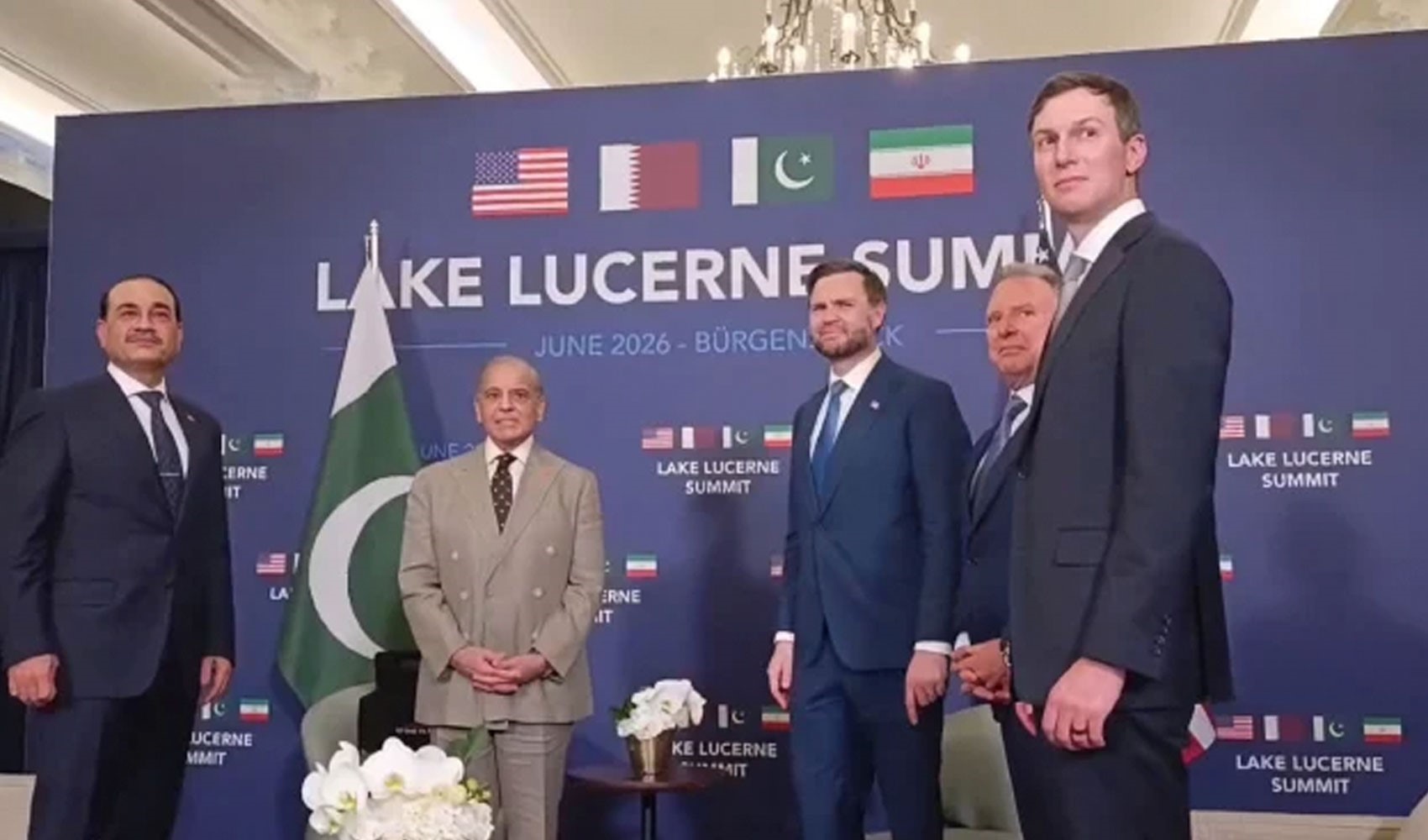
Critical contacts have begun between US, Iranian, Qatari, and Pakistani delegations in Bürgenstock, Switzerland. Regional security, energy flow, and economic sanctions are being discussed in the talks, which could affect the future of the fragile ceasefire reached after months of conflict.
The US delegation is led by Vice President JD Vance, while the Iranian side is represented by Parliament Speaker Mohammad Bagher Ghalibaf. The Qatari and Pakistani delegations are acting as mediators.
DEVELOPMENTS IN LEBANON ALSO ON THE AGENDA
Prior to the meeting, the Tehran administration announced that it would not be possible to implement the agreement reached with the US if Israel's operations in Lebanon continue. Iranian officials stated that they would bring ceasefire violations to the agenda as one of the priority topics of the talks.
The Washington administration, meanwhile, announced that the talks were initially planned within the framework of reopening the Strait of Hormuz, easing sanctions on Iranian oil, and unfreezing Iranian assets. However, due to the renewed rise in tensions in Lebanon, the issue of the ceasefire has also become one of the priority agenda items.
In a statement made before the contacts, JD Vance said, "We hope to make progress on the nuclear issue and the ceasefire in Lebanon. These are the two main issues we are currently focused on."
DECISION ON THE STRAIT OF HORMUZ DRAWS ATTENTION
Before the talks, Iran's decision to keep the Strait of Hormuz closed drew attention. The Tehran administration postponed the reopening of the strait, claiming that the US has failed to exert sufficient pressure on Israel and that the clashes in Lebanon are continuing.
While the continued closure of the Strait of Hormuz, through which a significant portion of world oil trade passes, has caused concerns in global energy markets, US President Donald Trump had previously warned that the world economy could face serious risks if the strait is not opened.
NEGOTIATION PROCESS DEBATED IN IRAN
While contacts continue in Switzerland, there are disagreements in Iran regarding the negotiations. While conservative circles react to the talks by arguing that the US is not fulfilling its commitments, President Masoud Pezeshkian states that the agreement will yield positive results for Iran.
Pezeshkian stated that the US's main demand is that Iran does not acquire nuclear weapons, saying, "We have already said many times that we do not want nuclear weapons. The US wanted us to put this in writing, and we signed it."
TALKS EXPECTED TO LAST UNTIL NIGHT
Iranian Foreign Ministry Spokesperson Esmail Baghaei announced that separate contacts would be held with the mediator countries in the morning, and a quadrilateral session with the participation of the US, Iranian, Qatari, and Pakistani delegations would be held in the afternoon.
The Iranian delegation reported that the talks are planned to continue until late at night and that no additional day of negotiations is foreseen at this stage.
News Source: 12punto
Most Read

Striking picture for Özgür Özel's 'New Party'

The PKK opening and Özgür Özel’s path!..

How did the newspapers view Özgür Özel's farewell to the CHP?

He killed his wife by slitting her throat: Their children witnessed the moments

What did the CHP do?

Özel’s new party move in the world press

Fire at TUSAŞ engine factory in Eskişehir under control

The New CHP, against CEHAPE

From self-efficacy to despair

Kılıçdaroğlu's first message on Özgür Özel's new party announcement