

General elections in Switzerland tomorrow: Record number of candidates to compete
General elections will be held in Switzerland tomorrow. Approximately 5.5 million voters will be eligible to cast their ballots to determine the members of the 200-seat National Council and the 46-seat Council of States. A total of 5,909 people are competing for seats in the National Council, an increase of 1,264 people or 27 percent compared to 4 years ago.



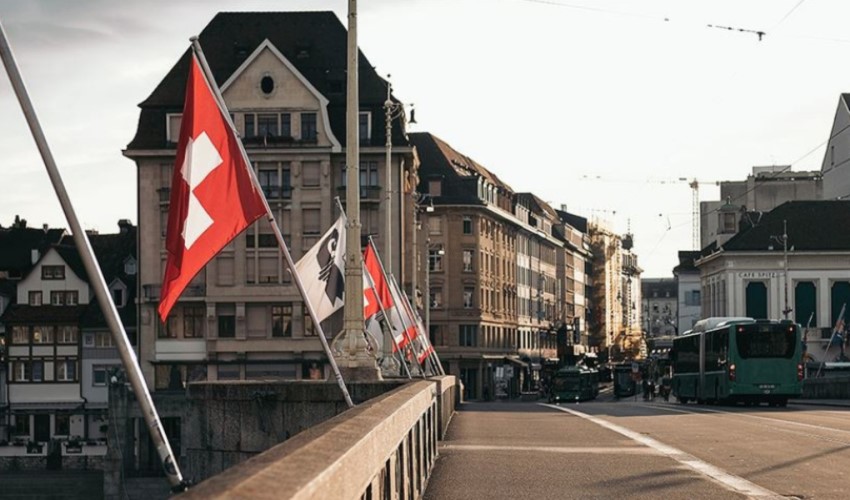
Approximately 5.5 million voters in Switzerland will head to the polls tomorrow for the general elections.
In Switzerland, where elections are held every 4 years, citizens will cast their votes to determine the members of the 200-seat National Council (People's Council) and the 46-seat Council of States.
In Switzerland, which has approximately 5.5 million voters, electors can cast their ballots at polling stations or via postal voting. While approximately 90 percent of voters prefer to vote by mail, 10 percent cast their votes at polling stations.
In the country, envelopes containing ballot papers were delivered to voters by the Swiss Post at the beginning of this month, and the postal voting process continued until October 19.
PARTICIPATION RATE HAS BEEN BELOW 50 PERCENT FOR 50 YEARS
In the country, where the voter turnout rate has remained below 50 percent for about 50 years, the number of people casting votes this year is expected to remain at similar levels.
RECORD NUMBER OF CANDIDATES
According to data published by the Swiss Federal Statistical Office, a record level has been reached in the number of parliamentary candidates participating in the elections this year.
A total of 5,909 people are competing for seats in the National Council, an increase of 1,264 people or 27 percent compared to 4 years ago.
While women make up 40.8 percent of the candidates, 10 candidates are 18 years old.
INCREASE EXPECTED IN SVP VOTES, DECREASE IN GREENS
According to the latest poll conducted by the official Swiss television channel SRG, the coalition partners that have guided Swiss politics for decades—the Swiss People's Party (SVP), the Social Democratic Party of Switzerland (SP), the Free Democratic Party (FDP), and the Christian Democratic Party (CVP)—are once again in the top ranks.
With the "ecological" atmosphere that existed before the 2019 elections being replaced by rising concerns over migration waves toward Europe, the right-leaning SVP is expected to increase its votes by 2.5 percent compared to the previous term (25.5 percent).
The SP is estimated to increase its votes by around 1.5 percent compared to the previous term (16.8 percent), while the CVP is expected to maintain its 11.4 percent vote share.
While a small decrease of 1.5 percent is expected in the FDP's vote share from the last term, the Green Party, which increased its votes by 6 percent in the last election to reach 13 percent, is projected to remain below 10 percent this term.
The Liberal Green Party is also expected to experience a decline from the 7.6 percent vote share it received last year.
"MIGRATION" TOPS THE AGENDA
While the "migration crisis" ranked first among the most discussed topics during the election period in Switzerland, health insurance premiums, climate change, social security, and the cost of living were also on the candidates' agendas.
Issues such as supply and energy security, pension reform, relations with the EU, housing prices, and Switzerland's independence also became topics of debate.
FEDERAL GOVERNMENT CONSISTS OF 7 MINISTERS
Switzerland, with a population of around 9 million, has been governed by coalition governments for more than 60 years due to its complex political structure and electoral system.
In Switzerland, which has a federal system, the government consists of 7 ministers elected by parliament.
Presidents of the Swiss Confederation are chosen by parliament from within the 7-member cabinet and serve for one year.
Under the system in practice since 1959, known as the "magic formula," the 3 parties with the most votes in the elections are given 2 seats each in the cabinet, and the 4th party is given one seat.
The confederation that forms the basis of Switzerland, whose official name is the "Swiss Confederation," was established at the end of the 13th century and has maintained its independence since 1499.
News Source: AA
Related News

Most Read

Striking picture for Özgür Özel's 'New Party'

Özgür Özel gives a dated response regarding the number of resignations

Forest fire in Antalya brought under control

The PKK opening and Özgür Özel’s path!..

How did the newspapers view Özgür Özel's farewell to the CHP?
Houthis strike Saudi-owned tanker

What did the CHP do?

Özel’s new party move in the world press

The New CHP, against CEHAPE

From self-efficacy to despair