

Government declares state of emergency following road blockade protests
Road blockades that have been ongoing for 50 days have led to an economic and social crisis in Bolivia; President Rodrigo Paz has announced that a state of emergency has been declared in the country.



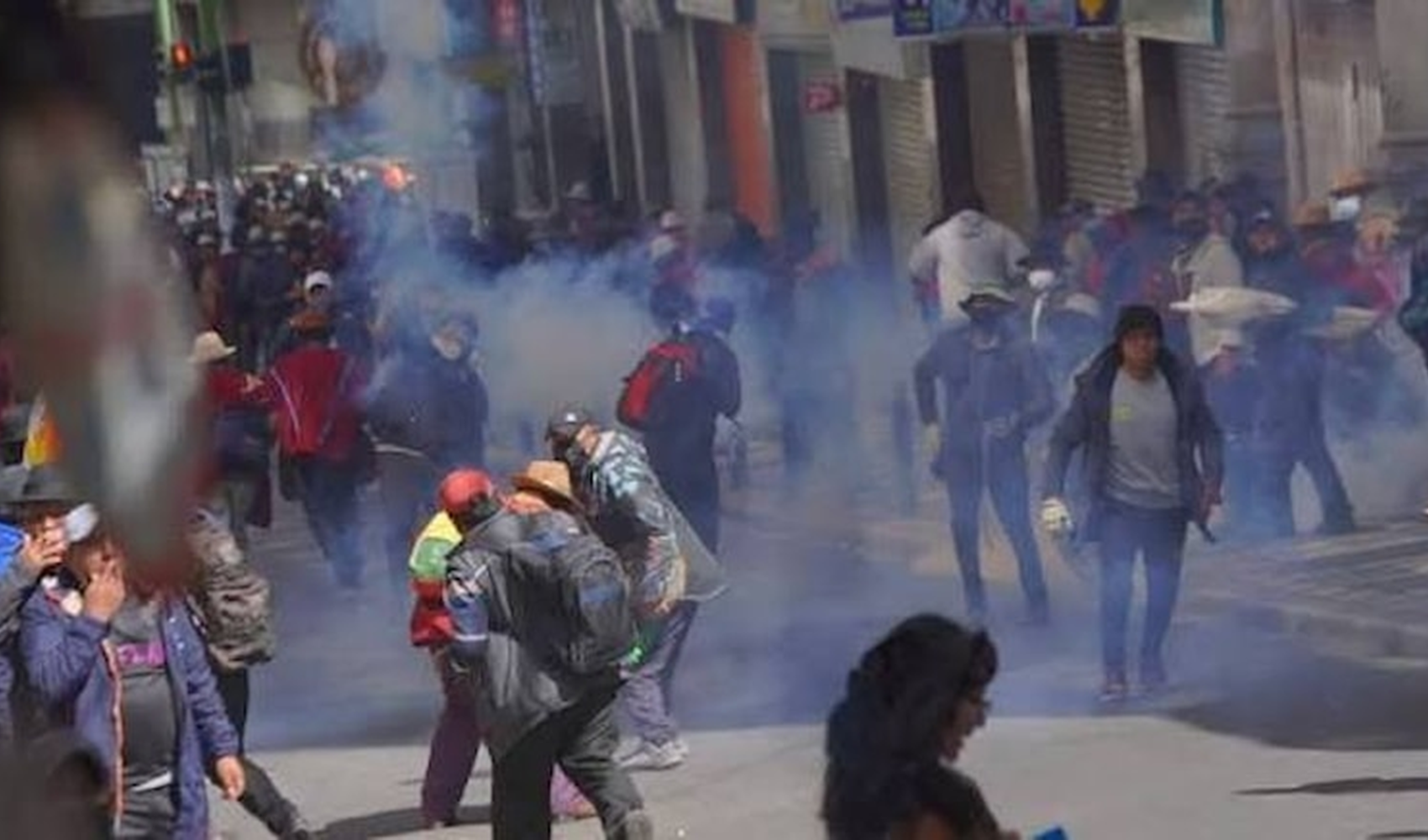
In Bolivia, road blockade protests that have been increasingly impactful in recent weeks have pushed the government to declare a state of emergency. As barricades set up across the country hinder access to basic necessities, the Bolivian administration has decided to intervene in the situation.
President Rodrigo Paz stated in a post on his social media account that he had "ordered a state of emergency to open the roads." Expressing that Bolivians are being prevented from working, receiving education, accessing healthcare services, and caring for their families, Paz emphasized that they "cannot be held hostage by barricades."
It has been reported that Bolivia, which has suffered significant economic damage, has incurred a loss of 3 billion dollars since the day the protests began, a figure that accounts for approximately 6 percent of the country's annual production. Furthermore, food and medicine supplies have been severely disrupted due to the protests.
WHY WAS THE STATE OF EMERGENCY DECIDED?
Even after an agreement was reached between the government and the national labor confederation COB to end the actions, some groups continued the protests. Many groups, primarily the La Paz farmers' federation Tupac Katari and supporters of former President Evo Morales, have continued to keep the roads closed.
President Paz stated that the state of emergency was declared "not to end normalcy, but to restore it." Noting that the government is open to dialogue, Paz underscored that Bolivia needs to open its roads, secure the supply chain, and return to normal during this process.
The 58-year-old leader, who promised "capitalism for everyone" during his election campaign and took office last October by ending twenty years of socialist rule, has also made significant changes to economic policies. The Paz administration, which has taken steps to access foreign capital and reduced fuel subsidies, announced that it is nearing the end of a 3 billion dollar financing program with the International Monetary Fund (IMF).
However, due to global economic pressures, farmers, miners, and indigenous communities have not found the support they expected from the government. In particular, the rise in inflation caused by the war in Iran has made things even more difficult for these segments of society.
The US government, meanwhile, announced that it is providing emergency food aid and logistical support to Bolivia in response to the developments. The famine caused by the protests has also mobilized the international community.
News Source: 12punto
Most Read

Striking picture for Özgür Özel's 'New Party'

The PKK opening and Özgür Özel’s path!..

How did the newspapers view Özgür Özel's farewell to the CHP?

He killed his wife by slitting her throat: Their children witnessed the moments

What did the CHP do?

Özel’s new party move in the world press

The New CHP, against CEHAPE

Fire at TUSAŞ engine factory in Eskişehir under control

From self-efficacy to despair

Kılıçdaroğlu's first message on Özgür Özel's new party announcement