

Iran closes the Strait of Hormuz to ship traffic! What happens next?
By closing the strategically important Strait of Hormuz, Iran has impacted global energy transport. Oil prices are expected to rise further following the tensions with Israel.



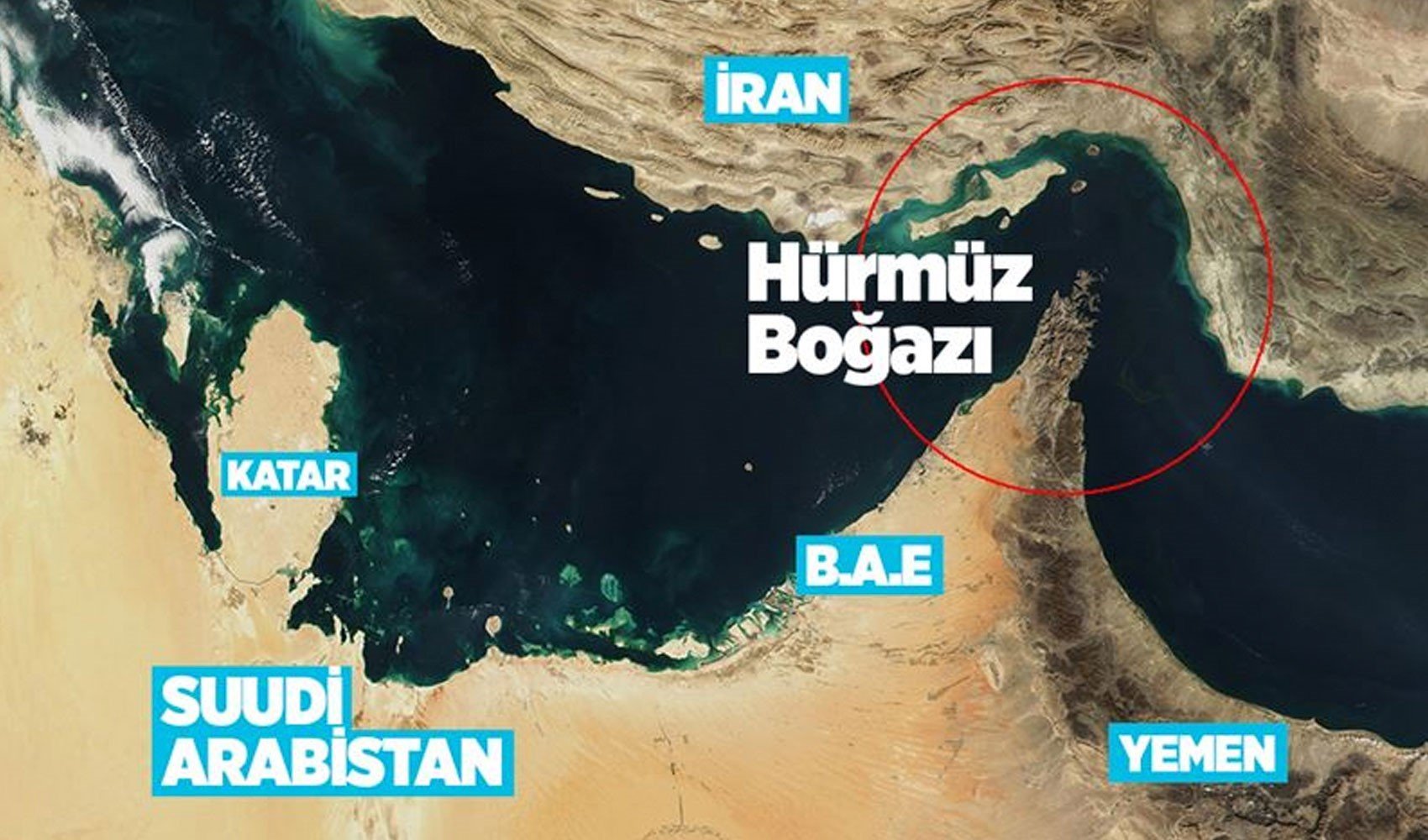
The Army of the Islamic Republic of Iran has announced that it has halted ship passage through the Strait of Hormuz. This decision came following the ballistic missile attack on the city of Tel Aviv in Israel. In a statement released on the army's official social media accounts, it was stated that the strait would remain closed until further notice. The statement read, "No ship will be allowed to pass through the Strait of Hormuz until further notice."
The Strait of Hormuz, a narrow waterway connecting the Persian Gulf to the Gulf of Oman and the Indian Ocean, plays a critical role in the transport of oil and LNG from the Middle East to world markets. Following these developments, oil prices saw a 7 percent increase, leading to volatility in energy markets.
WHY IS THE STRAIT OF HORMUZ IMPORTANT?
It is stated that approximately 20 percent of global oil consumption is transported through the Strait of Hormuz. This narrow maritime passage is of vital importance for global energy supply.
According to BBC Turkish, the majority of crude oil transported from the region is exported by members of the Organization of the Petroleum Exporting Countries (OPEC), namely Saudi Arabia, the United Arab Emirates, Kuwait, and Iran. This oil must pass through the Strait of Hormuz to reach world markets.
Furthermore, the production of Qatar, the world's largest exporter of liquefied natural gas (LNG), also reaches foreign markets almost entirely using this route.
The fragility of this region was clearly seen in history during the Iran-Iraq War between 1980 and 1988. During the war, both countries made moves to disrupt each other's oil shipments, a period that became known as the "Tanker War."
The US, in response to such threats in the region, is tasked with protecting commercial maritime transport through its 5th Fleet stationed in Bahrain.
WHAT HAPPENS IF THE STRAIT OF HORMUZ IS CLOSED?
Iran's potential move to close the Strait of Hormuz could have profound effects on the global energy supply. Experts state that in such a scenario, approximately 20 percent of worldwide oil transport could be disrupted.
In an analysis published by JP Morgan in June, it is predicted that the closure of the Strait to traffic could push oil prices to the 120-130 dollar per barrel level.
Prof. Dr. Aykut Lenger from Ege University states in his remarks that a potential intervention regarding the Strait of Hormuz is already affecting prices:
"This danger has been perceived, and financial markets in particular have already taken positions. We can say that if the strait is closed, oil supply will tighten and prices will rise even further."
Iran, for its part, issued a statement following the attacks carried out by Israel, announcing that there was no disruption in energy supply.
In a statement made by the Iranian Ministry of Petroleum, it was noted that the attacks did not damage refineries or oil storage facilities.
News Source: 12punto
Most Read

Striking picture for Özgür Özel's 'New Party'

The PKK opening and Özgür Özel’s path!..

How did the newspapers view Özgür Özel's farewell to the CHP?

He killed his wife by slitting her throat: Their children witnessed the moments

What did the CHP do?

Özel’s new party move in the world press

Fire at TUSAŞ engine factory in Eskişehir under control

The New CHP, against CEHAPE

From self-efficacy to despair

Kılıçdaroğlu's first message on Özgür Özel's new party announcement