

Iran's underground missile silos have become the weak link in the war
Having prepared for years by viewing its secret bases as a major advantage, Iran is suffering significant losses in its underground missile cities due to intense US and Israeli strikes. The smoke rising from each silo after the fighting serves as a sign of a major flaw in Tehran's strategy.



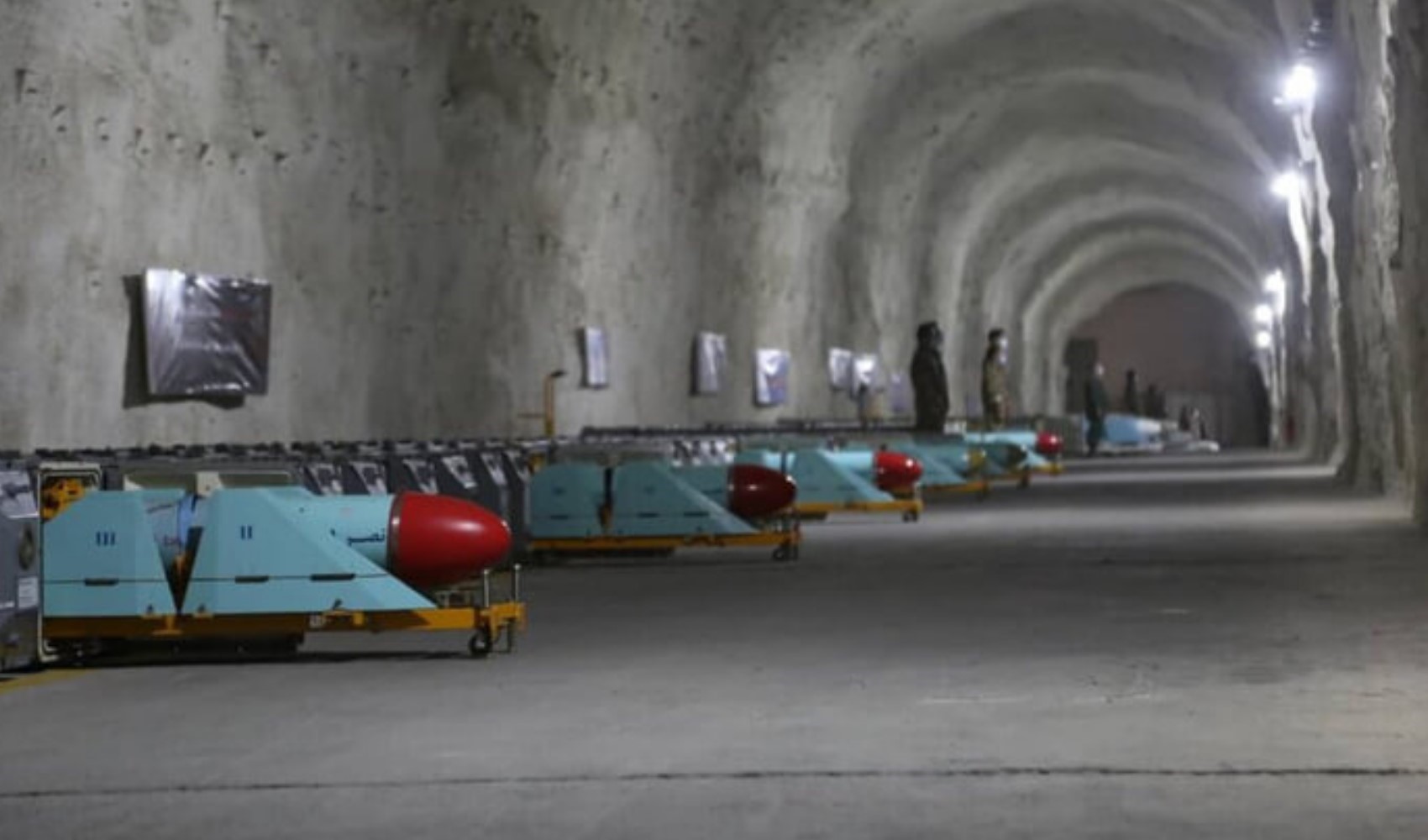
US and Israeli strikes, which have been ongoing in the Middle East for 6 days, continue to target the underground missile bases that Iran had prepared. Iran had stored its massive missile stockpile, developed against potential air raids, in fortified underground bunkers. However, in recent operations, these facilities have failed to provide the expected protection. Satellite imagery shows smoke rising in succession from the entrances of many "missile cities" where missiles have been destroyed.
As American and Israeli fighter jets and unmanned aerial vehicles launch attacks the moment missile launchers emerge to the surface, Iran's firing attempts are ending before they can even begin. It is reported that bases around critical cities have been targeted multiple times throughout the process.
DECLINE IN ATTACK CAPACITY IS NOTABLE
The operations conducted by the US and Israel have led to a visible decline in Iran's missile launch capacity. Admiral Brad Cooper stated, "We are hunting the last launchers to completely eliminate Iran's remaining ballistic missile capability, and we see that Iran's power to attack us and our partners is gradually diminishing."
The US Central Command announced that there has been an 86 percent decrease in Iran's missile launch rate over the last four days. Despite this, experts assess that Tehran still possesses thousands of short- and medium-range missiles. However, the locations of most of these facilities are known to the US and Israel.
‘MISSILE CITIES ARE NOW EASY TARGETS’
According to experts, the biggest flaw in the design of Iran's underground missile cities is the loss of mobility of these bases. Sam Lair from the James Martin Center emphasizes this vulnerability in Tehran's strategy, stating, "What was once mobile and hard to find is no longer mobile and is easier to hit."
With most air defense batteries rendered non-functional, slow-moving US and Israeli surveillance aircraft have begun to constantly patrol over the bases. Jets and UAVs launch attacks the moment they detect movement from underground. This method causes significant restrictions on Iran's missile launch attempts.
The successive strikes on bases around Shiraz and Isfahan have meant that launchers have not had the chance to fire before being destroyed. Satellite photos show reddish smoke from nitrogen-based fuel and blast marks next to the launchers. In some areas, it has been determined that air strikes have caused severe destruction at facility entrances.
TECHNICAL OBSTACLES EXIST
Serious deformations and risks of collapse are visible at the tunnel entrances of strategic bases near Tabriz, Horgo, and Kermanshah. Colin David assesses, "These attacks are carried out in waves that destroy several targets each time, and after numerous waves, the bases lose their effectiveness due to the loss of surface structures."
It is suggested that Iran, which in the past published videos of missile launches from underground, has largely abandoned this concept due to technical difficulties and the challenges of reusing the facilities.
UNCERTAINTY IN THE ARSENAL PROVIDES AN ADVANTAGE TO TEHRAN
Military experts in the region, however, consider the fact that the exact amount of Iran's missile stockpile is unknown to be a strategic advantage. Analyst Decker Eveleth says, "No one can count their arsenal, which creates great uncertainty about how long they can hold out, and this situation helps them."
In the recent period, Iran has transferred missile launch authority from the central administration to local commands. This is aimed at preventing a strike on the central headquarters from paralyzing the entire attack system. However, it is also stated that as the number of lost launchers and missiles increases, building new ones is quite laborious.
While the war is still ongoing, Iran is responding with sparse missile launches and unmanned aerial vehicle attacks. Experts are of the opinion that Tehran is saving its remaining large missile reserve as a "last resort" to be used in a situation that threatens the existence of the regime.
News Source: 12punto
Most Read

Striking picture for Özgür Özel's 'New Party'

Özgür Özel gives a dated response regarding the number of resignations

Forest fire in Antalya brought under control

The PKK opening and Özgür Özel’s path!..

How did the newspapers view Özgür Özel's farewell to the CHP?

Houthis strike Saudi-owned tanker

What did the CHP do?

Özel’s new party move in the world press

The New CHP, against CEHAPE

From self-efficacy to despair