

ISIS leader Baghdadi's wife recounts her experiences: I used to watch television in secret at home
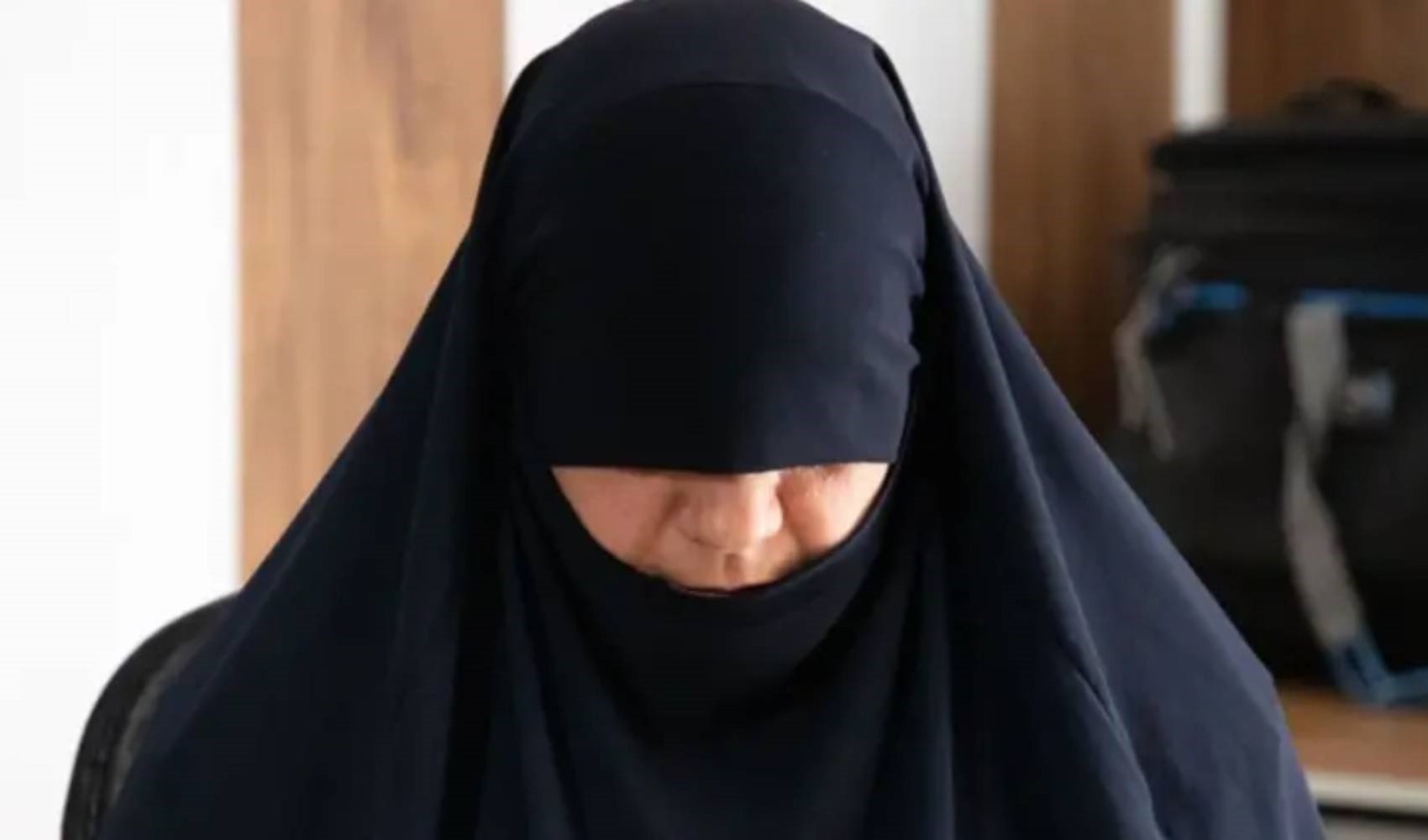
The widow of Abu Bakr al-Baghdadi, leader of the Islamic State of Iraq and Syria (ISIS), has recounted her experiences in a rare interview from prison. Umm Hudayfah was Baghdadi's first wife and was married to him during the period when ISIS brutally ruled large parts of Syria and Iraq. She is currently under investigation for terrorism-related crimes and is being held in a prison in Iraq.



In the summer of 2014, Umm Hudayfah was living with her husband in Raqqa, which was the ISIS stronghold in Syria at the time.
The radical jihadist group's wanted leader, Abu Bakr al-Baghdadi, was frequently spending time elsewhere, and on one occasion, he sent a bodyguard to the house to pick up their two young sons.
According to a report by Feras Kilani from BBC Turkish, Umm Hudayfah says, "He said they were going on a trip to teach the children how to swim."
She had a television at home that she watched in secret. "I would turn it on when he wasn't in the house," she says. Baghdadi thought the television was broken. She says she was cut off from the world and had not been allowed to watch television or use other technology, such as a mobile phone, since 2007.
She says that a few days after the bodyguard took the children, she turned on the television and was met with a "big surprise." She saw her husband giving a speech at the Great Mosque in the northern Iraqi city of Mosul, declaring himself the head of the newly proclaimed Islamic caliphate. This was just a few weeks after his fighters had seized control of the region.
The footage of al-Baghdadi, appearing in public for the first time in years with his long beard, black robes, and demanding allegiance from Muslims, was watched all over the world and marked a significant moment for ISIS, which was wreaking havoc across Iraq and Syria.
Umm Hudayfah says she was shocked to learn that instead of learning to swim in the Euphrates, her sons were with him in Mosul.
She describes her situation in the crowded prison in Baghdad, the capital of Iraq, where she is being held while Iraqi authorities investigate her role in ISIS and the crimes committed by the group. It is noisy as inmates accused of various crimes, including drug use and sex work, move around the prison and food deliveries are made from the outside.
We find a quiet spot in the library and talk for nearly two hours. During our conversation, she portrays herself as a victim trying to escape her husband and denies any involvement in the brutal activities of ISIS.
Hudayfah's account stands in stark contrast to the testimonies given in cases brought by Yazidis who were kidnapped and raped by ISIS members. The Yazidis accuse her of collaborating in the use of kidnapped girls and women as sex slaves.
She does not lift her head even once during the interview. Her black chador reveals only the part of her face below her nose.
Umm Hudayfah was born in 1976 into a conservative Iraqi family and married Ibrahim Awwad al-Badri, who would later become known by the alias Abu Bakr al-Baghdadi, in 1999.
Al-Badri had completed his studies in Sharia (Islamic law) at the University of Baghdad, and Hudayfah says he was “religious but not extreme... conservative but open-minded” at the time.
In 2004, a year after the US-led invasion of Iraq, American forces detained al-Baghdadi and held him for about a year at the detention center in Camp Bucca in the south, along with many others who would become top figures in ISIS and other jihadist groups.
Hudayfah claims that Baghdadi changed in the years after his release; she says, “He became someone who was quick-tempered and experienced outbursts of rage.”
Others who knew Baghdadi say he had joined Al-Qaeda before his time at Bucca, but according to Hudayfah, this period was a turning point during which Baghdadi increasingly drifted toward extremism.
"He started having psychological problems," she says. When she asked him why, he told her he had been "exposed to something she could not understand."
Although he did not say it explicitly, Hudayfah believes that Baghdadi had been "subjected to sexual torture while in detention." Photos that emerged that year from Abu Ghraib, another US-run prison in Iraq, showed prisoners being forced to simulate sexual acts and pose in humiliating positions.
We forwarded this allegation to the US Department of Defense, the Pentagon, but have not yet received a response.
She says she began to wonder if he belonged to a militant group. "When he returned home, I would search his clothes while he was showering or going to sleep."
"I would even check his body for bruises or wounds... I was confused," she says, but explains that she never found anything.
"At that time, I told him, 'You have gone astray'... this sent him into a fit of rage."
She explains that they frequently changed houses, used fake identities, and that her husband married a second wife. Umm Hudayfah says she wanted a divorce but did not accept her husband's condition of giving up her children, so she stayed with him.
As Iraq descended into a bloody sectarian war that lasted from 2006 to 2008, she no longer had any doubt that her husband had joined Sunni jihadist groups. Baghdadi became the leader of the Islamic State of Iraq in 2010. This organization, founded in 2006, was an umbrella group for Iraqi jihadist factions.
"We moved to the countryside of Idlib, Syria, in January 2012, and that was when I definitely realized he was the emir [leader]," says Umm Hudayfah.
The Islamic State of Iraq was one of the groups that joined forces two years later to form the broader Islamic State group, which declared a caliphate—an Islamic state governed in accordance with Sharia by someone considered to be God's deputy on earth.
She says that during that period, Baghdadi began wearing Afghan-style clothing, grew a beard, and carried a pistol.
As the security situation in northwestern Syria deteriorated during the civil war, they moved east to the city of Raqqa, which would later be considered the de facto capital of the ISIS "caliphate." She was living there when she saw her husband on television.
The brutality of the groups that came together to form ISIS was already known, but in 2014 and 2015, the atrocities became more widespread and more horrific.
A United Nations investigative team reported that it had found evidence that ISIS committed genocide against Iraq's Yazidi minority and that the group had committed crimes against humanity, including murder, torture, kidnapping, and enslavement.
ISIS broadcast its atrocities, such as the beheading of hostages and the burning of a Jordanian pilot, via social media.
Approximately [number] people, mostly Shiites, who were returning to their hometowns from the Speicher military base north of Baghdad He massacred 1,700 Iraqi military cadets.
Some women who went to live with ISIS now say they did not understand what they were getting into at the time, so I asked Umm Hudayfah about her views back then. She says she could not even look at the pictures at the time, describing the brutality as a “huge shock, inhumane,” and adding, “shedding blood unjustly is a terrible thing, and in that respect, they crossed the line of humanity.”
Umm Hudayfah states that she challenged her husband for having “the blood of those innocent people” on his hands, telling him, “According to Islamic law, there are other things that can be done, such as guiding them toward repentance.”
She describes how her husband communicated with ISIS leaders using his laptop.
He kept the computer locked in a briefcase. “I tried to get into the computer to find out what was going on, but I was ignorant about technology, and it always asked me for a password,” she says.
She says she tried to escape, but armed men at a checkpoint did not let her pass and sent her back home.
As for the war, she says that as far as she knows, her husband “never participated in any conflict or battle,” adding that when ISIS took control of Mosul, her husband was in Raqqa and later went to Mosul to give a speech.
Shortly after this sermon, al-Baghdadi married off their 12-year-old daughter, Umayma, to a friend named Mansour, who was tasked with handling the family's affairs. Umm Hudhayfah says she tried to prevent this but was ignored.
An Iraqi security source told us that Umayma had been married off once before, at the age of eight, to a Syrian ISIS spokesperson. However, they stated that the first marriage was arranged so that the man could enter the house while al-Baghdadi was away, and that there was no sexual dimension to this relationship.
Then, in August 2014, Umm Hudhayfah gave birth to another daughter named Nasiba, who had a congenital heart condition. This event coincided with Mansour bringing nine Yazidi girls and women, ranging in age from nine to 30, into the house.
They were just a few of the thousands of Yazidi women and children enslaved by ISIS; thousands more had been killed.
Umm Hudhayfah says she was shocked and felt "ashamed."
There were two young girls in the group named Samar and Zena (not their real names). Umm Hudhayfah says they only stayed at her house in Raqqa for a few days before moving. However, the family later moved to Mosul, and Samar reappeared and stayed with them for about two months.
I tracked down Samar's father, Hamid, who recalled the moment she was abducted in tears.
He said he had two wives and that they were abducted along with 26 children, two brothers, and their families from the town of Hansur in Sinjar. He had escaped to the nearby mountains.
Six of her children, including Samar, are still missing. Some returned after ransoms were paid, while others returned home after the regions where they were held were liberated.
Another daughter, Zena, is believed to be trapped in northern Syria with her nephew. Zena's sister, Suad, never met Umm Hudayfah, but she was enslaved, raped, and sold seven times.
Hamid and Suad have filed a lawsuit against Umm Hudayfah for her alleged cooperation in the kidnapping and enslavement of Yazidi girls. They do not believe she is a helpless victim and are calling for her to be sentenced to death.
"She was responsible for everything. She made the choices—this one will serve her, this one will serve her husband... and my sister was one of those girls," says Suad. She bases this on the testimonies of other victims who have returned home.
"She is the wife of the criminal Abu Bakr al-Baghdadi, and she is a criminal just like him."
We play the recording of our interview with Suad for Umm Hudayfah, who says, "I do not deny that my husband was a criminal," but adds that she is "very sorry for what happened to them," while denying the accusations directed at her.
Umm Hudayfah says that shortly after, in January 2015, she had a brief encounter with Kayla Mueller, an American aid worker who was kidnapped and died in captivity after being held hostage for 18 months.
The circumstances surrounding Kayla's death remain unknown. At the time, ISIS claimed that Kayla had been killed in an airstrike conducted by Jordan, but the US has always disputed this, and an Iraqi security source has now told us that she was killed by ISIS.
In 2019, US forces raided the hideout in northwestern Syria where al-Baghdadi was hiding with some of his family. When cornered in a tunnel, Baghdadi detonated his explosive vest, killing himself and two of his children, while two of his four wives were killed in the ensuing clash.
However, Umm Hudayfah was not there; she was living in Turkey under a false name and was arrested in 2018. She was sent back to Iraq in February of this year and has been held in prison since, as authorities investigate her role in ISIS.
Her eldest daughter, Umayma, is in prison with her, while 12-year-old Fatima is being held in a juvenile detention center. One of her sons was killed in a Russian airstrike near Homs in Syria, and the other died in the tunnel with his father; her youngest child is currently in an orphanage.
When our conversation ends, she lifts her head and I can see her full face for a brief moment, but her expression gives nothing away. As the intelligence officer leads her away, she pleads for more information about their youngest child. Now, she waits in her cell to learn whether she will face criminal charges.
News Source: 12punto
Most Read

Striking picture for Özgür Özel's 'New Party'

The PKK opening and Özgür Özel’s path!..

How did the newspapers view Özgür Özel's farewell to the CHP?

He killed his wife by slitting her throat: Their children witnessed the moments

What did the CHP do?

Özel’s new party move in the world press

The New CHP, against CEHAPE

Özgür Özel gives a dated response regarding the number of resignations

Fire at TUSAŞ engine factory in Eskişehir under control

From self-efficacy to despair