

Labor shortage in Ukraine: As men head to the front, women take on heavy labor
The mobilization of men for the army due to the war in Ukraine has created a gap in the labor force. To fill this void, Ukrainian women have begun working in heavy labor roles.



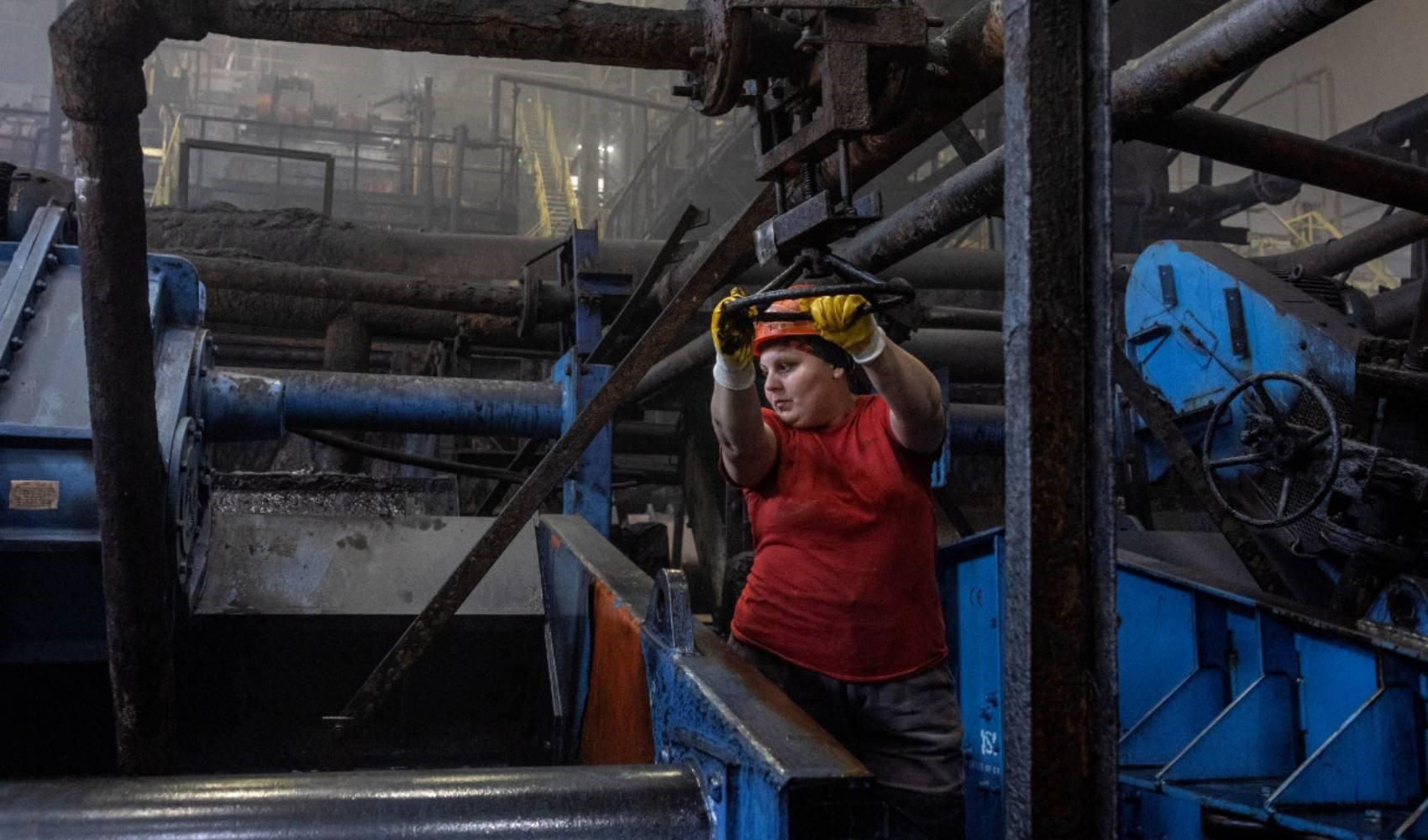
The Russia-Ukraine war, which began with Russia's invasion attempt of Ukraine, has left 2 and a half years behind. Due to the war, hundreds of thousands of men on both the Russian and Ukrainian sides have been sent to the front lines.
Particularly in Ukraine, there is almost no male population left to work in daily life due to the need for soldiers. In this situation, women have had to replace men who previously worked in heavy labor jobs in daily life. The American newspaper The New York Times wrote an article describing the labor shortage in Ukraine.
Here is the NYT article:
"Yatsina is one of 130 women who have started working underground in the mine since Russia's full-scale invasion of Ukraine in February 2022. They now operate conveyors that carry coal to the surface, work as safety inspectors, or drive trains that connect different parts of the mine. Serhiy Faraonov, deputy head of the mine operated by DTEK, Ukraine's largest private energy company, said, "Their help is huge because many men have gone to fight and are no longer available." He said that about 1,000 male workers at the mine, or about a fifth of the total workforce, had been drafted. To help fill the gap, the mine has hired about 330 women.
'WOMEN ARE BECOMING TRUCK OR BUS DRIVERS'
Following the decline in the male workforce due to conscription in Ukraine, more Ukrainian women have begun doing jobs traditionally dominated by men. Women are becoming truck or bus drivers, welders in steel factories, and warehouse workers. Thousands have also joined the army as volunteers. According to experts, these women are reshaping a male-dominated workforce shaped by prejudices inherited from the Soviet Union. Hlib Vyshlinsky, executive director of the Kyiv-based Centre for Economic Strategy, said, "There was a perception that women were second-class and less reliable workers."
Vyshlinsky said that Ukrainian women had long been excluded from certain jobs not only because of physical demands, but also because such roles were considered too complex for them. Noting that women could drive trolleybuses but not trains, he said, "Everything was full of clichés."
'THREE-QUARTERS OF UKRAINIAN EMPLOYERS ARE EXPERIENCING LABOR SHORTAGES'
The women flooding into the Ukrainian labor market carry echoes of the British women (munitionettes) who worked in arms factories during World War I and the women who went to work in the United States during World War II (commemorated in the iconic Rosie the Riveter posters). However, economists say that even with women entering the workforce, it will not be enough to replace all the male workers who have left. A recent survey showed that three-quarters of Ukrainian employers are experiencing labor shortages.
According to the World Bank, 47% of Ukrainian women were working before the war. Vyshlinsky said that since then, about 1.5 million female workers, or about 13% of the total, have left Ukraine. "The proportion of women working in Ukraine right now is higher than it was before the war," Vyshlinsky said. However, for the country to overcome its labor shortage, a very large number of women would need to leave Ukraine.
FORMER SHOP ASSISTANT, NEW MINER
28-year-old miner Dmytro Tobalov said, "Many women said they joined the Pokrovsk mine, owned by Ukraine's largest steel producer Metinvest, because it offered stable jobs in an economy devastated by war." Valentyna Korotaeva, a 30-year-old former shop assistant in Pokrovsk, said she lost her job after a Russian missile landed near the shop and the owners packed up and left.
'THERE IS NOWHERE ELSE TO GO'
She now works as a crane operator at the mine, moving large metal machines that are under repair in a warehouse. How long Korotaeva can keep her job will depend on the situation on the front line, which is just 13 kilometers away from the mine. Russian forces have been approaching Pokrovsk in recent weeks. Russia frequently bombs the region, and mine management has prepared evacuation plans in case it becomes too dangerous to stay there. Korotaeva, a mother of two, said, "It's a scary situation. But for now, I'm staying because there are schools and kindergartens here. There is nowhere else to go."
News Source: 12punto
Most Read

Striking picture for Özgür Özel's 'New Party'

Özgür Özel gives a dated response regarding the number of resignations

Forest fire in Antalya brought under control

The PKK opening and Özgür Özel’s path!..

How did the newspapers view Özgür Özel's farewell to the CHP?

He killed his wife by slitting her throat: Their children witnessed the moments

What did the CHP do?

Özel’s new party move in the world press

The New CHP, against CEHAPE

From self-efficacy to despair