

Strait of Hormuz tension at Iran-US summit: Iranian delegation leaves talks
During quadrilateral talks held between Iran and the US in Switzerland, harsh statements regarding the Strait of Hormuz escalated tensions on the table; the Iranian delegation left the meeting following threats from US President Donald Trump.



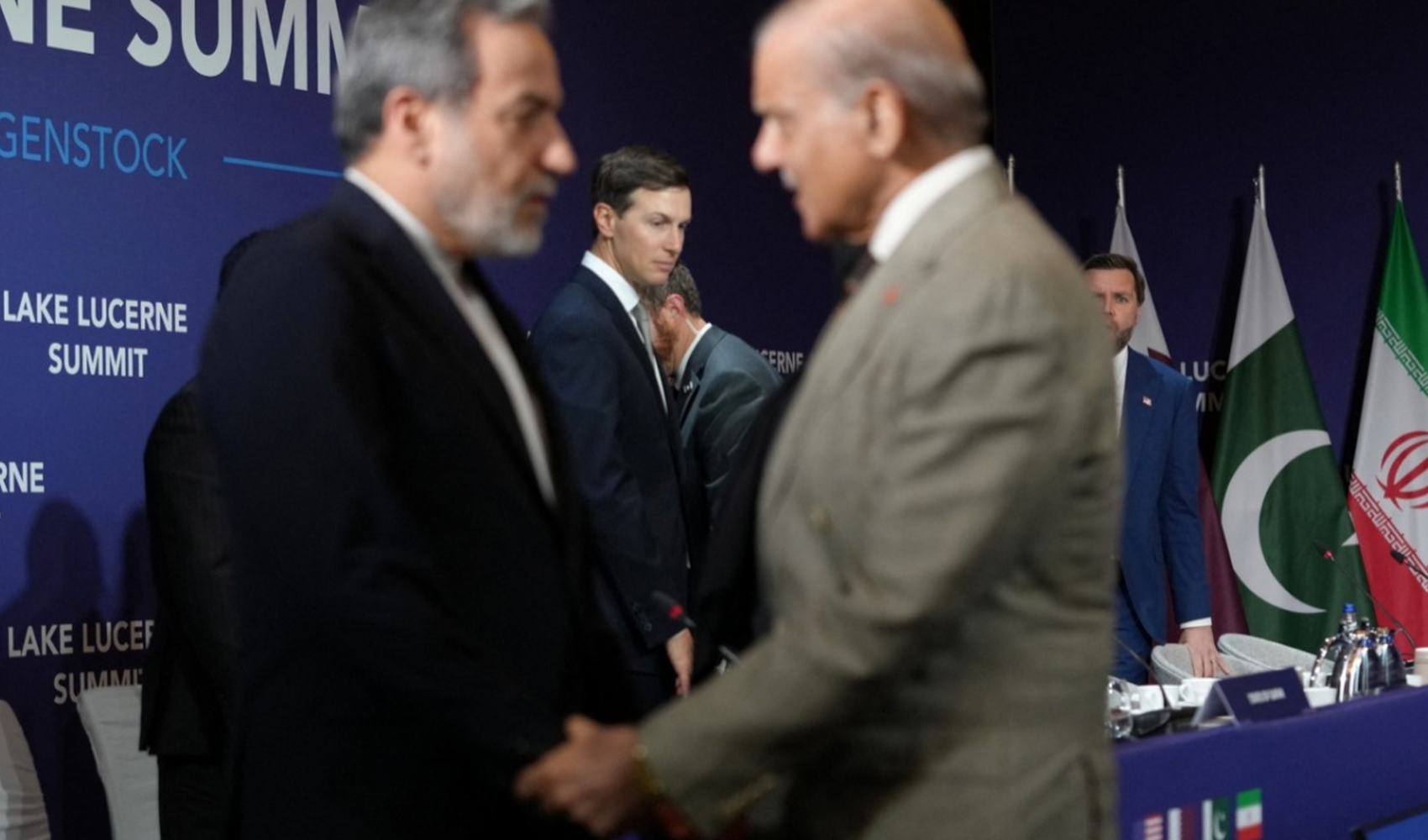
The summit, held in the city of Buergenstock on the shores of Lake Lucerne in Switzerland, brought together representatives from the US, Iran, Pakistan, and Qatar. This critical meeting also included representatives from Pakistan and Qatar, who are mediating for the resolution of regional issues, primarily the ceasefire in Lebanon. The main agenda of the quadrilateral summit was, in particular, the claims that Iran could close the Strait of Hormuz and the potential effects of this on global oil transportation.
It was learned that before the summit began, the Iranian delegation held preliminary talks with US officials under Qatari mediation. These meetings aimed to establish a more lasting peace in the Middle East and to solidify a 60-day ceasefire between the two countries.
TRUMP'S ULTIMATUM ON THE STRAIT OF HORMUZ
US President Donald Trump issued stern warnings to Iran in an interview with American television. In his statements to Fox News, Trump mentioned that he had spoken with Iranian officials and stated, "If you close the Strait of Hormuz, you won't have a country left after that. You won't even be able to return to your country."
Furthermore, although Trump stated in his social media posts that no fees would be charged for those passing through the Strait of Hormuz during or after the 60-day ceasefire period, he signaled in his assessment to Fox News that if the peace environment is disrupted, fees could be charged for passage. Suggesting that the US could be the "guardian angel" of the Strait of Hormuz, Trump said, "We can take 20 percent of the oil."
While tensions in the region rose following Trump's remarks, the US President also claimed that British Prime Minister Keir Starmer would resign.
CLEAR RESPONSE FROM IRAN: "WE DO NOT CARE ABOUT THREATS"
Mohammad Bagher Ghalibaf, Speaker of the Iranian Parliament and head of the negotiation delegation, took a firm stance against the threats from the US. Ghalibaf stated, "Do they not think at all that if threats had achieved a result, they would not have fallen into today's desperation? We do not take the Americans' threats seriously."
Emphasizing that US officials should be careful with their tone, Ghalibaf said that the Iranian Armed Forces are ready to respond to potential threats in a different way. Following these statements, the Iranian delegation left the meeting hall in protest against Trump's threats.
US Vice President JD Vance stated that diplomatic traffic for the sake of peace in the region is continuing and that significant progress has been made in the last few hours. Vance said, "What we are trying to achieve is to transform the Middle East by working together through diplomacy."
Reiterating that President Trump's instruction was to "turn a new page," JD Vance stated that major steps have been taken in recent days to maintain the ceasefire in Lebanon. Vance also pointed to the difficulty of diplomatic processes in the region, saying, "These types of ceasefires are always a bit painful."
News Source: 12punto
Most Read

Striking picture for Özgür Özel's 'New Party'

Özgür Özel gives a dated response regarding the number of resignations

Forest fire in Antalya brought under control

The PKK opening and Özgür Özel’s path!..

How did the newspapers view Özgür Özel's farewell to the CHP?
Houthis strike Saudi-owned tanker

What did the CHP do?

Özel’s new party move in the world press

The New CHP, against CEHAPE

From self-efficacy to despair