

The background of the Israel-Hamas deal revealed
Weeks of negotiations between Israel and Hamas, mediated by Qatar and the US, finally resulted in the release of hostages and Palestinian prisoners on Friday. The Guardian reports on the talks that have been ongoing since October.



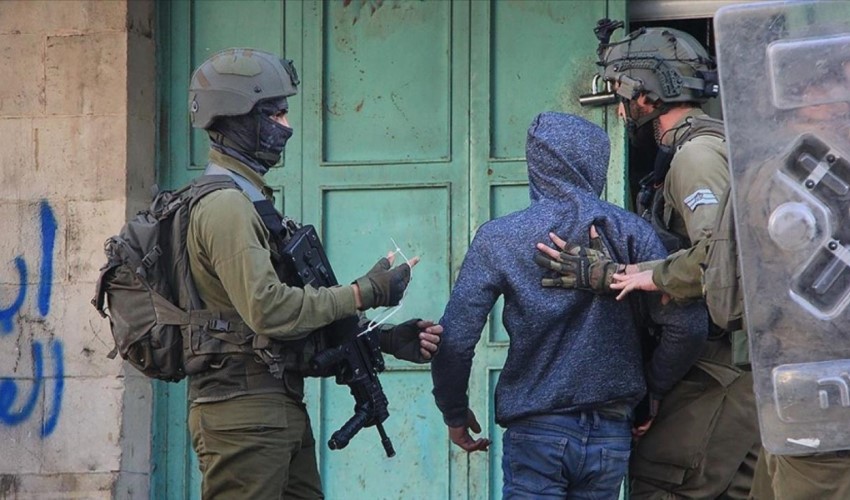
The Guardian has reported on the background process of the agreement reached between Israel and Hamas, detailing the events that have unfolded since October.
The massacre of Israeli civilians on October 7 was intended to inflict a permanent wound on Israel. The hostage-taking act had other motives as well: to curb Israel's retaliation and to exchange them for Palestinian prisoners in Israeli jails. Seven weeks later, it is clear that this event has functioned more as a bargaining chip than a deterrent.
The 240 hostages in Gaza did not stop the intense and relentless bombardment of Gaza or the ground offensive on October 27. However, now, nearly a month later, a four-day pause has been accepted, likely when it suited the Israel Defense Forces (IDF). If the ongoing discussions regarding the exchanges can be overcome, the ceasefire might be extended for a few more days, but Israel has left little doubt that the war will continue.
DREW THE REACTION OF FAMILIES
Israeli Prime Minister Benjamin Netanyahu tried to prevent the voices of the hostages' families from dominating the narrative of the war, fearing that it would slow the momentum of the military response to the October 7 attack and the goal of permanently dismantling Hamas. Netanyahu realized that the families were a potential political threat. Like much of Israel, they held him responsible for Israel's failure to protect its people, and Netanyahu was reluctant to face them directly.
When he finally agreed to meet with only the elected representatives of five families on October 15, it caused a scandal. After the meeting began, four more relatives of hostages, previously unknown to the families, appeared. It was stated that one of them urged Netanyahu to "act cool-headed and determined" and not to let the suffering of the hostages and their relatives distract from the military operation. While Netanyahu's intervention caused chaos in the room, the families claimed they were trapped by carefully staged, politically convenient theater.
BIDEN SET A PRIORITY REGARDING THE PROCESS
Netanyahu hugged the relatives in front of the cameras, but they began to approach him with even more suspicion and warned that if they were played again, they would ask US President Joe Biden to represent their interests. Two days before Netanyahu's meeting, Biden had spoken at length with the families of 10 American citizens who were still missing. Presidential aides who were in the Oval Office when he made the Zoom call said it was one of the "most heartbreaking things" they had ever experienced. Biden extended the call until every family had a chance to speak and express their feelings.
Shortly after, when Biden landed in Tel Aviv for a one-day trip on October 18, he met with the families in an even more emotional encounter. Once again, his subsequent meetings with Israeli officials were delayed to make time for the hostages, and US officials said he made the status of the hostages the main theme of his meetings with Netanyahu later that day.
The ruling family of Qatar, which has long hosted Hamas representatives in Doha, contacted the administration a few days after October 7 to establish a Qatar-US-Israel working group on the hostage issue. This also required the contribution of the Egyptians, whose spy chief Abbas Kamel has long served as the primary interlocutor for both Hamas and the Palestinian Islamic Jihad in Gaza. Kamel had brokered a ceasefire two years ago and delivered critical messages during the closing stages of that agreement.
QATAR AND THE US TOOK ACTION
US National Security Advisor Jake Sullivan appointed Middle East coordinator Brett McGurk and Deputy White House Counsel Josh Geltzer as US representatives in this group, whose existence was kept hidden from the rest of the administration at the request of the Qataris and Israelis. Every morning, McGurk had an early phone call with Qatari Prime Minister Sheikh Mohammed bin Abdulrahman Al Thani regarding Qatar's contacts with Hamas. McGurk would then brief Sullivan, who would then brief Biden. The President also occasionally joined the meetings with the Qataris. A senior US official said, "This unit established processes that proved it had direct reach to Hamas."
The secret unit's process was tested with the release of two American hostages, Judith Raanan and her young daughter Natalie, on October 20. As they were taken on a potentially dangerous journey toward the Rafah border crossing, their progress was monitored live by Sullivan and McGurk from the White House. As soon as they were met by a US diplomat on the Egyptian side, Biden called Natalie's father to confirm they had been released. Four days later, two Israeli hostages were released, and work accelerated on a much more ambitious exchange where Mossad director David Barnea was the lead official for the Israeli side and worked closely with his US counterpart, CIA chief William Burns.
THE PROCESS BECAME CLEAR ON OCTOBER 25
The outlines of the hostage deal had taken shape on October 25 after Hamas offered to release not only women and children but also the elderly and the sick in exchange for a five-day ceasefire and the release of a larger number of Palestinians. However, the Israelis were not convinced. Hamas provided neither a list of the hostages nor proof that they were alive. They told negotiators that they could not give the exact number of hostages without a ceasefire because multiple groups, including civilians, were holding them in different parts of Gaza, and even Hamas could not locate them all. The Netanyahu government, determined to compensate for the security failures that allowed the Hamas attack, viewed Hamas's initial offer as a maneuver to block Israel's impending ground operation.
The Americans accepted this but suggested as a compromise that the offensive be conducted in phases and paused after each phase if a real opportunity for a prisoner exchange arose. The initial attacks, led by tanks and infantry, began on October 27. The ground offensive did not disrupt the flow of hostage talks, but a few days later, the talks were suspended following two devastating airstrikes on the Jabalia refugee camp outside Gaza City, which resulted in the deaths of more than 100 people. According to a source familiar with the talks, Hamas negotiators in Qatar were angered by the loss of life and briefly walked away from the table.
ISRAEL DEMANDED PROOF
Within a few days, Sinwar made contact again with a better offer, suggesting that Hamas was ready to accept a shorter ceasefire in exchange for 50 women and child hostages. In an attempt to build trust between the parties, negotiators proposed a compromise of releasing 10-15 hostages in exchange for a shorter ceasefire. Barnea and Burns flew to Doha on November 9 to discuss the details and logistics of the deal, but the sticking point for the Israelis remained the same: The lack of details on who would be released or proof that the hostages were still alive and under Hamas's control.
According to the White House account, it was Biden who broke the deadlock by calling the Emir of Qatar, Sheikh Tamim bin Hamad Al Thani, on November 12. According to a senior US official, the President told the ruler "enough is enough" and stated that without details on the age, gender, and nationality of the 50 hostages in question, "there was no basis to move forward."
NEGOTIATIONS STALLED
Shortly after, the necessary list appeared, and it seemed as if a final agreement had been reached. However, events in Gaza slowed progress in Doha again, and Sinwar went silent. Israeli tanks and soldiers surrounded Al-Shifa Hospital in Gaza; it was said that the hospital was on top of a vast Hamas command bunker, a claim that had long been denied by Hamas. On November 15, Israeli forces raiding the hospital later discovered a small cache of weapons inside and tunnels beneath the facility.
Sinwar demanded that the IDF leave the complex. The Israelis flatly refused but offered to take the necessary steps to keep the hospital open. In Doha, Hamas negotiators were visibly unhappy with the tension in Gaza, but they remained at the negotiating table. After two days of silence, Sinwar re-established contact with both Egyptian spy chief Kamel and Hamas's political wing in Qatar, announcing that the hostage deal was still on the table.
"WE NEED THIS DEAL"
It was Netanyahu's turn to face pressure from the Oval Office. By then, the Israeli prime minister was more inclined to reach a deal. The organization of hostage families had strengthened their campaign on the domestic front, including protests in front of Netanyahu's residence, and public support was growing. According to a US official, after a meeting in Tel Aviv, Netanyahu grabbed McGurk's arm and said, "We need this deal."
For the last few days, the decision was in the hands of Netanyahu's cabinet. The Prime Minister could claim the support of Biden, whom he praised for improving the deal in Israel's favor, and the Israeli security forces, who insisted that the hostage deal would not affect their capacity to destroy Hamas. The cabinet voted to approve the deal on Wednesday morning, but Netanyahu pulled one last surprise by announcing that the International Committee of the Red Cross (ICRC) could visit the remaining hostages as part of the deal, an announcement that came as a surprise to the organization and likely the negotiators. According to Qatari foreign ministry spokesperson Majed Al-Ansari, Doha set up its own operations room to monitor the situation minute by minute by establishing contact with the ICRC, Hamas's political office, Israeli officials, and Egyptian diplomats.
News Source: 12punto
Most Read

Striking picture for Özgür Özel's 'New Party'

The PKK opening and Özgür Özel’s path!..

How did the newspapers view Özgür Özel's farewell to the CHP?

He killed his wife by slitting her throat: Their children witnessed the moments

What did the CHP do?

Özel’s new party move in the world press

Fire at TUSAŞ engine factory in Eskişehir under control

The New CHP, against CEHAPE

From self-efficacy to despair

Kılıçdaroğlu's first message on Özgür Özel's new party announcement