

The Turkey formula after the Strait of Hormuz blockade
Forced to halt maritime oil shipments due to the US blockade in the Strait of Hormuz, Iran is turning to alternative transport routes as its export channels narrow. With storage capacity in the country filling up rapidly, eyes have turned to land and rail transport via Turkey and neighboring countries.



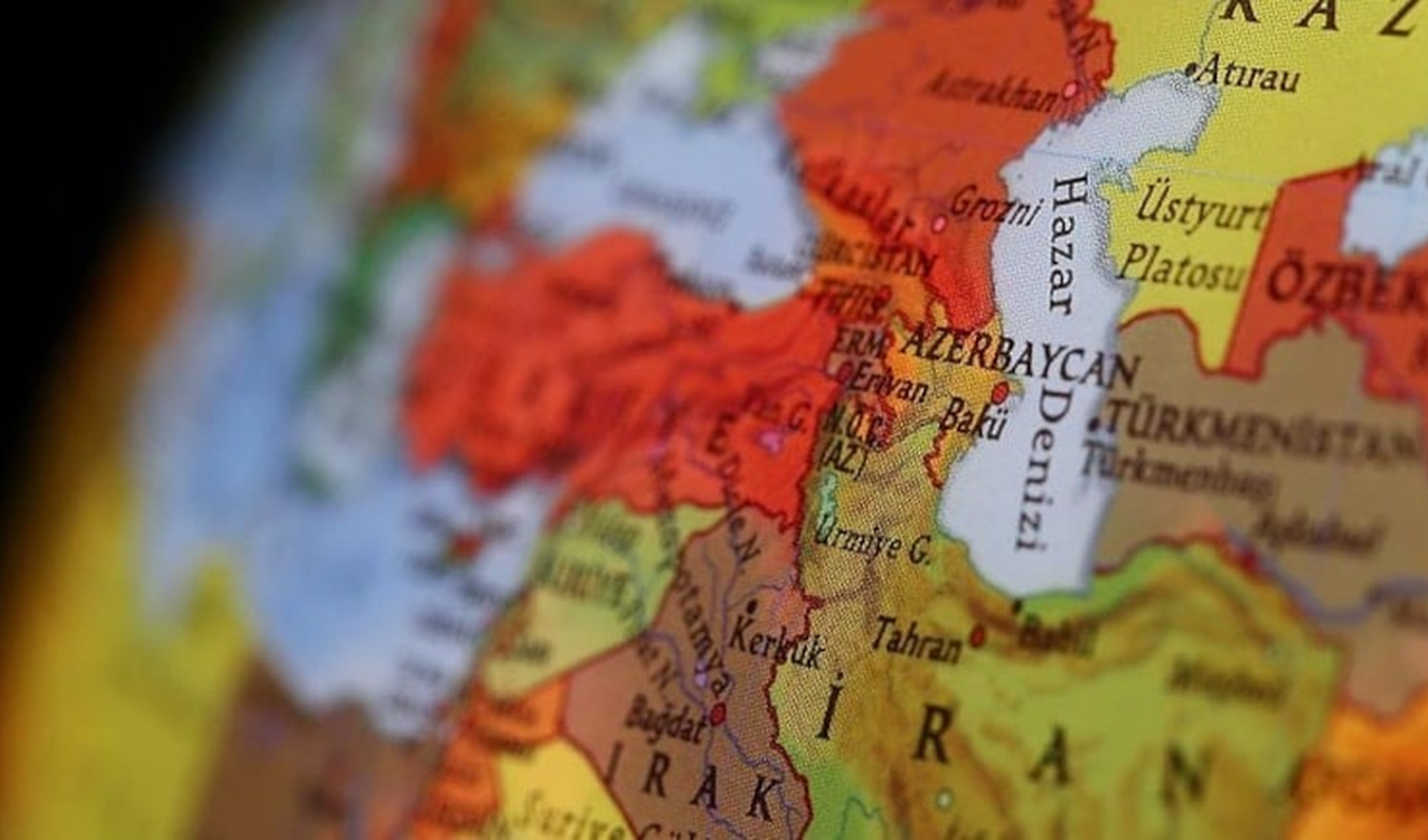
The increased oversight by the US Navy around the Strait of Hormuz has brought Iran's international oil trade to a near-total standstill. As a result, Iran has begun to reduce oil production, and its export-oriented storage capacity has reached a critical limit. The Tehran administration is implementing its long-standing "resistance economy" approach, developed in response to sanctions, to evaluate various alternatives to the current crisis.
The recent rapid decline in export figures and the fact that domestic storage facilities are nearing capacity are leading Iran to seek new avenues for its export activities. According to a senior Iranian official who spoke to Bloomberg, measures have been implemented to prevent capacity overflow in oil production. The congestion at Kharg Island, one of the country's most important export hubs, is particularly noteworthy.
This new pressure applied by the US has also disabled Iran's traditional "shadow fleet" methods—covert shipments, particularly to China, using tankers not subject to international oversight. As a result of the halt in vessel traffic, millions of barrels of oil have begun to sit idle at sea.
IRAN'S RESISTANCE STRATEGIES
In the tight spot Tehran finds itself in, the country's economic management is relying on its experience to overcome this crisis. Hamid Hosseini, spokesperson for the Iranian Oil, Gas and Petrochemical Products Exporters' Union, stated, "We have sufficient expertise and experience; we are not worried." Officials note that new techniques developed in recent years, particularly following the US withdrawal from the nuclear deal in 2018, can be utilized today.
During this period of rising regional tensions, the US administration is attempting to force Iran back to the negotiating table through economic pressure. However, it is notable that the Tehran front is holding high oil prices as a bargaining chip. Experts emphasize that Iran has gained significant expertise in rapidly reducing and subsequently increasing production.
STORAGE CRISIS AND THE SHIFT TO NEW ROUTES
Recent data indicates that Iran has approximately one month of storage space under current conditions. US Treasury Secretary Scott Bessent highlighted that the country's main export point, Kharg Island, will reach capacity in a short time, stating that this is beginning to exert negotiating pressure on Tehran.
However, Iranian exporters aim to strengthen their export capacity via land and rail lines against the possibility of the sea route closing. Hamid Hosseini notes that it is possible to make shipments by road to countries such as Turkey, Pakistan, Afghanistan, and Uzbekistan. Additionally, rail transport to China remains among the options, albeit at a higher cost.
PRESSURE ON THE OIL SECTOR CONTINUES TO MOUNT
According to Antoine Halff, co-founder of the data and research firm Kayrros, there is "serious stress" in the Iranian oil system at present. Slowing down production is emerging as a necessity. Nevertheless, the Iranian administration aims to be able to rapidly restore its production capacity to previous levels should the embargo be eased.
Brett Erickson, a director at Obsidian Risk Advisors, states that the intense economic pressure from Washington on Tehran will not yield results as quickly as expected, assessing that "these regimes do not surrender; they adapt." It remains a matter of curiosity to what extent Iran's "resistance economy" strategy will be able to withstand US economic restrictions in the coming weeks.
News Source: 12punto
Most Read

Striking picture for Özgür Özel's 'New Party'

The PKK opening and Özgür Özel’s path!..

How did the newspapers view Özgür Özel's farewell to the CHP?

He killed his wife by slitting her throat: Their children witnessed the moments

What did the CHP do?

Özel’s new party move in the world press

Fire at TUSAŞ engine factory in Eskişehir under control

The New CHP, against CEHAPE

From self-efficacy to despair

Kılıçdaroğlu's first message on Özgür Özel's new party announcement