

US nuclear energy push: Washington, which opposes Iran, wants to boost its own industry with the 'atom'
The inconsistency in the United States' approach to nuclear energy has once again sparked debate. Washington, which has caused regional crises over Iran's nuclear program, is now arguing that nuclear investments must be increased to combat the energy crisis within its own borders.



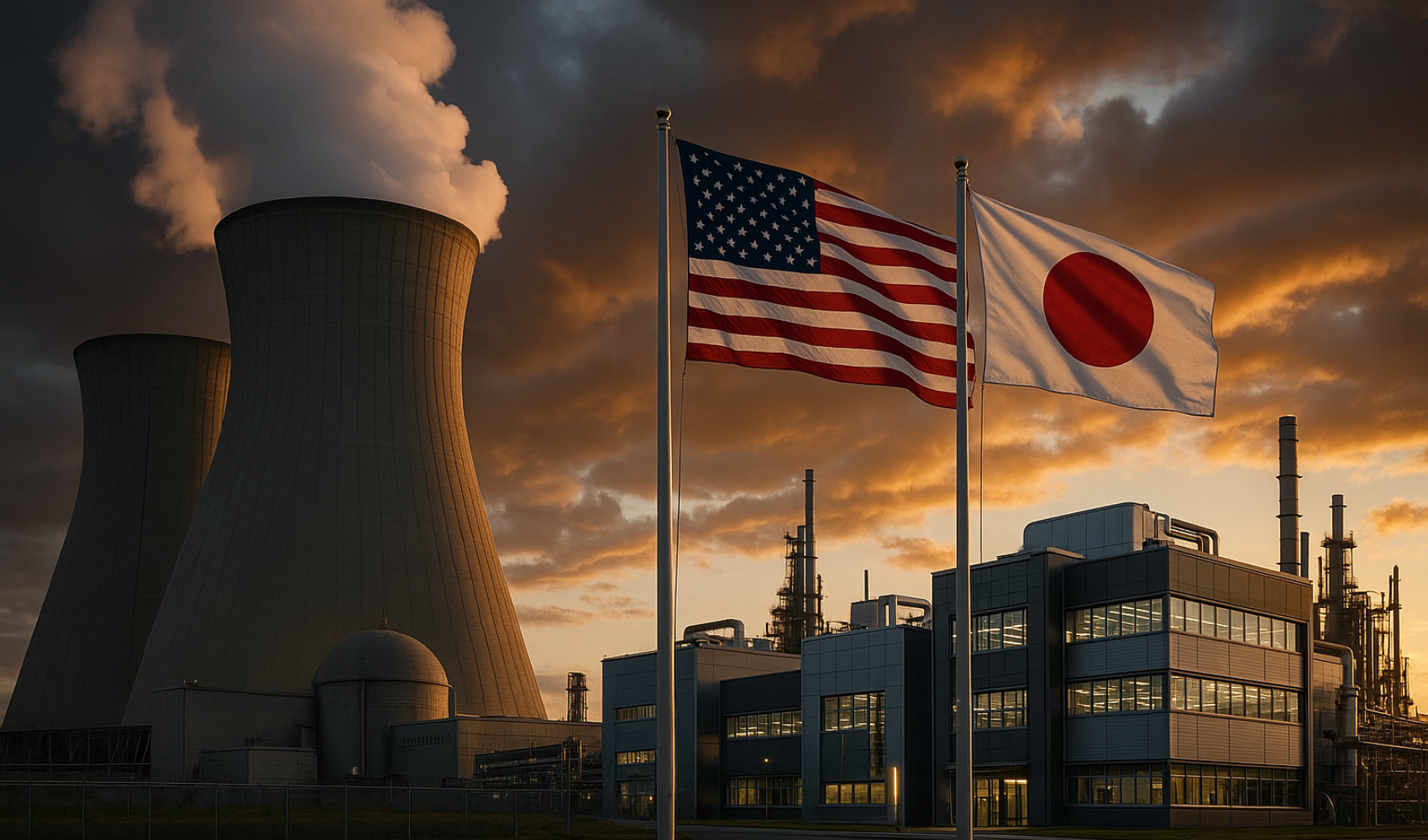
While the US administration continues military and diplomatic operations to eliminate Iran's nuclear capacity, it is preparing to pave the way for nuclear innovation at home for the sake of energy independence and economic development. A joint article by American politician Newt Gingrich and energy analyst Jason Hayes, published on Fox News, has brought this contradiction to light.
The article underscores the need for cheap and uninterrupted energy for American industry to become more competitive. As a solution, it proposes the widespread adoption of next-generation small modular reactors (SMRs). Stating that "our industry is thirsty for energy, and the path to prosperity lies through nuclear transformation," the authors point to the slowing effect of the country's nuclear regulatory body (NRC). It is emphasized that the proliferation of advanced nuclear technologies has been delayed for years due to existing bureaucracy.
It is also suggested that fears regarding nuclear energy stemming from the past should be put aside. While it is noted that modern reactors have high-level safety measures, it is stated that these technologies can produce massive amounts of energy with small amounts of fuel, operate on minimal land, and do not create air pollution. Regarding waste problems, the article provides this noteworthy data: all the nuclear waste produced by America's nuclear industry in 60 years would fill an area the size of a football field.
Waste is defined as a manageable byproduct rather than a crisis because it can be reprocessed. It is argued that the real danger is the lack of energy supply and the resulting economic instability.
On the other hand, it is stated that advanced reactors do not only produce electricity but could also play a critical role in the production of steel and fertilizer, which require high temperatures and are fundamental needs of the industry.
A CALL TO REWRITE NUCLEAR ENERGY IN AMERICA
Gingrich and Hayes describe the energy policies of past administrations as "weak" and note that nuclear technologies are no longer an option but a necessity for the US. They underscore that nuclear investments must be increased for both economic and national security reasons.
The article also includes criticism that Russia and China are bringing their own reactors to the world market with state-backed financing, while US developers are getting stuck in bureaucracy. The authors emphasize that the loss of American influence means a gain for Moscow and Beijing.
The commentary is made that "either we will set the gold standard that ensures security and prevents the proliferation of nuclear weapons to the world, or the global energy future will be left in the hands of authoritarian regimes." While recalling that the US has historically stood out with bold technological moves, it is stated that energy will be the fundamental element to support this new boom.
Another noteworthy development is the new $40 billion nuclear energy partnership announced by the US and Japan. This cooperation, which aims to break China's regional energy hegemony, is interpreted as an indication that Washington is preparing to play big in strategic nuclear investments.
It is now possible to see that America has placed nuclear energy at the top of its agenda for both national security and industrial competitiveness, not only in statements but also in the new international alliances being formed.
News Source: 12punto
Most Read

Striking picture for Özgür Özel's 'New Party'

Özgür Özel gives a dated response regarding the number of resignations

Forest fire in Antalya brought under control

The PKK opening and Özgür Özel’s path!..

How did the newspapers view Özgür Özel's farewell to the CHP?
Houthis strike Saudi-owned tanker

What did the CHP do?

Özel’s new party move in the world press

The New CHP, against CEHAPE

From self-efficacy to despair