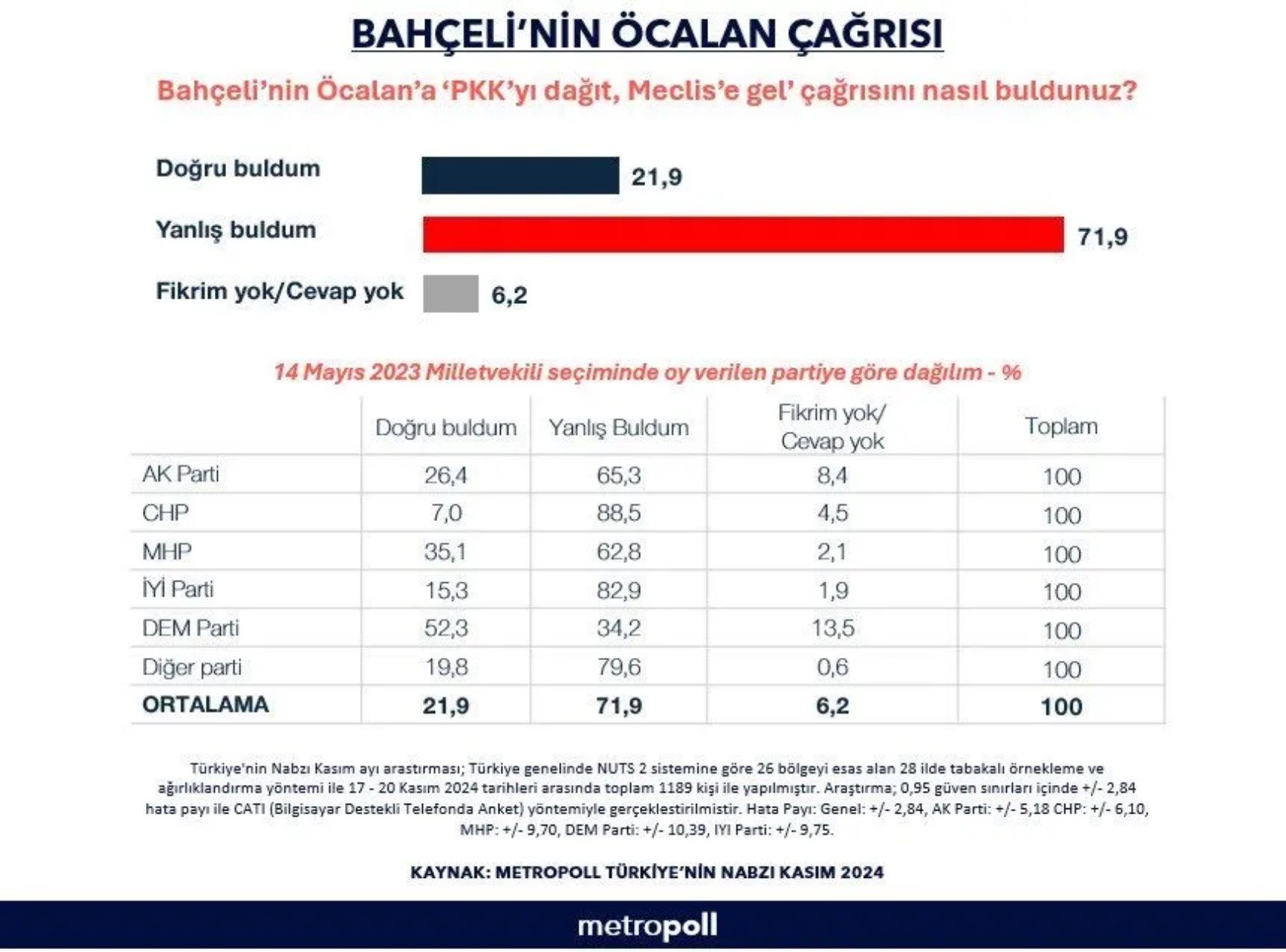
Metropoll survey: What does MHP's electorate think about Bahçeli's Öcalan call?
Metropoll Research asked citizens about the call made by MHP leader Devlet Bahçeli for terrorist leader Abdullah Öcalan. The survey results revealed the perspectives of AKP, MHP, CHP, İYİ Party, and DEM Party voters.
12punto
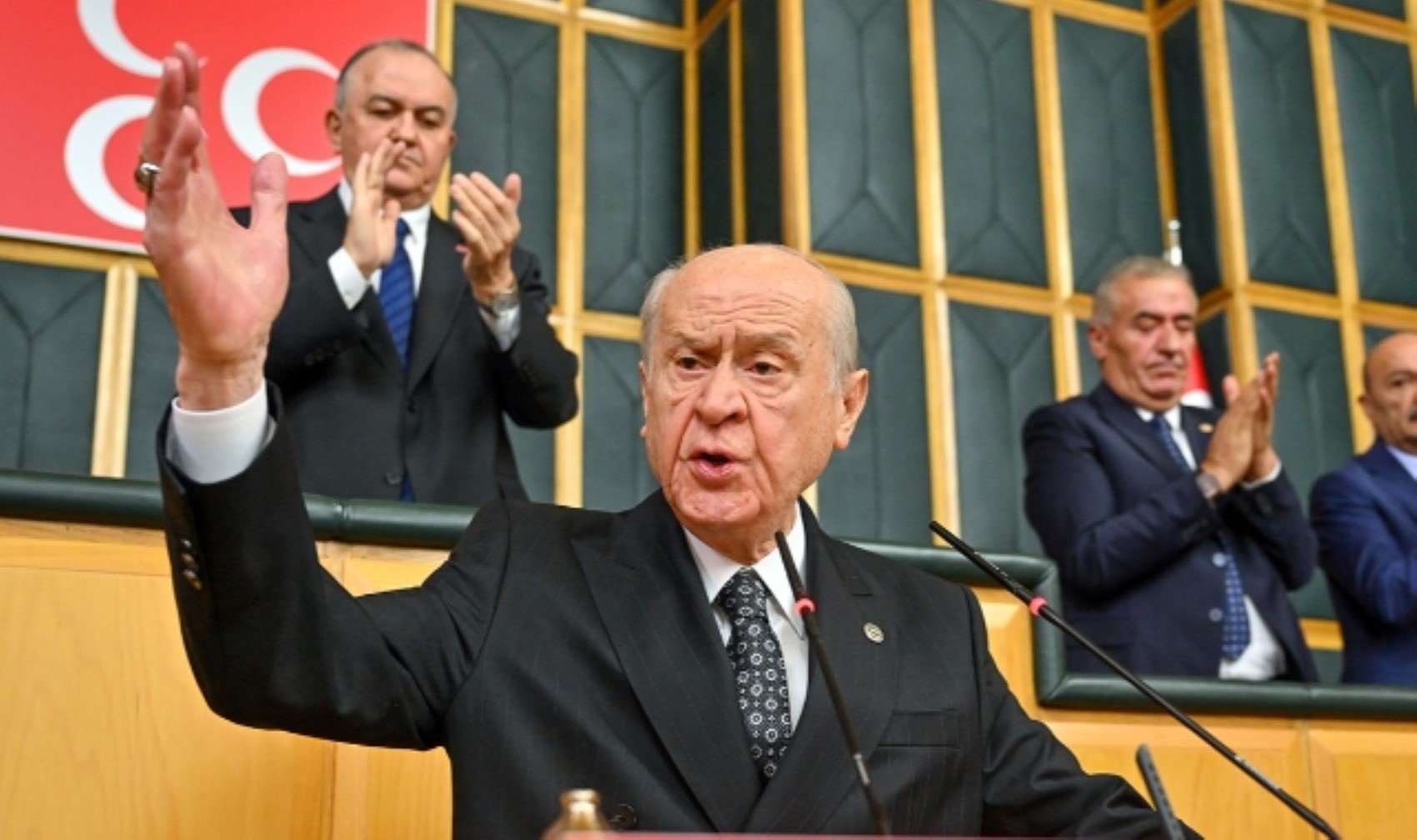
The call made by Nationalist Movement Party (MHP) Chairman Devlet Bahçeli during his party's group meeting, stating, "If the isolation of the terrorist leader is lifted, let him come and speak at the DEM Party group meeting, and declare that terrorism has ended and the organization has been disbanded," has initiated a new process in Turkish politics.
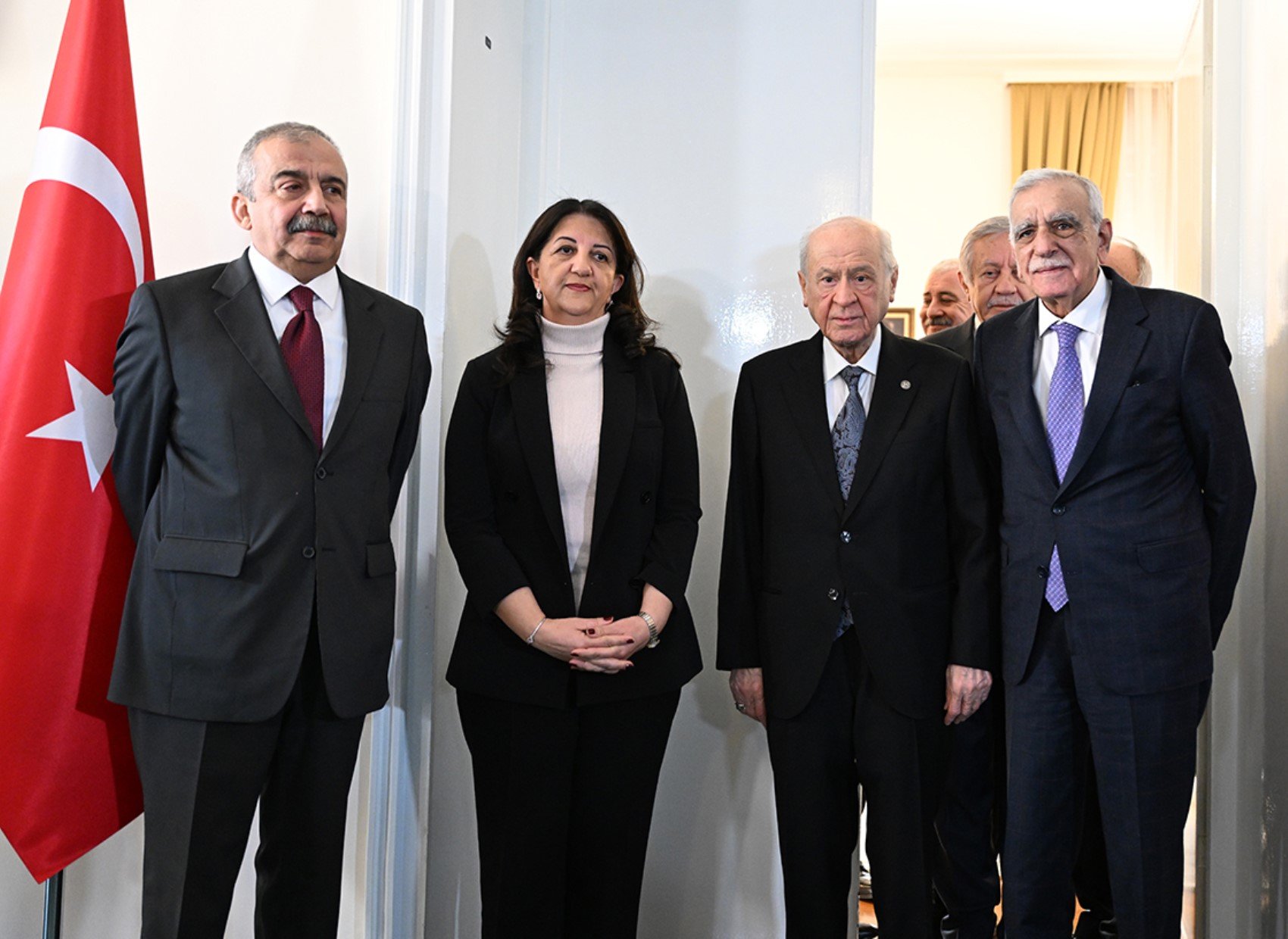
Bahçeli later said, "Let DEM and Imralı meet," and a DEM Party delegation went to Imralı to meet with the terrorist leader Abdullah Öcalan. Subsequently, they visited political parties in the Turkish Grand National Assembly (TBMM).
Metropoll Research measured the public pulse regarding this new process. In the survey conducted between November 17-20, 2024, with 1,189 people in 28 provinces, participants were asked, "How did you find Bahçeli's call to Öcalan to 'disband the PKK and come to Parliament'?" Metropoll Research founder Özer Sencar shared the survey results on his social media account.
According to the survey results, 21.9 percent of participants found Bahçeli's call to Öcalan correct, while 71.9 percent responded that they "found it wrong."
While 26.4 percent of AKP voters found Bahçeli's call "correct," 65.3 percent found it "wrong."
While 88.5 percent of CHP voters found Bahçeli's call wrong, 7 percent chose the "I found it correct" option.
Voters of the MHP, led by Bahçeli, did not support Bahçeli, with 62.8 percent finding the call wrong.

Meanwhile, 82.9 percent of IYI Party voters found Bahçeli's call wrong, while 15.3 percent found it correct.
SUPPORT FOR BAHÇELİ CAME FROM THE DEM PARTY
The greatest support for Bahçeli's call to Öcalan came from DEM Party voters. While 52.3 percent of DEM Party voters said they "found it correct," 34.2 percent responded that they "found it wrong."