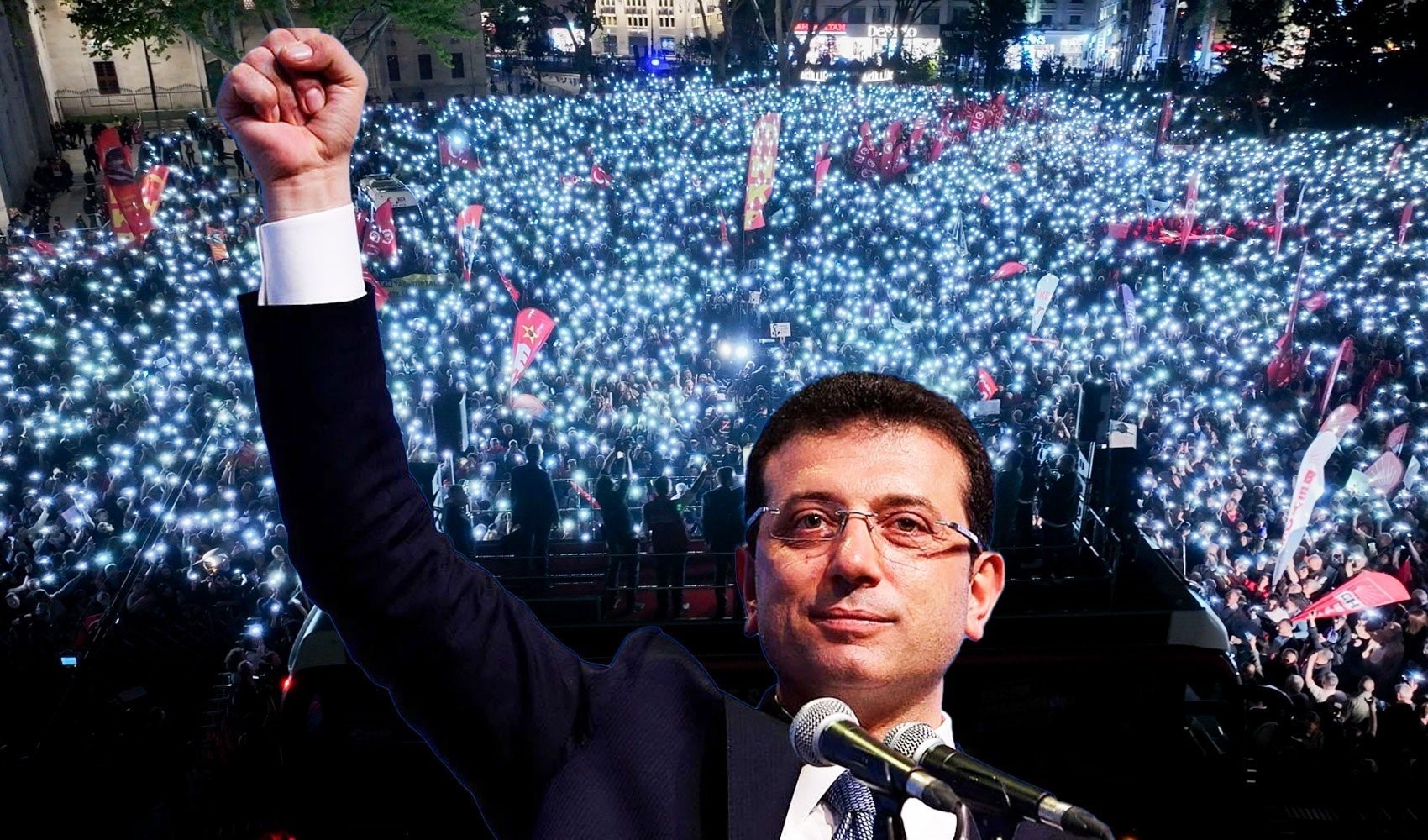
The balance facing İmamoğlu: Nationalist voters or DEM votes?
Nefes Gazetesi columnist Aytunç Erkin, in his article titled "Nationalist votes and İmamoğlu," draws attention to Ekrem İmamoğlu's statements in Le Monde and brings the question "Do Kurdish votes or nationalist votes lead to victory?" to the agenda. Erkin points to the importance of the nationalist voter by conveying the latest poll results and evaluations discussed in Ankara's political circles.
12punto
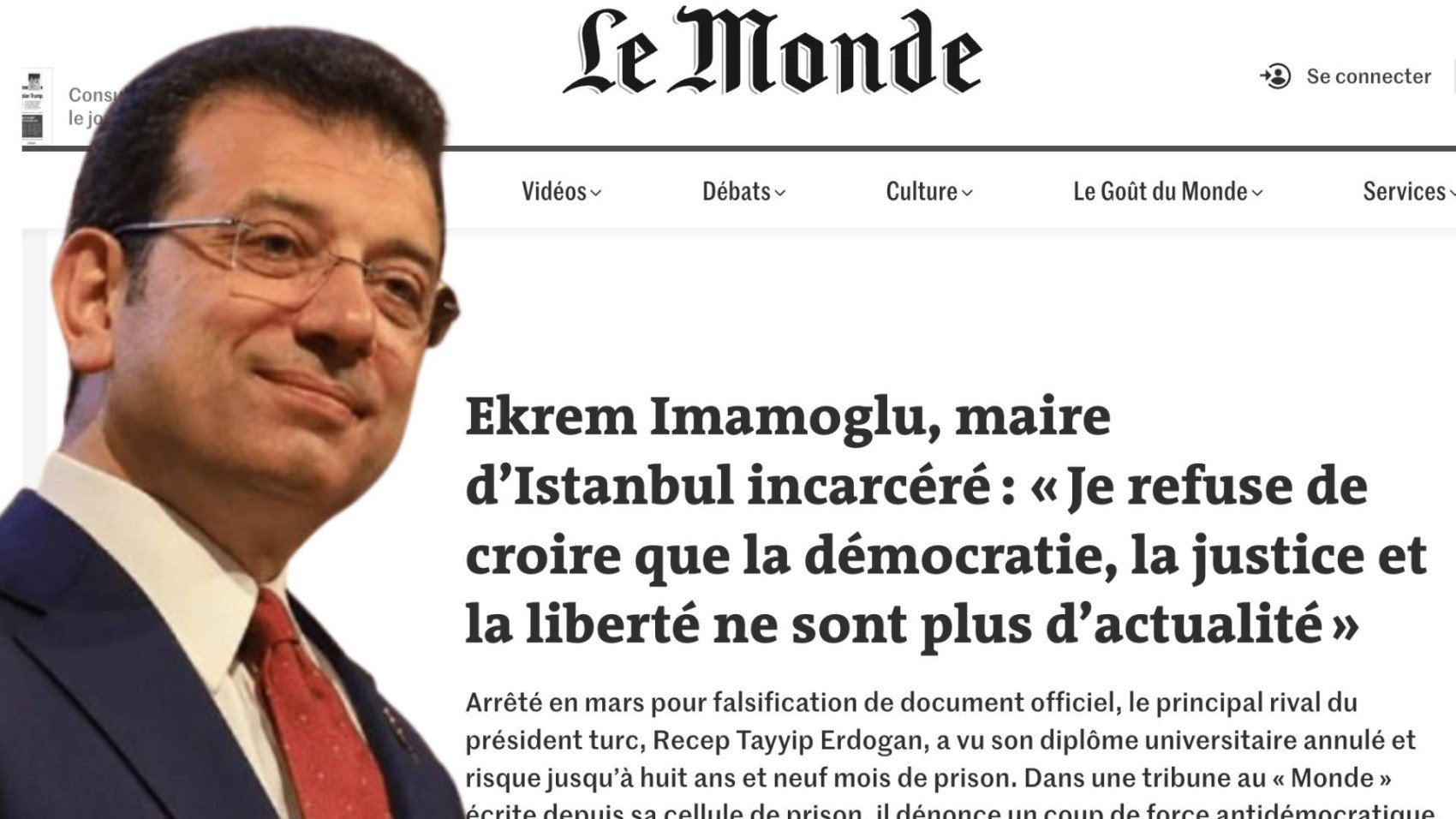
Nefes Gazetesi columnist Aytunç Erkin, in his article titled "Nationalist votes and İmamoğlu," draws attention to the remarks made by CHP's potential presidential candidate and Istanbul Metropolitan Municipality Mayor Ekrem İmamoğlu in an article published in the newspaper Le Monde.

Erkin recalled İmamoğlu's words: "The unfair seizure of my diploma is not the only case against me; there are many other Kafkaesque cases against me: 'insult,' 'corruption,' 'terrorism' (because I dared to put Kurdish candidates on my municipal lists in Istanbul in 2024). This is the system we are fighting against." He wrote that this statement has brought the political debate of "Do Kurdish votes or nationalist votes bring victory?" back to the agenda.
Erkin shared the results of four different surveys published in September, highlighting the nationalist vote percentages:
TEAM Research: 13.8%
PanoramaTR: 14.4%
Metropoll: 23.7%
AREA Research: 24%
In the continuation of his article, Erkin included an assessment from a "friend" who closely monitors Ankara. He reported that the source in question stated, "In 2028, the total for nationalist parties will be 25 percent. The nationalist electorate will be the deciding factor in the presidential election."
The source also stated, "The opposition makes a mistake by saying that nationalist votes are not needed in the presidential election. Ekrem İmamoğlu is making the same mistake, emphasizing in his Le Monde article that he put Kurdish candidates on his lists and that this was an act of courage. Furthermore, the narrative of some circles that 'the decisive voter is the DEM Party' is numerically illogical. It would also be a historical fallacy for some polling companies to try to explain that the elections will be won if the CHP secures DEM votes."
In his article, Erkin also underlined the following question:
"Isn't it the People's Alliance that is making the new opening? Why wouldn't the votes of the AKP-MHP fall?"

Regarding this question, the person Erkin interviewed made the following assessment:
"The answer is in the question. Along with the protest votes coming from the AKP and MHP, the votes of the IYI Party, Zafer Party, and Anahtar Party, plus the votes of reasonable DEM voters, will reach 50 percent plus 1. No one here is saying let's not get votes from DEM. But one must not underestimate nationalist votes or alienate them."
Erkin noted that in Ankara's political circles, voter blocs are roughly evaluated as follows:
25% conservative (AKP/YRP)
25% left-wing (CHP/TİP)
25% nationalist (MHP/IYI Party/Zafer Party/Anahtar Party/BBP)
10% DEM voters
15% apolitical or non-voting electorate
According to this picture, Erkin stated that a candidate who could occupy the intersection of nationalist, conservative, and nationalist-left blocs would have a high chance of winning. At the end of the article, it was stated that parties are already working on new alliances and formulas in line with the 50 percent plus 1 target for the elections expected to be held at the end of 2027 or the beginning of 2028.