Prof. Dr. Şener Üşümezsoy offers a different interpretation of 'major earthquake in Istanbul' scenarios: There is a major fault
As debates continue regarding the expected major earthquake in Istanbul, Geology Professor Prof. Dr. Şener Üşümezsoy has made statements that will create an agenda. Üşümezsoy, who has been closely monitoring fault movements in the Marmara region for years, stated that the 1894 Istanbul earthquake and the 1999 Gölcük earthquake completely released the energy on the Yalova–Çınarcık fault line.
12punto

Prof. Dr. Şener Üşümezsoy has brought a different interpretation to the long-debated "major earthquake in Istanbul" scenarios. Stating that the Yalova–Çınarcık line ended its seismicity with the 1894 and 1999 earthquakes, Üşümezsoy drew attention with his statement: "The wiring is there, but there is no current; as long as there is no stress on the fault, there will be no earthquake."

"The mere existence of a fault line is not a cause for an earthquake. If there is no stress on the fault, an earthquake is not expected," said Üşümezsoy, reopening the debate on risk perception in the Marmara region with his words, "The wiring is there, but there is no current."

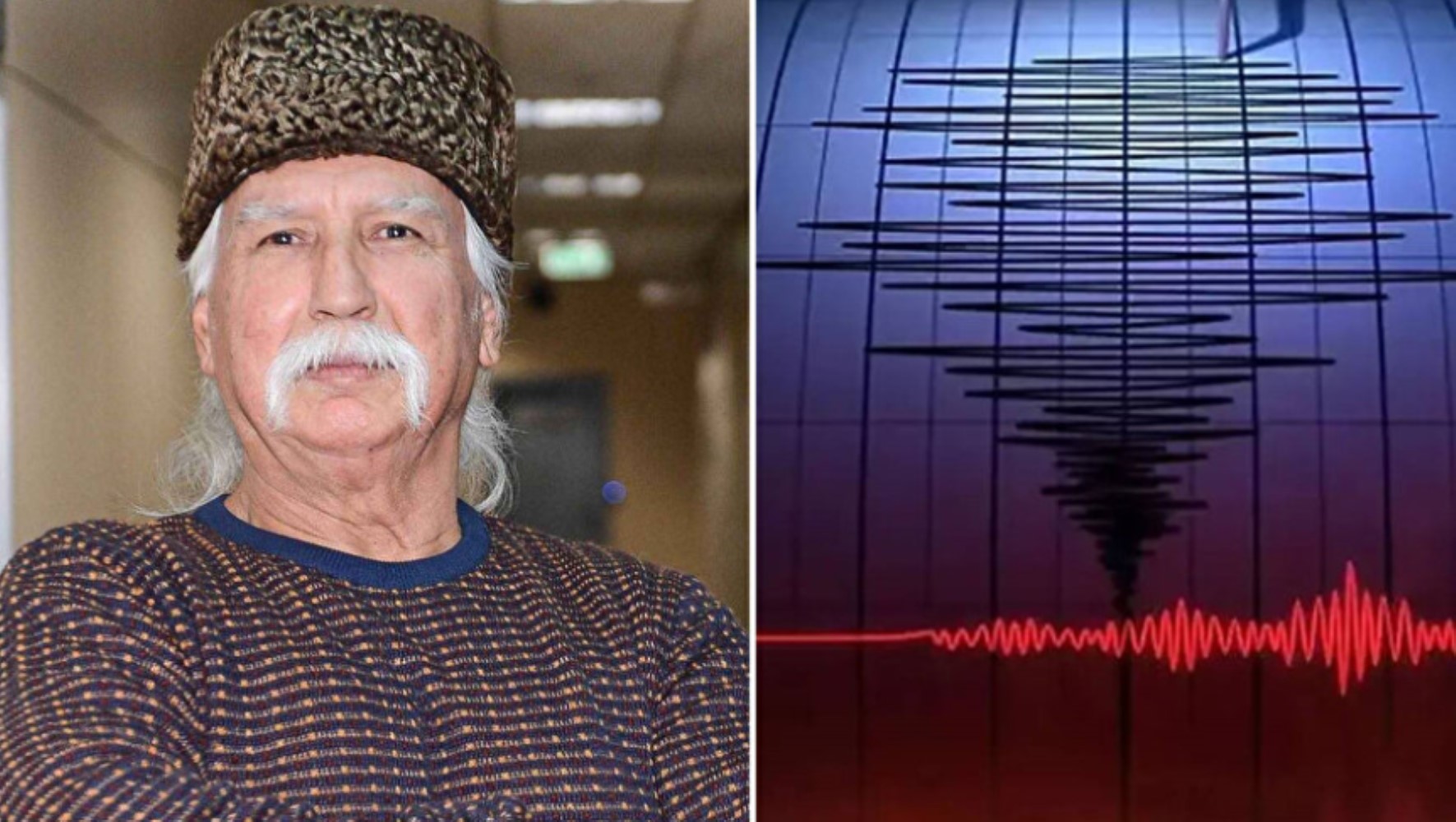
Prof. Dr. Şener Üşümezsoy made statements on his social media account last night regarding the Yalova-Çınarcık-Esenköy fault line. In his assessment, Üşümezsoy noted that while its potential is a 6.5 magnitude earthquake, the stress here was released in 1894.
Üşümezsoy made the following statements:
IF THERE IS NO STRESS ON THE FAULT, THERE IS NO EARTHQUAKE
"On the Yalova-Çınarcık-Esenköy fault line, the wiring is there, but there is no current. We emphasized that this humorous expression refers to the fault that broke on August 17, 1999, which extended from Esenköy towards Bozburun and ended in Teşvikiye (Çınarcık), and that the aftershocks were in Teşvikiye. When we consider the length, size, and depth of the fault here, it is potentially a 6.5 magnitude earthquake, but we can say 'there is 6.5 magnitude wiring,' but there is no current because the fault on the southern edge of the Çınarcık basin broke in the 1894 earthquake, and thus the stress between the block between Istanbul and Mudanya was released. Once this was released, the current—that is, the stress—loaded on August 17 does not allow the fault to break.
However, since the symmetrical fault in Düzce was loaded with stress, it broke on November 12 after August 17. But because the 1894 earthquake released the stress on the Çınarcık-Esenköy-Bozburun line, no significant stress has accumulated there since 1894. The stress loaded in 1999 is a tension that is not suitable for breaking the fault here, not suitable for causing an earthquake. Risk in an earthquake arises from the tension of the fault. To put it humorously, there is a fault, but if there is no stress on the fault, there will be no earthquake."

Stating that the Gölcük Fault is one of the strongest faults in the region, Üşümezsoy said, "In this dimension, on this fault, which broke with a major displacement in 1509, while the Sapanca and Mudurnu faults broke in the east in 1719, the Yalova-Çınarcık fault broke in the west in 1766. In 1894, the Yalova-Çınarcık fault, which did not break with sufficient displacement in the west, mainly saw the Yalova fault break; in contrast, there was no rupture on the Gölcük fault."

Üşümezsoy continued his statements as follows:
"In 1999, the Yalova-Gölcük-Sapanca fault broke. In this sense, the rupture periods of strong faults are longer. Weak faults, on the other hand, break at more frequent intervals because they release all their stress as the rupture stress is different."
"In this sense, looking at the earthquakes affecting Istanbul through the mechanism of the ruptures on the Mudurnu, Sapanca, Gölcük, Yalova, and Çınarcık lines based on whether the faults are strong or weak, there is a rupture history based on a weak fault model, not a classic rupture every 250 years."
"The Yalova fault, which broke in 1894, broke with a very low displacement, and as it progressed towards Çınarcık-Esenköy-Bozburun, the rupture ended west of Çınarcık; stress was loaded in the section extending to the south in 1999."

"The 1894 and 1999 earthquakes ended the stress in the sections starting from the Gulf of Gölcük and reaching to the west of Istanbul."
"The stress caused by the reverse movement between the Armutlu Peninsula and the Islam Mountains was completely released with these last two earthquakes."
'THERE IS NO RISK BECAUSE THERE IS NO STRESS'
"When we say there might be an earthquake potential on the potential Çınarcık-Esenköy-Bozburun fault, this refers to the size of the potential fault. There is no risk because there is no stress. Consequently, there has been no stress on the Yalova-Çınarcık fault since 1999."

"The 1894 and 1999 earthquakes ended the seismicity on the Yalova-Çınarcık line. The stress in the Gulf region has also been released."