Will the earthquakes in the Aegean trigger faults in and around İzmir? Statement from AFAD!
The more than 700 earthquakes that have occurred in the Aegean Sea since January 28 have raised concerns. Measures have been increased, particularly along Turkey's Aegean coast, such as in Muğla. So, will the earthquake swarm in the Aegean trigger faults in and around İzmir? A statement has come from AFAD.
12punto
Anxiety has escalated in the region due to the earthquake swarm occurring in the Aegean Sea. Because the tremors have been concentrated particularly at a point near the island of Santorini, residents of the island have been evacuated. The high-magnitude earthquakes were also felt in and around İzmir. So, will the earthquake swarm trigger fault lines in and around İzmir? A statement has come from AFAD.
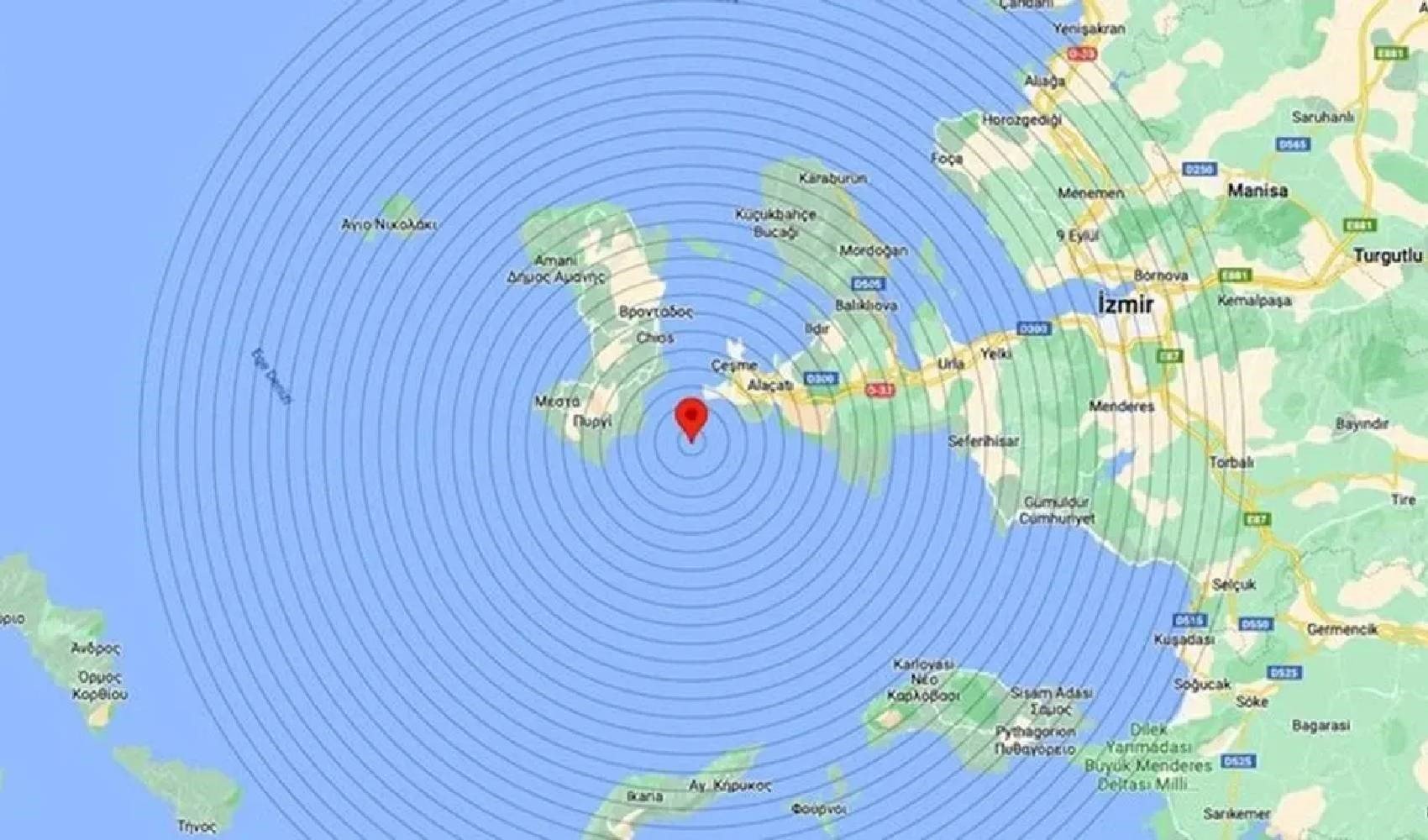
AFAD General Manager Prof. Dr. Orhan Tatar stated that it is not possible for the earthquake swarm recently experienced in the Aegean Sea to trigger active faults in provinces such as İzmir, Muğla, and Aydın.
Tatar made the following remarks:
"We evaluate these earthquakes in the Aegean Sea and around the island of Santorini as an 'earthquake swarm.' The origin and formation of an earthquake swarm can be tectonic or volcanic. There is a debate on this subject, but in fact, the region where Santorini Island is located is one of the most active volcanic belts in the world. We know that there are significant volcanic emissions there. We see that the materials that emerged from the major volcanic eruption that occurred 3,600 years ago reached our Aegean coasts and are currently within today's rocks."
Sharing the information that various volcanic eruptions have occurred in the region where Santorini Island is located in the past, Tatar explained that similar situations such as ash, dust, and steam emissions also occurred during the eruptions in 1600 and 1952.
Prof. Dr. Orhan Tatar recalled that similar seismic activity occurred in the region where Santorini Island is located in 2011-2012, stating, "A large number of earthquakes were recorded over approximately 14 months. A very serious 'state of emergency' was declared at that time. The seismic activity ended after 14 months, and no volcanic activity occurred there. This is, of course, a geological and volcanic hazard. These are important in some parts of the world. Although it may seem like a distant danger to us, there are actually 14 volcanoes in our country that we can call active. They are currently in a dormant state."
Emphasizing that they are closely monitoring developments in the Aegean Sea, Tatar made the following assessment:
"Actually, there is no situation at the moment that requires our citizens to panic. We see that there is an unnecessary and meaningless atmosphere of panic. We are in constant contact with our Greek and Italian colleagues abroad. Domestically, AFAD's Earthquake Advisory Board is evaluating this issue. Many scientists who are experts in the field are also contributing to this process. We have very valuable expert colleagues at our General Directorate of Mineral Research and Exploration (MTA), and they are also involved in this process. AFAD and MTA have prepared a preliminary evaluation report through a joint study. We will share this with our citizens very shortly. There is also some technical and scientific information there."