

New statement from the Court of Cassation regarding the crisis with the Constitutional Court
The Court of Cassation has issued a new statement regarding the crisis with the Constitutional Court. The statement directs a series of criticisms toward the Constitutional Court.



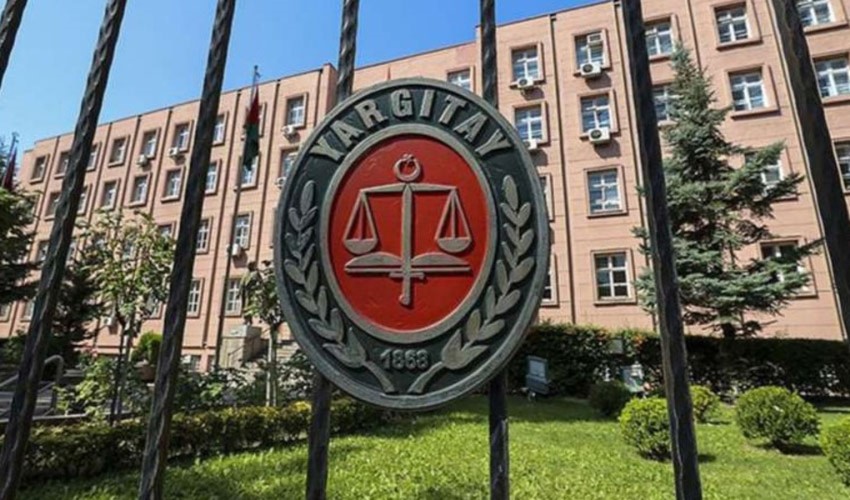
The 3rd Criminal Chamber of the Court of Cassation decided not to comply with the ruling for the retrial and release of Can Atalay, a defendant in the Gezi Park trial who was elected as a deputy from the Workers' Party of Turkey (TİP), following the Constitutional Court's (AYM) decision of a rights violation.
The Chamber decided to send a copy of the ruling to the Grand National Assembly of Turkey (TBMM) to initiate proceedings for the revocation of Atalay's parliamentary seat and to file a criminal complaint with the Office of the Chief Public Prosecutor of the Court of Cassation against the members of the Constitutional Court who issued the violation ruling.
While the decision made by the Court of Cassation is being debated, a new statement has come from the high court.
The written statement from the Court of Cassation, which directs a series of criticisms at the Constitutional Court, included the following expressions:
“Regarding the decisions of the Constitutional Court and the 3rd Criminal Chamber of the Court of Cassation concerning Şerafettin Can Atalay, which have occupied the public agenda, the following statement has been deemed necessary in order to inform the public accurately.
EXHAUSTION OF ORDINARY LEGAL REMEDIES...
As is known, in Articles 146, 154, and 155 of our Constitution, the high courts are organized as the Constitutional Court, the Court of Cassation, and the Council of State, and no hierarchy of superiority is envisioned among them. Like the decisions of the Constitutional Court, all finalized court decisions are binding for everyone.
The Court of Cassation was established on March 6, 1868, has a deep-rooted history of 155 years, is the highest appellate authority of the judicial judiciary, and all of its members consist of high-ranking judges who are experts and experienced in their fields.
According to Article 154/1 of the Constitution, ‘The Court of Cassation is the final review authority for decisions and judgments rendered by judicial courts that the law does not leave to another judicial authority.’ According to Article 154 of the Constitution and Article 13 of the Law on the Court of Cassation, the Court of Cassation has the duty to ensure the equal application of the law across the country in the field of judicial judiciary. The objectivity, certainty, and predictability of the law are the guarantees of equality, legal security, and especially the right to a fair trial.
Article 148 of the Constitution defines the duties and powers of the Constitutional Court, and ‘individual application’ was added to these duties with the constitutional amendment dated 07.05.2010 and numbered 5982, and it began to be implemented as of 2012.
In individual application reviews, it is a condition that ‘ordinary legal remedies must be exhausted’ in order to apply to the Constitutional Court. Furthermore, according to the provision of Article 148/5 of the Constitution, the judicial limit of individual application has been drawn with the provision stating, ‘In an individual application, no review can be made on matters that should be considered in the legal remedy.’
“IT IS NOT AN AUTHORITY AUTHORIZED TO RE-EXAMINE CASES”
In this state, individual application is a secondary type of legal remedy that can be resorted to if unlawful interventions against fundamental rights and freedoms cannot be resolved through legal remedies. It is not an ordinary or extraordinary legal remedy. Therefore, the Constitutional Court is not a court that overturns decisions made by judicial and administrative courts, nor is it an authority authorized to re-examine cases as an appellate or cassation authority.
“THE CONSTITUTIONAL COURT HAS EXCEEDED ITS LEGAL BOUNDARIES”
On the other hand, the fact that the Constitutional Court, in its individual application reviews, occasionally exceeds constitutional and legal boundaries and makes decisions that overturn established precedents developed by the specialized chambers of the Court of Cassation and the Council of State, and that drag the legal system into chaos, causes the effect of final judgment to be completely disabled.
SUPER APPELLATE COURT OUTBURST
On the other hand, with the communication strategy applied through cases that occupy the agenda of a segment of the public, the existing constitutional order has been set aside, and a social perception has been created that the Constitutional Court is a ‘super appellate court.’
The protection of fundamental rights and freedoms is the duty of all judicial bodies, not just the Constitutional Court.
The Turkish judicial system
News Source: 12punto
Related News

Constitutional Court crisis continues! This is how lawyers began their march to the Court of Cassation

Breaking News... Full support for the Court of Cassation from Erdoğan! "Like the Constitutional Court, the Court of Cassation is also a high court"

CHP's Günaydın issues press statement regarding Court of Cassation ruling
Most Read

Striking picture for Özgür Özel's 'New Party'

Özgür Özel gives a dated response regarding the number of resignations

Forest fire in Antalya brought under control

The PKK opening and Özgür Özel’s path!..

How did the newspapers view Özgür Özel's farewell to the CHP?

Houthis strike Saudi-owned tanker

What did the CHP do?

Özel’s new party move in the world press

The New CHP, against CEHAPE

From self-efficacy to despair