



A strange narrative has been circulating lately: that Apple Inc. is actually winning the artificial intelligence race. That falling behind is a conscious strategy. That by not moving fast, they are moving correctly. These interpretations share a common problem: there is no working product to show for it. What is described as a "strategy" is often just a polished version of a delay.
Tim Cook is undoubtedly a strong executive. He has kept Apple at the top in terms of operations, supply chain, and financial discipline. However, creation is a different muscle. Apple has not invented anything new for a long time. More importantly, it can no longer even improve what already exists at the necessary speed. To understand this picture, it is enough to look at Cook's leadership style. In his early years as CEO, when grumblings began on the board of directors, he changed the agenda and bought time by announcing his sexual orientation at an event. This move was masterful in terms of communication. However, it is difficult to see the same success on the product side.
The most visible example of this is Siri. For years, it has been the weakest link in the Apple ecosystem. This is no longer just a user complaint; it is a strategic breaking point. Instead of solving this weakness, Apple prefers to reframe the narrative: "Siri is becoming a platform." A nice sentence. But does it solve the problem? No. Because for something to be a platform, it must first have a core competency. How can a structure that does not understand you connect others to you?
As WWDC 2026 approaches, Apple's plan is becoming clear: opening up Siri. In other words, getting others to do what it cannot do itself. Systems like ChatGPT, Claude, and Gemini will be integrated into Siri. The user will be able to choose. Technically speaking, this is a smart move. It is a classic reflex of the platform economy. It is the App Store logic adapted to artificial intelligence.
However, there is a critical breaking point here. For the first time, Apple is openly admitting: "I may not be able to build the best artificial intelligence." This is a radical change in terms of the company's DNA. Because Apple has historically won by controlling hardware, software, and experience end-to-end. Now, it is trying to open a door to the outside without losing control. Will this delicate balance work? It is doubtful.
Then there is the user side of things. The biggest problem with Siri to date is "not understanding." To solve this problem, Apple is planning integration with Google models in the background. That is, the engine inside the platform, not the platform itself, will come from the outside. This raises the question: does Siri really remain Siri, or is it turning into a routing interface?
The "Extensions" approach reported by Mark Gurman of Bloomberg makes technical sense. Gathering different AI services at a single entry point simplifies the user experience. However, the critical threshold here is this: If the user is already using ChatGPT, Claude, or Gemini directly, what is the value of having Siri in the middle?
This is why Apple's WWDC event this year is not just an ordinary software launch. It is a trust test. The promises made in 2024 were not kept. A smarter Siri did not arrive. The ability to take action between applications did not arrive. A system that understands the user's screen did not arrive. Two years have passed. Expectations have grown. Patience has worn thin.
Now, Apple is using more cautious language. Less promise, more stability. This may be correct in the short term. But it is not enough in the medium term. Because in this race, stability does not win. Making a difference wins.
Meanwhile, OpenClaw, coworking-like structures developing with Claude, and systems where AI agents work together are slowly pointing to a new layer: AI-based operating systems. The user no longer wants an application, but a direct result. Interfaces are thinning out, and systems are becoming invisible.
Could it be that Apple is losing itself while trying to protect what it has?
A logo is the art of saying a lot with few lines, and that is what CNBC-E has done
In Turkey, logo debates have been revolving on the same shallow ground for years. People still cannot give up the habit of evaluating a logo based on whether it is "beautiful or ugly." Yet, this perspective misses the essence of the subject. A logo is not a work of art. It is the most fundamental communication layer an institution establishes with the outside world. Function should be discussed before aesthetics.
That is why CNBC-E's new logo should be read from the right place. I find this logo beautiful, but that is not the point. That was never the point. What CNBC-E has done is not a visual change, but a positioning update. Wherever the brand is going, the logo goes there too. It has to go. A logo is not a souvenir. It is a signpost.
The biggest mistake made here is this: the logo is evaluated on a single surface. Yet, a logo no longer lives in just one place. It has to behave differently on a television screen, in a mobile application, as a social media icon, and in outdoor media. It must even be able to maintain its meaning under the worst printing conditions. That is why logo design is not an aesthetic problem, but an engineering one.
Years ago, in an article I wrote about the Star TV logo, I said this: A logo that is not visible on the worst screen does not actually exist anywhere. The resolution and screen problems that webmasters experienced back then have become everyone's problem today. Different devices, different ratios, different platforms... A logo now lives in a multiple world. That is why simplification is not a trend, but a necessity. Behind logos that look minimal, there are technical realities rather than aesthetics.
http://atif.unaldi.org/blog/2012/01/03/eski-bir-webmaster-gozuyle-star-tv-logosu/
I said the same thing in my evaluation of the Jaguar logo: A logo should be minimal but say a lot. Because a logo is not a symbol, it is a declaration of intent. It must be able to carry both the present and the future of an institution at the same time. If this is missing, there is no logo, just a sign.
https://www.youtube.com/watch?v=TD7PyaHrdVY
Jaguar's "copy nothing" approach fits exactly here. You cannot go to the future by repeating the past. If there is a new world, its language changes too. Brands must redefine themselves. The logo is the most visible starting point of this redefinition.
https://www.youtube.com/watch?v=GQPFGBlmV5Q
The fundamental problem in Turkey is that simplicity and plainness are still confused. The minimal is underestimated, while the detailed is accepted as "having had effort put into it." Yet, a good logo is one that says a lot with little. Too much detail does not strengthen communication; on the contrary, it weakens it. A logo does not tell a story; it gives a signal. That signal must be fast, clear, and consistent.
https://www.youtube.com/watch?v=D3bnV_FM9kE
When I look at CNBC-E's new logo from this perspective, I see a correct decision. Because the point is not whether you like it. The point is that the logo can create the same effect in every environment it is in and can carry the new direction of the brand. CNBC-E is doing this.
A logo should be minimal but say a lot. And that is exactly what CNBC-E is doing.
Most Read
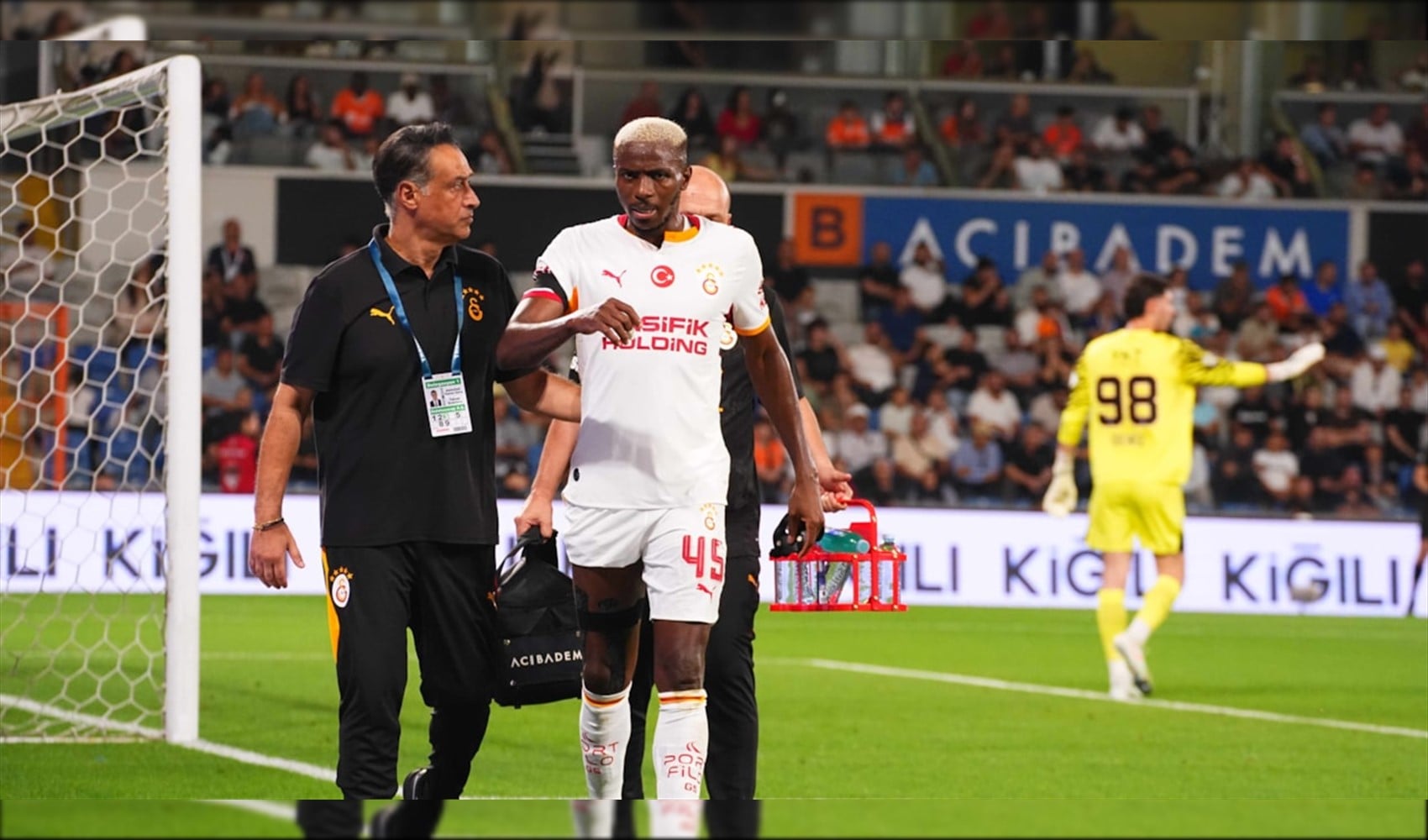
Galatasaray announces injury updates for Osimhen, Lemina, and Singo

Attention online sellers: Tax monitoring expanded
VAR for the Fenerbahçe-Beşiktaş derby has been announced!
Bridges and highways are being privatized: 15 July and FSM are also on the list
Peugeot September 2026 price list is out

New details emerge in 'panel' operation targeting lawyers
Gökçek era detail in ABB investigation
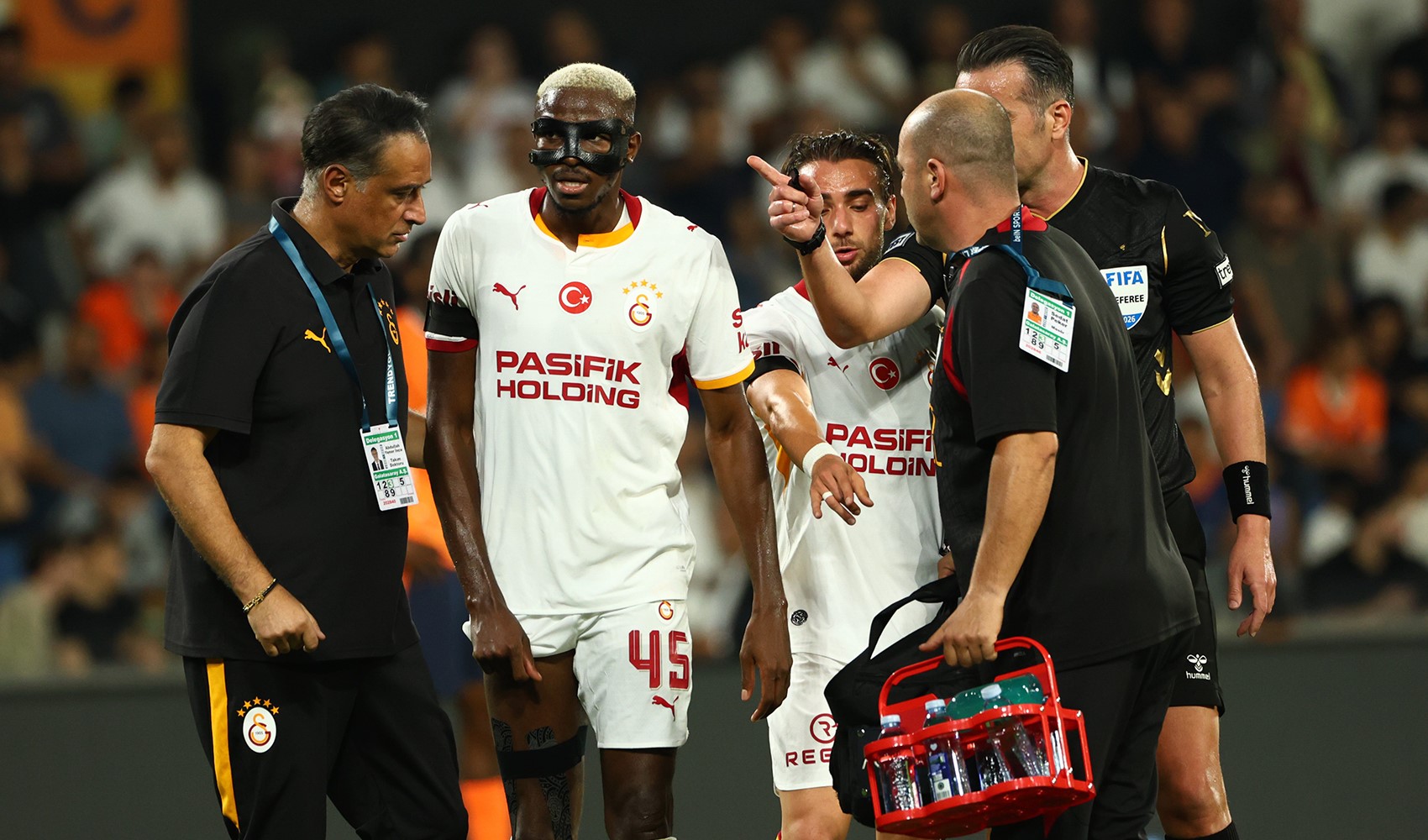
First statement from Osimhen after injury in Başakşehir match

Özlem Şanver: 'He said he would change, I believed him; should I be beaten just because I didn't leave?'
Mourinho explains why he substituted Arda Güler