



As attacks on the founder of our Republic, Gazi Mustafa Kemal Atatürk, increase, the love, respect, longing, devotion, and admiration the nation feels for Atatürk also grow. The increasing number of citizens visiting Anıtkabir every November 10th alone proves this simple truth.
There is more. As the state elite distance themselves from Atatürk, he is embraced even more by the heart of the nation.
In the face of attacks from religious profiteers, faith-based racketeers, fake republicans, ethnic separatists, dividers, and those who mistake sectarianism for Marxism, ethnicism for socialism, and cronyism for communism, Atatürk certainly loses nothing of his value or importance. Beyond being a commander, a state founder, a leader of the people, and a war hero for independence, he also draws more attention as a thinker, with the accuracy of his foresight and the correctness and consistency of his principles.
How so?
Let us discuss it together.
It must be emphasized that it is the realities of life that shape ideologies, and it is also the realities of life that determine the agenda and priorities of ideologies that have already been shaped and matured. Ideologies grow stronger and become mass movements as they face problems and are forced to solve the challenges that arise before them. Ideologies that are tested by the realities of life and emerge from this test, from this challenge, with their heads held high, become permanent.
The fact that Atatürkism—Kemalism—is still debated and still finds strong support so long after Atatürk's death is a topicality and validity stemming from this realism. Because neither have the Six Arrows lost their validity, nor has national sovereignty gone out of fashion, nor has full independence lost its meaning, nor has anti-imperialism fallen off the agenda.
EARLY THEORETICAL STUDIES ON KEMALISM
Gazi Mustafa Kemal Atatürk personally witnessed the theoretical studies conducted on Kemalism while he was alive.
It must be stated that the theory of the Kemalist Revolution was first developed in the 1930s, particularly between 1932 and 1935, around the journal Kadro. Those who conducted these discussions, led by the journal's pioneer Şevket Süreyya Aydemir, were not ordinary or mediocre intellectuals. They were the well-educated, knowledgeable, equipped, and elite figures of the period.
Kemalism's 6 principles, the 6 arrows, are a program of modernization, enlightenment, and holistic development for a state founded through war and revolution, for a third-world country, for an oppressed nation, following an empire that had fallen into a semi-colonial state, had been occupied, and had surrendered. It is original. It is a synthesis that Atatürk, as a thinker, discovered himself, produced for Turkey and under Turkish conditions by examining and observing examples in the West and the East, the French Revolution, the October Revolution, capitalism, and socialism. For this reason, our important historian whom we remember with longing, Prof. Dr. Şerafettin Turan, insistently emphasized that Atatürk was also a thinker, alongside his other qualities. Prof. Dr. A. M. Celal Şengör also states in his books Bilgiyle Sohbet (Conversation with Knowledge) and Dâhi Diktatör (The Genius Dictator) that Atatürk was a scientist, alongside his other qualities.
Atatürk's qualities as a leader, a charismatic leader, must also be addressed together with his dimension as a person of thought and action.
Atatürk was a pioneer and courageous. In an interview İsmet Paşa gave to TRT in the early 1970s, his response to a question about Atatürk was as follows: He was not afraid. Yes, that is how İsmet Paşa defined Atatürk: He was not afraid. This is a common trait of world-class revolutionaries, thinkers, state-founding heroes, and commanders who lead national wars of independence; they are not afraid.
Atatürk was a leader who knew that mistakes are teachers. The 1908 Revolution, the Young Turk Revolution—which, in the words of the teacher of teachers Prof. Dr. Tarık Zafer Tunaya, is a political laboratory before the Republic—was a teacher for Atatürk. He drew all the necessary lessons from that revolution. In addition to drawing lessons, he also saw what 1908 could not do and why. Many things that Atatürk wanted to do and did were also on the agenda of 1908; however, they were either left incomplete or could not be done at all. Moreover, the majority of those who founded the Republic in 1923 were either part of the cadre that carried out the 1908 Revolution, or even if they were not part of it or involved in it, they were close witnesses to it.
Atatürk was a genius of timing. He took all his revolutionary steps by calculating and preparing the public. He both thought and implemented. Many things he thought of, from women's rights to the parliament, were so far beyond what even those who set out with Atatürk could imagine, yet Atatürk thought of them and implemented them.
REVOLUTIONARY, GENIUS, THINKER
Like every revolutionary, Atatürk was assertive about what he wanted to do because he was trying to turn the wheel of history quickly. He was radical. Sometimes he was harsh. He had to be. Because he was aware that he was limited by the power of what he could do, by his lifespan, by the means at his disposal, and by the human material available. Convening a teachers' congress while the war was still ongoing at the front, or planning the establishment of a general directorate of culture, shows his revolutionary spirit and genius, as well as his status as a thinker.
The diversity and vastness of Atatürk's interests are remarkable. From linguistic studies to historical studies, from archaeology to anthropology, from political science to basic sciences, he read roughly 4,000 books that can be known or found, and he did so under very difficult conditions. Even at the fronts, he had his books with him, and he read these books by taking notes and making comments on the pages. The Anıtkabir Association has published these books in 24 volumes.
The words Atatürk derived and brought into our Turkish language, from military terms to mathematical terms (such as açı [angle], alan [area], artı [plus], eşit [equal], üçgen [triangle], eksi [minus], boyut [dimension], ısı [heat], kesit [cross-section], toplam [sum], konut [residence], oran [ratio], subay [officer], teğet [tangent], türev [derivative], uzay [space], yüzey [surface], yatay [horizontal], dikey [vertical], düşey [perpendicular]), are among the proofs of the great leader's intelligence, and that he was an elite intellectual, a very well-trained scholar, and a thinker.
To those who claim that Atatürk was not a thinker, that he did not receive such an education, that he did not have such a goal, that this was not his priority, and that even if he had aspired to it, he would not have had the time, opportunity, or environment—some of whom are sincere Atatürkists—one should also ask the following.
WHO IS A THINKER?
Must one necessarily have received an education in social sciences, such as economics, law, political science, philosophy, history, or sociology? Can thinkers not emerge from those who studied medicine or engineering? Can a thinker not emerge from someone who studied language, literature, geography, physics, chemistry, biology, or mathematics? Can thinkers not emerge from people who studied fine arts, painting, or sculpture, graduated from a conservatory, or played the piano?
Besides reading many books, must a thinker also write books? Is it necessary to produce or derive concepts, words, and terms to be a thinker? Is knowing a foreign language a requirement? How many of those who carry academic titles as long as a horseshoe in front of their names are truly thinkers?
Objective, scientific, and cool-headed answers to these questions show that, alongside his other qualities, Atatürk was also a very elite thinker.
Let us also state that we cannot explain how Gazi Mustafa Kemal Atatürk was able to gather around him and convince a large number of civilian and military bureaucrats, intellectuals, influential figures in the provinces, popular leaders, religious figures, and local notables while leading the War of Independence solely by his charisma, his being a good organizer, an effective orator, or a war-hero commander. Alongside all of these, it must also be emphasized that he was, at the same time, a very elite intellectual and a very competent thinker.
Most Read
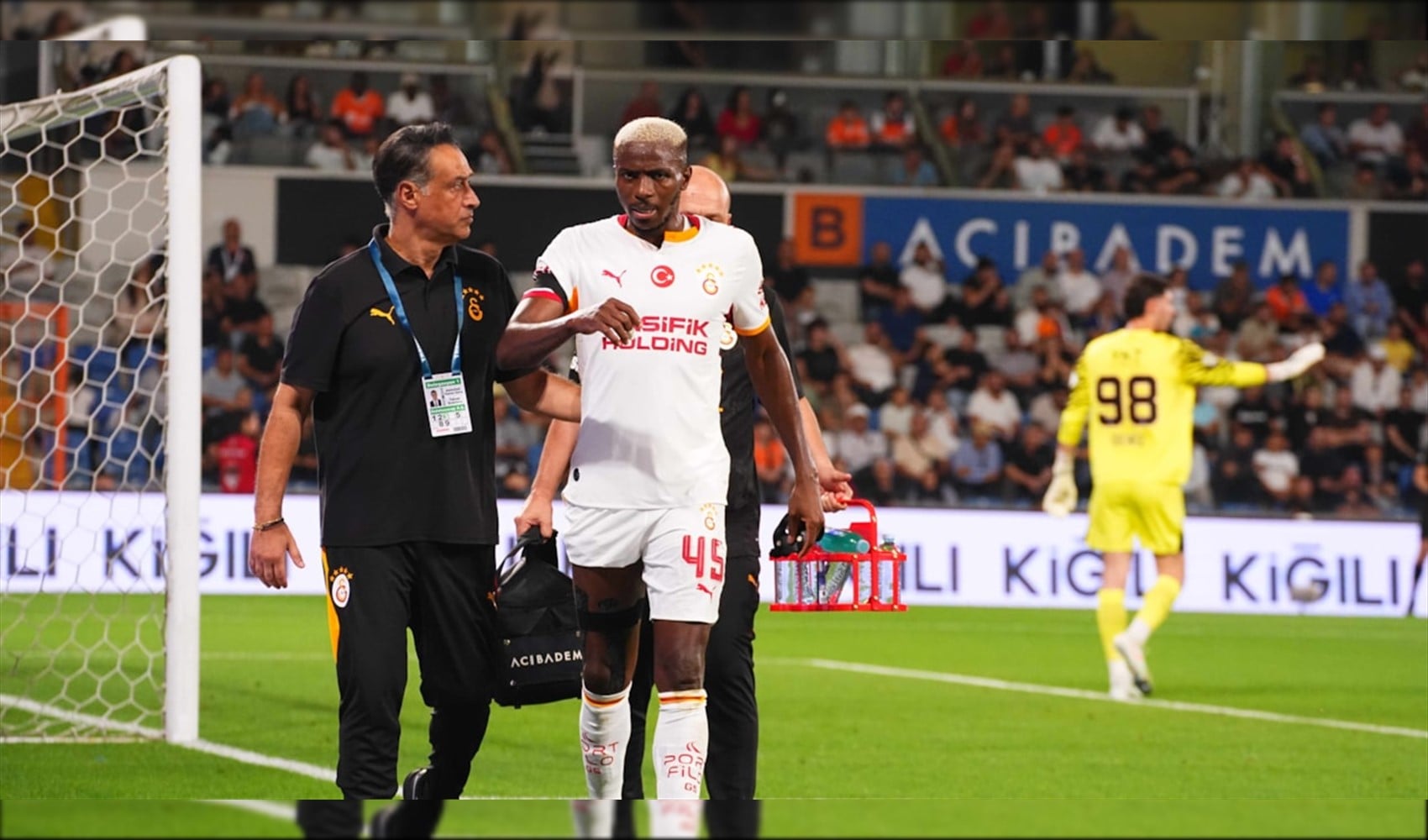
Galatasaray announces injury updates for Osimhen, Lemina, and Singo

Attention online sellers: Tax monitoring expanded
VAR for the Fenerbahçe-Beşiktaş derby has been announced!
Bridges and highways are being privatized: 15 July and FSM are also on the list

Peugeot September 2026 price list is out

New details emerge in 'panel' operation targeting lawyers
Gökçek era detail in ABB investigation
First statement from Osimhen after injury in Başakşehir match

Özlem Şanver: 'He said he would change, I believed him; should I be beaten just because I didn't leave?'

The Süper Lig's new team becomes the transfer champion