



Language influences and is influenced by individuals, societies, citizens, and nations, not only through its cultural, historical, and social dimensions but also through its living and dynamic structure. The phonetic structure of a language, its richness, and its mathematics are important. Whether written or not, language is valuable not only for its national dimensions but also for its regional characteristics as it is passed down from generation to generation. In this respect, the proliferation and enrichment of studies related to language, and the diversification of research on dialects, vernaculars, and accents, are highly valuable in every aspect. They must be supported.
A work that recently met with readers stands out in this regard and deserves attention. The title of the book is Kars ve Yöresi Ağızları Sözlüğü (Dictionary of Kars and Regional Dialects), (Teke Akademi Yayınları, Bursa, 2025). The authors of the book are Prof. Dr. Cengiz Alyılmaz and Prof. Dr. Bahadır Güneş. Alyılmaz serves at Bursa Uludağ University, while Güneş serves at Karadeniz Technical University. The book was edited by Prof. Dr. Semra Alyılmaz and Assoc. Prof. Dr. İsmail Çoban.
The photographs, maps, and visuals in the book are also noteworthy. As two academics who are themselves from the region they studied, Alyılmaz and Güneş have not only contributed to science with this 658-page book but have also sought to partially repay their impossible-to-repay debt to our Republic, demonstrating their loyalty and longing for the lands where they were born and raised.
This consciousness, this stance, this attitude, and this sensitivity are important. This has dimensions that transcend localism, regionalism, and identity politics. Because it demonstrates the communal, populist, and public-oriented character of the Republic. It reflects the Republic's equality of opportunity, especially in education. It is the Republic—the Republic of Gazi Mustafa Kemal Atatürk—that made both Bahadır Güneş, born in the Âşık Şenlik township of Ardahan's Çıldır district, and Cengiz Alyılmaz, born in Kars, into scientists. First and foremost, this fact must be underlined with thick lines, colored pens, and repeatedly. This is what the "fake republicans" do not understand; this is what the merchants of religion, the profiteers of faith, and the bankers of belief do not understand; and this is what those who mistake ethnicism for Marxism, sectarianism for socialism, and localism for communism do not understand.
The preface of the book begins as follows: "Words fly away, writing remains; it stays not in the memory, but on the line!"
The sections of the book are as follows: Preface, Introduction, Dictionary of Kars and Regional Dialects, Conclusion and Suggestions, Bibliography.
Our two esteemed professors, Alyılmaz and Güneş, have utilized various sources, literature, compilations, and field research in their work, which presents the vocabulary belonging to the Kars province and its region (Kars, Ardahan, Iğdır) in a dictionary format.
In the preface, the authors inform the reader by providing this definition: Dialectology is a sub-branch of linguistics that researches and examines dialects that evolve and develop in their own flow, naturally and far from the influences of the written language. Dialects do not have a written tradition. They contain within them much data belonging to the past of the language. For this reason, dialects are viewed by researchers as museums and data banks within a language. In this context, the vocabulary contained in dialects and the quality of this vocabulary reflect both the different dimensions of words and meanings between the past and the present, as well as sociocultural values and the change and development of these values.
The following observation, or rather warning, in the preface is also of great importance: No dictionary is ever complete.
By writing this, Alyılmaz and Güneş both draw attention to a very fundamental law of science, demonstrate their academic self-confidence, and state that they are open to all kinds of suggestions and criticism.
The work our two professors have undertaken is a difficult and arduous task. Let us admit that listing tens of thousands of words with their explanations is a very exhausting job. Alyılmaz and Güneş have succeeded in this.
At the beginning of the book, in the first section, Prof. Dr. Alyılmaz informs the reader with a long article he wrote on the geographical location and history of Kars. Immediately following this article, Prof. Dr. Güneş explains the main characteristics of the dialect groups of Kars and its region in his article. In the third article, Alyılmaz and Güneş share with the reader the sources they utilized while preparing the dictionary. At the very top of these sources is, undoubtedly, the Turkish Language Association's (TDK) Derleme Sözlüğü (Compilation Dictionary). The rich bibliography includes the works of many important scientists, experts, and researchers, including Russian researchers and graduate theses. Among these names are numerous scientists, experts, and researchers, including Fahrettin Kırzıoğlu and Ahmet Caferoğlu, as well as Ensar Aslan, Salih Şahin, Seyfettin Altaylı, Efrasiyap Gemalmaz, Selahattin Olcay, Mahmut Sarıkaya, Gökmen Mor, Haluk Şahin, Kürşat Öncül, Yılmaz Yeşil, Ünal Kalaycı, Emine Balcı, Muharrem Daşdemir, and Süleyman Efendioğlu.
In the conclusion section of the book, the two esteemed academics wrote the following:
"It has been determined that there are a total of 28 thousand 132 concept signs in the Kars region and its dialects. 19 thousand 367 of these concept signs consist of nouns, and 8 thousand 765 consist of verbs."
Alyılmaz and Güneş concluded their book by wishing for new academic studies to be prepared on the subject.
We hope that this work by two esteemed scientists finds the attention it deserves, lays the groundwork for new studies, and attracts the interest of experts, readers, scientists, and citizens interested in the subject.
Most Read
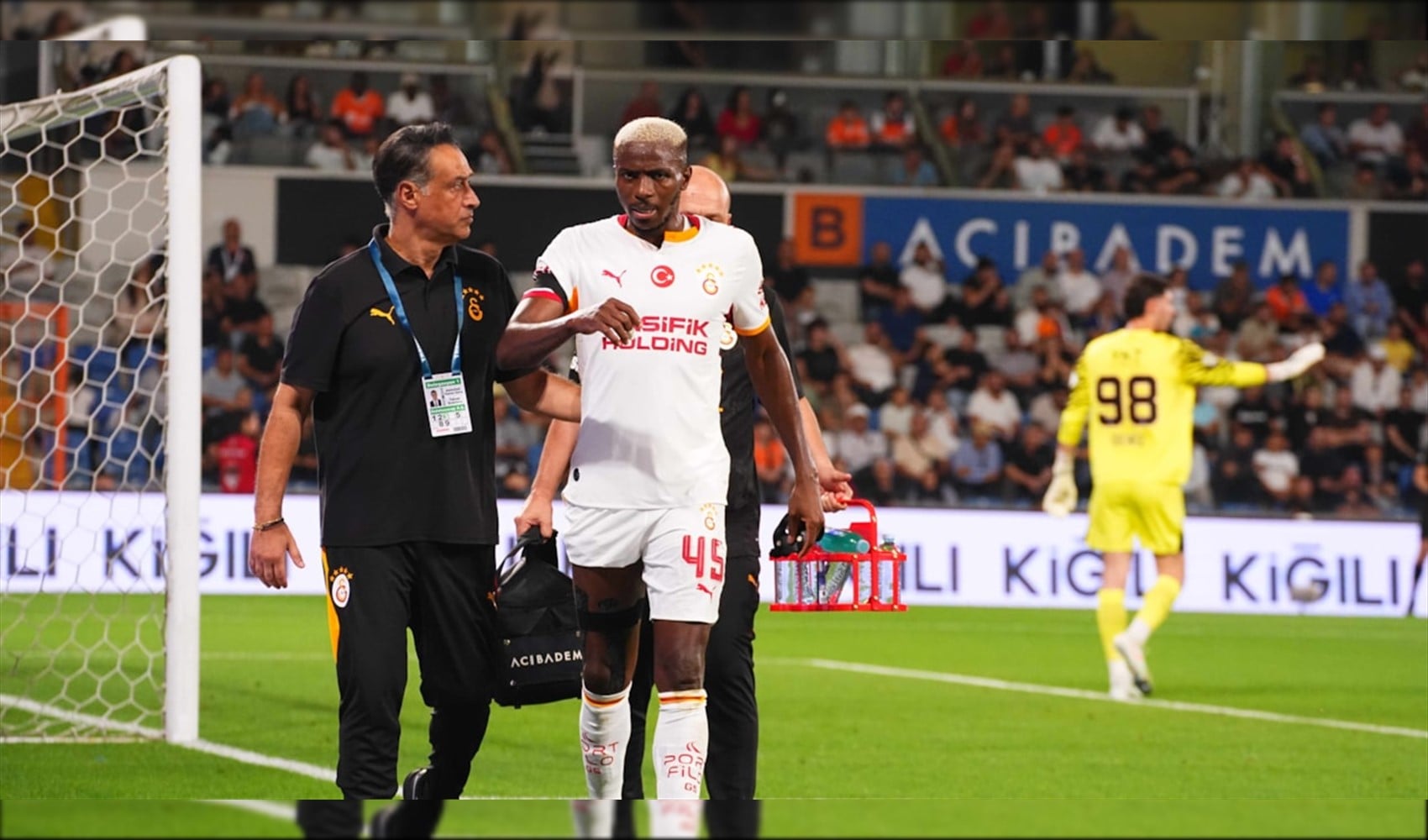
Galatasaray announces injury updates for Osimhen, Lemina, and Singo

Attention online sellers: Tax monitoring expanded
VAR for the Fenerbahçe-Beşiktaş derby has been announced!
Bridges and highways are being privatized: 15 July and FSM are also on the list

Peugeot September 2026 price list is out

New details emerge in 'panel' operation targeting lawyers
Gökçek era detail in ABB investigation
Özlem Şanver: 'He said he would change, I believed him; should I be beaten just because I didn't leave?'
First statement from Osimhen after injury in Başakşehir match

The Süper Lig's new team becomes the transfer champion