



In Turkey, there are those who claim that the current government is anti-imperialist. Not only is this impossible historically, politically, ideologically, culturally, and in terms of class, but the government itself has no claim or intention to be anti-imperialist. On the contrary, in order to soften relations that have been tense with the West, the government is sending quite moderate messages to the US.
To discuss the issue more comprehensively, let us first ask this question. When addressing a political or social problem, one must first conduct a political analysis, an economic analysis, a class analysis, and an analysis of forces. When these are done, the intense, close, and deep relations of the ruling classes, the current political understanding, and the mainstream parties in our country with imperialism become evident. Furthermore, it is impossible for a government that is not anti-capitalist and does not turn its face to the left to be anti-imperialist.
WHAT IS THE MEASURE OF ANTI-IMPERIALISM?
To understand whether a government is anti-imperialist, one must look at its stance on production, ownership, and distribution relations. One must look at the social classes it relies on. One must look at which social classes it prioritizes and protects in its politics.
To be against imperialism, it is essential to first be in favor of labor, equality, independence, and enlightenment. It is a prerequisite to view NATO, which is a Cold War alliance, as an apparatus of aggression and occupation for US imperialism, and the European Union (EU) as an apparatus of imperialist domination for Europe's major powers, led by Germany and France, and their ruling capital circles, and to stand against both. It is mandatory to support oppressed nations—in the words of our great leader Gazi Mustafa Kemal Atatürk, the 'oppressed peoples'—and the Third World.
Whether a state is imperialist or not is related to its state capacity and the sum of its national power elements (political power, economic power, military power, soft power). It is related to whether it has reached the stage of imperialism in parallel with its development along capitalist lines and its accumulation of wealth and power. It is related to its search for markets, raw materials, and cheap labor abroad, and whether it uses force to achieve these goals when necessary.
THE CLASS STRUCTURE OF THE AKP GOVERNMENT
Since 2002, the government in Turkey has been defending a savage capitalist order, both with the classes it nurtures and the classes that nurture it. The liberal approach in the economy, the privatization program, the liquidation of the remaining crumbs of the welfare state, the marketization of public services—especially in education and health—the pruning of workers' gains, the rapid subcontracting of labor, and wage policy are all part of a whole. Moreover, an anti-imperialist government cannot be a champion of privatization. However, Turkey carried out $8.2 billion in privatizations between 1986 and 2003, and $60 billion between 2003 and 2017. The AKP prides itself on this.
In the last 20 years, Turkey has deindustrialized. Even during periods when the economy grew, it could not create employment in parallel with that growth. Agriculture has practically been written off. The surface area of agricultural land has shrunk, and the population working in agriculture has decreased and aged. The share of labor in our country's prosperity has declined, and the minimum wage has become the standard wage (40 percent of employees earn the minimum wage). Turkey has become a paradise for imported goods. Although the external debt taken on in the last 20 years has exceeded the total external debt taken on in the previous 80 years, Turkey has not been able to convert the resources it has into investment, production, exports, and employment. While records for external debt are being broken, unemployment, the cost of living, and poverty have reached unbearable levels.
Turkey's economic power, capital accumulation, class matrix, industrial infrastructure, and technological capacity are not sufficient for Turkey to be a developed capitalist country. Because they are not sufficient, Turkey's mainstream politics, both right and left, are practically in a race to play a role in the US's regional policies and to receive approval from the US. This is not being anti-imperialist; on the contrary, it is being in the service of imperialism and having a structure open to imperialist interventions, pressures, coups, and coup attempts.
US IMPERIALISM, THE MIDDLE EAST, AND TURKEY
Alignment with the US in foreign policy and participation in US Middle East policies have manifested themselves in Iraq and Afghanistan. The periodic tensions experienced with the US in Syria cannot be explained by the government being anti-imperialist, but rather by the unacceptability of the US approach toward Turkey. In particular, the Syria policy was initially completely compatible with the regional policies of imperialism. It is a supporter and complement to these policies. In the past, one should not forget the support given to the March 1 memorandum, the efforts shown for the acceptance of the Annan Plan in Cyprus, the co-chairmanship of the Greater Middle East Project (GMEP, later known as GOKAP), the co-chairmanship of the Alliance of Civilizations, and subsequently the support given to the Arab Spring and the closeness established with movements in the line of the Ikhwan (Muslim Brotherhood).
Acting ambitiously, resentfully, and aggressively in foreign policy, being adventurous, engaging in Ikhwanism in Egypt, sectarianism against Assad in Syria, and ethnicism alongside Barzani in northern Iraq is not anti-imperialism. On the contrary, these are policies that serve imperialism. One should not forget that whichever major capital circles, bosses, or top executives of companies participate in the trips of the President, Prime Minister, or Foreign Minister, they are influential in determining the country's foreign policy, and their expectations for raw materials, markets, and cheap labor are decisive. Whichever flight destinations or cities the country's airlines organize flights to abroad, these route selections are compatible with the class preferences, business relationships, and commercial connections of the ruling powers and dominant capital circles in the country.
Although it is claimed that foreign policy is conducted on the axis of national interest, it is not independent of the interests of the ruling classes. Therefore, in our immediate vicinity, in 2003, 2004, and 2005, respectively, from the tulip, rose, and carnation revolutions (also called color revolutions or orange revolutions) experienced in Georgia, Ukraine, and Kyrgyzstan, when the world-famous stock market speculator George Soros, whom we know from these events, said in a speech he gave at Sabancı University in Istanbul in March 2002, 'Turkey's best export product is the Turkish Army,' he received applause not only from the owners and professors of the aforementioned university but also from major Turkish capital and prominent figures of the government.
In domestic politics, a government that claims to be against imperialism does not divide the nation through sub-identities, remnants of feudalism, or medieval affiliations and allegiances. It does not define or segregate people based on ethnic, religious, or sectarian sensitivities. It knows that one cannot fight against imperialism without defending secularism. Because secularism not only develops a citizen identity but also fosters class consciousness—that is, a comrade identity. It prevents laborers from being detached from the labor struggle and class struggle through identity politics.
WHAT WERE THE 'OPENINGS' IMPOSED BY IMPERIALISM?
Let us recall that the domestic and foreign conjuncture of the time was decisive in the AKP becoming the sole government in the general elections of November 3, 2002. Domestically, the fact that parties other than the CHP remained below the 10 percent threshold (the CHP had also fallen below the threshold in the 1999 elections before re-entering the Grand National Assembly of Turkey) paved the way for the AKP to be represented in the Parliament with an excessive mandate—that is, a number of seats far exceeding the percentage of votes it received. Citizens held the coalition government of the time accountable for both the failed policies implemented by the government following the 1999 earthquake and the economic crises that occurred one after another at the very beginning of the 2000s. Externally, both the abundance of foreign capital looking for places to invest and the US preparations for the invasion of Iraq paved the way for the AKP, which stood out as the political party that would show the most alignment with the West on these issues. Indeed, the government met the expectations of the US with its efforts in these areas. Cyprus, the Aegean, the Kurdish opening, and the Armenian opening should all be considered within this context.
In summary, one cannot be anti-imperialist by selling Turkish citizenship for money, by providing a waiting room service to Syrian refugees to keep them from going to Europe, by opening the door to federalism through feudalism, or by opening unlimited space for capital. On the contrary, the struggle against imperialism is, by its nature, carried out in conjunction with the struggle against capitalism. National independence and national sovereignty are concepts too important to be brushed aside with rhetoric. To fight against imperialism, one must sincerely embrace these concepts, stand on the side of labor, equality, enlightenment, and secularism, adopt public-oriented, collectivist, populist, and revolutionary policies, and turn one's face to the left.
Most Read

Galatasaray announces injury updates for Osimhen, Lemina, and Singo

Attention online sellers: Tax monitoring expanded

VAR for the Fenerbahçe-Beşiktaş derby has been announced!
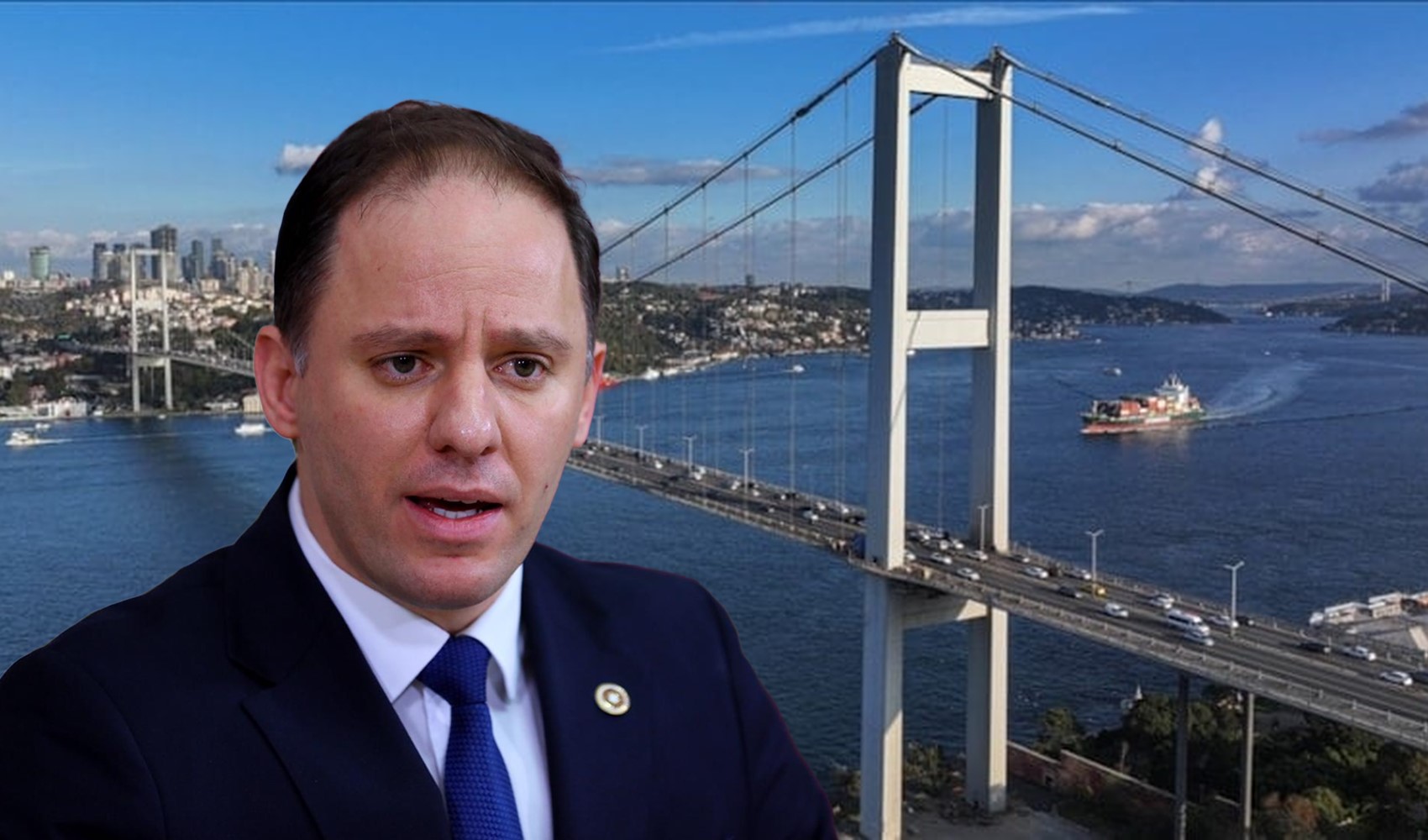
Bridges and highways are being privatized: 15 July and FSM are also on the list

Peugeot September 2026 price list is out

New details emerge in 'panel' operation targeting lawyers

Gökçek era detail in ABB investigation

First statement from Osimhen after injury in Başakşehir match

Özlem Şanver: 'He said he would change, I believed him; should I be beaten just because I didn't leave?'

The Süper Lig's new team becomes the transfer champion