



Immediately after the Republic was proclaimed on the night of October 29, 1923, at 8:30 PM, Mustafa Kemal Pasha, who was elected President by the Grand National Assembly of Turkey (TBMM) at 8:45 PM, concluded his speech with the words, "The Republic of Turkey will be happy, successful, and victorious."
Five years after the proclamation of the Republic, in his opening speech for the 2nd legislative year of the 3rd term of the TBMM on November 1, 1928, Gazi Mustafa Kemal Pasha underscored the social, populist, and public-oriented character of the Republic by stating, "The Republic is, above all, the protector of the unprotected."
Our Republic, whose 102nd anniversary we celebrate this year, was founded as a result of the War of Independence waged against imperialism and its collaborators. Therefore, in historical sequence, for us, the Republic is the result of the War of Independence, and the multi-party system is the result of the Republic. We must truly appreciate its value.
To refresh our memory, let us go back a few years before the Republic.
On May 15, 1919, Greek armies occupied İzmir. Less than a year later, on March 16, 1920, the British raided the Ottoman Chamber of Deputies in Istanbul, dissolved the parliament, arrested some deputies, and sent them into exile. The occupation of İzmir first, and then the dissolution of the parliament in Istanbul, further increased interest in and support for the Anatolian movement and the Kuvayı Milliye (National Forces). It accelerated the public's turning of their faces and direction toward Anatolia.
It should be noted that the fatwa (Fetvayı Şerife) issued by Sheikh-ul-Islam Dürrizade Abdullah Efendi, which stated that "it is a religious duty to kill the members of the Kuvayı Milliye," was dropped from the air onto Anatolian cities by British planes and transported to cities on the Aegean coast by British warships.
COLLABORATORS DURING THE WAR OF INDEPENDENCE
"Every war is also a civil war," says Karl Marx. This truth also applies to our War of Independence. It was a war with many traitors, collaborators, and saboteurs. Let us give a few examples immediately...
Refik Halit Karay says: "The only path to salvation for us is to walk together with England." These words also belong to him: "I would prefer the country to be taken by the Greeks rather than seeing Mustafa Kemal victorious." Kambur İzzet, the Governor of İzmir appointed by the Istanbul Government, gave the following order: "Greek forces will be welcomed with a special ceremony and respect." When the Greek army occupied Eastern Thrace, Uşak, Balıkesir, and Bursa in June 1920, the final sentence in the statement of Minister of Justice Ali Rüştü Efendi was: "Pray for the victory of the Greek army." The words of the rebels in Konya were: "Whoever goes against the Greeks with the nationalists is a disbeliever according to Sharia." The Teali-i İslam Society published a declaration stating, "The Greek army is considered the Caliph's army." Ali Kemal asked, "Which nation in Asia has succeeded in coping with Europe for centuries, so that we might succeed?" Damat Ferit Pasha said, "With 70 foreign ships in the harbor, there is no need to fear the Kuvayı Milliye uprising." While Refii Cevat Ulunay said, "The only solution is to reconcile and reach an agreement with the victors," the philosopher Rıza Tevfik stated, "It is insolence to object to a state like England that represents civilization." Minister of Foreign Affairs Mustafa Şerif Pasha was able to say, "The general desire is for us to be governed by England." (Mümtaz Soysal, "Our Foreign Saviors," Hürriyet, 24. 10. 2000) (See also on this subject: Aydın Keleşoğlu, İhanet Basını [The Treason Press], Bilgi Yayınevi, Ankara, 2010).
ATATÜRK'S DIFFERENCE FROM HOPELESS PATRIOTS
Gazi Mustafa Kemal Atatürk says, "There are no hopeless situations, there are hopeless people." This simple truth was also seen during the War of Independence. While the Ottoman Empire had lost World War I and a significant portion of its territory was occupied by Greek, British, French, and Italian armies, some patriots at the Sivas Congress (September 4–11, 1919) proposed a mandate and protection. Some also asked Mustafa Kemal Pasha, "Under these conditions, wouldn't it be better to establish the army before the parliament?"
Mustafa Kemal Pasha, however, was determined. He first convinced and organized the nation. Then he opened the Parliament. Then he established the army. Regarding this, he told Yunus Nadi (Abalıoğlu): "The Parliament is not a theory, it is a reality, and it is the greatest of realities." In other words, the Parliament is not a theory; it is a fact. And the greatest fact at that.
The British were also aware that the Turks were moving toward a Republic. They also had great concerns regarding the Turkish victory. They feared that the great success in the War of Independence would serve as an example and inspiration to British colonies. For this reason, they mobilized and sent to the front everyone they could use, provoke, and manipulate—the Sultanate, the Damat Ferit Government, Anzavur Ahmet, the intellectuals of the armistice period, Ali Kemal, Refik Halit Karay, Refii Cevat Ulunay, and Süleyman Şefik Pasha (Söylemezoğlu), the commander of the Kuvayı İnzibatiye (Forces of Order) established by the Istanbul Government. They encouraged and incited rebellions and supported the rebels. None of this could stop Mustafa Kemal Pasha. The Gazi Parliament, the Constituent Assembly, opened on April 23, 1920, and operated on the principle of the unity of powers. Ministers were elected individually by the Parliament. The Commander-in-Chief was accountable to the Parliament. Even under wartime conditions, the most intense debates were held. Because of its democratic structure, the Gazi Parliament holds a very special, unique, and pioneering position in our history. In the definition of Bülent Tanör, this is a war democracy. Samet Ağaoğlu, in his book titled "The Spirit of the Kuvayı Milliye," defines the functioning of the Gazi Parliament, its unity of powers, and its sensitivity and jealousy regarding its authority as a "Parliamentary dictatorship."
LESSONS LEARNED FROM THE WORLD WAR
The cadres who led the War of Independence and founded the Republic, led by Gazi Mustafa Kemal Atatürk, were cadres who had lived through the Italo-Turkish War (1911–1912), the Balkan Wars (1912–1913), and World War I (1914–1918), and had personally served and fought in those wars. They were heroes who were the product of Ottoman modernization, and specifically, Ottoman military modernization. They were commanders who knew better than anyone what war was.
Those commanders witnessed the defeats, territorial losses, and disintegration of the Ottoman Empire, as well as the efforts of Germany, which had completed its political unity late and was rising rapidly, to gain influence from the Balkans to North Africa, and its developing relations with the Ottomans. They saw the calculations of those governing the Ottoman Empire to regain lost territories by acting together with Germany, their anger toward the British—who were so base and unreliable that they would not even deliver the ships for which they had already received payment—and the concessions granted in the 20-kilometer areas to the right and left of the Berlin-Baghdad railway line. They experienced the pressure exerted by the Germans for the Ottoman Empire to enter World War I, the efforts and initiatives made by the Ottomans to avoid entering the war, and how the war was extended by at least two years due to their entry, thereby reducing the pressure on the Germans and increasing the number of fronts. They were the closest witnesses to the fact that the Ottoman Sultan's declaration of the "Great Jihad" had no effect on the Arabs. They fought on all 9 fronts where the Ottoman Empire, which entered the war 3 months after it began on July 28, 1914, fought on October 30.
The Ottoman Empire was a semi-colonial state. It had largely lost its political independence due to administrative, economic, financial, and legal capitulations. It was a typical feudal-agrarian empire. In a state whose finances had collapsed due to a heavy external debt burden, there was almost no heavy industry. The national income per capita was 4 liras. Everything from sugar to roof tiles, from cloth to window glass, was imported. There were 40 thousand villages. The number of midwives was around 200. Because Anatolia could not transport its wheat to Istanbul, wheat was imported from Russia. The mortality rate in children aged 0–2 was 60 percent. In the entire empire, there were only 158 middle schools and high schools, and one university that was an extension of a madrasa. The number of students studying in all high schools was 230. All basic professions were the monopoly of men. Women had no right to vote or be elected, and they had no social life. The literacy rate was 7 percent for men and 0.4 per thousand for women. All laws were behind the requirements of the age. The country was experiencing medieval primitiveness and oppression in many areas. This was the legacy inherited by the Republic. When the Republic was proclaimed, the length of the railways within the Misak-ı Milli (National Pact) borders was 4,559 kilometers. These railways were operated by German, British, and French companies. The train drivers were Greek and Armenian. The operating language was French. Railroading was closed to Turks. During the National Struggle, these drivers were forced to work at gunpoint. A few Turkish drivers were trained before the Battle of Sakarya began. Heavy artillery could only be brought from Kars to Afyon in 3 months. A broken plane from Elazığ could only be transported to Ankara in 2 months. There were no railways to the east or the south. (Interview given by Turgut Özakman to Uğur Dündar, Sözcü, 29. 09. 2018).
THE NATIONAL SECRET IN MUSTAFA KEMAL'S CONSCIENCE
In an interview he gave years later, Mustafa Kemal Pasha, who said, "I kept the Republic in my conscience like a national secret," also had the following written in his personnel file at the Ministry of War: He is a Republican. And he was such a Republican that, even though some of his close friends suggested he become the Caliph after the liberation, as he recounted in his Nutuk (Speech), he did not even let this suggestion cross his mind. Even though a communist regime was established in the Soviet Union and fascism was rising in Europe, he did not turn to look at either. He established a secular, modern nation-state based on national sovereignty and brought the Republican administration to life.
Because Mustafa Kemal had learned the necessary lessons from the defeats in wars, the great territorial losses, the heavy external debt burden, the calculations of imperialist powers over the Ottomans, their incitement of minorities toward independence, the consequences of the capitulations, the poor governance of the state, and the keeping of society in ignorance. For this reason, in addition to going down in history as a great commander, he also went down as a state founder, a war of independence fighter, a national leader, and a head teacher.
Most Read
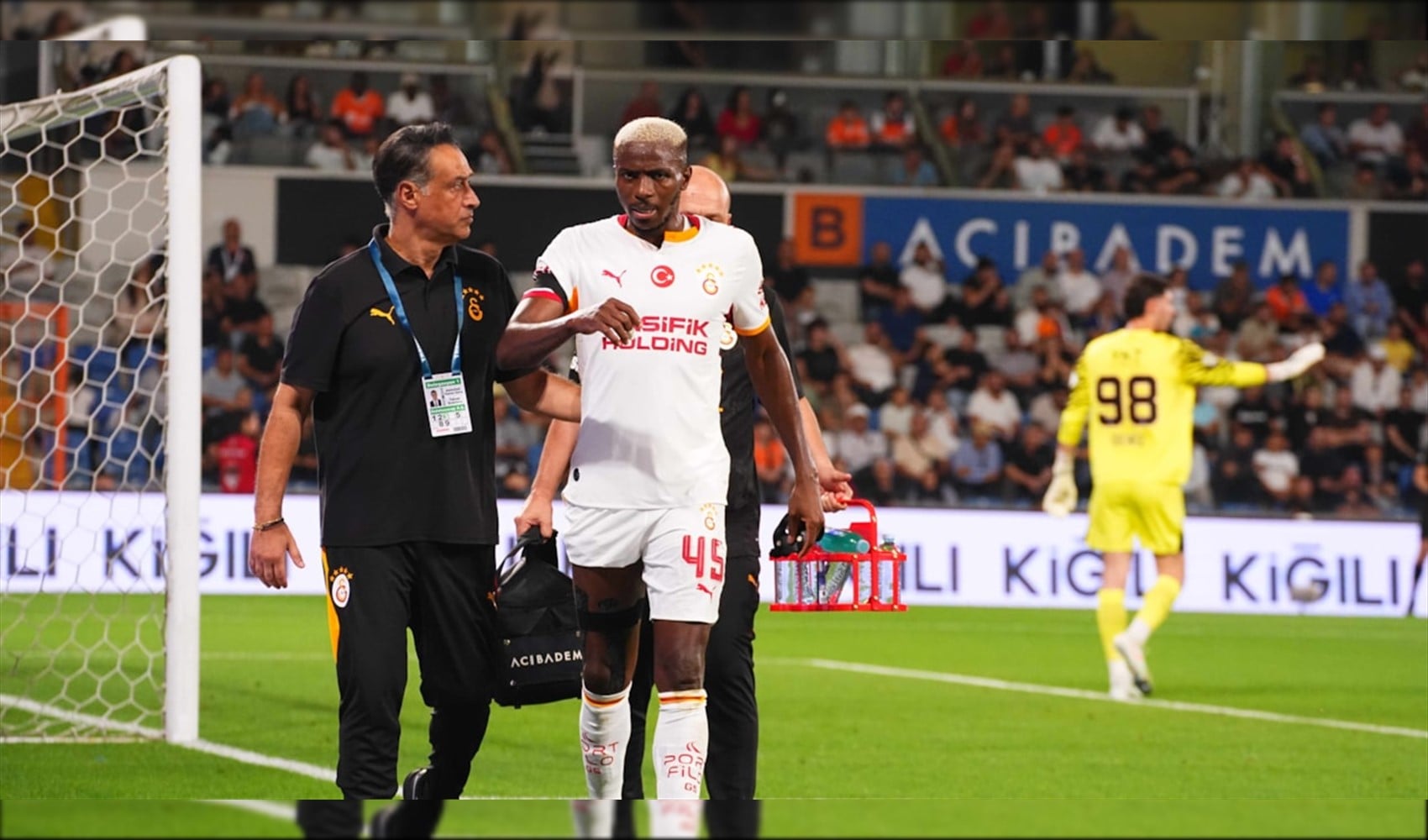
Galatasaray announces injury updates for Osimhen, Lemina, and Singo

Attention online sellers: Tax monitoring expanded
VAR for the Fenerbahçe-Beşiktaş derby has been announced!
Bridges and highways are being privatized: 15 July and FSM are also on the list

Peugeot September 2026 price list is out

New details emerge in 'panel' operation targeting lawyers
Gökçek era detail in ABB investigation
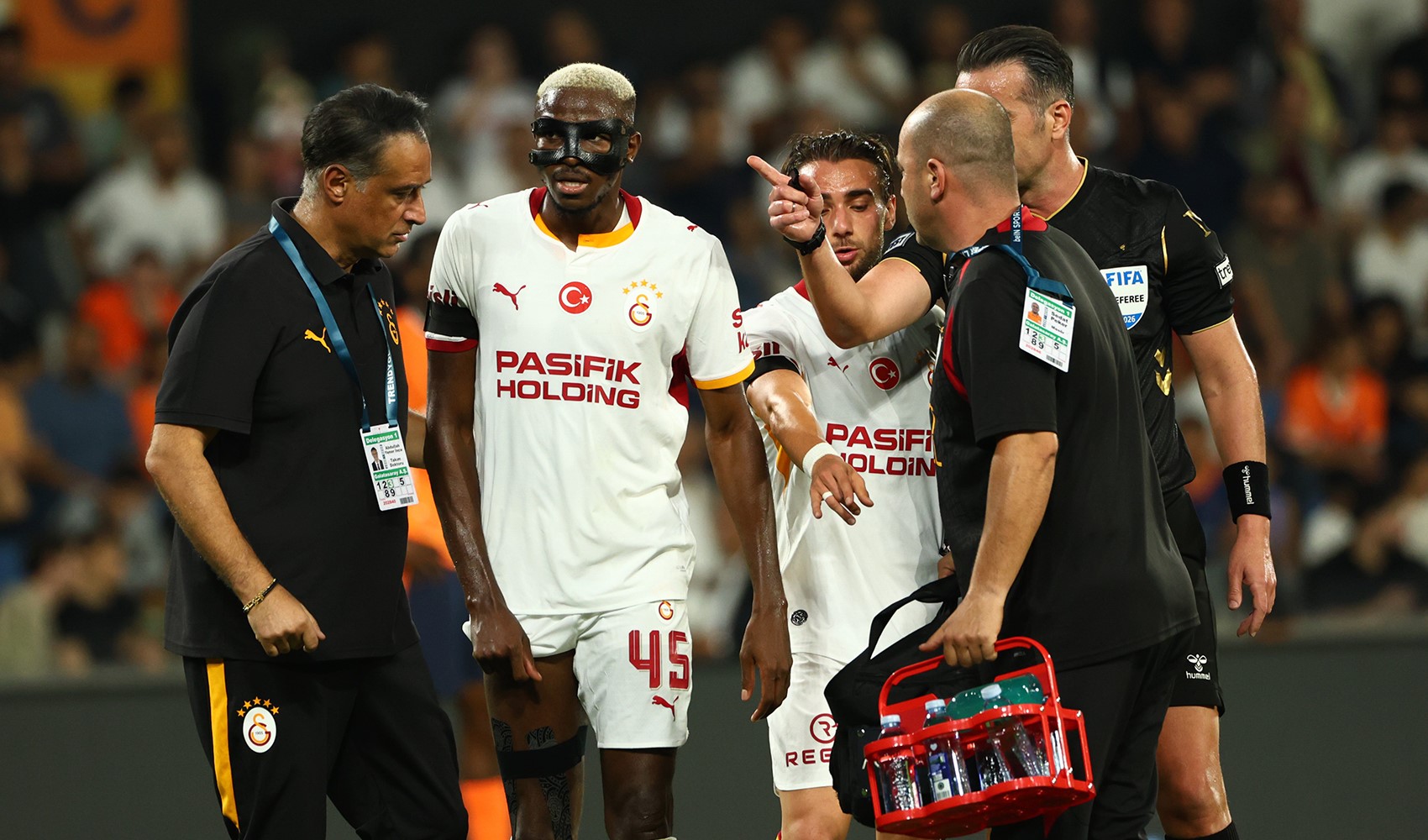
First statement from Osimhen after injury in Başakşehir match

Özlem Şanver: 'He said he would change, I believed him; should I be beaten just because I didn't leave?'
The Süper Lig's new team becomes the transfer champion