



Over the course of more than twenty years of AKP governments, we have naturally faced very different foreign policy practices. The foreign policy pursued throughout the Republican era, particularly its Western-facing aspect, continued in the early years of the AKP governments accompanied by a more liberal discourse. Following Israel’s 2008-2009 Cast Lead Operation against Gaza, the foreign policy began to take on a distinct character with reactions and sensitivities similar to those of today. It gained symbolic significance at the Davos Summit in early 2009, when then-Prime Minister Recep Tayyip Erdoğan left the meeting after being prevented from speaking in response to Israeli President Shimon Peres, famously saying “One minute!”. The “Arab street” moment in foreign policy, which then-Foreign Minister Ahmet Davutoğlu described as “standing on the right side of history” during the series of uprisings and internal conflicts known as the “Arab Spring,” presented an appearance far removed from the caution that marked the Republican era, characterized by active support for a wave of change primarily orbiting the Muslim Brotherhood.
The foreign policy practice of this period, which was largely identified with Davutoğlu himself, reached its peak with the frequent confrontations with Russia following its entry into Syria in 2015. However, it lived its final days during the premiership of Davutoğlu—which lasted from 2014, when Erdoğan became president, until May 2016—and in the conjuncture following the July 15, 2016, military coup attempt, it gave way to more “transactionalist”, short-term foreign policy practices suited to the interests of the day. The foreign minister of this more pragmatic period, which roughly covers 2016-2023, was Mevlüt Çavuşoğlu. Now, since last year, when former MIT head Hakan Fidan was appointed Minister of Foreign Affairs, another foreign policy orientation can be sensed.
Therefore, it is possible to divide Turkish foreign policy during the AKP governments into at least four different periods: 2002-2009, 2009-2016, 2016-2023, and from 2023 onwards. As someone who holds a doctorate in International Relations and has headed important institutions in terms of foreign policy such as TİKA and MIT, Hakan Fidan becoming Foreign Minister, and the appointment of another social scientist, İbrahim Kalın, as head of MIT, were appreciated through campaigns whose effects could be observed on social media. It can also be seen that a serious effort is being carried out on X with the constant “Foreign Minister Hakan Fidan” hashtag. Together with another social scientist, Fahrettin Altun, it can be said that they form the new intellectual triumvirate of Erdoğan’s leadership.
It can be observed that Erdoğan, having been burned by Davutoğlu, has opened a fairly wide space for this triumvirate, which can be considered a newer generation compared to Davutoğlu, perhaps even while treading carefully. A direction is emerging where signs in a certain direction are increasing, with the long speech İbrahim Kalın recently gave at a meeting celebrating the anniversary of MIT’s founding, and now the “strategic mechanism” talks that Hakan Fidan is conducting with his US counterpart Anthony Blinken. Kalın’s speech was aptly analyzed by Prof. Dr. Mustafa Türkeş in an interview in the newspaper Bir Gün. In this discourse, which is similar to Davutoğlu’s approach but possesses more flexible and liberal tones, it was noteworthy that there was no mention of Atatürk, nor of Erdoğan, while on the other hand, it leaned on Western power definitions and sought common ground with the West.
Since the day this speech by MIT head Kalın, which in many respects seeks common ground with the West, was delivered, issues with the US have been overcome on topics such as Sweden’s NATO membership and the approval for the modernization of existing F-16 fighter jets and the purchase of new F-16s. Foreign Minister Fidan’s recent contacts in Washington came on top of this. Some problems that began during the era of previous US President Barack Obama had turned into a real tug-of-war during the Donald Trump era. At the forefront of these is the military support and cooperation provided by the US to the formation they call the Syrian Democratic Forces, whose main backbone is formed by the PKK-linked PYD-YPG forces in Syria. During the Trump era, efforts by former Turkish ambassador James Jeffrey to mitigate this problem and find ways to maintain a kind of relationship between the parties also included opening new spaces for Turkey to a certain extent, but an understanding at this level had not yet been developed during the Biden era, and in any case, the main focus had been on Gaza for some time. Now, it appears that the two countries are reviewing their positions in Syria together. At this point, it should also be noted that President of the Russian Federation Vladimir Putin postponed his visit to Turkey, but in the meantime, Ukrainian President Volodymyr Zelenskyy has visited Turkey.
All of this coincides with a conjuncture, which I discussed in last week’s article, where Europe is also looking for ways to continue supporting Ukraine without the US. We also recall from last month’s news that Turkey, along with Greece, has joined the European Sky Shield Initiative, which was previously led by Germany and involved 15 European countries. In this way, Turkey will be able to obtain the protection of different missile defense ramps with shorter and longer ranges, in addition to the Patriots that the US refused to give it. Here, we also see that the war of words previously entered into with Greece has been abandoned for some time.
It is also striking that Erdoğan has not made a similar outburst after his surprisingly complimentary improvised remarks about the Houthis, and even seems to be careful to speak less and with fewer sharp edges in the field of foreign policy for some time. In fact, the fact that Turkey is not at the forefront this time in the aid planned to be delivered to Gaza by sea via the port of Larnaca in Southern Cyprus makes one wonder whether an attempt is being made to stay away from the Middle East for a while, even if only for a short time.
Turkey’s involvement in any activity aimed at suppressing Russia in the Black Sea, either under the pretext of a mine-clearing operation to be carried out by NATO countries with a coastline on the Black Sea or in some other form, would complete this picture. Given the presidential elections to be held in the US in November, it is obvious that it is far too late to achieve a new Blinken-Fidan harmony similar to the one Davutoğlu had with Hillary Clinton, the Secretary of State during the Obama era. Whether the common ground that now seems to have been newly and re-captured can be maintained in a new Trump era, or whether there will be new tug-of-wars as in the previous Trump era, stands as the main shadow over this harmony. Regardless, it can be clearly seen that the Fidan era contains a new orientation and that this is embodied in a greater willingness to work with the West.
Most Read
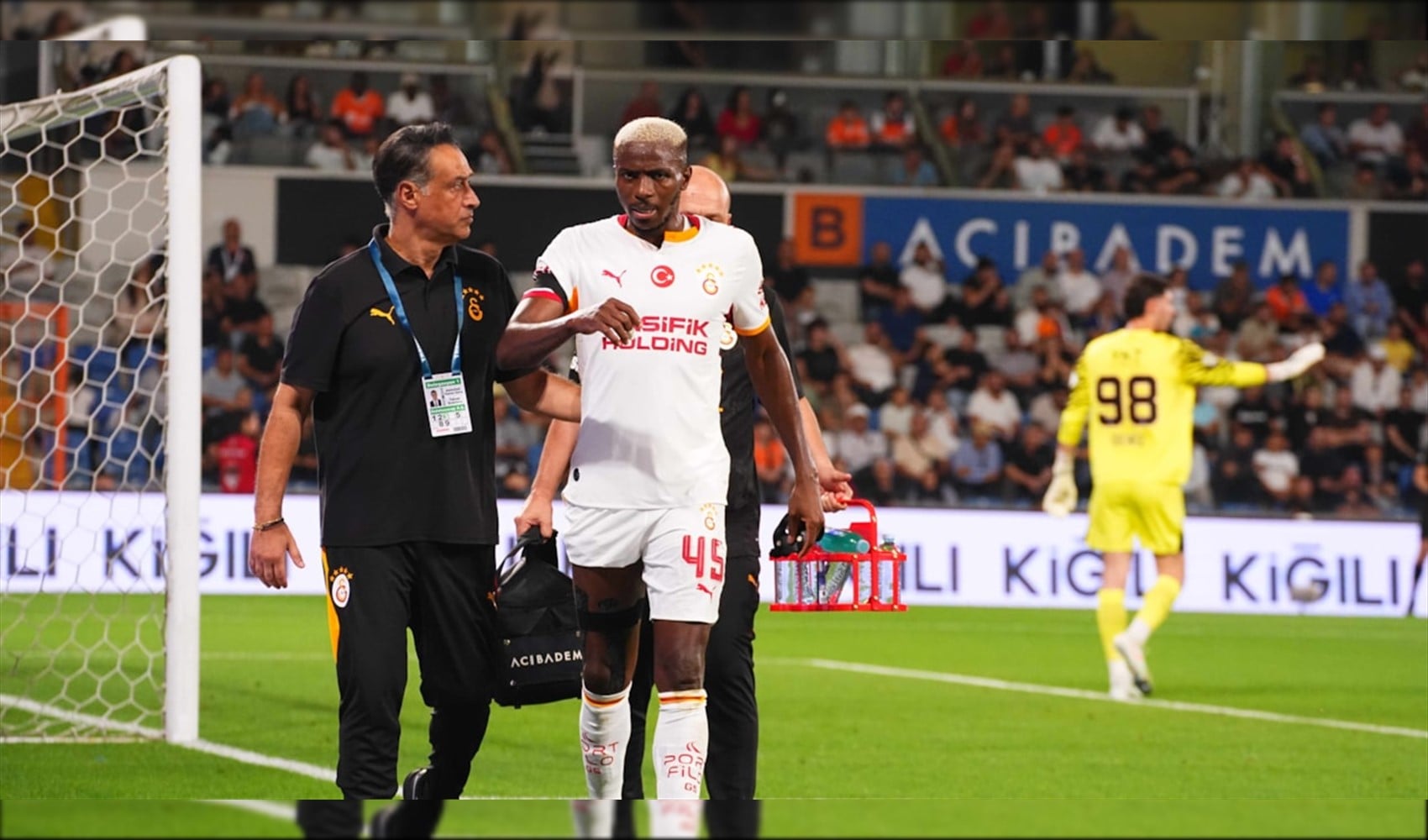
Galatasaray announces injury updates for Osimhen, Lemina, and Singo

Attention online sellers: Tax monitoring expanded
VAR for the Fenerbahçe-Beşiktaş derby has been announced!
Bridges and highways are being privatized: 15 July and FSM are also on the list

New details emerge in 'panel' operation targeting lawyers
Another bankruptcy in the construction sector

Peugeot September 2026 price list is out
First statement from Osimhen after injury in Başakşehir match

Detention warrants for 31 lawyers, searches at 39 offices

Özlem Şanver: 'He said he would change, I believed him; should I be beaten just because I didn't leave?'