



Our Turkey is experiencing a multifaceted decay and collapse in its institutions, social structure, politics, and economy. The state that our ancestors established at the beginning of the 20th century by waging the War of Independence is slipping through our fingers right before our eyes.
Demands are rising from many segments of society for Turkey to return to the principles and philosophy of its founding era. In the words of my dear friend Prof. Dr. Gökhan Çapoğlu, “To rebuild Atatürk’s Republic…”
We succeeded under much more difficult conditions in the past; we can succeed now as well. While planning for tomorrow, it is necessary to realistically analyze the past and the period we are living in.
Turkey entered the 20th century with the 1923 Republican Revolution. The War of Independence was a tremendous success story, adorned with the political establishment of a new state and economic development from scratch. One hundred years after this magnificent story, the Republic is trying to stand tall against the heavy onslaught of the Counter-Revolution. What happened that the Turkish society could not protect the Republic and Enlightenment Revolutions of its founder, Gazi Mustafa Kemal Atatürk?
The Counter-Revolution is a major project of imperialism that could not digest the Treaty of Lausanne and wants to implement the continuation of the Treaty of Sèvres. It is a move by imperialist states, which were trying to reshape the world after World War I, to settle scores with the independent Republic of Turkey.
The goal is to control Turkey’s military and political power. The goal is to prevent the industrialization and development move that the Republic of Turkey, which emerged after the semi-colonial Ottoman Empire under the yoke of imperialism, achieved with its own resources without being dependent on imperialism. The goal is to prevent a country with a Muslim-majority population in the Middle East geography from transforming into a secular republic based on modern law and becoming an example for other countries.
The world is being reshaped. The future of NATO is being debated. We must not forget that NATO membership was an important milestone in Turkey’s deviation from Atatürk’s principles and its surrender to the counter-revolution. Europe is planning a new security architecture without NATO. What will be Turkey’s place within the European security architecture? We are very close to repeating the mistake we made by sending troops to the Korean War and joining NATO, this time by taking part in the European Security Architecture. Europe will build this security structure against Russia, which it sees as a threat. Turkey’s participation in this structure will mean being in a camp hostile to Russia.
FOUR IMPORTANT MILESTONES OF THE COUNTER-REVOLUTION
While planning for tomorrow, we must fully grasp the moves that the Counter-Revolution has carried out in the past—in the economy, defense alliances, and education—and in which it has largely succeeded. I find this subject very important for learning lessons from the past and designing the future.
I can list the 4 Important Milestones of the Counter-Revolution in the economy, defense system, and education as follows:
FIRST BLOW: PREVENTION OF LAND REFORM AND VILLAGE INSTITUTES: The first and most important blow was the rendering of the Farmers' Land Settlement Law (Land Reform) ineffective in 1945, the beginning of the functionalization of the Village Institutes starting in 1946, and their complete closure in 1954. Eighty percent of the population lived in rural areas and had not yet fully met the Republic and the Enlightenment Revolutions. With this blow, the process of a significant portion of the population transitioning from the ummah to the nation, and from being subjects of the sultan to free individuals of the Republic, received a heavy blow. The formation of the “National and Citizenship Consciousness,” which would be the strongest foundation of the Republic, was crippled.
SECOND BLOW: TRUMAN DOCTRINE-MARSHALL PLAN-FULBRIGHT-NATO: The second and most important blow was the 1947 Defense Agreement signed with the USA, the Truman Doctrine, and the subsequent Marshall Plan. Turkey threw away its third industrial plan, which aimed for development with its own resources. By adopting the Marshall Plan and the report prepared by American economist Thornburg, a plan (the Verner Plan) was prepared that abandoned industrialization and prioritized agriculture and highways. The economy began to fall under the control of imperialism.
The Turkish economy, which did not have a foreign trade deficit until 1947, began to run a constant foreign deficit from this date on. An application was made to NATO in 1950, but it was not accepted. Troops were sent to Korea, and NATO membership came in 1952. With NATO membership, it is no longer possible to speak of an independent Turkey. As in many NATO countries, a Deep State began to form under the control of the Pentagon. This process, like the previous counter-revolutionary move, began with the single-party rule of the CHP and was riveted with the rule of the Democrat Party.
During this process, the education system was also placed under the control of the USA with the Fulbright Agreement; with this education system, the explanation of Atatürk’s principles and revolutions to the young generations and the public was diluted, Turkish history was distorted, and US interests were observed in the formation of social culture.
THIRD BLOW: 4TH PLAN - JANUARY 24 - SEPTEMBER 12, 1980: In 1978, Turkey remembered Atatürk’s principles in the economy again. Prime Minister Bülent Ecevit was in office, and the Undersecretary of the State Planning Organization (DPT) was Prof. Dr. Bilsay Kuruç. The goal was to return to the principle of “Turkey’s development with its own resources and prioritizing capital goods industries,” which was thrown away in 1947. For this purpose, the 4th Five-Year Development Plan was prepared. As a result of the initiatives of the IMF, the World Bank, and the Turkish private sector against the plan, the government was toppled. The person who carried out these initiatives on behalf of the World Bank is also a familiar name: Kemal Derviş, who would later return to Turkey. With the Derviş-Robinson Report, the plan was thrown into the trash. The January 24 Decisions came in its place. The aftermath of the January 24 Decisions was the September 12, 1980 military coup.
Before the Turkish economy could complete its industrialization, it opened its domestic market completely to the foreign market. The disease of running a foreign deficit in the economy, which started in 1947, became chronic after 1980. However, these deficits were at a controllable level until the beginning of the 2000s. In education, the state’s official ideology completely broke away from Atatürk’s principles and turned into a Turkish-Islamic synthesis.
FOURTH MOVE: LOSS OF COMPETITIVENESS, MULTIPLE INSTITUTIONAL COLLAPSE PROCESS: The fourth biggest move of the Counter-Revolution came with the 2001 Crisis and the November 2003 elections. In 2001, Kemal Derviş was on the stage again. This time, not as a quiet World Bank official, but in the role of a savior. The program proposed by the IMF in 2001 and implemented by Kemal Derviş began to bear fruit. Economic indicators pointed to Turkey emerging from the crisis, but the reflection of prosperity to the public had not yet begun. It was precisely in this process that MHP Chairman Devlet Bahçeli, a partner in the government, called for early elections. Due to the impact of the economic crisis, many parties could not pass the threshold. The AKP secured a 65 percent majority in parliament with around 25 percent of the total votes and around 35 percent of the valid votes. Let us also note that during this process, opposition parties did not uphold Atatürk’s principles and revolutions, but on the contrary, began to become conservative.
The IMF and Kemal Derviş program, which was supposed to be implemented for a two-year period, aimed to increase the Central Bank’s foreign exchange reserves by paying heavy prices for hot money. And it was supposed to be finished after the balances in the economy were established. Due to the comfort provided by abundant foreign currency, the program was implemented until 2008. As a result of this program, Turkey’s competitiveness in agriculture and industry was destroyed. The chronic but controllable foreign deficits reached an uncontrollable level. The country became mired in a foreign debt trap, from the public sector to the private sector. Dependence on the outside world, especially in the economy, defense, and foreign policy, reached its peak. With the economic policies implemented after 2008, society was impoverished, and the middle class disappeared. Education and health services collapsed. The principles of judicial independence, the rule of law, and secularism disappeared and remained as flowery sentences in the constitution.
As a result of these four moves, Turkey took on the appearance of a semi-colonial country and completely lost its independence in the economy and, along with it, in foreign policy and defense. When this economic attack combined with the destruction of the Counter-Revolution in foreign policy, defense, law, and social structure, a serious survival problem for the Republic of Turkey emerged.
TO BUILD TOMORROW…
If we are to aim to rebuild the Republic of Turkey according to the principles of Gazi Mustafa Kemal Atatürk, these are the lessons we must learn from the counter-revolutionary process.
While discussing NATO and the European Security architecture…
While discussing the new constitution, while trying to grasp the fundamental difference between the equality of citizens and definitions of equal citizenship…
While talking about the secular state, the nation-state, the democratic state, the state of law, and the social state…
While searching for a truly economic development model and planning how to increase the welfare of citizens with a principle of fair distribution…
We will carry the fundamental principles and thought structure of Gazi Mustafa Kemal Atatürk to the conditions of the Twenty-First Century.
When we look at the fundamental columns of the Enlightenment Revolutions, we can foresee tomorrow more clearly with the perspective of a strategic genius. We will also seek the solution by being inspired by this.
For a way out, a political will and the political preference of the voter are required first. The element that can do this is political party organization. Does Turkey have political parties and cadres that adopt these principles with its current political parties? I cannot answer this question. I leave it to you, the readers.
No matter which time period you carry Atatürk’s principles to, there are two golden keys that are independent of time and space.
Freedom and independence are my character…
Of course, mutual cooperation in the economy is important in the developing world. Every country can be dependent on another country in some way, especially for raw materials and technology. But what is important here is to be able to control the subject you are dependent on. And most importantly, to maintain the anti-imperialist character. Countries that are not independent in the economy (that cannot control their dependencies) cannot remain independent in defense or foreign policy either. Especially under the conditions of the Eastern Mediterranean and the Middle East, which have been on the agenda for more than a century and have turned into a geography of conflict today, they are forced to bow to imperialist powers and make concessions from their geopolitical values.
The truest guide in life is science. If my words contradict science, do not take what I say, but take science as the basis.
Very rapid breakthroughs in technology are changing the balances in the world, both between countries and between classes. The “Future,” where production relations, states, societies, classes, social division of labor, individuals, cities, in short, everything will change rapidly, is coming faster than expected with major and rapid breakthroughs in technology. While rebuilding the state and shaping the economy, we will think about and plan for tomorrow and will definitely be in search of new ways.
The neoliberal system that has dominated the world for the last 40 years will transform into another system. It is not very clear what it will be. But two paths are visible on the horizon. Either “Digital Fascism,” where giant technology companies are dominant not only in the market but directly, not indirectly, in state administration, or “State Capitalism,” which prioritizes development and fair distribution… (The possibility of state capitalism evolving into a new model of communism in a later stage, and its consideration together with the price mechanism in the age of Central Planning and Artificial Intelligence, is a separate article topic that needs to be addressed. I am noting it in my agenda to write an essay later.)
RADICAL TRANSFORMATION ON THREE AXES
Turkey’s standing up again is only possible with a radical transformation on three fundamental axes:
First is economic independence.
Without establishing a planned development model based on its own resources, science-based; without transitioning to a production economy and ensuring fair distribution, true independence cannot be spoken of.
Second is the rule of law.
A secular and democratic parliamentary system based on the separation of powers is not just a preference, but a condition for the existence of the Republic.
Third is institutional reconstruction.
Fundamental human rights and public property rights must be redefined. The entire structure of the state must be rebuilt with an understanding that centers on the human being and the equality of citizens. The principle of the nation-state cannot be abandoned.
Gazi Mustafa Kemal Atatürk’s saying, “The truest guide in life is science,” is not just a principle, but a state of mind. Acting with the guidance of science and reason, with an understanding of continuous revolutionism, is the only way to carry the Republic into the future.
Most Read
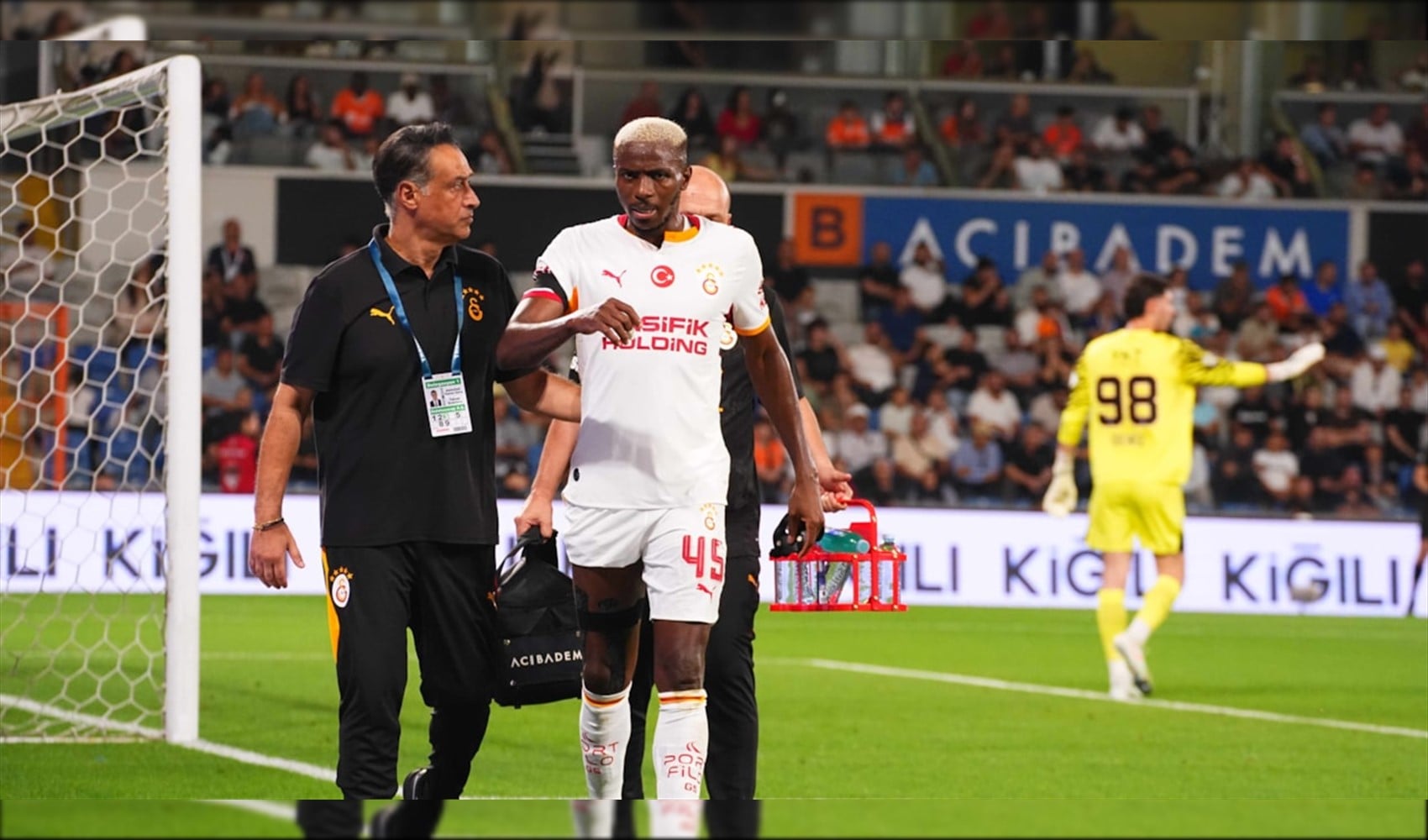
Galatasaray announces injury updates for Osimhen, Lemina, and Singo

Attention online sellers: Tax monitoring expanded
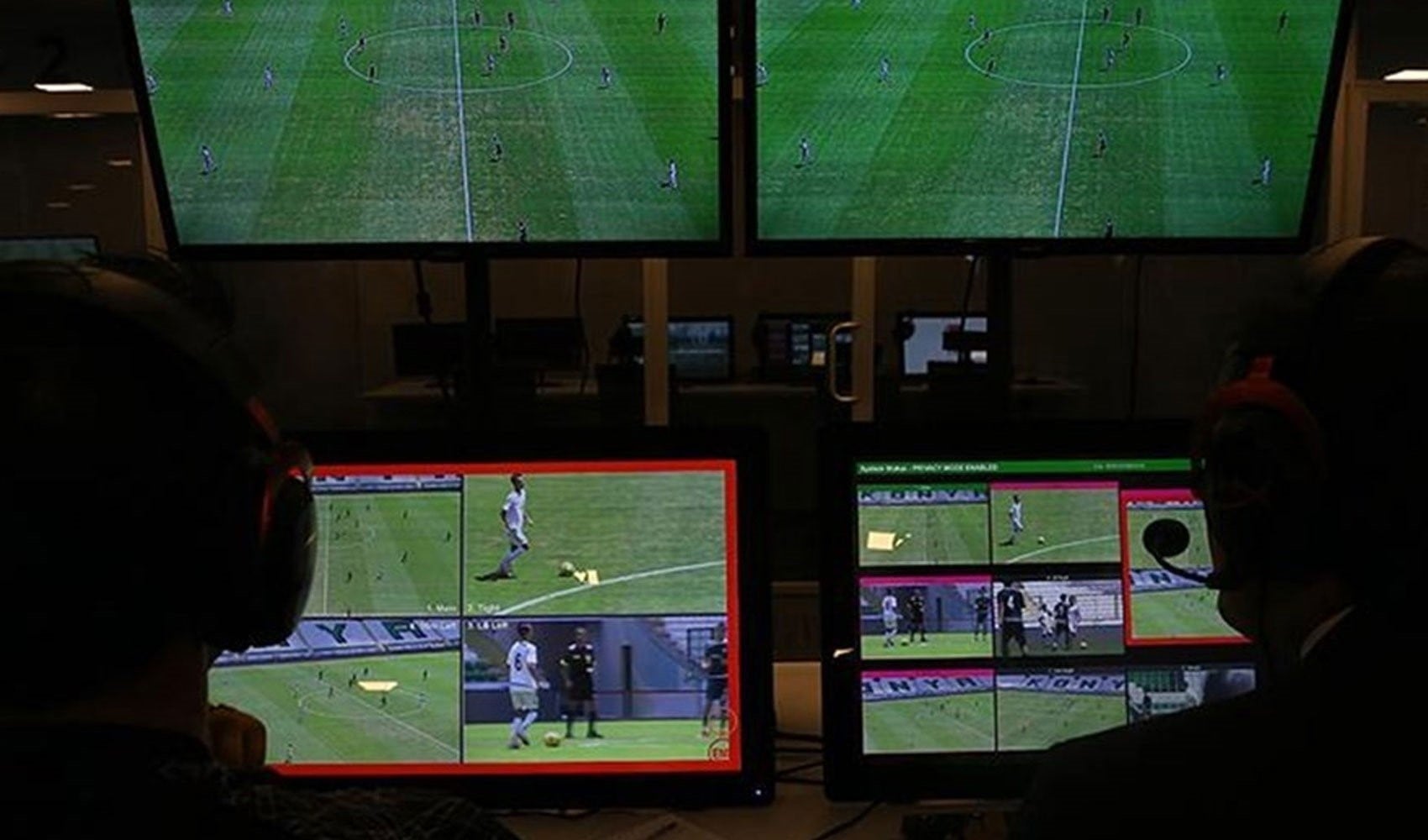
VAR for the Fenerbahçe-Beşiktaş derby has been announced!
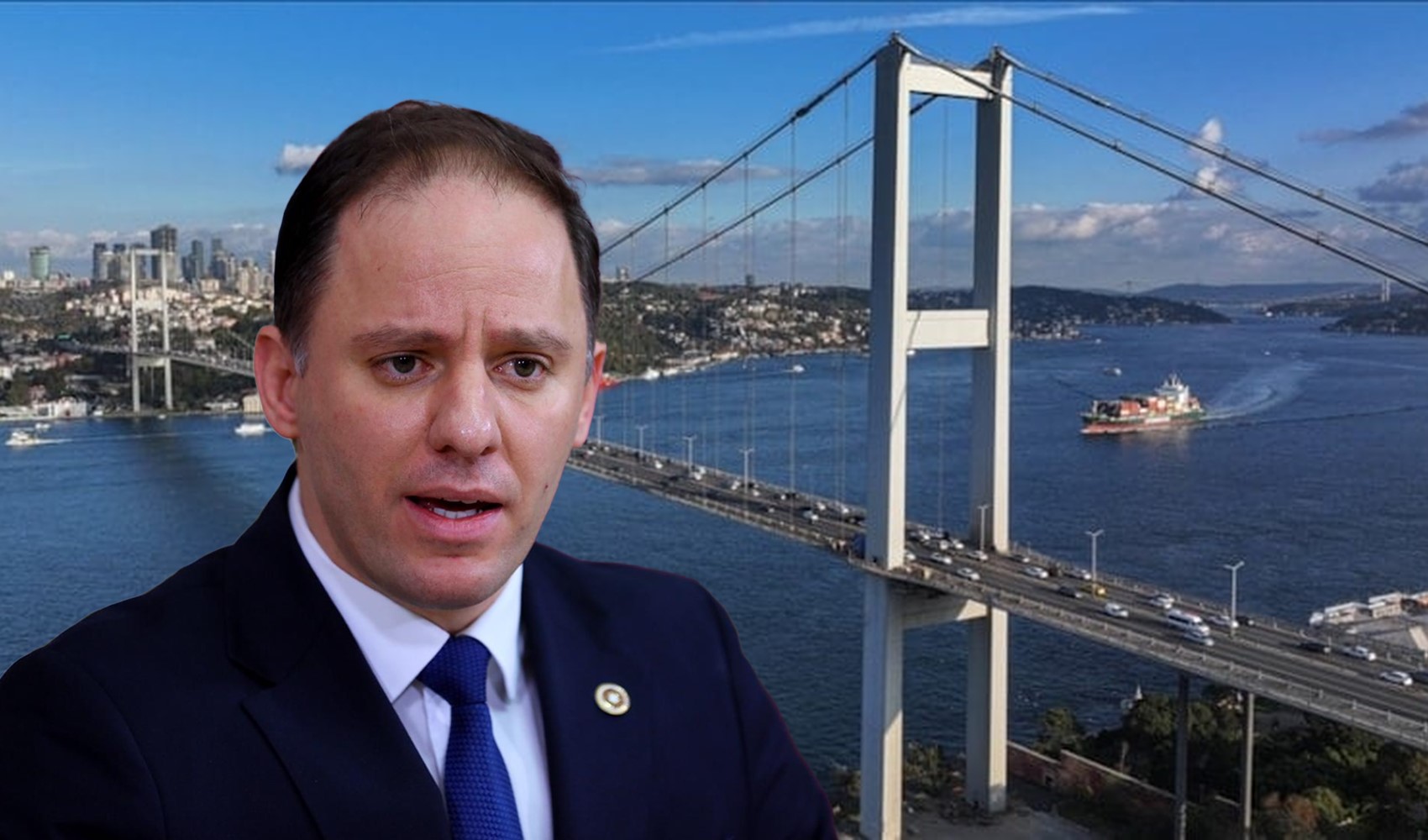
Bridges and highways are being privatized: 15 July and FSM are also on the list

Peugeot September 2026 price list is out

New details emerge in 'panel' operation targeting lawyers
Gökçek era detail in ABB investigation

Özlem Şanver: 'He said he would change, I believed him; should I be beaten just because I didn't leave?'

First statement from Osimhen after injury in Başakşehir match
The Süper Lig's new team becomes the transfer champion