



On May 28, the 18th Conference of Balkan Countries' Chiefs of General Staff was held in Istanbul, hosted by Chief of General Staff General Metin Gürak.
Greek Chief of General Staff Dimitrios Houpis also attended the conference, but he arrived in Istanbul a day early.
During that one day, in his own words, he visited the Greek Consulate General in “Constantinople”...
He went to the Ecumenical Patriarchate of Constantinople and was received by the “Ecumenical” Patriarch Bartholomew...
During this reception, he presented Bartholomew with a Hellenic map drawn in 1585 that shows Istanbul and Thrace outside of Turkey's borders...
After attending the Balkan Countries' Chiefs of General Staff meeting, he returned to Greece and was present at the commemoration ceremonies held on the occasion of the “fall of Constantinople” alongside Defense Minister Nikos Dendias.
Ankara remained silent for a full nine days in the face of this disgrace that we brought to light.
On the ninth day, upon a question from journalists, Ministry of National Defense sources made the following statement regarding only the map, without mentioning the expressions “Constantinople” or “Ecumenical” at all:
“Instrumentalizing the past to send a message is nothing more than a nostalgic consolation. We invite those who try to disrupt the constructive approaches put forward by the leaders of the two countries and to build a political career by sowing discord between the Turkish and Greek peoples to abandon nostalgic consolations and to see, understand, and accept the facts.”
WHY DID THEY GIVE THAT MAP?
Let us report the latest development in the incident.
Greek Ministry of Defense sources gave responses that went beyond impudence to that statement by the Ministry of National Defense sources just one day later, not nine.
The gift was supposedly purely symbolic... Turkey's reactions were “absurd”...
For a country that continues to demand a non-existent “Blue Homeland” map according to international law, it was supposedly surprising, to say the least, that they felt uncomfortable with a 16th-century map gifted by Chief of General Staff Houpis...
Let us come to the more important parts.
That map was the 1585 “Thraciae Veteris Typus” map, the work of Flemish cartographer and geographer Abraham Ortelius, and this map depicted “the wider geographical area of Thrace, including the Dardanelles, Propontis (Sea of Marmara), Bosphorus, Constantinople, the Black Sea, and the islands of Imbros (Gökçeada), Tenedos (Bozcaada), Lemnos, Samothrace, and Thasos”...
And the map was chosen as a symbolic gift for the “Patriarch” because it showed Imbros (Gökçeada), the homeland of Bartholomew...
The Greek side also confirmed that the map belongs to the year 1585, but let us just emphasize this:
Greece had not yet declared its independence, meaning it was Ottoman territory... 32 years had passed since Fatih Sultan Mehmet's conquest of Istanbul... But in 1585, they put forward their Megali Idea with this map and, unfortunately, largely achieved their goals.
Now, does this lead to the conclusion of “nostalgic consolation,” as our Ministry of National Defense sources said, or is it a pointing toward unreached goals?!
The map was gifted because Gökçeada, the homeland of Patriarch Bartholomew, was shown on it.
Very well, let one of our soldiers going to Greece gift one of our elected muftis a map of the Ottoman Empire's expansion... And if there is a reaction, let an explanation be made, for example, “because Thessaloniki, the birthplace of our Atatürk, is included.”
Let us see if the Greek Ministry of Defense sources will brush this off as “nostalgic consolation” as well!..
PAY ATTENTION TO GÖKÇEADA-BOZCAADA
On this occasion, let us draw attention to the ambitions of both the imperialists before and after World War I, and Greece and the European Union and Council of Europe it leans on, regarding Gökçeada and Bozcaada.
The imperialists decided that all islands in the Aegean should be given to Greece, but due to wars and negotiations, this could not be realized for Bozcaada and Gökçeada. Although the two islands in question were left to the Ottoman Empire, they were still occupied, and the occupation was not ended despite the agreements. During World War I, they were used as a naval base by the British. Commander-in-Chief of the Allied Armies Sir Hamilton managed the Gallipoli landings from his headquarters there.
Let us come to the present day. The Council of Europe and the EU brought the issue of Gökçeada-Bozcaada to the agenda for the first time in the 2004 Turkey Progress Report under the heading of “Christian minorities” and requested the following:
“That the Greeks who left the islands of their own free will due to the events that took place in Cyprus in the 1960s and settled in Greece or other European countries should return... That the lands they claim belong to them should be given back... That their churches and schools should be opened... That the islands should be made ‘bicultural’ and a kind of ‘autonomy’ should be granted”; in other words, that they should be jointly administered by Turkey and Greece.”
Meanwhile, the European Parliament took up the matter and applied to the EU Commission for the cancellation of the Turkish Government's decision regarding the seizure of the properties of the Greeks of Gökçeada. Along with this, the Gökçeada Greeks Association in Germany wrote a letter to the then EU Commissioner Verheugen, demanding “the reopening of schools, the lifting of the status of banning the Greek Orthodox religion, the return of properties to their owners, and the recognition of inheritance rights regardless of their nationality.”
Immediately after these developments, the then Prime Minister Erdoğan went to the islands and said, “Whatever their problem is, I have to solve it.”
Just four days after that visit by Erdoğan, the former Foreign Minister of Greece, Pangalos, who took the terrorist leader Abdullah Öcalan, who had left Syria, to Greece, and 21 deputies submitted a motion to the Parliamentary Assembly of the Council of Europe and demanded “autonomy” for Bozcaada-Gökçeada.
The year was 2008; Greek Prime Minister Karamanlis came to Ankara. The then Prime Minister Erdoğan, out of the blue, said, “30 thousand Greeks living outside of Turkey can return to Turkey.” The Ministry of Foreign Affairs also reported in the “November 2008- Minorities” report sent to the Human Rights Commission of the Grand National Assembly of Turkey (TBMM) that “there is no obstacle to the return of 60 thousand Turkish citizen Greeks who settled in Greece to Turkey.”
In the same year, between April 28 and May 2, a delegation from the Human Rights Committee within the Council of Europe, of which Turkey is a founding member, came to Turkey and examined the problem on-site. The Rapporteur of the delegation, Andreas Gross, received a promise from Erdoğan that “the restoration on the islands would be accelerated.” He also specifically “thanked” the Chairman of the TBMM Foreign Affairs Committee, Murat Mercan, whose great help he had received.
When the report prepared by Gross was accepted by the Parliamentary Assembly of the Council of Europe, the Ministry of Foreign Affairs reacted as follows:
“The report is based on a series of prejudices about our country and ignores the principle of ‘reciprocity’ established between Turkey and Greece by the Treaty of Lausanne. The correction of the biased expressions and serious inaccuracies in the report was brought to the attention of the Rapporteur in detail during the meetings held with him. However, despite these initiatives of ours, the necessary corrections were not made in the report. Furthermore, it is viewed with regret that the report, which does not reflect the legislative changes made in recent years to improve the situation of non-Muslim minorities living in our country, has been accepted by the PACE.”
What was in that report prepared by Gross, titled “Gökçeada and Bozcaada: Preserving the Biculturalism on the Two Turkish Islands as a Model for Cooperation Between Turkey and Greece”?
The demands we mentioned above, which were included in the EU Progress Report, were listed.
I suppose it is understood that Greek Chief of General Staff Houpis did not gift the map because of Bartholomew's birthplace at all, and that it was not “nostalgic” at all!..
Müyesser YILDIZ
June 11, 2025
Most Read
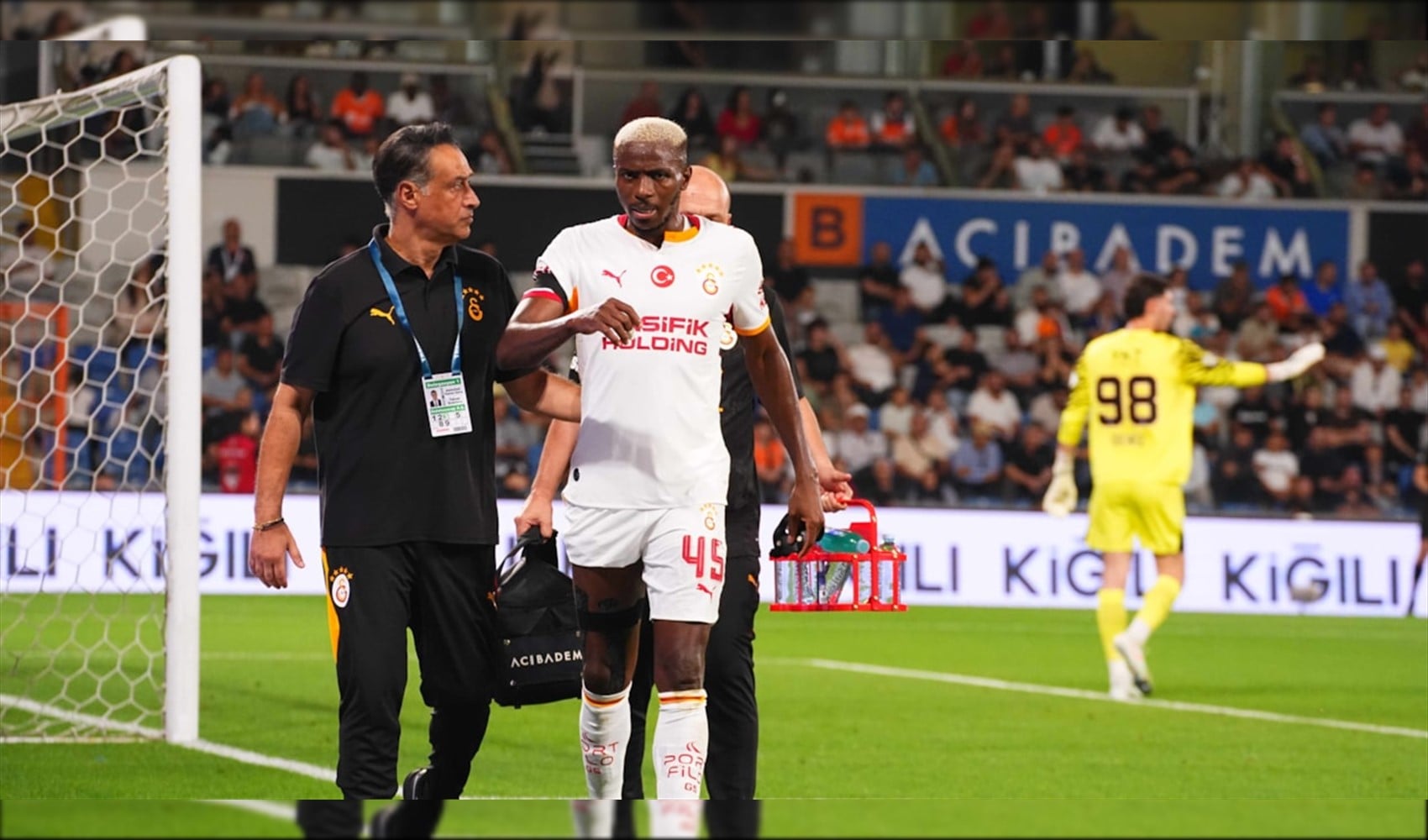
Galatasaray announces injury updates for Osimhen, Lemina, and Singo

Attention online sellers: Tax monitoring expanded
VAR for the Fenerbahçe-Beşiktaş derby has been announced!
Bridges and highways are being privatized: 15 July and FSM are also on the list

Peugeot September 2026 price list is out

New details emerge in 'panel' operation targeting lawyers
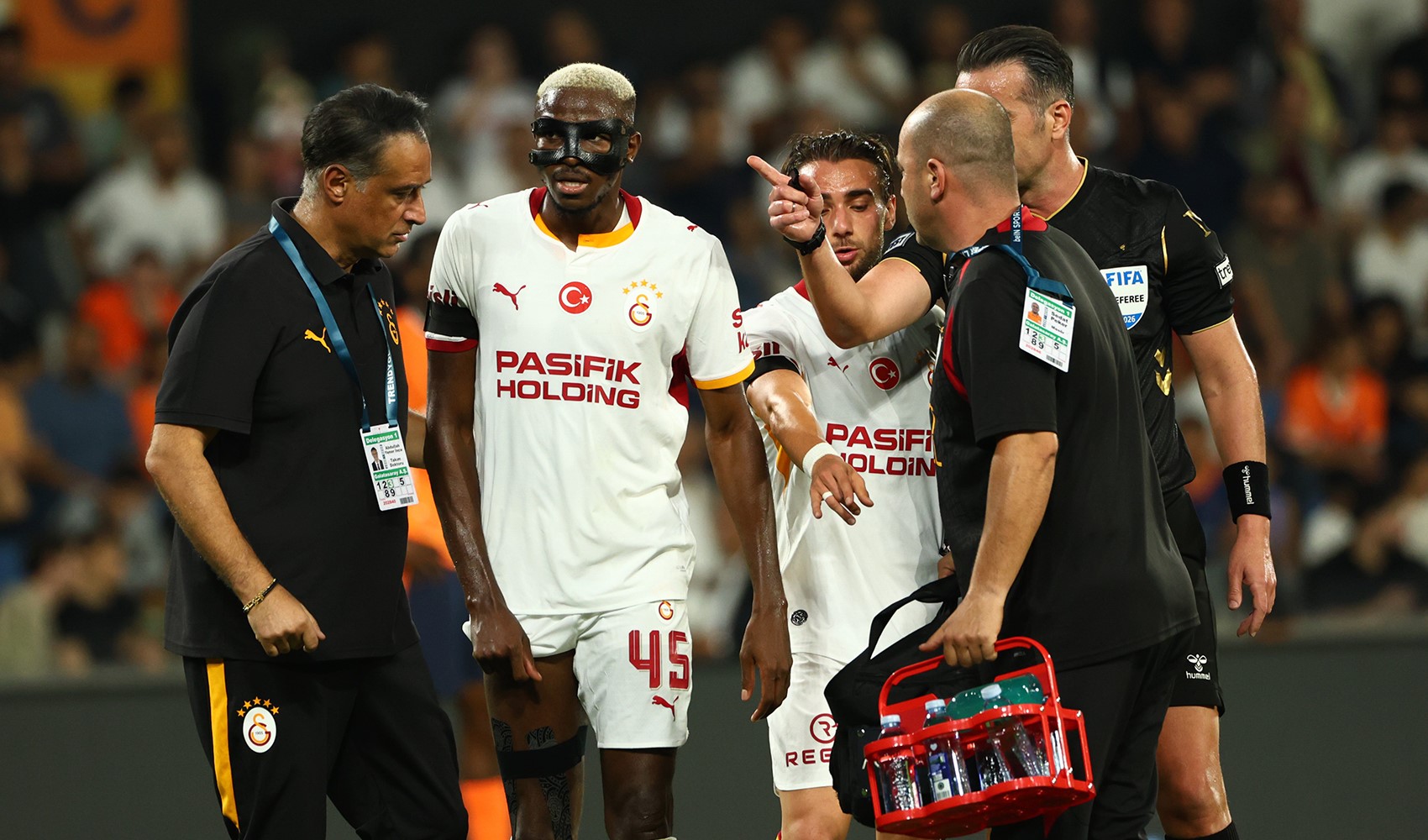
First statement from Osimhen after injury in Başakşehir match
Gökçek era detail in ABB investigation
Özlem Şanver: 'He said he would change, I believed him; should I be beaten just because I didn't leave?'
Mourinho explains why he substituted Arda Güler