



This fifth PKK opening was called "state wisdom"; our survival was tied to "peace" with the terrorist organisation due to developments in the region.
Most recently, Defence Minister Yaşar Güler spoke as follows:
"As you are all closely following, global and regional security is under threat. Those who drew maps with a ruler in our region a century ago and turned the Middle Eastern geography into a patchwork quilt are acting with the same ambitions today. As new plans were being laid in our surrounding geography, Turkey had to take resolute steps to disrupt these games. We have taken these steps under the leadership of our President and as a requirement of state wisdom, and we will continue to do so. Within this scope, with the proactive measures and practices we have implemented, we are now at a historic turning point. We are determined to save our country from the scourge of terrorism, which for 40 years has planted dynamite under our eternal and everlasting brotherhood as a nation and has drained our energy and resources."
What did "state wisdom" foresee?
Once again, not only was the terrorist leader in İmralı treated as an interlocutor, he was effectively elevated to the position of representative of our citizens of Kurdish origin... The outcome of the process was also made contingent on the terrorist organisation in Syria laying down its arms and integrating into the Damascus administration.
However, when the Syrian PKK insisted on a "decentralised" structure and the organisation's patron, US Syria Special Envoy Tom Barrack, said "A structure slightly below a federation should be considered," Ankara began sending messages that it should "draw its sword from its scabbard."
The indirect response came again from Barrack — a figure the public regards as "persona non grata" but whom the government cannot praise enough. Stating that the YPG is no longer affiliated with the PKK but is an ally of the United States, Barrack also noted:
"Mazlum [Abdi] and the SDF representing this group, and President Erdoğan's representatives Hakan Fidan and İbrahim Kalın are being responsible in managing this situation, aren't they? There is dialogue among us. But we need more dialogue here as well."
In other words, he was effectively saying, "We would consider it drawing a sword against the US, not against the YPG/SDF!"
WILL BUSINESSPEOPLE OFFER THE TERRORIST LEADER A CEO POSITION?
The function and purpose of the commission established in the Grand National Assembly of Turkey (TBMM) in response to the PKK burning 30 weapons has also become thoroughly muddled.
While Commission Chair Numan Kurtulmuş announced that no laws or constitution would be drafted in the commission, he argued that in all the work carried out to date, not even the slightest demand for autonomy, independence, a separate region, or the official status of Kurdish had ever been raised.
Setting aside the fact that some of the representatives heard by the commission requested a constitution based on the decentralist spirit of the 1921 Constitution and Kurdish-language education and instruction — did not Binali Yıldırım himself, the last Prime Minister of the Republic of Turkey and Chair of the Turkish World Council of Elders, enter through the door of updating the definition of citizenship and exit through the door of a new constitution?
Either Chair Kurtulmuş did not hear these things, or...?!
The terrorist leader preparing a "manifesto" in İmralı also seemed to grow impatient with the pace of events, calling for "a new phase in which steps are urgently taken in all dimensions" on the basis of the three key concepts of "democratic society, peace, and integration."
DEM Party members proposed that the commission travel to İmralı to meet with the terrorist leader. The PKK, however, considered this an insult to the terrorist leader and made it a condition that he be released from his "hostage" status and brought to parliament.
This picture that emerged after 7 sessions drove not only AKP members but even Abdülkadir Selvi to exasperation. Selvi, noting that the commission has no mandate to resolve the "Kurdish issue" or to work toward Turkey's democratisation, said: "If the commission attempts to do work beyond its purpose, it will become dysfunctional and fall apart."
The commission, which will take a break from its work this week, is reportedly set to hear "representatives of the business world, civil servant and worker trade unions, and academics" at a meeting expected to be held on 10–11 September.
Good heavens!.. Is the matter not about deciding what will legally become of the terrorists after they lay down their arms and surrender?.. What will civil servant and worker trade unions have to say on this?.. Or will the business world be making CEO offers to Öcalan or others for the "social integration" of terrorists?!
THE MHP-BACKED GOVERNMENT ABOLISHED THE DEATH PENALTY
Having summarised current developments, let us continue asking "who will have the final word on the PKK opening" in order to refresh memories.
In our first article on this subject, we recalled how the terrorist leader's execution file was not sent to parliament but was kept waiting at the Prime Ministry.
Following this decision taken by MHP Leader Bahçeli together with the late Bülent Ecevit and Mesut Yılmaz, the "National Programme" prepared within the scope of "EU harmonisation" included a commitment to abolish the death penalty... This was duly carried out, and the provision "The death penalty shall not be applied except in cases of war, imminent threat of war, or terrorist crimes" was inserted into the Constitution... This was followed by an amendment to the Turkish Penal Code (TCK)...
Let us share two notes from that period.
While the amendment related to the abolition of the death penalty was being debated in the Constitutional Commission, some AKP members submitted a motion to exclude the terrorist leader from its scope. At that point, Bahçeli summoned MHP members of parliament to his office. After the MHP members returned to the session, they voted to reject this motion.
The late Mersin MP Ali Güngör, who was expelled from the MHP for strongly opposing the process, revealed that when he shared his thoughts with Bahçeli — saying "If we say yes to these, neither the public, nor MHP members, nor the Ülkücüler will forgive us" — Bahçeli responded: "Ali Ağa, they will forget, don't worry."
Let us also note that 24 years later, Oğuzhan Güngör — son of Ali Güngör and an adviser serving in the TBMM Group — was dismissed from his post for criticising Bahçeli's 22 October call to the terrorist leader.
THE AKP ABOLISHED THE DEATH PENALTY ENTIRELY AND PURSUED AN AMNESTY
Let us summarise what the AKP, which came to power in November 2002, did for the terrorist leader and the PKK:
- In 2003 and 2004, the 6th and 13th Protocols of the European Convention on Human Rights, which provide for the abolition of the death penalty, were signed... With the amendment in May 2004, all remaining traces of the death penalty were also removed from the constitution.
- Also in 2003, when the United States made the enactment of a "Social Rehabilitation Law" a condition for cooperation against the PKK, AKP members demanded that "Öcalan, Hizbullah, and the Sivas defendants" also be included in its scope, whereupon the then-Interior Minister Abdülkadir Aksu announced that "taking reactions into account, the leadership cadre that directly ordered actions has been excluded from the scope."
- In the TCK amendment of June 2005, a single word was added to Article 125, under which Öcalan had been convicted. This turned out to be in Öcalan's favour, and the article was immediately reverted to its original form.
- In 2006, the phrase "the leadership cadre also benefiting from effective remorse" was inserted into Article 6 of the draft Anti-Terror Law. While Prime Minister Erdoğan said "I have no knowledge of this," the then-Justice Minister Cemil Çiçek said "units of the state requested this." DTP's Sırrı Sakık also claimed: "A segment of the state inserted this article, but apparently they did not have enough power."
BEHIND CLOSED DOORS... 'DEEP BACKGROUND' INFORMATION
Let us move to the period following Erdoğan's 2005 trip to Diyarbakır, where he said "The Kurdish issue exists and it is my issue" and "apologised on behalf of the state."
In July 2006, Aslı Aydıntaşbaş, then Sabah's Ankara correspondent, wrote about the most comprehensive project to "bring the PKK down from the mountains" — one that had been quietly put into practice for a year with the approval of the "highest levels of the state" behind closed doors. She claimed that a senior official from "an important security institution" in Turkey had met with Barzani and Talabani; that pressure was being applied for more than 2,000 terrorists in northern Iraq to lay down their arms and return to Turkey; that "intermediaries had proposed a general amnesty"; that it had been communicated that this was not currently possible "but that those outside the leadership cadre could quietly return to Turkey"; that it was proposed that 450 members of the leadership cadre who could not return to Turkey be resettled in a Northern European country; and that "on one hand, democratisation efforts would continue, while on the other, Öcalan telling the organisation to 'lay down arms' was on the table."
This claim caused an uproar. When asked whether such a plan existed, then-Prime Minister Erdoğan's response was: "Asking this question is an act of treason."
The person Aydıntaşbaş referred to as the "senior official of an important security institution" was none other than MIT Undersecretary Emre Taner.
Immediately after Aydıntaşbaş, İsmet Berkan revealed a conversation he and Murat Yetkin had in 2005 with "a senior official heading one of the state's top security units" on a deep background basis — meaning without citing the source, for informational purposes only. What Berkan recounted about the PKK plan was no different from what Aydıntaşbaş had written. The additional details were these troubling points:
- "Even though senior officials and politicians accepted the reality behind closed doors, there was serious resistance at lower levels. The units showing resistance were the Ministry of Justice, the Ministry of Interior, and some military units. The same climate also existed in the media and to some extent in public opinion..."
- "Without accepting the reality of Barzani's federated state and without ceasing to refer to Barzani as a 'tribal chief,' there was no possibility of implementing the plan to dismantle the PKK..."
Let us also emphasise that İsmet Berkan said: "The source Aslı Aydıntaşbaş spoke to is apparently the same person as our source."
Coming to the present day — are not the same things being discussed?.. Are not the Barzanis and Talabanis once again in play?.. And is not MİT once again the "main actor" in the process?!
The only difference is that, since it is now called "state wisdom," there is apparently no one left in the state "showing resistance" — there is complete alignment...
And public reaction continues. This is precisely why TBMM and commission chair Numan Kurtulmuş says: "The commission's purpose is also to increase social consent in Turkey... It is to turn this matter, which is state policy, into national policy."
THE MİT MESSAGE THAT 'BROKE THE MOULD'
January 2007: On the occasion of MİT's 80th founding anniversary, Undersecretary Emre Taner published a message that "broke the mould."
Taner made the following observations regarding our region, in summary:
"Turkey finds itself in an interior-line position between the Balkans — where wars of various scales and characters took place until recently and where potential conflict threats still exist — the Caucasus, which has been the scene of friction in many respects and carries various instability potentials, and the Middle East, which has been shaped by actual conflicts and terrorist activities for approximately 40 years. Furthermore, this position is gradually connected to areas opening toward Central Asia. It is also a fact that these three regions and Central Asia constitute, in many respects, areas where global policies and 'role' wars are concentrated from certain angles. Accordingly, a dynamic area expanding eastward in the 21st century in line with new problems and threats is in question, and this situation shows that Turkey is gaining/will gain a central position in an ever-expanding area."
He then said: "The lead actors and the extras are changing. Some nation-states will lose the history marathon and will lose their national sovereignty."
A full 18 years have passed; MİT was the lead actor not only in the 2005–2009 period but also in the 2010–2015 period, and similar things were debated and experienced.
What kind of "state wisdom" is this, that the same roads and methods are still being relied upon?
Let us consider Emre Taner's prophecy that "nation-states will lose" together with the question of who has benefited from the policies Turkey has pursued for 18 years — and with Trump's Ankara Ambassador and Syria Special Envoy Tom Barrack's words: "Strong nation-states are a threat to Israel."
Let us close with these lines from Professor Ahmet B. Ercilasun on 15 June:
"The Republic of Turkey is not composed solely of the government and the official institutions attached to it. The Republic of Turkey means the entirety of the Turkish nation, and the Turkish nation has the power to repel every kind of pressure, deception, and covert process."
In short: for decades, the state has said what it had to say. Now it is the turn of the Turkish Nation to have the "final word"!
Most Read
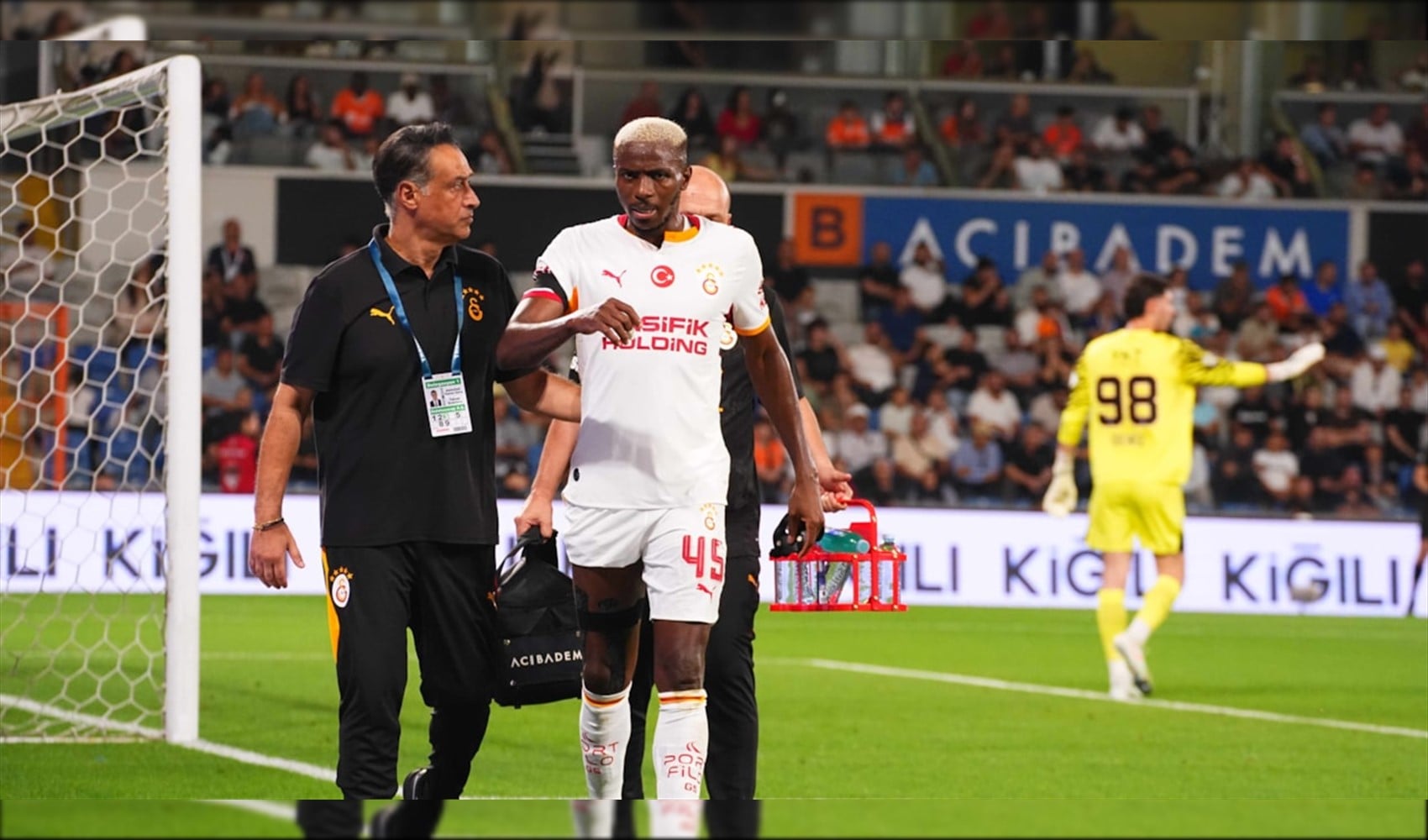
Galatasaray announces injury updates for Osimhen, Lemina, and Singo

Attention online sellers: Tax monitoring expanded
VAR for the Fenerbahçe-Beşiktaş derby has been announced!
Bridges and highways are being privatized: 15 July and FSM are also on the list

Peugeot September 2026 price list is out

New details emerge in 'panel' operation targeting lawyers
Gökçek era detail in ABB investigation
First statement from Osimhen after injury in Başakşehir match

Özlem Şanver: 'He said he would change, I believed him; should I be beaten just because I didn't leave?'
The Süper Lig's new team becomes the transfer champion