



The meeting between US President Donald Trump and Chinese President Xi Jinping in Beijing recently was eagerly anticipated as a “historic” moment. Xi’s cold demeanor toward Trump in October 2025 and the attack on Iran in February 2026 had raised questions about whether the meeting would even take place.
However, the US President finally landed in Beijing on May 13. Yet, one could say it was a summit marked by symbols and rhetoric, from the welcoming ceremony where Xi did not appear to the statements made by both leaders after the meeting.
As of May 17, it is impossible to agree with Western experts who described the meeting as “the mountain labored and brought forth a mouse.” Yes, no significant outcome emerged from the meeting. It was never expected that two powers engaged in a long-term rivalry would reach an agreement in fundamental areas where their interests clash. However, the image presented by the poses of the two leaders, and especially the contradictory statements from the American side, was this: Trump and Xi are like Gorbachev and Reagan, shaped by the political and social conditions of today. Especially President Xi, with his harsh expressions similar to Reagan’s confident declaration, “Mr. Gorbachev, tear down this wall (the Berlin Wall)!”, has determined the direction of the coming period. The hegemon is tired, China is shaping the conditions of war, and the meeting of the two leaders is essentially just a “halftime.”
“TIRED HEGEMON” IN BEIJING
Using the conceptualization of China foreign policy expert Hüseyin Korkmaz, even the fact that the “tired hegemon” went to Beijing is significant as a symbol in itself. The US is still powerful today and perhaps the dominant power in the world, but it cannot manage global crises alone, and for this reason, it is seeking common ground with China to reduce its burdens.
In fact, even this attitude is contradictory in itself: Just like Gorbachev, who tried to renew, purify, and thus save the empire, the first steps Trump took in foreign policy were intended to be isolationist and aimed at withdrawing to the continental United States. After all, the real threat was in the Pacific, that is, China itself. But the US administration, which surprised many bureaucrats, diplomats, and international relations experts, found itself buried in the Middle East in a way never seen in history while preparing to withdraw from the region. Thus, while actually preparing to fight the “end-game boss” China, it set off for China to discuss the topics of Iran, Taiwan, and technology wars.
In this process, President Xi acted as if reminding everyone of the idea of the 2,500-year-old Chinese strategist Sun Tzu: “The victorious side determines the conditions of victory before the war begins.” The venue was Beijing, the rhythm was Beijing’s, and Washington was no longer the only one setting the important agenda items. The diplomatic missions of China, which shared slogans of “peaceful coexistence”—a Cold War slogan—even before President Trump set off, actually reflected this spirit. As such, the poses Xi struck with Trump and Trump’s behavior—polite and respectful of Chinese culture without engaging in his usual polemics—carry significant meaning in every respect.
THREE FILES: IRAN, TAIWAN, AND TECHNOLOGY
China did not leave the US’s soft messages unanswered. However, behind the image of friendship in Beijing were discussions on the Strait of Hormuz, the Taiwan issue, rare earth elements, artificial intelligence, espionage, and supply chains. These topics show that the US–China rivalry is no longer continuing only in the military or diplomatic sphere, but has turned into an infrastructural and technological struggle.
Trump’s greatest expectation from Xi was, of course, for him to help with Iran and provide breathing room for the global economy. This situation reveals that the US can no longer solve every crisis alone, especially one like the one in Iran that creates massive aftershocks. However, as I have discussed in this column before, China does not want to act as a “subcontractor” for the US or other actors, but rather wants to maintain its own role as a rule-maker.
The harsh message that no one expected in the meetings came from Xi. The CCP leader, known for his stable, constructive language and who portrays a cold, moderate image, gave a very important warning to the US by mentioning the concept of the “Thucydides trap,” which has inspired countless articles in every language. The concept, named after the Ancient Greek strategist Thucydides, describes the risk of war that arises when a rising power begins to threaten the existing hegemon. However, at the Trump–Xi summit, this concept pointed less to the idea of inevitable war and more to the question of what rules the rivalry would be managed by: China does not want to escalate the conflict with the US immediately, but rather wants to continue this rivalry at its own pace, within a framework where red lines are recognized and which is called “constructive strategic stability.”
Beijing, aside from the “constructive” messages it gave, could also be said to be adapting the “protracted war” concept of Mao Zedong, the founder of the People’s Republic of China, to today’s conditions. Indeed, Sun Tzu’s view that “the greatest mastery is to win the war without fighting” is also a guide at this point: China is not trying to defeat the US directly in a military sense; it is trying to build a ground that narrows the opponent’s room for maneuver, from rare earths to artificial intelligence standards, and from the Persian Gulf to the South China Sea. Mao’s emphasis on long war and political will also completes this picture: For China, the issue is not whether the US has power, but how long Washington can sustain this power in Iran, Taiwan, technology, and domestic politics all at the same time.
As a result, it can be said that Xi’s strategy is not to challenge the US and start a war, but to quietly gain ground in areas that increase the US’s capacity, will, and time problems.
NOT A TRAP, BUT MANAGED INSTABILITY
As some experts have stated, Xi’s warning of the “Thucydides trap” does not mean “China is afraid of war.” This warning shows more that China wants to pull the rivalry into a long-term, controlled, and manageable framework in its own favor. Indeed, the bells are tolling for Taiwan: A spark that might ignite there next autumn could drag the entire globe into a fire.
Aside from the US’s demands, what China wants is not for the rivalry to end; it wants the rivalry to continue in a “measured,” “manageable” way that respects China’s red lines. While the Chinese side speaks of the risk of “conflict and even war” if the Taiwan issue is mismanaged, the US side tries to keep the subject low-profile by saying that policy has not changed. Trump’s statement on May 15, “We will have to go to fight somewhere 15,000 kilometers away (Taiwan). I don’t want that. I want them to calm down. I want China to calm down,” is an expression of this. But of course, one must not forget Sun Tzu’s saying, “All warfare is based on deception.”
In conclusion, what emerged from the summit in Beijing was not peace, but new rules of rivalry. China does not see avoiding direct conflict as a weakness; it wants to use time, space, and the tempo of the crisis to its own advantage. A similar situation is, of course, true for the US. However, material realities point to a “tired hegemon” before us and the existence of a rising power that says “tear down these walls” by pointing to today’s blockades.
Most Read
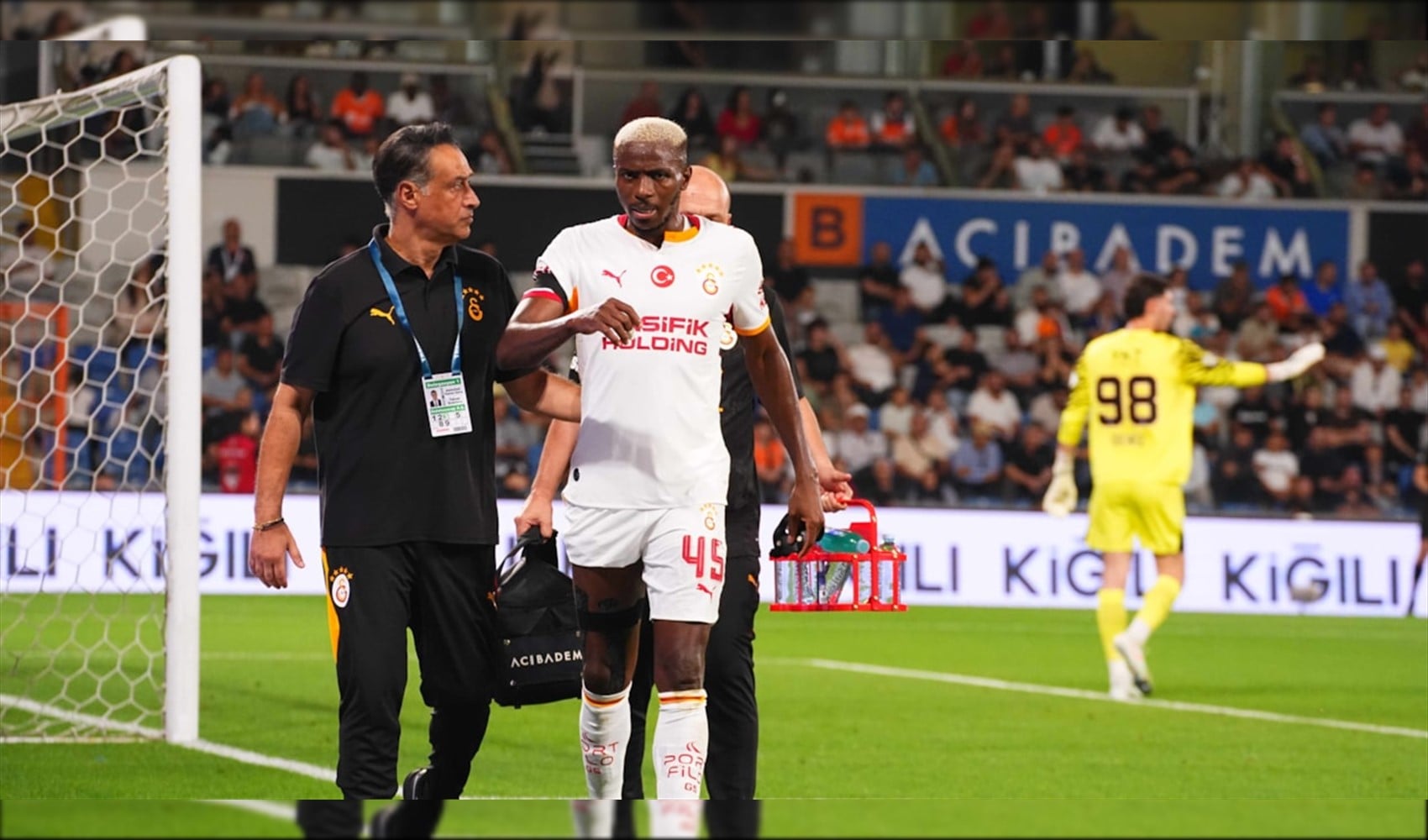
Galatasaray announces injury updates for Osimhen, Lemina, and Singo

Attention online sellers: Tax monitoring expanded
VAR for the Fenerbahçe-Beşiktaş derby has been announced!
Bridges and highways are being privatized: 15 July and FSM are also on the list

Peugeot September 2026 price list is out

New details emerge in 'panel' operation targeting lawyers
Gökçek era detail in ABB investigation
First statement from Osimhen after injury in Başakşehir match

Özlem Şanver: 'He said he would change, I believed him; should I be beaten just because I didn't leave?'

The Süper Lig's new team becomes the transfer champion