



Turkey’s fight against terrorism continues not only within our country, our homeland, and our lands, but also beyond our borders. This struggle is a very just, very legitimate, and very correct one, and it also demonstrates the following: Turkey is not just fighting against terrorists; it is primarily fighting against the imperialism that supports terror and terrorism. In this regard, clarity of consciousness, a holistic struggle, and national mobilization are essential. This is because we see that US imperialism and its European allies provide not only weapons and training support to the PKK, PYD, YPG, and FETÖ terrorist organizations, but also financial support, intelligence support, political support, diplomatic support, and media support.
At this very point, let us return to our history and remember once again how national consciousness, national sacrifice, and national determination supported the heroic army on the front lines during the War of Independence.
We know that the Great Offensive during the War of Independence was a crucial battle where the heaviest blow was dealt to the enemy and the road to İzmir was opened. The Victory of August 30 also holds a unique and instructive position in world military history. In our day, when every method is being tried to divide countries, dissolve nations, and eliminate states, the method followed by our great leader Gazi Mustafa Kemal Atatürk during the War of Independence provides important lessons that shed light on, guide, and inspire the present.
Atatürk, who started the National Struggle with a pioneering cadre, continued it with the Association for the Defense of the Rights of Anatolia and Rumelia, and conducted it under the legitimacy, will, and administration of the Grand National Assembly of Turkey (TBMM), founded the Republic of Turkey at a national, regional, and global breaking point. In this process, he also demonstrated once again how essential organization and intelligence are for the success of the struggle and for governance.
Atatürk, who said, “I love the artistry of soldiering more than anything else,” also demonstrated his commitment to peace by stating, “Unless the life of the nation is in danger, war is a crime.” His following words teach what must be done for the permanence of success: “No matter how great political and military victories may be, victories that are not crowned with economic victories cannot be lasting and will fade in a short time.”
THE NATION'S SUPPORT IN WAR
Atatürk, who said, “There is no warfare without communication,” tried to establish his headquarters as close to telegraph offices as possible during the War of Independence, which is one of the proofs of his strategic genius. The Irade-i Milliye newspaper, the Hâkimiyet-i Milliye newspaper, the newspaper published by Yunus Nadi first under the name Yenigün and later as Anadolu'da Yenigün, and the Anadolu Agency, which was established on April 6, 1920, even before the TBMM opened, are indicators of the importance Atatürk placed on the press. Through the press, propaganda was also conducted. The public was informed about the purpose, scope, and method of the war. The nation was being organized. Public opinion was being formed both domestically and abroad, and intelligence was being gathered.
The Directorate General of Press and Intelligence, established on June 7, 1920, shortly after the opening of the TBMM, was founded to take measures against internal and external plots aimed at disrupting national unity and to inform the public about the National Struggle. Atatürk, who knew very well the relationship between the press, politics, and national security, as well as its impact on society, provided paper support to many local newspapers in Anatolia, which had been cut off from Istanbul at that time, through this directorate.
BEING AN INDEPENDENT AND NON-ALIGNED INTELLECTUAL
The Anatolian press, which some circles today look down upon or turn their noses up at as the “provincial press,” supported the Kuvayı Milliye (National Forces) during those years when a large part of the Armistice press was identified with treason, and took a very honorable stance in the name of the homeland, the nation, honor, and the profession. The Anatolian press followed in the footsteps of Hasan Tahsin, not Ali Kemal.
Indeed, today, it is highly debated that some foreign foundations and funds, known to have close relations with their countries' intelligence services, pour large sums of money into “training and informing” certain professional organizations, unions, and democratic mass organizations in Turkey. The concerns that this is not only a matter of damaging the independence of the institution receiving that money but also a national security issue are very justified concerns. The funds allocated by the US to “influence” media organizations around the world during the period of the invasion of Iraq and the concept of “embedded journalism” are in our memories. Suddenly, the 4th estate began to be used in 5th column activities.
Mustafa Kemal Pasha, a leader proficient in using military victories for political goals, kept his finger on the pulse of the people during his frequent domestic tours. In his conversations with intellectuals, scientists, and journalists, he asked for the policies being pursued to be explained to the public. In a period when communication opportunities were very limited and in a poor country, religious figures, businessmen, scientists, and journalists, who were intertwined with the public due to their professions and had gained the public's trust, were the people Atatürk met with frequently.
Education is one of the two ministries, along with defense, that has the word “National” in front of its name. It is one of the subjects to which Atatürk attached great importance. Atatürk, who knew very well the relationship of education with national culture, national consciousness, national self-confidence and goals, and national security, entrusted the Republic to the youth, and the youth to the teachers.
We know that today, by using all elements of social engineering, perception operations, psychological warfare, and the economy, there is an attempt to divide the nation through sub-identities. Federalism is being imposed through feudalism. For this purpose, concepts such as democracy, freedom, and human rights are being hollowed out. What the US has done in Afghanistan, Iraq, Libya, and Syria in the name of “democracy, freedom, and human rights” is evident.
It is necessary to think together about the validity of the words of the famous actor Peter Ustinov, who said, “The terror of great countries is called war, and the war of small countries is called terror,” and the dimensions of the current confusion of consciousness, conceptual chaos, ideological drifting, and political blindness.
Most Read
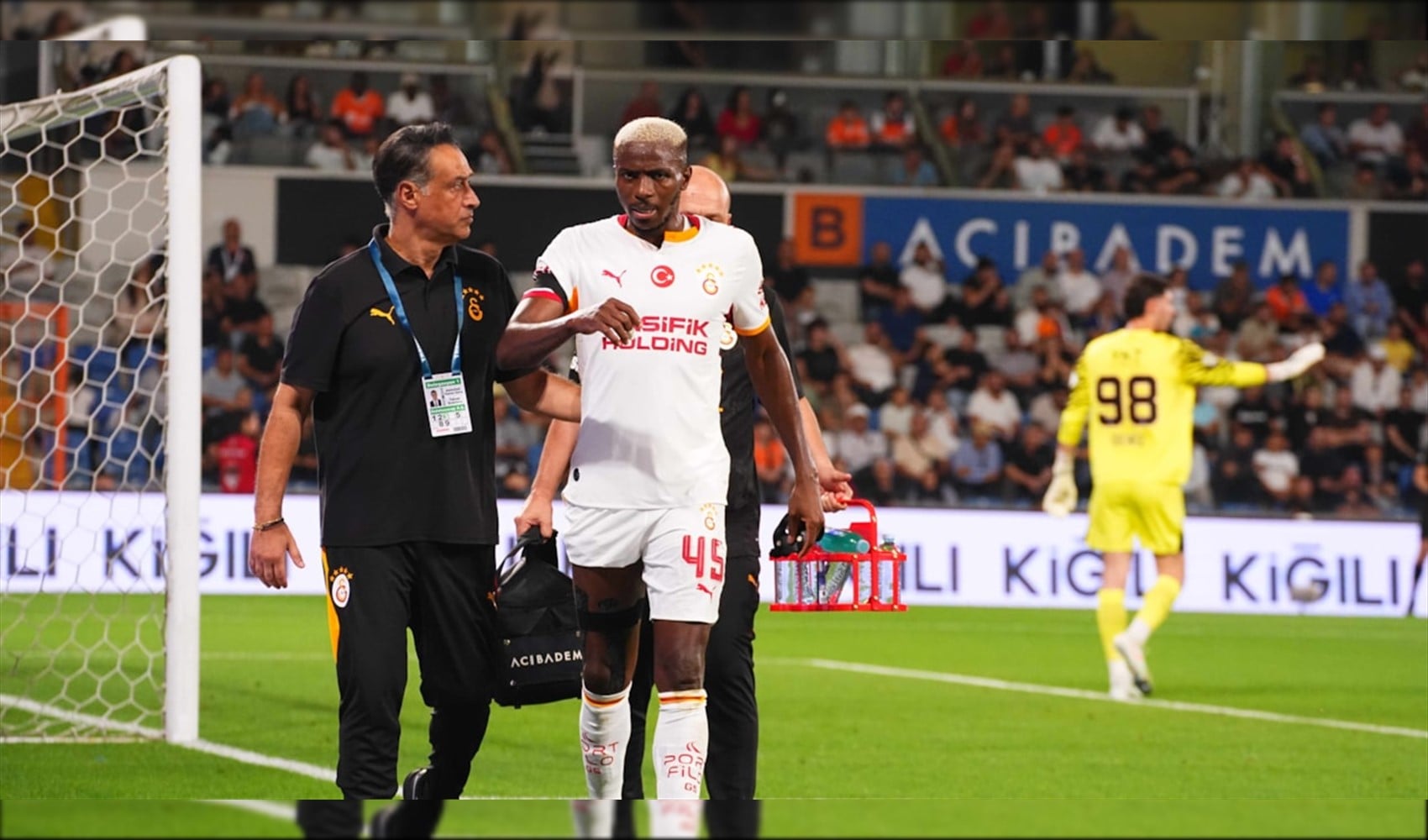
Galatasaray announces injury updates for Osimhen, Lemina, and Singo

Attention online sellers: Tax monitoring expanded
VAR for the Fenerbahçe-Beşiktaş derby has been announced!
Bridges and highways are being privatized: 15 July and FSM are also on the list

Peugeot September 2026 price list is out

New details emerge in 'panel' operation targeting lawyers
Gökçek era detail in ABB investigation
First statement from Osimhen after injury in Başakşehir match

Özlem Şanver: 'He said he would change, I believed him; should I be beaten just because I didn't leave?'

The Süper Lig's new team becomes the transfer champion