



A father... He is a high mountain one leans their back against, even if there is snow on his distant peaks and barren rocks on his slopes. When you walk beside him, as your tiny hand disappears into his huge, warm fatherly hand, the world is laid out at your feet, and all the rugged roads become smooth. When he lifts you onto his shoulders, you can see even the most distant lands; even the seas pull back, as long as your father just knits his brows and looks.
When you are left an orphan, everything you once considered close falls far away, all the tree branches you could reach grow even higher, the night is painted blacker, and the blue sky turns a murky gray. A weight settles upon your wings. Forget flying; you are afraid to even walk on a flat road.
It is a very heavy burden. When a child is left without a father, they continue to live by stumbling and rising. Every time they fall, the two drops that gather in their eyes are always their father.
This is exactly how I feel every November 10th, on behalf of my country that Mustafa Kemal left behind.
The Turkish nation is like an orphaned child that Mustafa Kemal left behind when he departed. For a time, those around feel the shadow of the father. The wild hyenas are still afraid to approach. As his shadow diminishes, a sense of courage comes to the pack of hyenas; their eyes turn bloodshot, their teeth are sharpened against the ownerless homeland.
However, those who know, know well that the child of a strong father always rises from where they fell, even stronger than before, drawing the power within from their father's memories, his happy, joyful days, and the morals and principles he entrusted to them.
His country is like his own flesh and blood to Mustafa Kemal. Just as a father imagines his child in the brightest future, lays the stones on the path they will walk one by one, and never wants them to trip, stumble, or stray from the path anywhere, Mustafa Kemal showed such care for his homeland.
He meticulously taught everything it would need in the future to the child of his own soul, whom he would have to bid farewell to so early.
A child, or a nation, if on the path to success, commemorates the cherished memory of their Ata with a bittersweet smile and pride. They whisper to the deep blue sky, 'Do not be sad! I am on your path, I will succeed, just as you always dreamed, so that you do not worry or grieve for me.'
However, our bittersweet smile has been erased for a long time. For years, every November 10th, our tears, which burn our souls like fire, have been streaming down involuntarily. The reason is that we have fallen leagues away from the future Mustafa Kemal dreamed of.
It is the miserable, pessimistic, and exhausted state of the nation. It is the fact that every trust Mustafa Kemal left to the Turkish nation is being torn to pieces between the teeth of this pack of hyenas with anger, spite, and audacity.
The reason for our tears is not weakness. It is because we have turned into a country where rationality, morality, manners, and ethics are concepts that are mocked. It is because grace and kindness are now seen as weakness and naivety. It is because we have been kept away from enlightenment, reforms, knowledge, and science.
For all these reasons, every November 10th, I grieve for the state of my country with the bitterness of a child who could not properly hold onto life after their father.
Because we know, we see with our own eyes. We see the destruction the Turkish people have suffered over the years, unable to either internalize or implement the reforms Mustafa Kemal envisioned. We see what the children of this country have been deprived of. We see what kind of disasters they have had to deal with because of all these deprivations. We all know, and that is why we grieve so much every November 10th.
We see the opportunities, possibilities, and what occupies the minds of a young person in Europe, their understanding of art, musical talent, level of general culture, and the grace and good intentions in their view of the world, and we are saddened by the misfortune of our own country.
While the world is preparing for the next industrial and technological revolution with all its might and resources, while international summit meetings on artificial intelligence are being held, in our country, the people are still desperately trying to understand the miracle of a ship weighing tons that can stay on the water, the wisdom of an airplane gliding in the sky, and the mystery of fresh water and salt water that do not mix, using all kinds of methods other than the scientific.
Looking at the deep chasm between us and contemporary civilizations, we grieve. A little more each year at this time.
Admitting that we could not protect Mustafa Kemal's legacy is, of course, a heavy burden. No one wants to shoulder such a heavy burden. Mustafa Kemal's legacy to us was not just the pampered children of the mansions or villas in Istanbul, who would be supported by their families anyway—though they are also very precious to the homeland, of course. However, Mustafa Kemal's legacy was to raise children who would develop this country from every corner; they were the children in Diyarbakır, Mardin, Hatay, Konya, Gaziantep, and Sivas.
They were children who, let alone shoes, did not even have rawhide sandals, who were dying of disease, and who had neither health services nor educational opportunities. They were children just like Abdurrahim, whom he took with him from Diyarbakır, who was motherless and fatherless, and perhaps did not even know how to speak Turkish, nor how to read or write.
As we always ask ourselves, 'Where did we go wrong?'
We made a mistake by forgetting that while condemning a nation to ignorance, we were also a part of that nation, and that we all live in the same country together. Because we are currently living in a country formed by the votes of the grandchildren of those children we forgot to protect.
We made the mistake by hiding inside our homes with bookshelves on the walls, forgetting that we would build our future together with the people of this country who have never been given the feeling of reading a single book from beginning to end in their entire lives.
Education is a process in human life; it continues until death. It does not stop even if you want it to. For this reason, school is a system created by civilizations, invented to equip a child with basic knowledge to prepare them to live within a civilized society.
But how does the education of an adult who has broken away from school life continue? In our country, the education of the people continues in mosques, and in recent years, it has even begun to continue in madrasas and religious sects, moving beyond the control of mosques. Fathers learn how to educate their children, how to treat their wives, whether to send their daughters to school, at what age a girl should be married, the conditions for committing violence against their wives, whom to hate and whom to love, whether to get vaccinated during a pandemic, and whether science is necessary or what the theory of evolution explains, in these places. And in the construction of the country we dream of, everyone certainly has a right to lay a brick.
Mustafa Kemal's goal was to entrust the children of this people, who were left to the mercy of mullahs and charlatan 'hodjas', to good teachers, primarily through boarding schools. It was to create a generation that learned positive sciences and knew foreign languages. In the next step, the goal was to send these children abroad to bring the developments there to Turkey. Through these children, their families in Anatolia would also be included in the same developments, the education level of the local people would be increased with the support of the Village Institutes, and thus the country would rise together from every corner.
The education plan he prepared for the children he adopted was exactly like this. I still ask myself, how many of our politicians who have taken Atatürk as a guide have adopted a child from an orphanage in Anatolia and shared the food at their table, their knowledge, and their manners with this child? How many of our politicians are there who, while in office, entrusted this child to their mother and sister, covered the child's education expenses abroad out of their own pocket, and ensured that this child grew up to be a useful person for the country?
While the life of a leader like Mustafa Kemal, who dedicated his life to the duty for the Turkish nation, is told so much, how could it not be taught so much? It is truly very difficult to understand.
As we were saying, 'Where did we go wrong?', I think this is one of the mistakes. We have been trying to make people memorize Mustafa Kemal for 85 years with a single-type curriculum. We need our children to understand Mustafa Kemal sincerely more than ever. Knowing where he was born, the crows he chased in the field, and the schools he attended does not provide sufficient equipment for young people who have no way of understanding the spirit of that time.
When you examine the books Mustafa Kemal read, when you look at the notes he took on the books and the sentences he underlined, you see a completely different person. Suddenly, he appears before you with all his ideas, like a book you enjoy reading very much. The traces a person leaves inside the book they read. It is the most direct and sincere way to understand that person's ideals, principles, dreams, and even their state of mind.
In the books he read, he took notes under some sentences saying 'nice', and in some places, he said 'exquisitely nice!'; it must be the most elegant compliment one can make for a sentence in a book they are reading... He underlined some places, highlighted some sentences as if scribbling under them; he read in French, he read in English, in Ottoman Turkish, and in other languages.
To understand a leader like Mustafa Kemal, perhaps we need to understand the books he read while forming himself and include them in the curriculum. We can only expect new Mustafa Kemals to grow up from a generation educated with the books that formed Mustafa Kemal's personality. If we turn our way of understanding Mustafa Kemal into an ideology, we must also accept with prejudice that ideologies, just like religions, are systems closed to criticism and therefore to change. We must break out of this vicious cycle and learn and teach Mustafa Kemal anew so that the new generations we long for, who will develop this country, can grow up....
Most Read
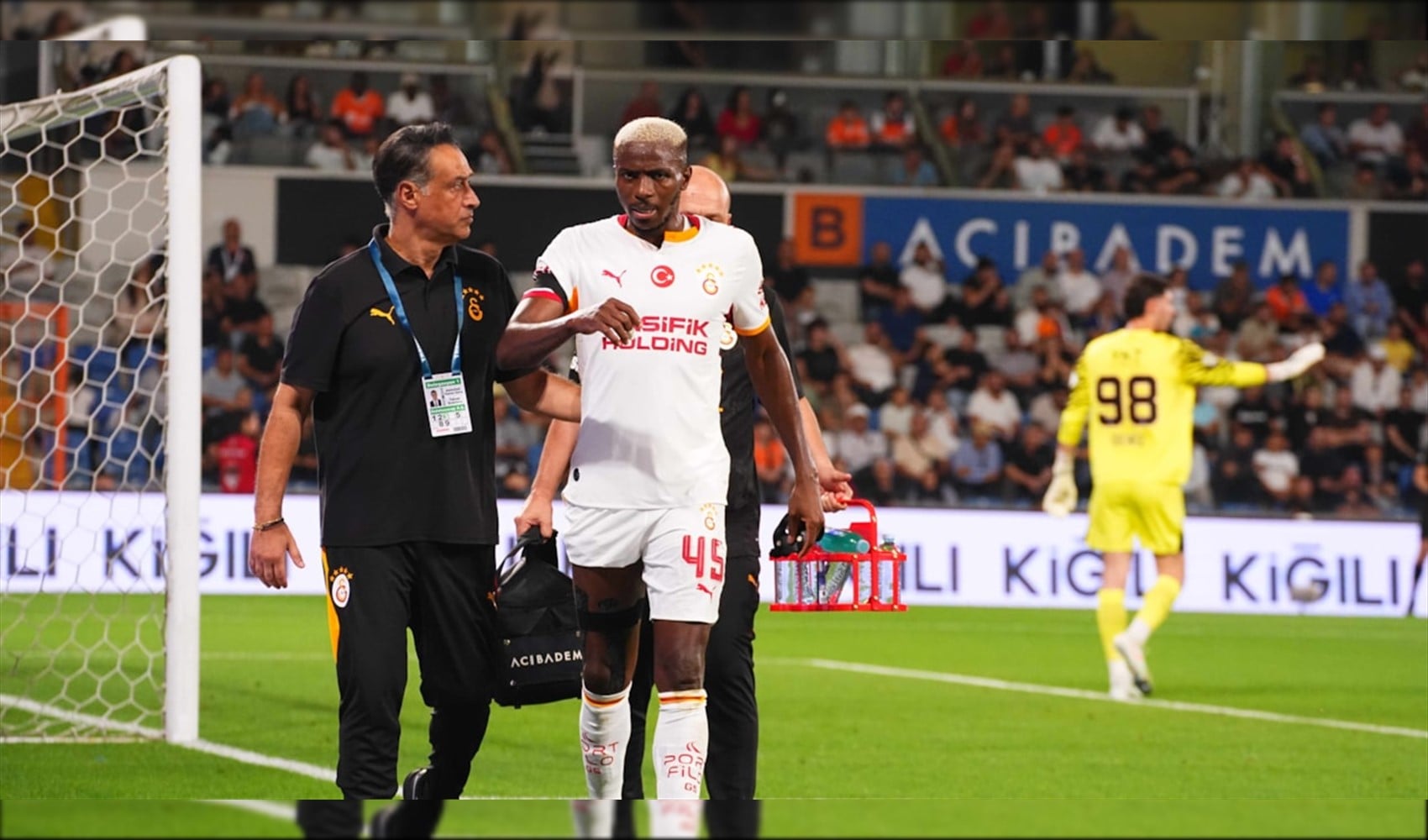
Galatasaray announces injury updates for Osimhen, Lemina, and Singo

Attention online sellers: Tax monitoring expanded
VAR for the Fenerbahçe-Beşiktaş derby has been announced!
Bridges and highways are being privatized: 15 July and FSM are also on the list

Peugeot September 2026 price list is out

New details emerge in 'panel' operation targeting lawyers
Gökçek era detail in ABB investigation

First statement from Osimhen after injury in Başakşehir match

Özlem Şanver: 'He said he would change, I believed him; should I be beaten just because I didn't leave?'

The Süper Lig's new team becomes the transfer champion