


The 1921 and 1924 Constitutions



The rationale and scope of this article
Despite the fact that almost every possible change has been made to the constitution over the last 20 years and a de facto presidential system has been adopted, there are still some things that the government has not been able to touch. These are the unchangeable articles that contain the fundamental characteristics of the republic. The intention behind the recently voiced call that "we must create a new constitution" is to utilize the principle of the unification of powers (tevhid-i kuva) of the republican revolution to build the counter-revolution's own superstructure.
For this reason, in my article, I will address Turkey's constitutional and political developments from 1921 to the 1928 amendment. During these seven years, there were three terms of the Grand National Assembly of Turkey (TBMM) and two constitutions: the 1921 and 1924 constitutions. It is also necessary to mention the period from October 9, 1923, to April 20, 1924, which I call the interim period. This is why I define this sub-period, in which the institutions of the republic and the caliphate coexisted, as an interim period.
WHAT KIND OF POLITICAL REGIME WAS ESTABLISHED WITH THE 1921 CONSTITUTION?
The Law of Fundamental Organization (Teşkilatı Esasiye Kanunu) dated January 20, 1921, and numbered 85, revealed and sufficiently clarified the nature of the regime with its first 9 articles. The first points that draw attention were the source of sovereignty and the fact that the country was governed by the TBMM. The TBMM was the political organ in which sovereignty was manifested and concentrated. The constitution indicated that the powers of legislation and execution were inherent in the moral personality of the assembly. These were also the principles of the French Convention.
The 1921 Law of Fundamental Organization should be examined in three sections. The first defines the fundamental principles of the regime. These are the first 9 articles that were actually implemented. The constitution defines the assembly, the presidency of the assembly, its supreme and indisputable powers, and the unification of powers (tevhid-i kuvva). The second section is a projection for the future that was never implemented: the section on administration and provinces (vilayat).
This section is based on the principle of decentralization. In 1921, the provincial administration was neither the administration of the Ottoman era nor that of the republic. It was a unit of decentralization. An important concept here is 'autonomy in local affairs' (mahalli umurda muhtariyet).
The limits of this were to be determined by a law to be enacted. Let us recall that such a law was never enacted. It would be appropriate here to mention a little about my article titled 'The Draft Law on Districts' (Nevahi Kanunu Layihası).
The draft law on districts was the bill that the first assembly debated for the longest time, only for it to become obsolete. The title of my article was: 'A Local Democracy Initiative in 1920s Anatolia: The Draft Law on Administration of Villages and Districts' (Toplumsal Tarih, August 1996). The original title of my article was 'Commune Democracy.' The editor changed it to 'local democracy' and published it that way. However, I had chosen that title specifically. They did not understand what I meant.
When evaluating this draft law—even today—I think the same things. Neither in the 1921 Constitution nor in the debates on the Draft Law on Districts was the autonomy (muhtariyet) that came to the agenda a form of political autonomy. There is no political autonomy in the Law of Fundamental Organization (Teşkilatı Esasiye Kanunu) or the obsolete District Draft Law. There is autonomy, but it is 'autonomy in local affairs,' not in the sense of independent administration.
If we were to accept the existence of such a thing, it would contradict the principle of the unification of powers and the supremacy of the assembly. In a system where the Grand National Assembly of Turkey (TBMM) is accepted as the supreme political institution where sovereignty is manifested and concentrated, speaking of the political autonomy of provincial and district councils is contrary to the nature of things.
WHAT WAS THE POSITION OF THE TBMM SPEAKER IN TERMS OF LEGISLATION AND EXECUTION IN 1921?
The 1921 Constitution determined the term of office for the Speaker of the TBMM as one election cycle. For the deputy speakers and the second speaker of the assembly, re-election was required for each legislative term.
The conclusion drawn from this, based on the premise that the Grand National Assembly of Turkey (TBMM) represented the national will, was to authorize its president as the head of the legislature to sign laws on behalf of the assembly. In addition to this, it was decided to establish executive power through the General Assembly decision numbered 5. With this decision, an executive organ was being created. The President of the TBMM was also the natural head of the executive power. Law No. 3 on the Election of Executive Deputies determined the procedure for the formation of executive power.
As for the application of the principle of the separation of powers, the execution of executive affairs through a mandate given by the TBMM was adopted as the fundamental principle. The ministers were not ministers of the constitutional monarchy, but deputies of the TBMM; such as the Minister of Health, the Minister of Justice, and the Minister of Public Works. The government was also defined as the Council of Executive Deputies. The army was the Army of the Grand National Assembly of Turkey. It was under its command and control.
SUSPENDING CERTAIN REGIME CONTRADICTIONS
Another regulation with constitutional value enacted in the autumn of 1920 was the Law on Quorum for Deliberation. This law contained some points that contradicted the principle of national sovereignty. The law spoke of a goal of saving the office of the Caliphate and the Sultanate. This was a clear contradiction. How could an assembly that explained its foundation through national sovereignty express that its goal was to save the Sultanate? The goal was to save the homeland. That was the real goal. Based on the principle of national sovereignty, the Caliphate and the Sultanate were identified with the state through an abstraction, independent of the Sultan and his government. However, as clearly stated in the 1921 Constitution, the place where national sovereignty was manifested was the Grand National Assembly of Turkey. And the state was to be the State of Turkey, not the Ottoman State.
Undoubtedly, in an environment where the National War of Independence was being fought, this formulation was an intermediate path found to avoid unsettling the religious deputies. In later regulations, the phrase 'the Caliphate and the Sultanate will take their place within the framework of the law after the liberation' would be included. This was leaving a door open. In the Law on Quorum for Deliberation—in my opinion—the contradiction between the state of the Anatolian Revolution and the old regime in Istanbul was being suspended, and the decision was being left for after the liberation.
WHAT DID THE LAW ON QUORUM FOR DELIBERATION PERMIT AND WHAT DID IT PROHIBIT?
The law—with the knowledge and approval of the Assembly—authorized members of parliament to hold external positions such as army or corps command and ambassadorships. It did not authorize civil administrative positions. One could not be both a governor and a member of parliament simultaneously.
With the authorization granted by the law, commander-parliamentarians were permitted to command troops. Examples include Kozan Deputy Fevzi Pasha serving as Minister of National Defense, and Edirne Deputy Mirliva İsmet Bey (later Pasha) serving as Chief of General Staff and Commander of the Western Front. The First Assembly was a body that both managed the war and assigned some of its own members to serve in the Army. The red-green ribboned Independence Medals were to be awarded in reference to this.
HOW WAS THE COMMANDER-IN-CHIEF DEFINED? WHAT WERE ITS LIMITS?
In the Ottoman Empire, the Sultan himself was the Commander-in-Chief. If the Grand Vizier commanded the army, he was the 'serdar-ı ekrem' (commander-in-chief). During the First Assembly period—and today as well—the Commander-in-Chief position is inherent in the moral personality of the TBMM (Grand National Assembly of Turkey). According to the Law on the Commander-in-Chief dated August 5, 1921, it was explicitly stated that the military powers of the Assembly were delegated to the Commander-in-Chief, with the condition of renewal every three months. The Assembly granted this authority to its own president—subject to extension every three months—while reminding him of its superior legal status and the legislative irresponsibility and immunity of its members. The 1924 Constitution preserved the institution of the Commander-in-Chief exactly as it was. It again referenced the moral personality of the Assembly, noting that it is represented by the President. For the TBMM, which is currently in its 28th term, this principle remains valid despite recent constitutional amendments.
THE SULTANATE AND THE CALIPHATE AFTER THE GREAT VICTORY 1922-1923
With the decisions of November 1, 1922 (307-308), the TBMM abolished the Sultanate. It declared that the right of sovereignty had passed to the nation. The exact content of this concept would be defined a year and a half later, on March 3, 1924.
The sultanate was abolished on November 1, 1922, but the Caliphate remained as its outward appearance. Until October 29, 1923, the government of the Grand National Assembly of Turkey (TBMM) continued to exist in Ankara, and while its representatives were negotiating peace, the Caliph of the Muslims, elected by the TBMM, was residing in Istanbul. Had the Ottoman dynasty continued, the Crown Prince would have ascended the throne as Abdulmejid II. The sultanate was abolished; only the caliphate remained. This had no legal significance. A delegation sent to him reminded him that he held no political authority and that the caliphate was being preserved merely as a historical trust. When the Republic was proclaimed in 1923, an interim period began in which the President of Turkey was in Ankara, while Abdulmejid Efendi, who attended the Friday procession on a white horse, was in Istanbul. This lasted until the revolutionary laws of March 3, 1924.
RESULTS OF THE SECOND PARLIAMENTARY ELECTIONS
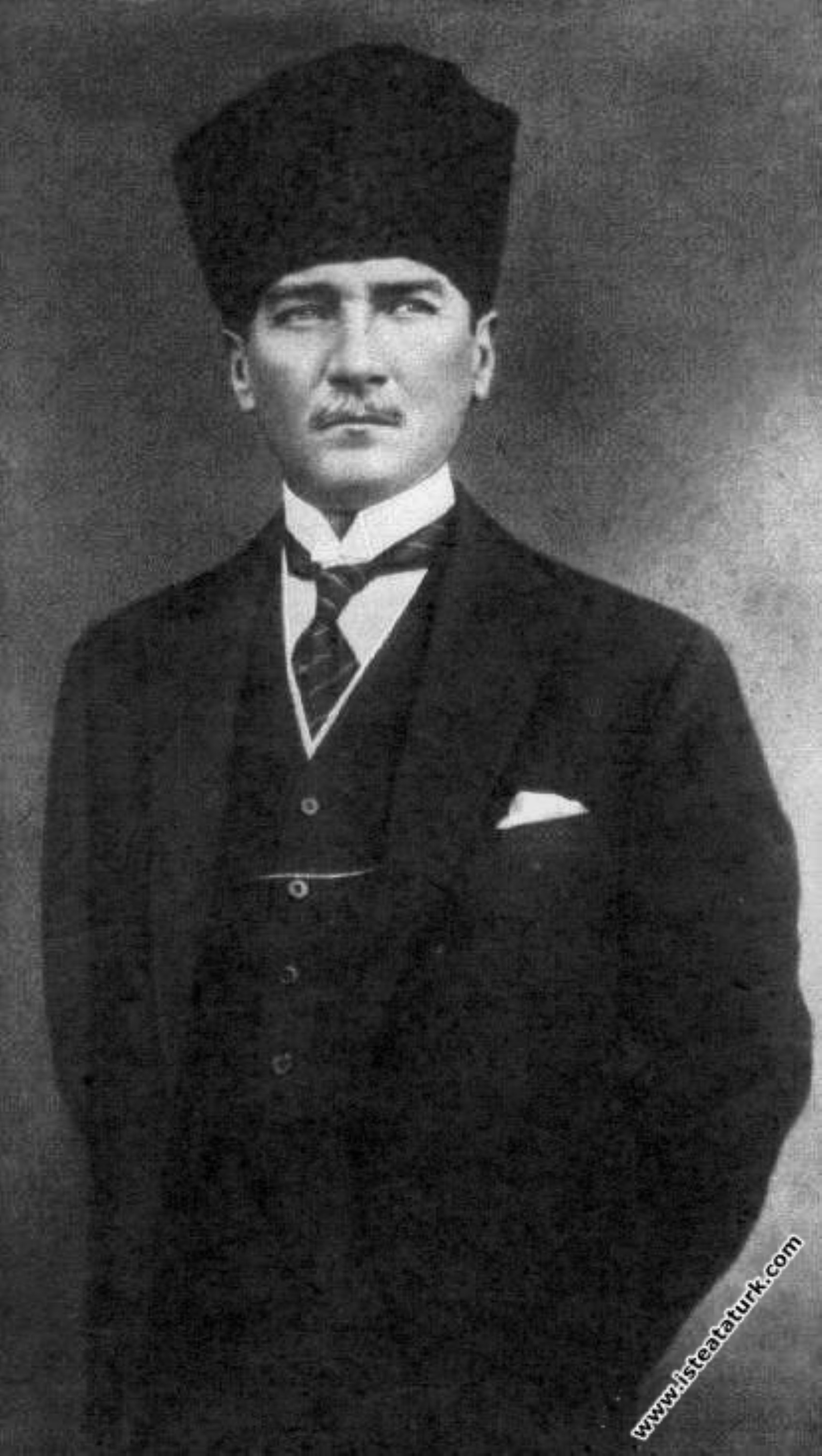
The Great Victory had elevated the President of the TBMM and Commander-in-Chief Mustafa Kemal Pasha to the position of a charismatic leader. He was no longer just a field marshal and Gazi Pasha; he was the Savior (Halaskar).
The decision to renew the elections provided the opportunity to purge the conservative elements of the Ankara Convention. The first parliament was the parliament of the national struggle and liberation. However, the composition of its deputies posed an obstacle to the realization of the process we call the Turkish Revolution. The first parliament was the parliament of liberation, while the second parliament was the one that established the Republic and the state. I would like to clarify this point: for many conservative deputies, the TBMM was a third constitutional parliament whose caliph had been taken prisoner. They viewed the TBMM as an assembly of the consensus of the community (icma-i ümmet) without a caliph as they saw it.
For the Turkish Revolution to shift into a higher gear, it needed to change tracks at the appropriate station. This change was made possible by the second parliamentary elections.
This parliament would ratify the Treaty of Lausanne, proclaim the republic, abolish the caliphate, and draft the 1924 Constitution. It carried out many revolutionary changes, primarily the Civil Code and the Penal Code, through ordinary legislative means, and enacted the revolutionary laws that still exist today as a chapter in our Constitution.
HOW CAN TURKEY'S POLITICAL REGIME BE DEFINED FROM AUGUST 1923 TO THE REPUBLIC?
The second parliament was Mustafa Kemal's parliament. Although it contained elements that would later form the Progressive Republican Party, its members were overwhelmingly behind Mustafa Kemal. In the atmosphere of self-confidence created by victory and peace, the Grand National Assembly of Turkey (TBMM) elected Mustafa Kemal Pasha as its speaker.
As for the executive branch, Rauf Bey had been elected Chairman of the Council of Deputies following his return from Malta, in accordance with Law No. 244 passed in the summer of 1922. After Rauf was elected by a direct vote of the general assembly, he was referred to as the Prime Minister. He stood against the Speaker of the TBMM—with the support of the second group—as a display of political power. However, the Second Parliament would not have elected him. Times had changed. Instead, Ali Fethi Okyar was brought in as the Chairman of the Council of Deputies.
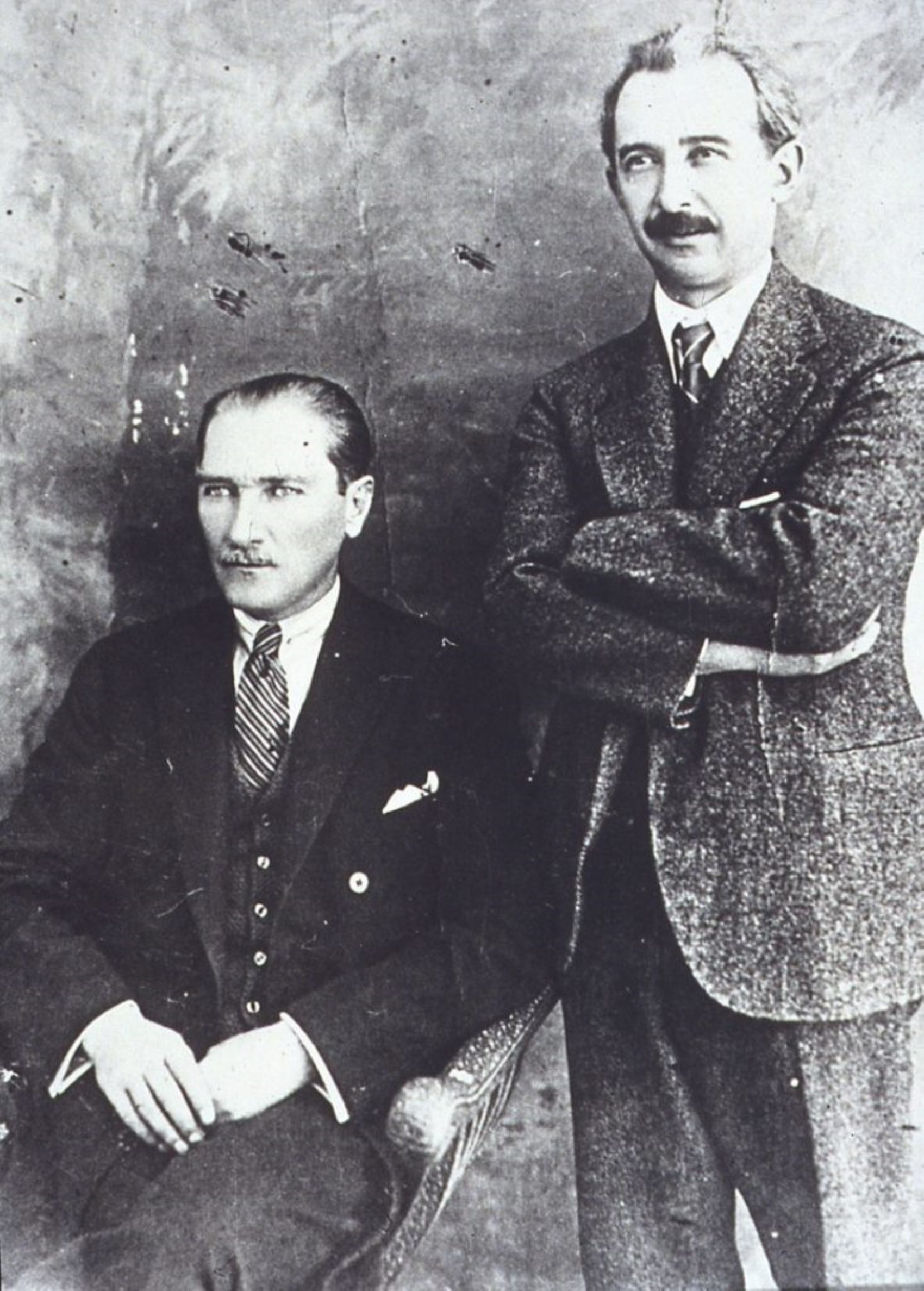
From his return from Malta (1921) until Lausanne, Rauf Bey had acted within the first group of the Association for the Defense of Rights as if he were a representative of the second group. After 1921 and during the Lausanne process, he was competing with the leadership of the Gazi. After Fethi Bey was elected Prime Minister (his official title was still Chairman of the Council of Deputies), the other deputies were also elected one by one as required by law. Without being nominated. By direct election by the general assembly of the parliament. Thus, the executive was organized in a way where Mustafa Kemal Pasha was the Speaker of the TBMM and de facto head of state, and Fethi Bey was the Prime Minister.
THE FORM OF GOVERNMENT OF THE STATE OF TURKEY IS A REPUBLIC
There were only two months between the convening of the second parliament and the proclamation of the republic. As will be remembered, the official argument was discord within the cabinet. This statement is not incorrect either.
Because the Council of Deputies was not a government, but a collection of individuals. The law that made the executive one step more autonomous from the legislature—on the path to becoming a real government—is Law No. 364. It bears the title "Law Amending the Law on the Fundamental Organization (Teşkilatı Esasiye Kanunu) for Clarification." With this amendment, the transition was made from the TBMM regime to a republic.
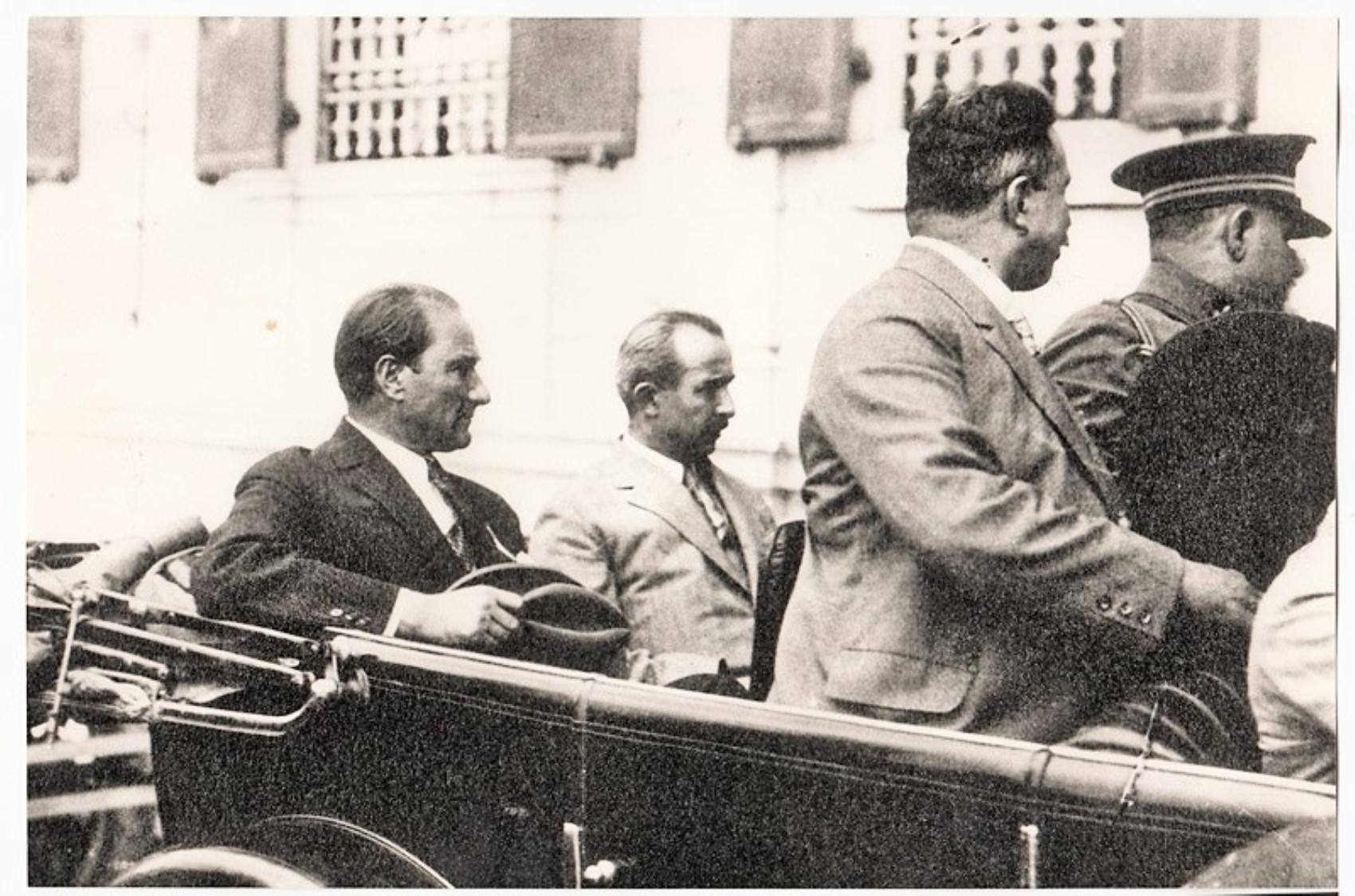
Mustafa Kemal and the new political elite conducted legal studies regarding the regime, this time in the station building used for executive affairs from the very first days of the Ankara government. Serious changes were made to the 1921 Constitution. In Article 1, the phrase "The form of government of the State of Turkey is a republic" was adopted. According to the amendment, which maintained the TBMM as the supreme state authority and the executive as a functional appearance, the President of Turkey (Cumhurbaşkanı) became the head of the executive and the state. The president was to be elected for one election term. The person to be elected could be none other than Mustafa Kemal Pasha, the Speaker of the TBMM, who was effectively acting as head of state. And so it happened. The savior of Turkey became the first president of the Republic of Turkey.
WHAT KIND OF OFFICE WAS THE PRESIDENCY OF THE 1923 REGIME?
There is an important point that needs to be clarified here: until the 1961 Constitution, the President of Turkey was elected at the beginning of each legislative term. Membership in the Grand National Assembly of Turkey did not lapse. It remained reserved; the President could not participate in debates or vote, much like the Speaker of the Grand National Assembly of Turkey. The President could preside over the Assembly during ceremonial sessions and, as the head of the executive, could preside over the Council of Ministers whenever they wished. In my opinion, the reason for this is that the presidency was an institution born from the speakership of the Grand National Assembly. The President's membership in the Grand National Assembly continued, and they likely continued to receive their parliamentary salary as well. The 1924 Constitution mentions that the President had an allowance and that this would be determined by a special law (kanun-ı mahsus).
THE LEGAL AND POLITICAL SIGNIFICANCE OF THE 1923 AMENDMENT
Viewed from the perspective of the Council of Ministers, the President appointed a member of parliament as the Prime Minister, who then formed a cabinet. Once the President approved the cabinet, the government was established. After presenting its political program (government program) to the Assembly, a vote of confidence was held. With these changes, the Council of Ministers had effectively gained the character of a government with collective political responsibility.
Mustafa Kemal, who was also the founder and leader of the People's Party, ascended to the presidency and appointed his most trusted man as Prime Minister, thereby forming a government composed of deputies from his own cadre. This government was now a party government. With the constitutional amendment, the possibility of opposition members entering the government—which had been created by Law No. 244—was completely eliminated. Although the Assembly retained other parliamentary oversight mechanisms, a power bloc had been created. With the Republic, it became possible to speak of a true People's Party government.
THE CALIPHATE REPUBLIC FROM THE CONSTITUTIONAL AMENDMENT NO. 364 TO THE LAWS OF MARCH 3, 1924
During this period, which lasted roughly five months, a Caliph elected by the decision of the Grand National Assembly in 1922 continued to exist in Istanbul as a non-political office. This should not be overlooked. It was no longer just the State of Turkey, but the State of the Republic of Turkey. However, Caliph Abdülmecid Efendi, who was elected by the First Assembly, was in Istanbul. To put it more clearly, there was both a President and a Caliph in the country.
This inevitably brings to mind the pamphlet 'The Islamic Caliphate and the Grand National Assembly' written by former Afyon deputy İsmail Şükrü Çelikalay after the abolition of the Sultanate. The statement in the introduction of the pamphlet is as follows: “The Caliph belongs to the Assembly, and the Assembly belongs to the Caliph”This pamphlet by Hoca Şükrü Efendi is an important document demonstrating that the Republic and the Caliphate could not coexist. The pamphlet is a veiled call for a theocratic constitutional monarchy. In opposition to this understanding, which viewed the head of state as the Caliph, the Kemalist elite Caliphate and National Sovereignty would write a collective compilation under this title. Ultimately, on March 3, 1924, the Grand National Assembly of Turkey (TBMM), through laws numbered 429, 430, and 431, abolished the Caliphate (a shadow sultanate), which was a remnant of the old regime, along with other significant changes.
Another change made with these laws was the removal of the religious institution from the sphere of political power—that is, from the Council of Ministers—and its inclusion under the administration.
THE SITUATION FROM THE REVOLUTIONARY LAWS OF MARCH 3, 1924, TO 1928
The Office of the Sheikh al-Islam/Ministry of Sharia, which was a member of the Council of Ministers during the constitutional monarchy and the Executive Council in the First Assembly, was transformed into the Presidency of Religious Affairs. However, an important point that should not be overlooked is that it must not be forgotten that the Grand National Assembly of Turkey was responsible for the execution of the provisions of Sharia. It is also worth remembering that in the 1923 amendments, Islam was declared the official religion of Turkey.
In the 1924-1928 sub-period, the Directorate of Religious Affairs (Diyanet) was relegated to the administrative sphere, removed from being a part of political power, and transformed into a state department under its authority. This is similar to the removal of the Chief of General Staff from the Council of Ministers. It is emphasized that the Grand National Assembly of Turkey (TBMM) would be authorized in the implementation of Sharia provisions concerning the people. This means that 'the right to decide what religion is also rests with the Assembly.'
With the constitutional amendment made in 1928, while the Diyanet continued its existence as an administrative department providing public service, the duty of the Grand National Assembly of Turkey to execute Sharia provisions was abolished; the expression 'by God' (vallahi) in the oath text of the President and members of parliament was removed and replaced with an oath 'upon honor.' These are very significant changes. To the question of whether 'secularism can be considered achieved' with these decisions, my answer would be 'no.' At most, this could be considered Turkish secularism.
These steps taken do not correspond to France's 1905 removal of the church from the state sphere. The state no longer has an official religion. However, the Diyanet continues its existence as a public department within the state. The Diyanet is inside the state, not outside of it. This means placing Islam at the service of the Republic.
The Diyanet is defined as a non-political office under the command of political authority. It is tasked with explaining, teaching, and implementing Islam in the sense understood by the Republican administration. The Diyanet will interpret Islam from within the state. I do not want to go into the practices related to Atatürk's project of religious reform and the idea of transforming Islam from an Arab religion into a Turkish Islam here. That could be the subject of a separate article.
FINAL EVALUATIONS
The 1921 and 1924 constitutions point to two separate phases of Turkish political history. In 1921, the fundamental issue was to render the theocratic source of sovereignty dysfunctional. The legitimacy of the National War of Independence served as an important lever in this direction. I can say that from the spring of 1920 to the 1921 Law of Fundamental Organization (Teşkilat-ı Esasiye Kanunu), Bolshevik influence gradually increased—even reaching the point of taking power with the appointment of Nazım Bey of the People's Communist Party of Turkey as Minister of the Interior.
In this sense, the 1921 Constitution drew its ideological-political boundary as a government based on populism and the national will. In this constitution, while the Assembly exercised its legislative power in practice, it used executive power through the Council of Ministers chosen from among its members. Each minister was considered a commissioner or agent of the assembly in their own field. In 1921, the key office was that of the Speaker of the TBMM, who was the head of both the legislative and executive branches.
The opposition, which had organized itself until April 1, 1923 (the end of the first term) in the context of challenging Mustafa Kemal's identities as the leader of the national liberation, party leader, and commander-in-chief, was liquidated after the victory. Issues that had been postponed were resolved over time with steps appropriate to the conjuncture.
Following the ratification of the Treaty of Lausanne by the Second Parliament, which was based on a Kemalist majority, the duo of TBMM Speaker Mustafa Kemal and Prime Minister Fethi Bey ensured the smooth continuation of the legislative and executive branches until the proclamation of the republic.
Law No. 364 provided the opportunity to define the state of the Anatolian Revolution as, "The form of government of the Turkish state is a republic." With the republic, the Speaker of the Grand National Assembly of Turkey, who had been serving as the de facto head of state, was elected president.
Through a series of transformations that lasted until 1928, the party leader, who was the engine of the revolution, succeeded in implementing a political structure unprecedented in the Eastern world: a secular Republic and a national state.
The Turks achieved success in the national war of liberation with the 1921 Constitution. They established a new state. With the 1924 Constitution, they built the institutions of the republic.
The reason for the regime's authoritarianism was the institutions that were remnants of the Middle Ages and continued to exist in society. These structures and dynamics served to protect the actors of the counter-revolution.
It is significant that all the legitimate actors of the new regime established in 1946 emerged from the dominant party, the CHP. The fact that the transition to a multi-party political life could be achieved without any changes to the constitution is evidence of the bourgeois democratic framework of the 1924 Constitution.
Would you like to get notifications about new developments and save news?
- NotificationsNew developments and breaking news
- SaveNews is stored in the app
Most Read
Statement from Nihat Zeybekci on the fund investigation

New 75,000-seat stadium plan for Fenerbahçe
Interpol and MIT tracking yields results in Izmir

ID convenience for KPSS candidates

2027 Budget: Taxes for the people, tax exemptions for capital

The Çanakkale robbery -1- How was the Troy treasure smuggled out?

To whom and how was the Petition of Intellectuals submitted? Who accepted the petition?

The reality of Akkuyu and the longing for national nuclear power

Artificial intelligence and the new imperialism

Ministry investigation into unauthorized promotional messages