



(Continued from New Imperialism-2)
One of the most significant transformations emerging in the age of artificial intelligence is the formation of a new elite class that combines economic and political power.
This class is referred to in literature as the "techno-bourgeoisie": the highest and most privileged layer of the bourgeoisie.
The techno-bourgeoisie controls data and algorithms, operates on a global scale, and directly influences state policies.
They control not only the means of production but now war itself.
The discourse of Alex Karp, CEO of Palantir Technologies and spokesperson for technological militarism, imposes not only an economic but also a moral and political responsibility on this class.
Military operations conducted through artificial intelligence systems show that the techno-bourgeoisie has become a direct geopolitical actor. This situation further deepens the tension between democratic representation mechanisms and capital power.
This class manages not only the battlefield but also the “field of perception.” You look at the screen — but the screen tells you what to look at.

(Technological militarist Palantir executives with the state of Israel)
***
AI-supported surveillance systems and algorithmic control mechanisms are being discussed in some academic and political circles under the concept of "techno-fascism."
This concept differs from classical authoritarian rule: control is not established directly through force, but through data, prediction, and guidance.
Constant surveillance, the manipulation of individual behaviors, the algorithmic suppression of opposition — these are no longer dystopian scenarios, but realities staged in Gaza and in operations in Iran.
Techno-fascism is a concept that defines a new form of authoritarian control established specifically through artificial intelligence, data, and algorithms.
Classical fascism establishes its power through violence, fear, and direct repression — soldiers, police, prisons.
In 1933, Bulgarian anti-fascist leader Georgi Dimitrov, whom the Nazis blamed for the Reichstag fire, challenged German fascist leaders Goering and Goebbels in court and was acquitted.
In those years, Dimitrov defined fascism as the open terrorist dictatorship of the most reactionary, most chauvinistic, and most imperialist elements of finance capital.
Today, their counterparts in some countries are still exactly that!
Techno-fascism, however, makes repression invisible. Control is not established through direct force, but through data collection, behavioral guidance, and algorithmic surveillance.
Facial recognition cameras — systems that record where you are, who you meet, and what you do;
Social media algorithms — mechanisms that determine what you see, which news you reach, and which opinions you are exposed to;
Targeting systems in Gaza — the algorithmic warfare order where AI decides who is a threat is one of the applications that new imperialism is rapidly spreading today.
Techno-fascism is a new form of authoritarian order that imprisons the individual not physically but digitally, preferring to guide rather than restrict freedom, and using data instead of violence.
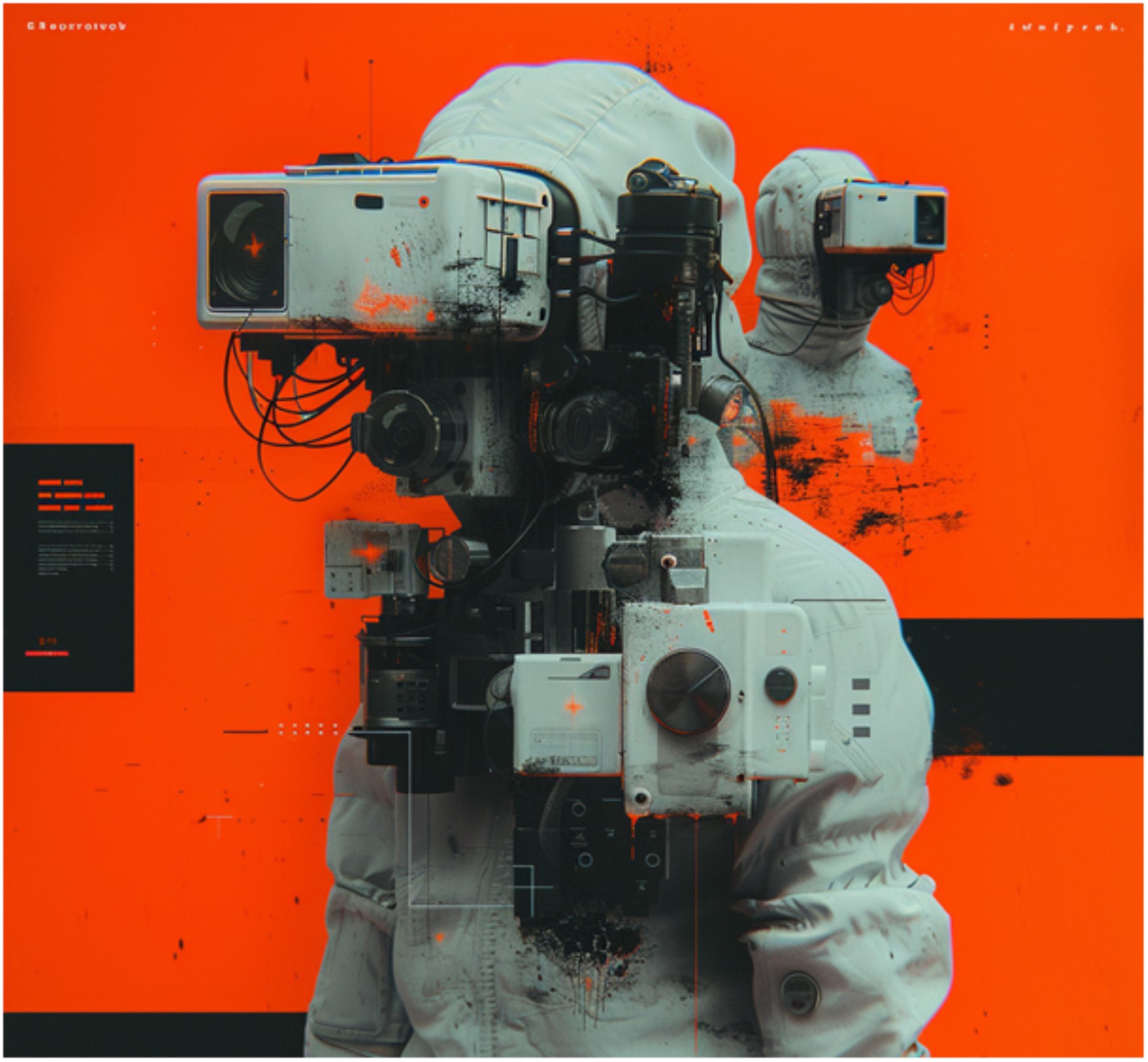
(Techno-guardian!)
***
In the age of artificial intelligence, the most fundamental tension is between security and freedom.
Palantir and Karp, who represent techno-fascist tendencies, prioritize security. But here, one must ask whose freedom is being forced to be sacrificed in the name of security.
Can algorithmic decisions truly be audited?
Because at the foundation of algorithms lies mathematics; and mathematics works on probabilities and certainty.
How can the power of technology companies be limited?
Because deep calculations are often invisible.
As seen in the Palestinian example, the freedom-security balance is often established unilaterally in favor of security; algorithmic systems make this preference invisible.
And there is a deeper question on the horizon.
Some thinkers, most notably Ray Kurzweil, the futurist born in 1978 and Google's director of artificial intelligence, predict that in the 2040s, "singularity" — the human-machine merger, the threshold where AI surpasses human intelligence and begins to improve itself, spiraling out of control — will occur.
If that happens, the questions of power, security, and freedom we are discussing today will take on a completely different dimension. This topic deserves a discussion all on its own.
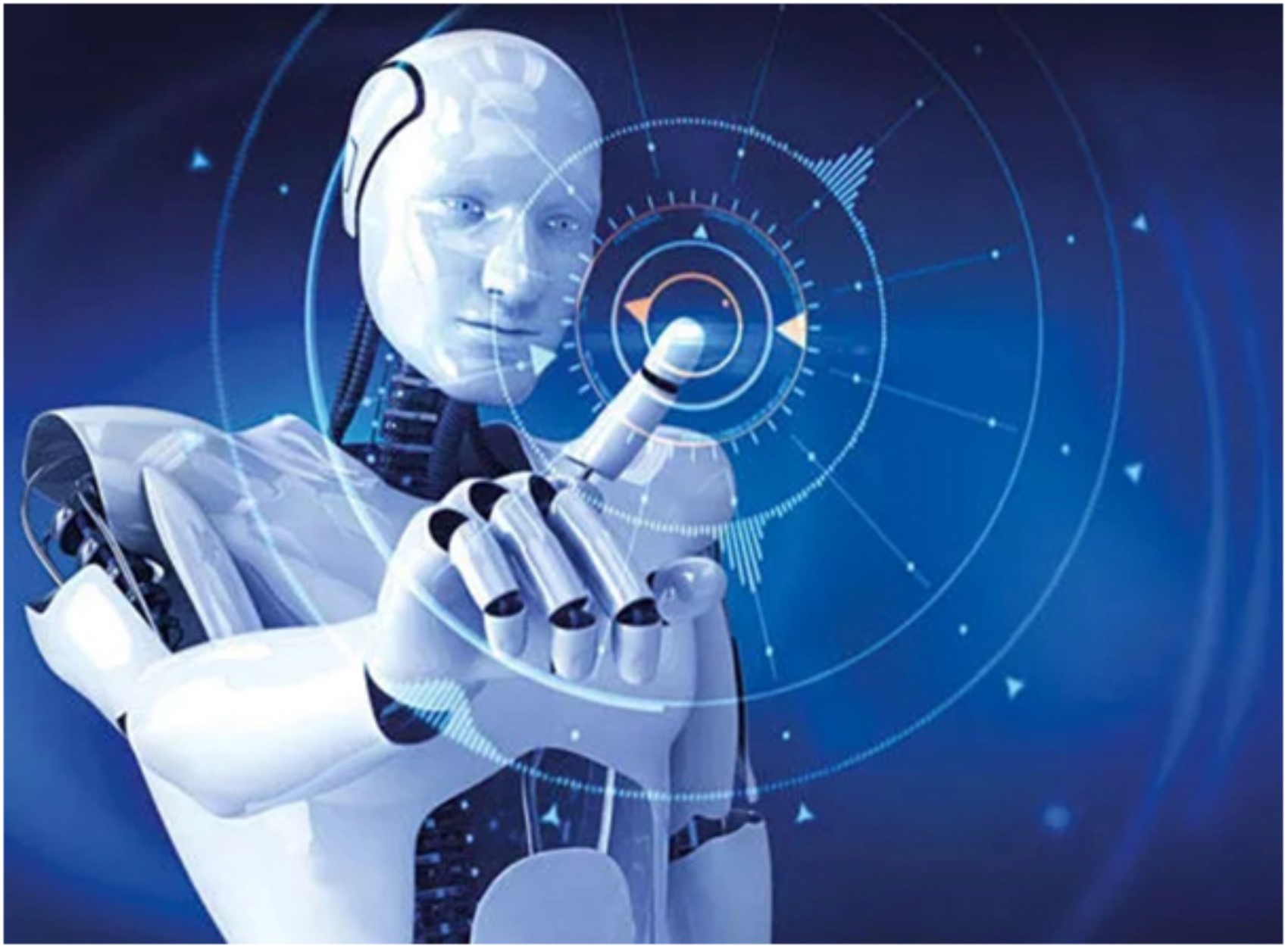
(Singularity?)
***
At this point, it is necessary to mention Anthropic, which has found a serious place for itself in the AI world in recent years.
Even the company's name carries a philosophical stance: "Anthropic," derived from the Greek root "anthropos," meaning human, signifies something belonging to humans, human-centered.
This choice is not a coincidence; it must be the embodiment of the idea that artificial intelligence should develop under human control and in harmony with human values.
While Palantir's name symbolizes power and foresight, Anthropic's name symbolizes limits and responsibility. Two names, two opposing perspectives.
Could Anthropic be a different option against this security-oriented trend?
(Anthropic’s logo)
***
The Amodei siblings, Dario and Daniela, US citizens likely of Italian descent who founded Anthropic in 2021, previously held senior positions at OpenAI.
Dario was the director of research, and Daniela was the director of operations.
OpenAI, founded in 2015 by techno-feudal lords Elon Musk, Sam Altman, and a few partners, moved in an increasingly commercial direction after forming a major partnership with Microsoft in 2019.
Sam Altman is the CEO of OpenAI, the creator of ChatGPT, one of the most widely used AI language models in the world today.
Elon Musk left the organization in 2018 and subsequently founded his own AI company, xAI.
The rift between the two names has turned into not just a commercial but an ideological conflict in recent years.
While Musk accused OpenAI of betraying its founding mission, Altman accused Musk of trying to take over the company.
Concrete proof that the techno-bourgeoisie is not without contradictions within itself.
So, the techno-bourgeoisie can fight among itself as well.
Dario and Daniela Amodei, who were part of the OpenAI formation at the beginning, were uncomfortable with this trend. They believed that the commercialization of AI at such a rapid and uncontrolled pace carried serious risks.
In 2021, they left OpenAI with a group of employees and founded Anthropic.
This founding story itself was a stance: the claim to keep AI not just in the service of capital, but in the service of humanity.
It is not easy to say that Anthropic's emphasis on AI safety, ethical boundaries, and human-centered use is entirely performative.
However, to what extent a structure that emerges today in the name of human benefit can remain independent from capital, state, and military power relations tomorrow is a separate subject of debate.

(Anthropic’s founders, the Amodei siblings Dario and Daniela)
***
Anthropic, which focuses on AI safety and ethical use in its own way, reports that it aims for AI systems to be compatible with human values, auditable, and safe through the "constitutional AI" method (an approach of limiting AI by setting fixed principles and ethical rules) it has developed.
The company's best-known product is a "Language Model" called "Claude."
This name was not a coincidence. It is most likely a tribute by the founders of Anthropic to Claude Shannon, the American mathematician and electrical engineer who laid the foundations of modern computer science and digital communication.
Shannon founded "information theory" with his groundbreaking article published in 1948: he mathematically defined how data would be encoded, transmitted, and stored.
Every digital system we use today — the internet, phones, AI — is built upon his theory.
Naming an AI model after Shannon, known as the "father of information theory," is both a tribute and a claim: to use humanity's digital heritage for the benefit of humanity.
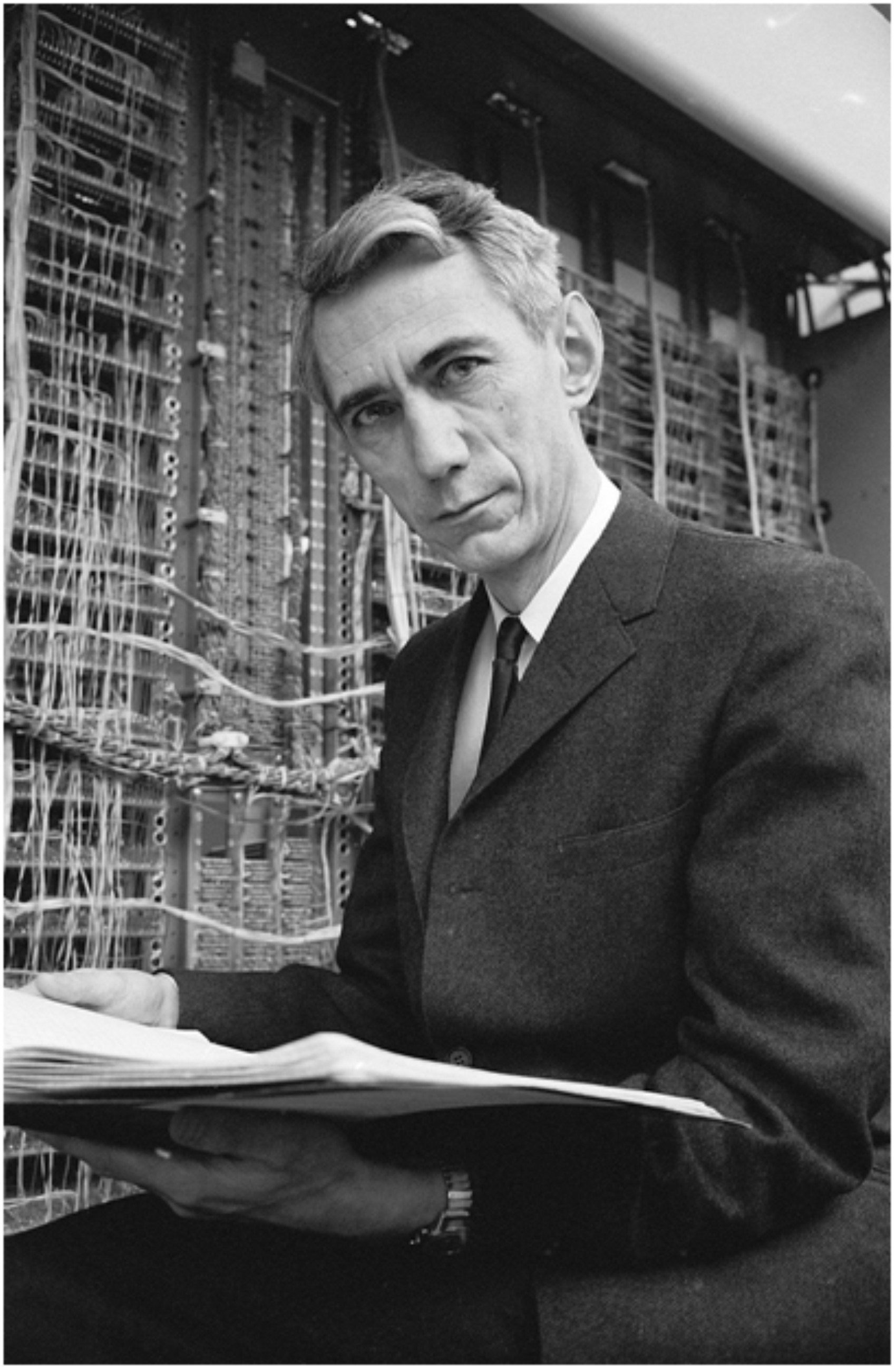
(Claude Shannon: The father of “Information Theory”)
***
“Claude” currently competes with language models such as ChatGPT (OpenAI — Sam Altman), Gemini (Google — Larry Page and Sergey Brin), and Grok (xAI — Elon Musk).
Many circles find Claude more useful than others. However, it is also said that they all have different advantages over one another. In the end, it is in the hands of those who trade!
But who can say that a better one won't emerge tomorrow?
Who can guarantee that it won't become prey to the insatiable appetite of new imperialism or compromise with the system?
The structure in the hands of Elon Musk, the owner of Grok, is particularly noteworthy in this context:
While X (formerly Twitter) collects data from billions of users, xAI processes that data; SpaceX and Starlink provide military communication infrastructure, and Tesla develops autonomous vehicle and robot technology.
All gathered in one hand.
These are the techno-feudal lords of new imperialism — new power centers that control data, weapons, communication, and decision-making mechanisms simultaneously.
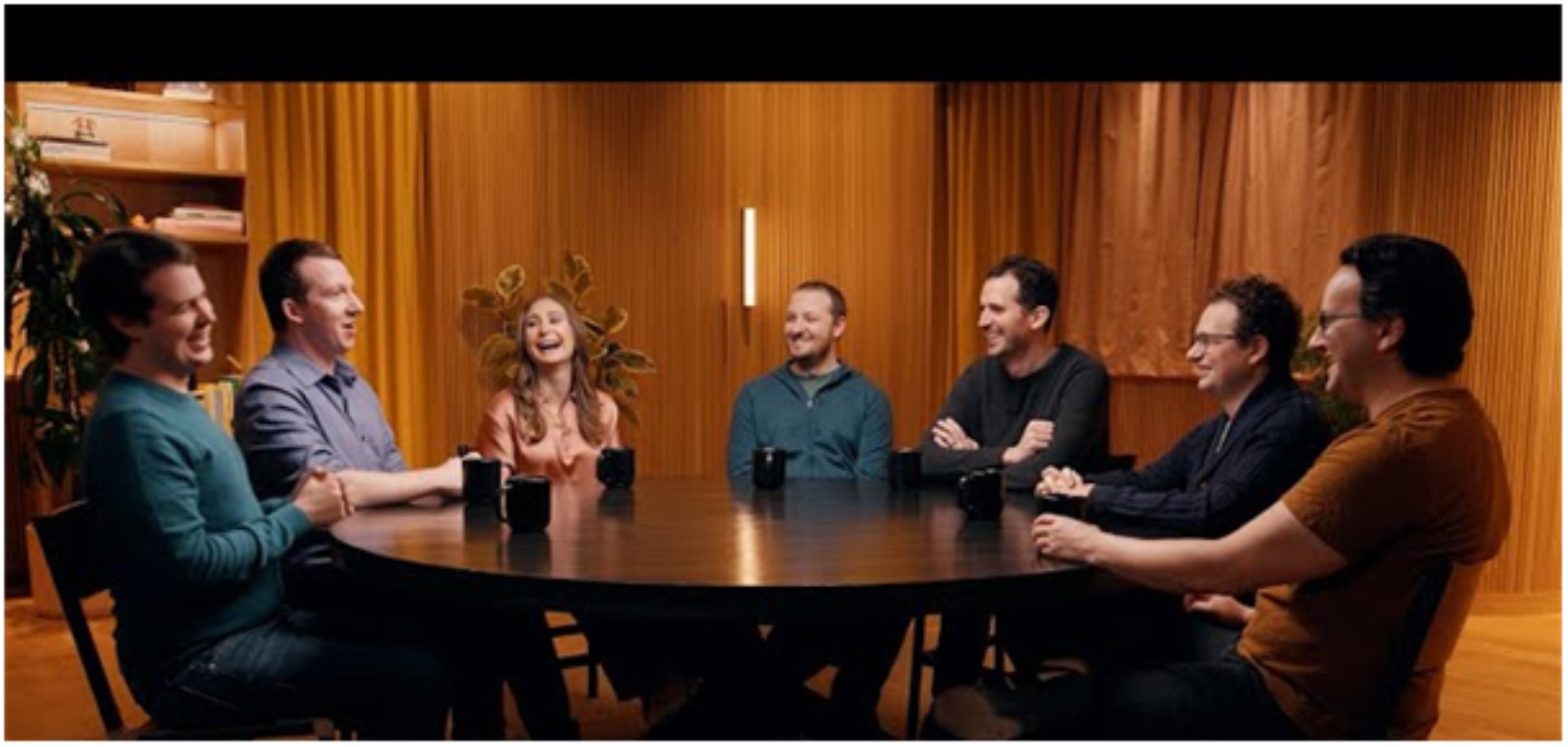
(The team that created Anthropic)
***
It is understood that the distinction between Palantir and Anthropic is not technical, but for now, a difference in perspective, perhaps philosophical.
Palantir positions technology as a tool that increases the state's defense, intelligence, and operational capacity; it advocates for an intertwined relationship with the state.
Anthropic, on the other hand, argues that AI should primarily be safe and compatible with human values; it emphasizes that technology should be developed within ethical frameworks through "AI safety" (an approach of developing AI in a way that does not harm humanity and keeping it under control).
While Palantir develops data analysis platforms directly aimed at public, security, and military fields, Anthropic produces general-purpose AI systems aimed at civilian use areas.
According to allegations published in the US Wall Street Journal, Palantir's software is widely used by the US Department of Defense and federal law enforcement agencies (ICE against immigrants).
Some news reports suggest that models developed by Anthropic may have been used in the operation to “kidnap President Maduro” in Venezuela.
On the other hand, Anthropic's reported usage rules prohibit Claude from being used to facilitate violence, develop weapons, or conduct surveillance activities.
(Artificial Intelligence!)
The Wall Street Journal, published in the US, also wrote that Anthropic's contract with the Pentagon, which could reach up to 200 million dollars, could be canceled due to these concerns. (Source: euronews.com, February 14, 2026)
Palantir and Anthropic are the most visible actors of today. But competition in the IT world is so fast, and the race for innovation is so intense that these names could be replaced by completely different companies tomorrow.
What will not change is not the actors, but the logic of the system: whoever accelerates the machines, whoever develops the algorithm, whoever controls the data holds the power.
According to a story, the prophet King Solomon, who was also a ruler, had a six-pointed seal with supernatural powers given to him by God, and he held power with it.
An old Turkish proverb based on this story says, "whoever holds the seal is Solomon."
This maxim remains valid today for the new emperors who hold the algorithm, the data, and the weapon.
Palantir is harsher, Anthropic is softer. But in the end, both are part of the techno-feudal network, the new imperialism.
In the final analysis, the determining power is still capital.
The indispensable product: profit.
Who can guarantee that Anthropic, which seems humane today, will not veer in another direction tomorrow?
Because what is decisive now is not only economic power, but cognitive power — the power to direct the human mind, perception, and will.
Whoever captures the factory controls production.
Whoever captures the algorithm controls the decision-making mechanisms.
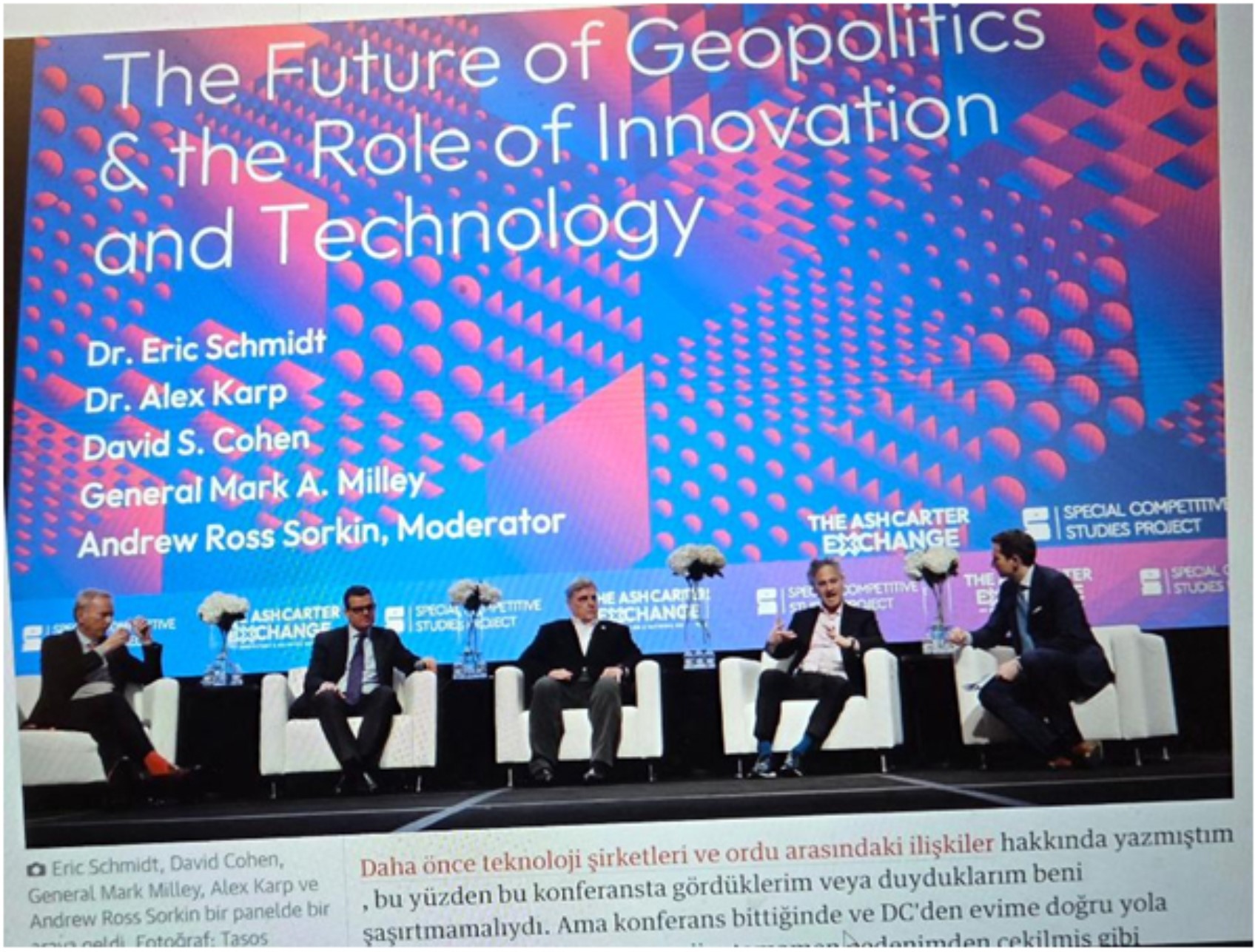
(The directors of Digital Capitalism produce theory)
***
So, are there no dissenters to this picture?
Of course there are. And very powerful voices at that.
The approach defended by Karp and Palantir — the closer integration of the world's technology hub, Silicon Valley (California, USA), with the defense industry, and the rapid increase of AI-based military capacity — is met with strong criticism from different circles.
World-renowned human rights advocacy organizations such as "Amnesty International" and "Human Rights Watch" argue that Palantir's systems strengthen mass surveillance in areas such as immigrant tracking, policing, and border security, and that this situation could undermine fundamental human rights.
American academic Shoshana Zuboff, author of the book "The Age of Surveillance Capitalism," and Belarusian technology critic Evgeny Morozov argue that the merger of data and state power erodes democratic oversight; they claim these companies have become the "military extension of surveillance capitalism." According to them, this is a new form of techno-fascism.
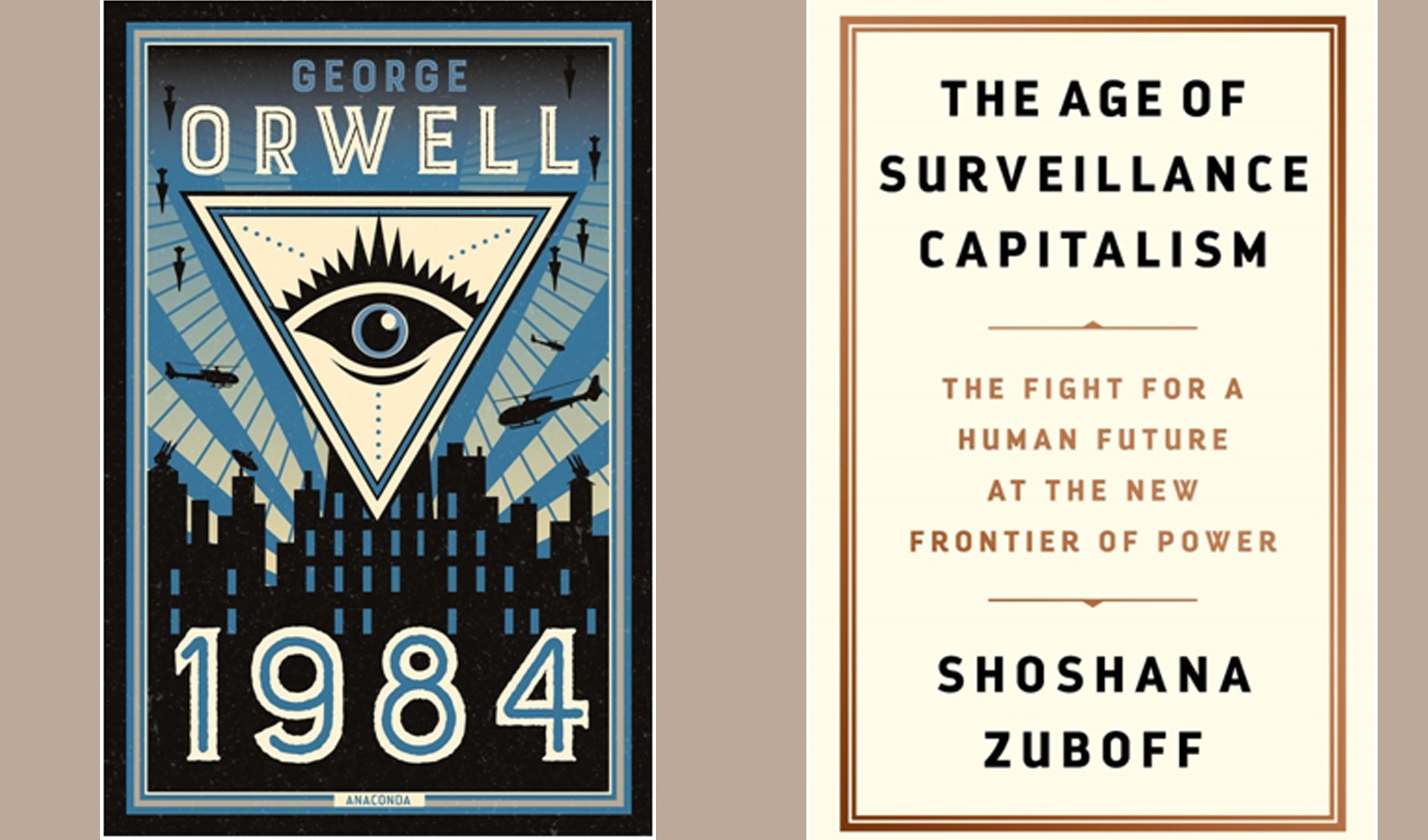
(George Orwell’s 1984 and Shoshana Zuboff’s The Age of Surveillance Capitalism: The fight for the future of humanity on the new front opened by Power” books)
British-American scientist Stuart Russell, a professor of artificial intelligence at UC Berkeley and one of the most important names in the field, opposes the development of autonomous weapon systems, emphasizing that delegating the decision to kill to algorithms is ethically unacceptable.
Politicians like British MP Caroline Lucas express that Palantir's influence on public data weakens democratic sovereignty.
American AI researcher Meredith Whittaker and Ethiopian-American AI ethics expert Timnit Gebru argue that technology companies should not turn into the state's security apparatus.
The British newspaper The Guardian and the US technology publication The Verge also find the Palantir-Karp approach militaristic and risky.
Many thinkers, jurists, and scientists around the world are issuing serious warnings on this subject.
All these voices converge on a common concern: The blurring of boundaries between technology, state, and capital is redefining not only the nature of war but also the boundaries of democracy.
Democracy?
One cannot help but remember the book “1984,” written by British author George Orwell in 1948, which descends upon humanity like a nightmare.
“Big Brother” is already watching everyone.
Moreover, he is now doing it from inside the screens.
How clear were the slogans of the world Orwell described: “War is peace. Freedom is slavery. Ignorance is strength.”
Is techno-fascism anything other than this?
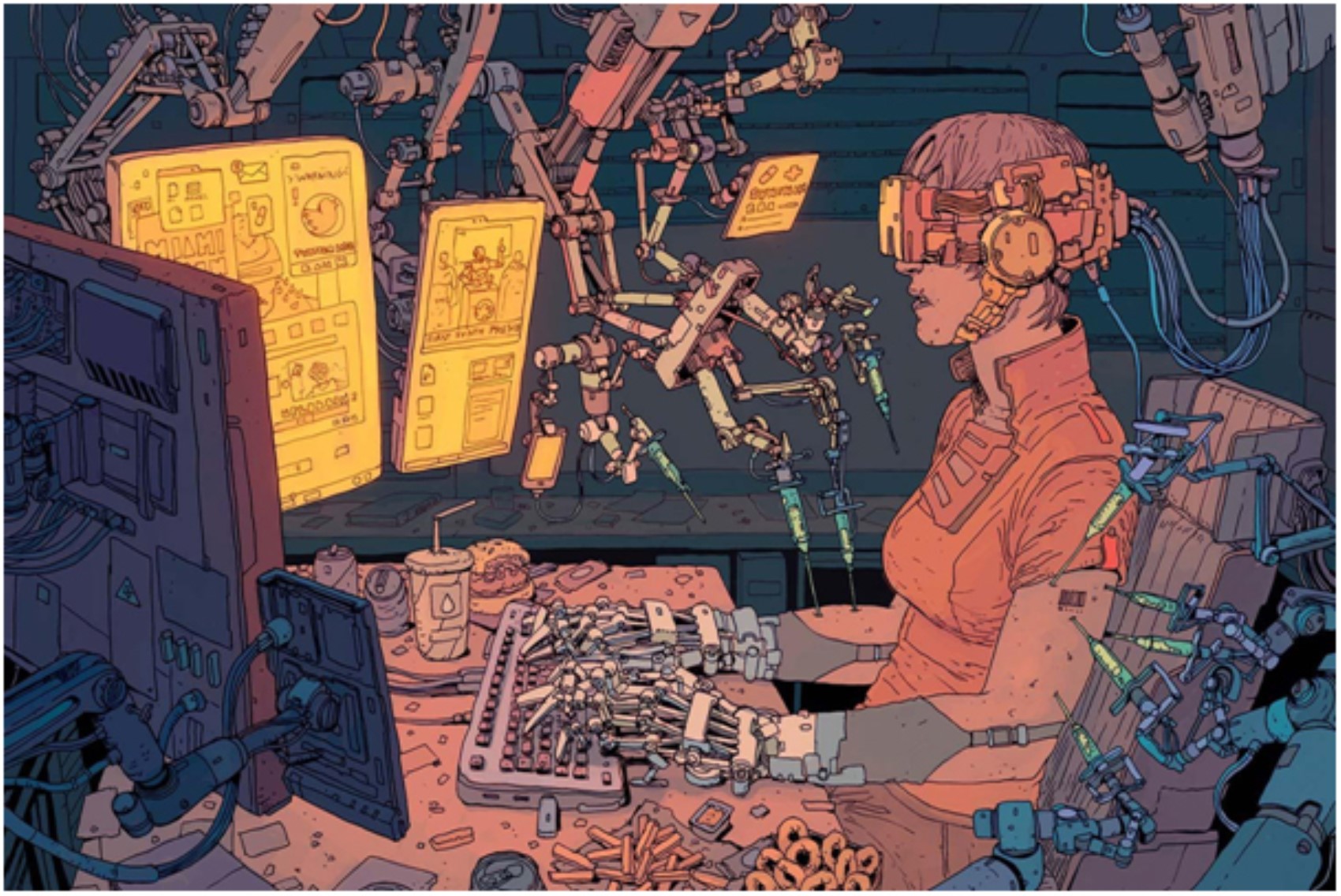
(Techno-fascism?)
***
And we have arrived at the most critical question.
Quo Vadis — where is the world going?
In the previous article, New Imperialism-2, we used that famous metaphor from Stanley Kubrick's film 2001: A Space Odyssey: The killing bone turned into an “algorithm.”
The factory became a “data center.” And the emperor became a “coder.”
But the question is the same: Who holds this power and in whose name do they use it?
Today, the answer to this question is clearer than ever.
Palantir's targeting systems in Gaza, the ten million dollars that the company's co-founder and capital power Peter Thiel transferred to current US Vice President J.D. Vance's election campaign, the warrior theses in Karp's book — these are not secret. They are stated openly, they are applied openly.
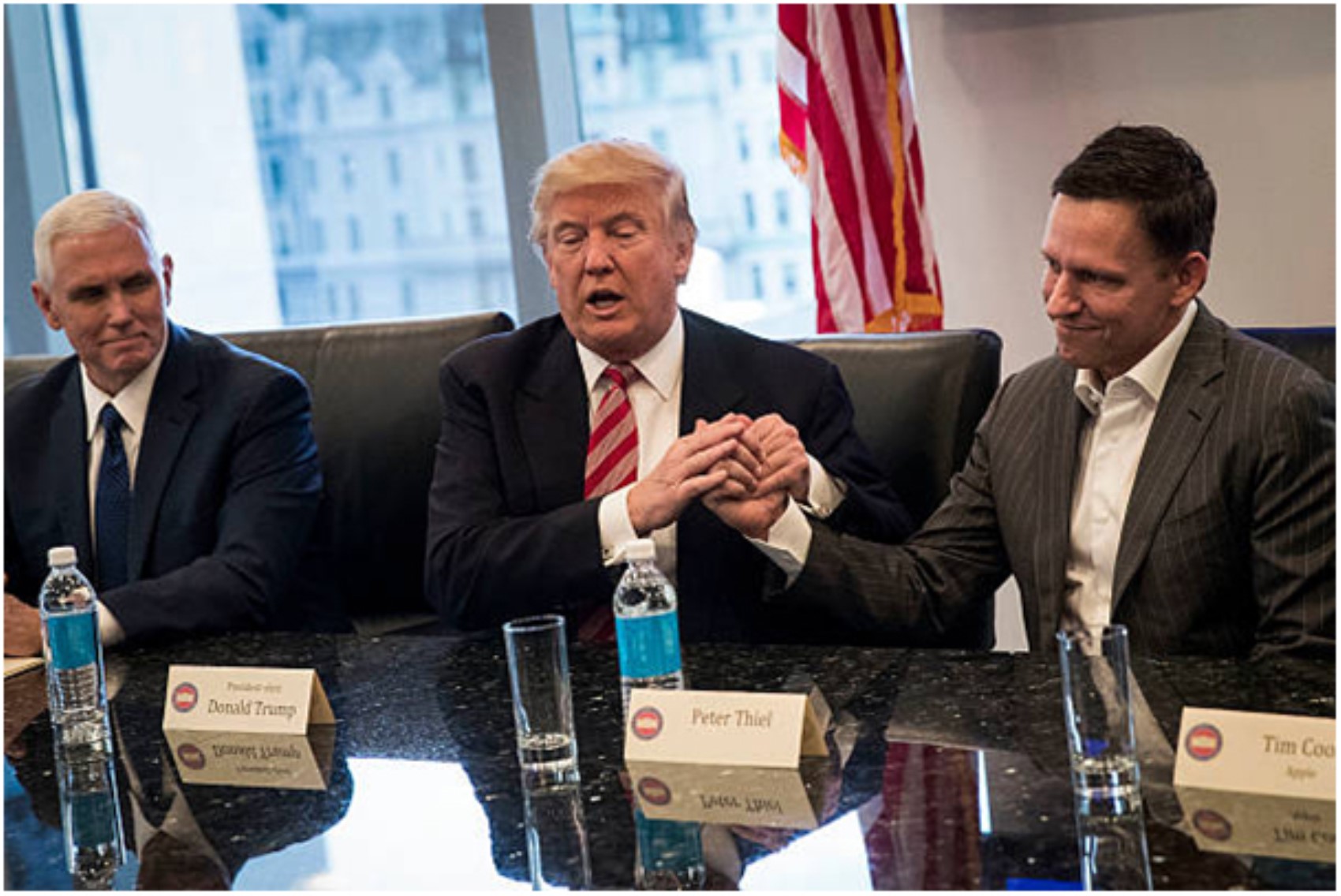
(US President Donald Trump, his deputy Mike Pence, and Peter Thiel, one of the creators and theorists of the warrior Palantir Technologies company, shaking hands. Trump Tower-New York. 14.12.2016. Getty Images)
New imperialism no longer hides itself; it legitimizes itself.
This is perhaps the most dangerous threshold.
People resist when they notice oppression. When oppression is normalized, legitimized, or even applauded — resistance becomes impossible.
Technology is not neutral. But people do not have to be neutral either.
If those who write the algorithm decide who will live, those who will dissent against this need to do something — laws, manifestos, resistance codes, or at least such lines must be written.
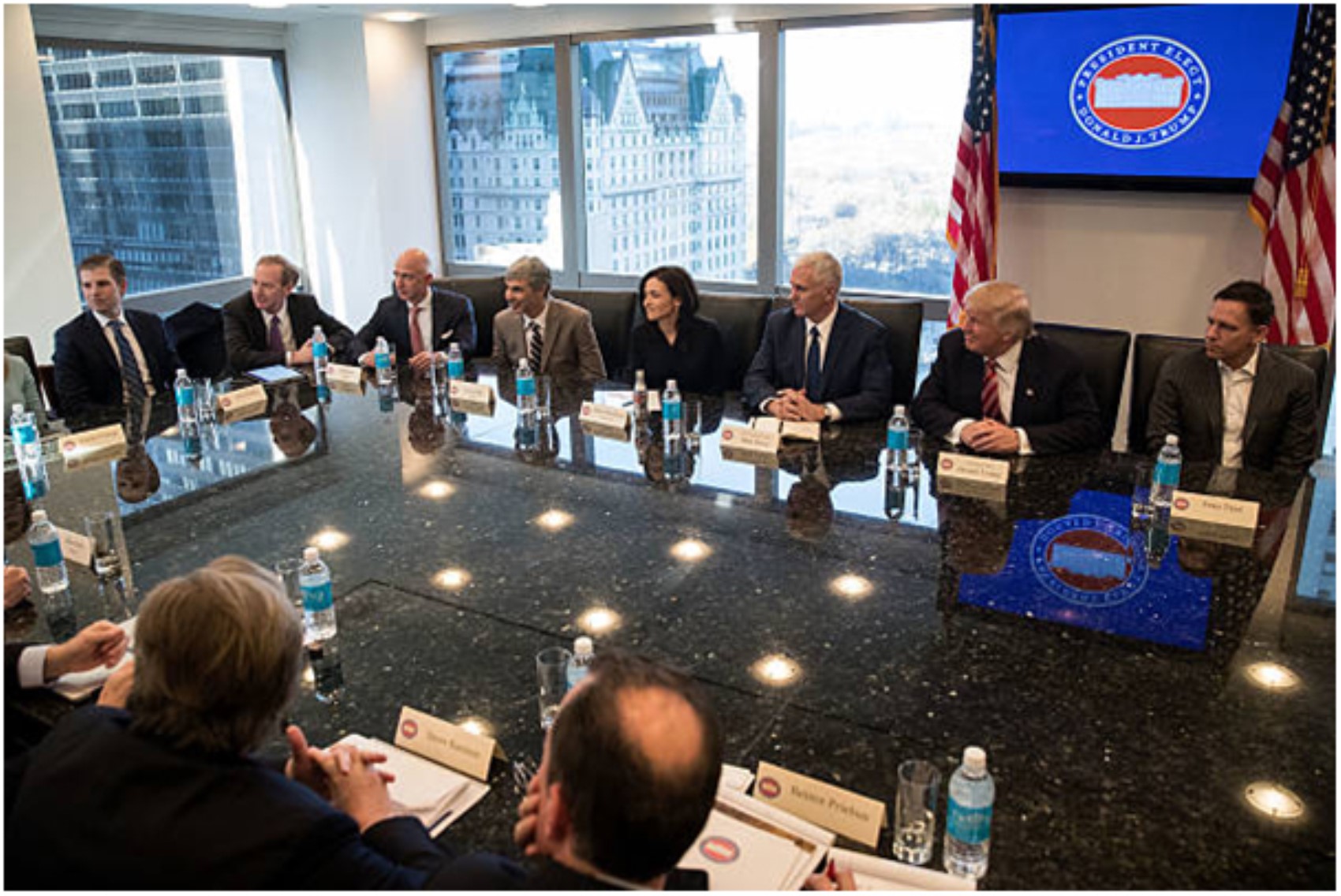
(US President Donald Trump, his deputy Mike Pence, new feudal lords; Amazon founder Jeff Bezos, Google founder Larry Page, former CEO of Facebook Meta Sheryl Sandberg, Oracle CEO Safra Katz, Apple CEO Tim Cook, Palantir co-founder Peter Thiel: Key figures of the Trump administration, those who govern the state; Wilbur Ross, Reince Priebus. Rob Portman, Steve Mnuchin, Katrina Pierson, Stephen Miller, Sean Spicer, Gary Cohn; meeting at Trump Tower in New York. 14.12.2016. Getty Images)
One must be aware of this new order established by new imperialism.
Today's blue-collar workers, white-collar workers, farmers, small and medium-sized industrialists, and even politicians and members of traditional security apparatuses; everyone outside the ‘techno-bourgeoisie’ must be aware of what will happen to them.
Where is the world going?
Perhaps the world is not going anywhere; only the same power relations are being reproduced under new forms.
As Shakespeare said at the beginning of his play “Timon of Athens,” “the world goes round.”
***
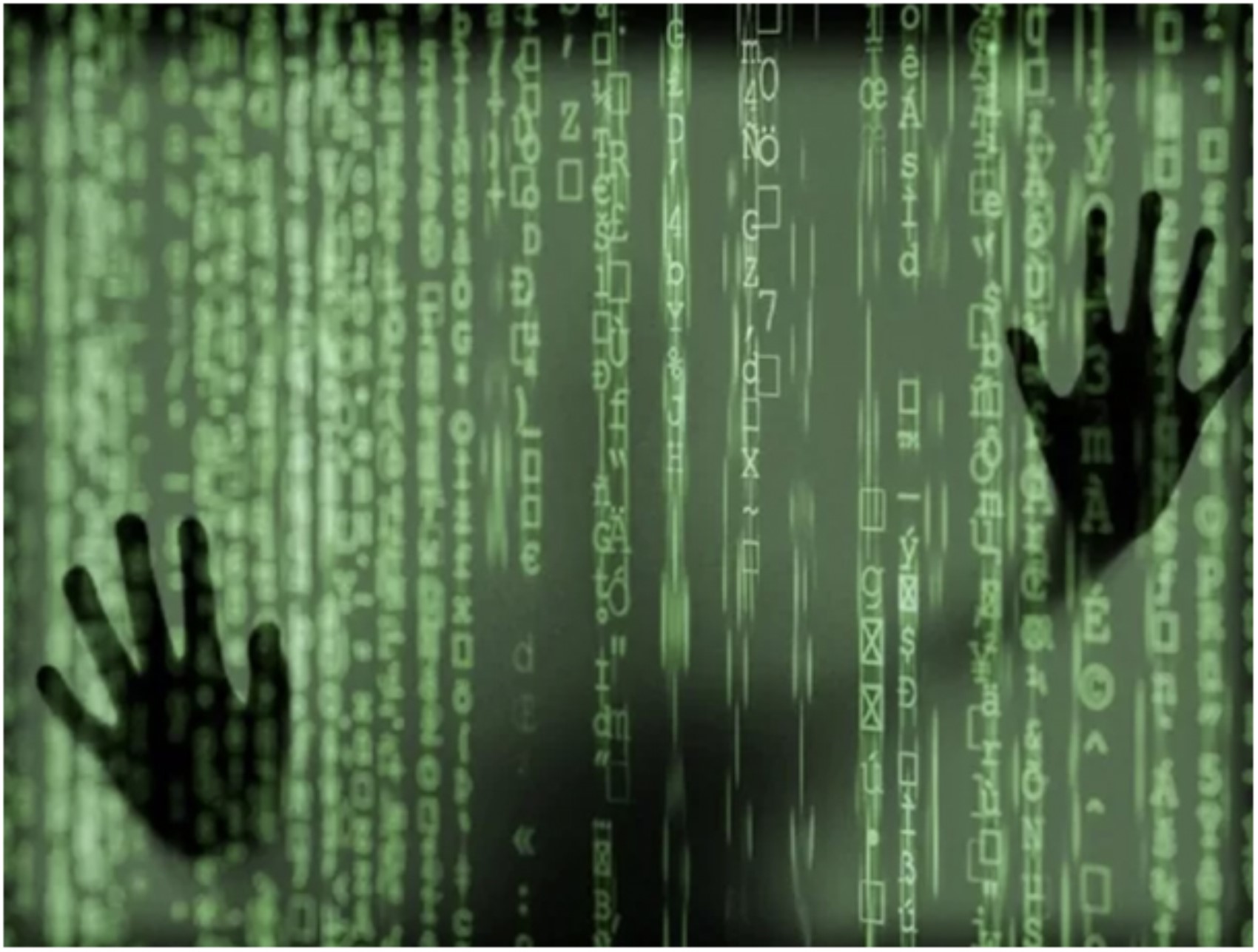
(Awareness, questioning, dissent..!)
The world is being brought under the control of new imperialism to an unprecedented extent through algorithms and data that are turned into deadly tools for the sake of profit.
New imperialism no longer wants to manage only countries, energy resources, or markets; it also wants to manage minds, behaviors, and the perception of reality.
That is why the struggle is not only economic or military. It is also over information, consciousness, and human will.
Seeing what is happening, continuing to ask, and creating awareness are still the most important possibilities at hand today.
Because as in every age, in this age too, the greatest power of authority is not just its weapons; it is people stopping to think.
For this reason, resistance must be organized not only in the street; but also in knowledge, law, science, art, and the human conscience.
Because whoever writes the algorithm will also determine the future.
(To be continued: New Imperialism-4. Singularity—Is the Last Emperor an Algorithm?)
Sefa Taşkın
17.05.2026
Karşıyaka/İzmir
Most Read

Galatasaray announces injury updates for Osimhen, Lemina, and Singo

Attention online sellers: Tax monitoring expanded
VAR for the Fenerbahçe-Beşiktaş derby has been announced!
Bridges and highways are being privatized: 15 July and FSM are also on the list

Peugeot September 2026 price list is out

New details emerge in 'panel' operation targeting lawyers

First statement from Osimhen after injury in Başakşehir match

Özlem Şanver: 'He said he would change, I believed him; should I be beaten just because I didn't leave?'
Gökçek era detail in ABB investigation

Mourinho explains why he substituted Arda Güler