



CYANIDE DIARIES FROM BERGAMA-10
At this rate, humanity will be sleeping and waking up with the "Environment"!
It appears that environmental issues are causing, and will continue to cause, a great deal of trouble for Turkey.
Just as they are for the rest of the world.
Environmental scientists now also refer to the "environmental disasters" that occur as "ecocide."
Dictionaries define "ecology" as "the branch of science that examines the relationships of living things with both each other and their environment, either individually or collectively," and "cide" (kırım) as "the mass killing of defenseless people or prisoners; massacre."
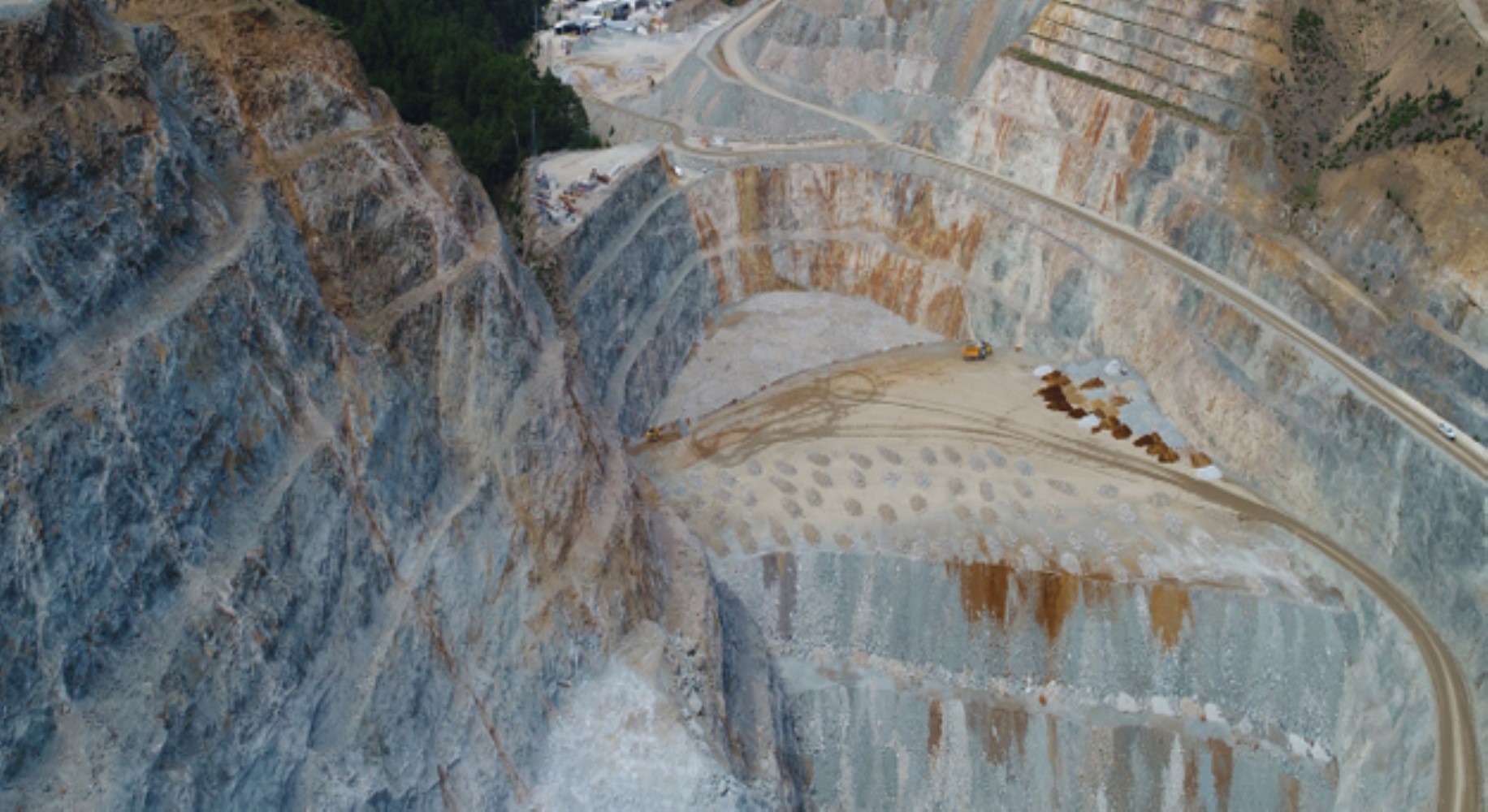
(Çukuralan-Dikili-Izmir, Gold Mine site)
In other words, "environmental and human massacre."
In this context, "Wild Capitalism" and its practice of making easy and vast amounts of money are rapidly turning our world into a planet that is no longer habitable!
Stone quarries, cyanide gold mines, low-calorie coal mines for thermal power plants, the risks brought by nuclear power plants, hydroelectric power plants (HES), solar power plants (GES), necessary or unnecessary dams, water weirs, polluted rivers and seas, melting glaciers, floods, drought...
Of course, it was impossible for this situation to go unnoticed by societies and States!
In this direction, public organization and institutional structuring were undertaken in the State administration in our country.
The "General Directorate of Environment" was established on 08.06.1983 as an institution affiliated with the Prime Ministry to carry out work related to the "Environment" in Turkey.
Subsequently, legislators enacted the "Environmental Law" No. 2872 on 11.08.1983. The law was published in the Official Gazette on September 9, 1983, and entered into force.
Turgut Özal, who won the elections held after the September 12 fascist coup, became Prime Minister on 13.12.1983. Cemal Büyükbaş, Sudi Türel, and Fahrettin Kurt served as Ministers of Energy and Natural Resources in succession.
Upon Özal becoming President, Yıldırım Akbulut served as Prime Minister between November 9, 1989, and June 23, 1991. Togay Gemalmaz and Muzaffer Arıcı were the Ministers of Energy and Natural Resources in his government.
When "Cyanide Gold Mining" began to be discussed as an environmental issue in Bergama and Turkey, the Minister of Energy and Natural Resources was Fahrettin Kurt (21.12.1987-30.04.1991). While ordinary people in Bergama were working hard to gather information against the disaster that could befall them, Minister Fahrettin Kurt thought that "arsenic" would be used instead of "cyanide" to extract gold.
In fact, "arsenic" was "rat poison" and was at least as dangerous as "cyanide."
In other words, the Minister didn't know the job!
However, the people of the region were grumbling out of concern that their lives were in danger, and they were trying to learn about the subject to explain that their concerns were justified.
This period was also the years when the Cyanide Gold Miners in Bergama went on the offensive.
Gold: What it was capable of!
The US company, which appeared to be German-French-Australian and was called Eurogold, was trying to convince both the State and the people of the region and the country, together with PR agents, TV personalities, and well-known public opinion makers such as academics and mining employers they had brought to their side.
It was understood that the Ministry was unaware of the damage such an operation could cause to the environment.
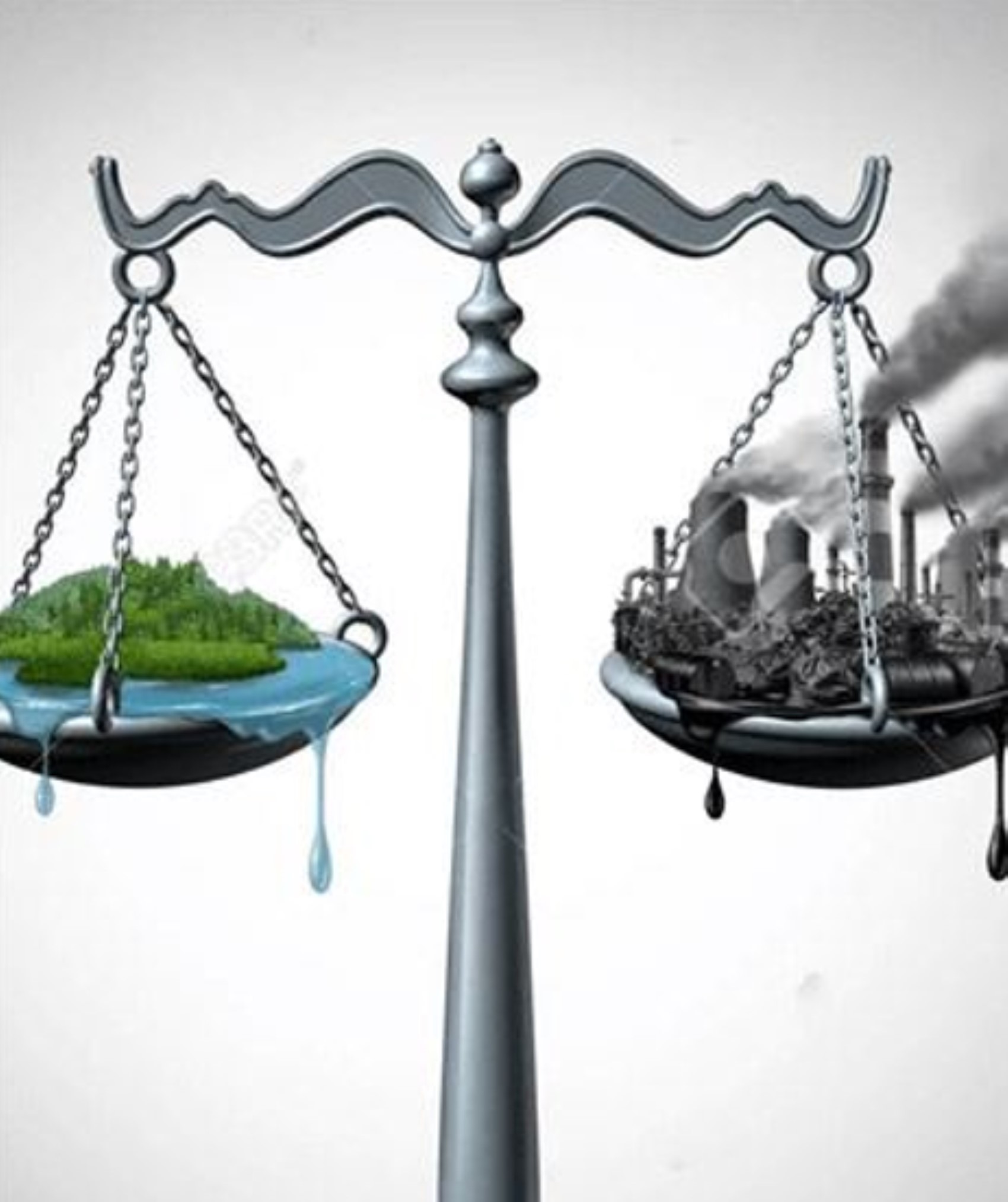
(On one side the environment, on the other pollution)
***
The country, struggling with social problems, was tired of the Motherland Party (ANAP) administration under Özal and Akbulut and was in search of new alternatives. The atmosphere of a General Election had begun.
The ANAP Government, which was understood to be losing, established the Ministry of Environment on August 8, 1991, just before leaving office.
The General Directorate of Environment, which was affiliated with the Prime Ministry and responsible for "Environment" events until then, was also attached to the Ministry of Environment.
On August 22, 1991, Ali Talip Özdemir from ANAP became the Minister of Environment.
The "Cyanide Gold Mine" incident, which was intended to be operated in Bergama, was increasingly entering the country's agenda.
Sensitivity to "Environment" events had already begun to reflect in Turkey, just as it had all over the world.
Discussing "environmental issues" and being an "environmentalist" were becoming fashionable.
In this environment, a press center established in the Bergama Municipality, which did not want to see a toxic operation at the base of its drinking water sources, was spreading the reservations of the local people against the environmental disaster that the "Cyanide Gold Mine" could create to the whole country.
Such an event was being experienced for the first time in the country; the impartial press was reflecting the concerns, and information was being sought and conveyed.
In fact, during this period, the new Minister of Environment, Ali Talip Özdemir, had given an award to the Bergama Municipality at a meeting held in Antalya due to the interest he showed in the "Environment."
It was clear that the State was still confused about such businesses.
It had not yet made a "yes" or "no" decision!
It was also in search of information.
The Ministry of Environment had even sent its experts to the Bergama Municipality to get information about the subject.
***
The multinational Eurogold company, which was persistent in convincing the State and society about the toxic mining it would carry out, had a special Environmental Impact Assessment (EIA) report prepared, which was common all over the world but had no rules or implementation in Turkey.
After all, there were more than 500 places in Anatolia where gold could be obtained using poison.
The cyanide users had to prove themselves scientifically or pull the wool over people's eyes to conquer Turkey!
They had to show the public and public opinion how scientifically they were working!
Preparing an EIA report was a positive thing, but it should have been done by the "impartial scientific community" and "real experts"!
There should have been "suspicion" in these evaluations!
The foreign company Eurogold applied to Ege University in Izmir to prepare an EIA report, which means "Environmental Impact Assessment," to determine the possible impact of the cyanide gold mine on the environment.
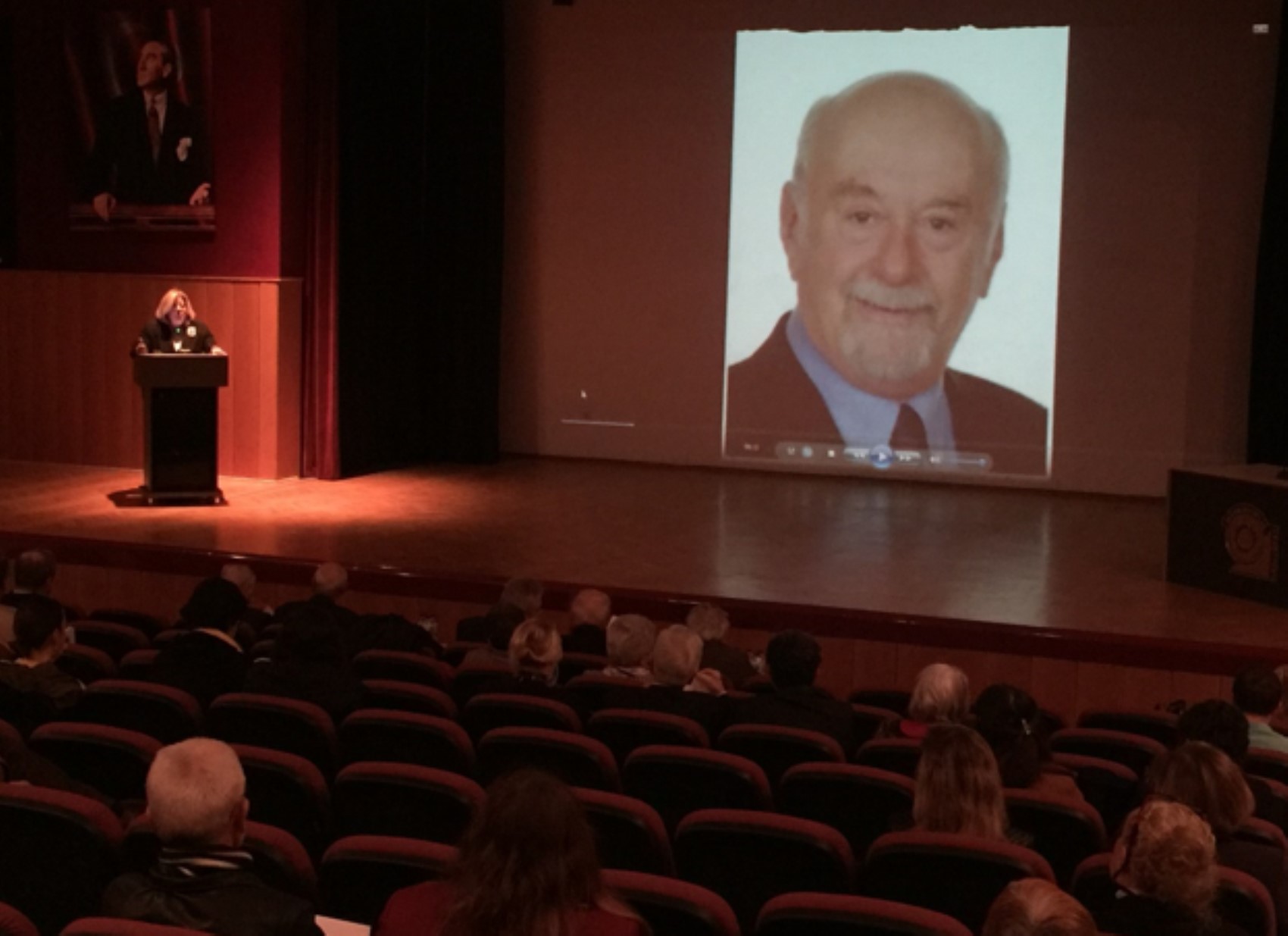
(Prof. Orhan Uslu)
A comprehensive report was prepared under the management of Prof. Orhan Uslu, who had been the Head of the Environmental Engineering Department of this University since 1982.
Orhan Uslu was very proud of preparing such a report.
How many people in Turkey knew about the environment scientifically anyway!
Moreover, Prof. Uslu had trained many students.
This EIA report was about the Bergama Ovacık Gold Mine, which is currently being discussed in our country, and it was the first in Turkey.
A large meeting was organized at the Sabancı Cultural Center on the 9 Eylül University campus in Izmir-Konak to introduce the so-called EIA. The year was 1991.
Prof. Orhan Uslu and his team explained the EIA they had prepared in glowing terms.
"Cyanide was so useful that you could almost sleep next to it!"
"There was no harm in the business of extracting gold by processing the soil with cyanide!"
On the other hand, the villagers, who could not pronounce this method, whose scientific name is "cyanide leaching," called it "cyanide lynching."
"Nature was going to be lynched"!
Orhan Uslu finished his presentation with great good news.
"Bergama was also a historical and touristic town, and by building viewing platforms at the mine, tourists would be provided with the opportunity to watch the mining activities."
Look at the business: The sheep was worried about its life, the butcher about the meat!
With the verbal interventions of the villager representatives attending the meeting, the "gold-polished presentation" was cut short.
"In an environment where the State does not have a clear stance on such businesses in the country, the phenomenon should be discussed in every aspect everywhere, and scientific environmental impact assessments should be made for such businesses, but not in such an arbitrary, ruleless, and custom-made way!"
A "crocodile" could not be shown as if it were a "lamb" openly!
"After paying money and having a report prepared according to one's wishes, how could the 'public and society' trust this?"
"Moreover, the local people should have been informed about this issue, and the public's opinion should have been asked."
"In the end, if anyone was going to get hurt, it would be them."
Following the intense criticism that came after this meeting held in 1991, Prof. Orhan Uslu would leave the Ege University Environmental Engineering Department Chairmanship and move to 9 Eylül University, also in Izmir.
The scientific community was attacking this custom-made EIA!
Thus, in our country, the "EIA" adventure, which the "Environment" polluting Wild Capitalists and their supporters feared like the plague, had begun!
Even though it was hollowed out, not applied when it should have been, with false evaluations that were turned away from court doors, and was a sham that was legally circumvented
***
In these discussions, the villagers wanted the public's approval in addition to asking for their own thoughts regarding this business.
This demand had universal validity.
The final declaration of the "United Nations Economic Commission for Europe (UNECE) Environment and Development Conference," held in Bergen, Norway, on May 8-16, 1990, which Turkey also supported, made an important determination regarding the concept of people's right to the environment.
"The need to consult the local people on issues that could be harmful to the environment and humans, and the issue of not opening businesses if the local people do not want them, was brought to the agenda."
"In addition, it was pointed out for the first time that even possible risks could be considered sufficient reason for not opening such businesses, in line with the concept of 'risk' that could arise in the future, not just for that moment."
"The need to consult the local people on these issues and not to open businesses if the local people do not want them was requested."
The world is small!
Meanwhile, the Minister in Turkey related to the subject was "Fahrettin Kurt," who confused what "cyanide" and "arsenic" were.
The Bergama villagers had learned about the "human and environmental rights" discussed in Bergen and now wanted this right to be recognized.
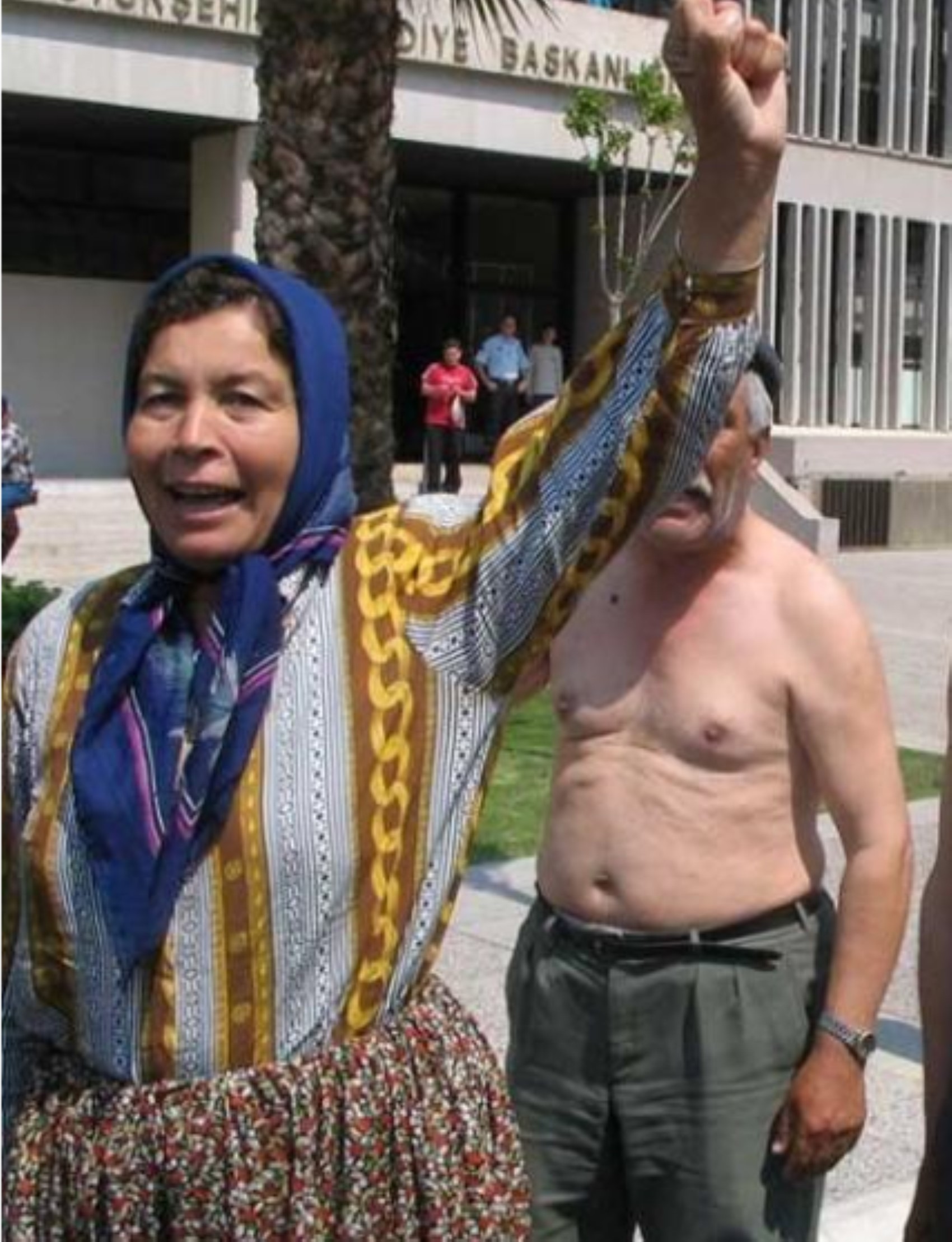
Sabahat Hanım from Çamköy, right next to where the mine was intended to be operated, was a primary school graduate, but she had learned about this universal right of the villagers.
She was loudly defending the "Bergen negotiations"!
She wanted the people living in the region to be asked whether this toxic gold mine should be operated or not.
They were the ones who would live with the poison!
***
The Motherland Party lost the General Elections held on 20.10.1991.
The DYP-SHP coalition was established under the Prime Ministry of Süleyman Demirel.
In the new Council of Ministers, Ersin Faralyalı from the DYP became the Minister of Energy and Natural Resources. He served between 20.11.1991 and 25.06.1993.
Bedrettin Doğancan Akyürek from the DYP became the Minister of Environment.
Cyanide Gold Mining was actually in the field of interest of the Ministry of Environment, but the pieces had not yet fallen into place in this new Ministry.
The Ministry of Energy and Natural Resources was dominant on the subject.
It was not known whether the other partner of the government, the SHP, had knowledge or an inclination on this subject, but the Minister of Energy and Natural Resources, Ersin Faralyalı from the DYP, was the flag-bearer of toxic mining.
It seemed like the work was slowly starting to make sense to the upper echelons of the State.
I wonder what Prime Minister Süleyman Demirel was saying about this?
When the fake EIA commissioned by the foreign company was announced to the public, it received a lot of reaction and did not seem like it would be accepted?
However, an Environmental Impact Assessment (EIA) method, which is applied in many places in the world for an investment and has clear rules and scope, could shed light on the decisions the State would make.
The local people already wanted this anyway?
The State began to prepare an EIA regulation in Ankara.
The State's ambivalent attitude and the frightening evaluations that emerged from the discussions on this subject further increased the concerns of the citizens in the region.
Could people be forced to live with tons of poison against their will?
Where did the right to life begin and where did it end?
Or, as in the case of the workers who died in the disaster that recently occurred in Erzincan-Iliç, was human life being measured with money?
What about humanity!
Sefa Taşkın
19.01.2025
Karşıyaka/Izmir
Most Read

Galatasaray announces injury updates for Osimhen, Lemina, and Singo

Attention online sellers: Tax monitoring expanded
VAR for the Fenerbahçe-Beşiktaş derby has been announced!
Bridges and highways are being privatized: 15 July and FSM are also on the list

Peugeot September 2026 price list is out

New details emerge in 'panel' operation targeting lawyers
Gökçek era detail in ABB investigation

First statement from Osimhen after injury in Başakşehir match
Özlem Şanver: 'He said he would change, I believed him; should I be beaten just because I didn't leave?'

Mourinho explains why he substituted Arda Güler