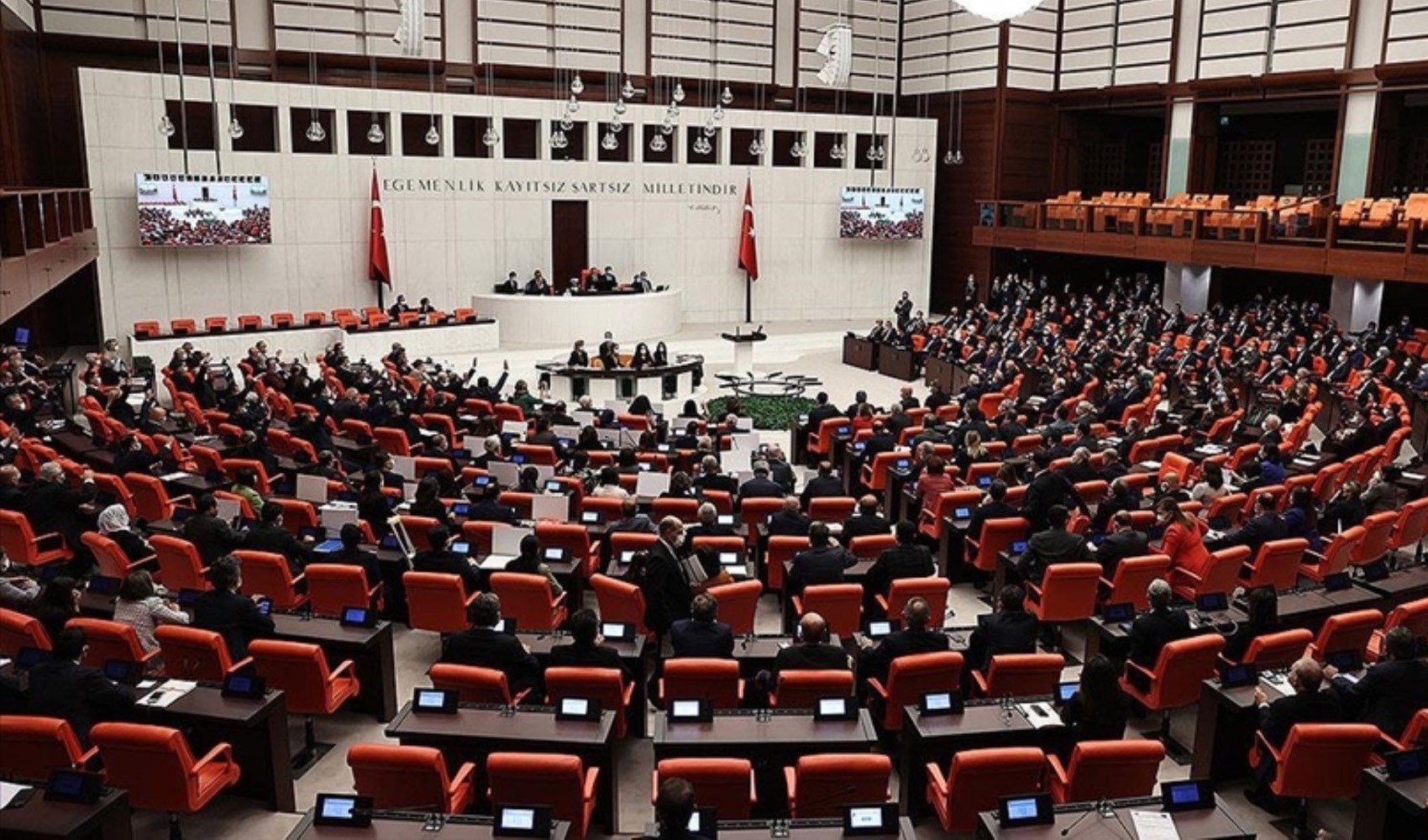
The Bill on Amendments to the Notary Law and Certain Other Laws, which includes regulations concerning the judiciary, has been accepted and enacted in the General Assembly of the TBMM.
With this law, amendments are being made to the Attorneyship Law in line with the Constitutional Court's annulment decision. Accordingly, working as an insured employee in any job, provided it does not physically hinder the legal internship, will no longer prevent the completion of the internship.
Except for judicial and administrative judge and prosecutor candidates or assistants, as well as judges and prosecutors, those working in the staff or positions of public institutions and organizations will also be able to complete their legal internship while on unpaid or leave-without-pay status during the internship process conducted in courts, provided their position is reserved. During this period, annual leave may also be utilized upon the request of the individual.
During the internship process conducted under a lawyer, working hours and leave periods may be regulated by the public institution and organization in a way that does not disrupt the public duty performed by the individual. However, in cases where the nature of the public duty performed would cause disruption if the internship were conducted simultaneously, the individual may be granted unpaid or leave-without-pay status during the internship process under the lawyer.
Contracted personnel who are granted the right to transition to civil servant positions under relevant legislation will only be able to benefit from these provisions after acquiring the right to transition to civil servant positions. Unpaid or leave-without-pay status will not be subject to limitations found in other legislation.
The procedures and principles regarding the regulation of leave periods, durations, and working hours during the internship process for those working in the staff or positions of public institutions and organizations will be determined by a regulation issued by the Presidency.
Previous provisions will apply to those who began their legal internship before the effective date of this regulation.
REGULATIONS REGARDING NOTARIES
With the amendment made to the Notary Law, the procedures and principles regarding the work of notaries on holidays and during off-hours are being regulated. Accordingly, the work of notaries on holidays and during off-hours will be regulated by a regulation to be put into effect by the Ministry of Justice after obtaining the opinion of the Turkish Notaries Union.
The Notary Fee Tariff will be regulated at the beginning of January each year instead of March.
Taxes, duties, fees, valuable paper costs, notary fees, and other transaction expenses that must be paid due to transactions performed at notary offices and documents prepared will be collected in cash or by using bank cards, credit cards, and similar cards.
The procedure for filing tax returns regarding taxes, duties, fees, and valuable paper costs for notaries will be simplified. Accordingly, returns for the previous month will be prepared within the first five business days of each month and submitted to the relevant offices within the same period.
In exchange for sharing information contained in the vehicle registration and title system database with individuals and institutions within the framework of the additional 18th article of the Highway Traffic Law, a transaction participation fee of 2 liras will be collected by the Turkish Notaries Union per query or returned record. This amount will be increased and applied each year, effective from the beginning of the calendar year, at the revaluation rate determined and announced in accordance with the provisions of the Tax Procedure Law for the previous year. No participation fee will be collected from public administrations within the scope of general government. Other individuals and institutions exempt from the participation fee and matters related to the implementation will be determined by regulation.
Notary transactions prepared by signing with a handwritten signature will be recorded in the information system of the Turkish Notaries Union with a secure electronic signature.
With the law, regulations are being made regarding the presidencies of the Council of State (Danıştay), the Court of Cassation (Yargıtay), and the Court of Accounts (Sayıştay), as well as judge and prosecutor positions, in line with the Constitutional Court's annulment decision.
AMENDMENTS TO THE TURKISH CIVIL CODE
With the amendment made to the Turkish Civil Code, the registration of a name change in the population registry will be announced on the Press Advertisement Agency's announcement portal. This announcement will include: the court that issued the ruling, the date the decision was rendered, the file's basis and decision number, as well as the place of population registration, date of birth, mother's and father's name, previous name and surname, and the new name and surname granted by the court decision of the person whose name is decided to be changed.
The period required for couples who cannot re-establish a common life after the finalization of the dismissal of a divorce case to file for divorce again will be reduced from 3 years to 1 year. If a case filed for any of the grounds for divorce is dismissed and 1 year has passed since the date this decision became final, if the common life has not been re-established for any reason, the marital union will be considered fundamentally shaken, and a divorce will be granted upon the request of one of the spouses.
An amendment will be made to the Law on the Establishment, Duties, and Powers of First Instance Judicial Courts and Regional Courts of Justice. Accordingly, the regulation regarding the most senior Public Prosecutor serving as the Deputy Chief Public Prosecutor will be abolished. Deputy Chief Public Prosecutors in regional courts of justice will be determined by the Council of Judges and Prosecutors (HSK). Additionally, more than one Deputy Chief Public Prosecutor may be assigned in places where the workload requires it.
According to the amendment made to the Criminal Procedure Code (CMK), in the event of a change in the nature of the crime, notifications regarding the right to additional defense may be made to the defendant in addition to the defense counsel. The defense counsel will benefit from the rights granted to the defendant just as the defendant does. If notification cannot be made to the defendant's last address in the file or if the defendant does not attend the hearing despite notification, notifications made to the defense counsel will be considered sufficient.
STATE UNIVERSITIES WILL BE ABLE TO ESTABLISH CHILD MONITORING CENTERS (ÇİM)
With another regulation in the CMK, state universities will be able to establish Child Monitoring Centers (ÇİM).
With the amendment to the Law on the Execution of Penalties and Security Measures, the scope of the rights of convicts to formal and non-formal education will be expanded. Accordingly, convicts in open penal institutions and juvenile education houses will be provided access to all types of education; convicts in other penal institutions will be provided access to non-formal, distance, and open education programs that can be provided within the institution.
Convicts in closed penal institutions will be able to continue formal education programs opened within the institution, provided it does not jeopardize institutional discipline, order, and security, and to the extent that institutional capacity and facilities are suitable. Priority will be given to convicts in need based on criteria such as age, education level, disability status, social and economic status, and similar factors.
Exams for convicts in closed penal institutions who meet the necessary requirements according to the relevant legislation of the educational institutions they are enrolled in will be conducted within the penal institution according to the specified procedure, by taking measures to prevent the disruption of individual and institutional security as well as institutional discipline and order. Accordingly, exams within the scope of secondary education, associate degree, undergraduate, and similar educational programs, as well as written or oral exams such as vocational qualifications, will be conducted primarily online by coordinating with the relevant institution, and if that is not possible, face-to-face under the supervision of an official from the relevant educational institution.
Convicts will participate in central exams and open education institution exams in penal institutions designated as exam centers.
Institutions, organizations, and universities will be responsible for making the necessary arrangements and taking measures regarding the exams.
The participation of convicts in open penal institutions and juvenile education houses in education or exams cannot be prevented except in cases where the convict is unsuccessful, shows absenteeism, commits one of the acts requiring disciplinary punishment written in the Law in education and exam areas, or if the education program is not suitable for the operation of the penal institution in terms of place and time.
Procedures and principles regarding education and exams will be determined by a regulation issued by the Ministry of Justice after obtaining the opinions of the Ministry of National Education and the Council of Higher Education (YÖK).
TWO ARTICLES REMOVED FROM THE REGULATION
With the accepted motions of the AKP, the article regarding the introduction of a new crime for espionage and the provision stating that the general assembly could be called to an extraordinary meeting upon the application of one-fourth of the general assembly members in tradesmen and craftsmen professional organizations were removed from the regulation.
Following the acceptance and enactment of the bill, Deputy Speaker of the Parliament Gülizar Biçer Karaca closed the session to reconvene on Tuesday, November 19, at 15:00, in accordance with the decision taken.
News Source: AA