

Dismissal of lieutenants' commander from TSK overturned
The Ankara 19th Administrative Court has unanimously overturned the decision to dismiss Colonel Alper Topsakal from the Turkish Armed Forces (TSK), which was based on the allegation that he failed to prevent lieutenants from chanting "We are the soldiers of Mustafa Kemal" during the Military Academy graduation ceremony; the court members concluded that the dismissal was disproportionate and that there was no concrete evidence of a crime.




Müyesser Yıldız - 12punto.com.tr
The Ankara 19th Administrative Court has unanimously overturned the dismissal of Colonel Alper Topsakal, the acting School Commander at the time, who was expelled from the TSK on the grounds that he did not prevent lieutenants from crossing their swords, reciting the Officer's Oath, and chanting "We are the soldiers of Mustafa Kemal" after the official part of last year's Military Academy graduation ceremony had concluded. In the decision, which was reached with a majority opinion regarding the reasoning, the Court President and one member stated that the dismissal was "disproportionate," while another member expressed the opinion that no concrete crime had been committed.
The Ankara 19th Administrative Court, which had previously rejected Alper Topsakal's request for a stay of execution by a majority vote in recent months, held a hearing on the merits of the case on October 21. The decision to unanimously overturn the dismissal from the TSK, which was reached on November 4 following the hearing, was notified to the parties today.
"A LESSER PENALTY COULD HAVE BEEN IMPOSED INSTEAD OF DISMISSAL"
In the decision, the Court President and one member found Topsakal's dismissal to be unlawful for the following reasons:
"Maintaining a fair balance between the actions subject to disciplinary action and the sanctions imposed is a requirement of the rule of law. While remaining bound by legislation, the bodies authorized to impose disciplinary penalties must also consider the sub-principles of proportionality, which are among universal legal norms: suitability, necessity, and proportionality. In the case at hand, it could not be demonstrated that the plaintiff had any permission, approval, or involvement regarding the act performed, and the act was carried out after the official ceremony had ended. In this situation, it was not proportionate to hold the plaintiff individually and equally responsible for the actions of his subordinates and to punish him with the penalty of separation from the Armed Forces. The act attributed to the plaintiff could only be evaluated within the scope of negligence in the supervision of subordinates, and the penalty imposed does not correspond to the attributed act; therefore, the 'typicality' requirement was not met. It was concluded that the plaintiff's act could only be evaluated within the scope of the act of 'Negligence in the supervision of subordinates: showing negligence in the inspection, control, and supervision of subordinates and those under one's command,' which is included in the article on 'disciplinary offenses requiring a salary deduction penalty.' Therefore, no compliance with the law was found in the action of punishing the plaintiff with the penalty of separation from the Armed Forces."
MEMBER JUDGE: "THERE IS NO CRIME"
The member judge, who wrote a 7-page dissenting opinion regarding the rejection of Alper Topsakal's initial request for a stay of execution, also objected to the reasoning of the decision to overturn the dismissal on its merits with a 6-page dissenting opinion.
Pointing out that no one can be held legally responsible for an act they did not commit, and that there is no provision in the legal legislation stating that commanders, solely by virtue of being school commanders or superiors, are equally and equivalently responsible for the actions of their subordinates, the Member Judge summarized the following points:
"There is no concrete, legally acceptable evidence that the plaintiff had any fault or negligence regarding the attributed issues, and it cannot be concretely demonstrated that the acts subject to the accusation were committed. Since punishment cannot be imposed for a behavior that has not concretely occurred or cannot be demonstrated through an active or passive act in terms of disciplinary and administrative law, I do not agree with the reasoning of the majority decision to overturn the dismissal based on the grounds stated therein. The decision to terminate his relationship with the TSK was based on assumptions or inferences rather than the plaintiff's concrete, clear, and actually performed active or passive actions, and the 'typicality' requirement was not met; therefore, I believe the decision should have been overturned based on these reasons."
It is estimated that this decision will set a precedent for the annulment cases filed by both Battalion Commander Halit Türkoğlu and the lieutenants.
News Source: Müyesser Yıldız
Most Read
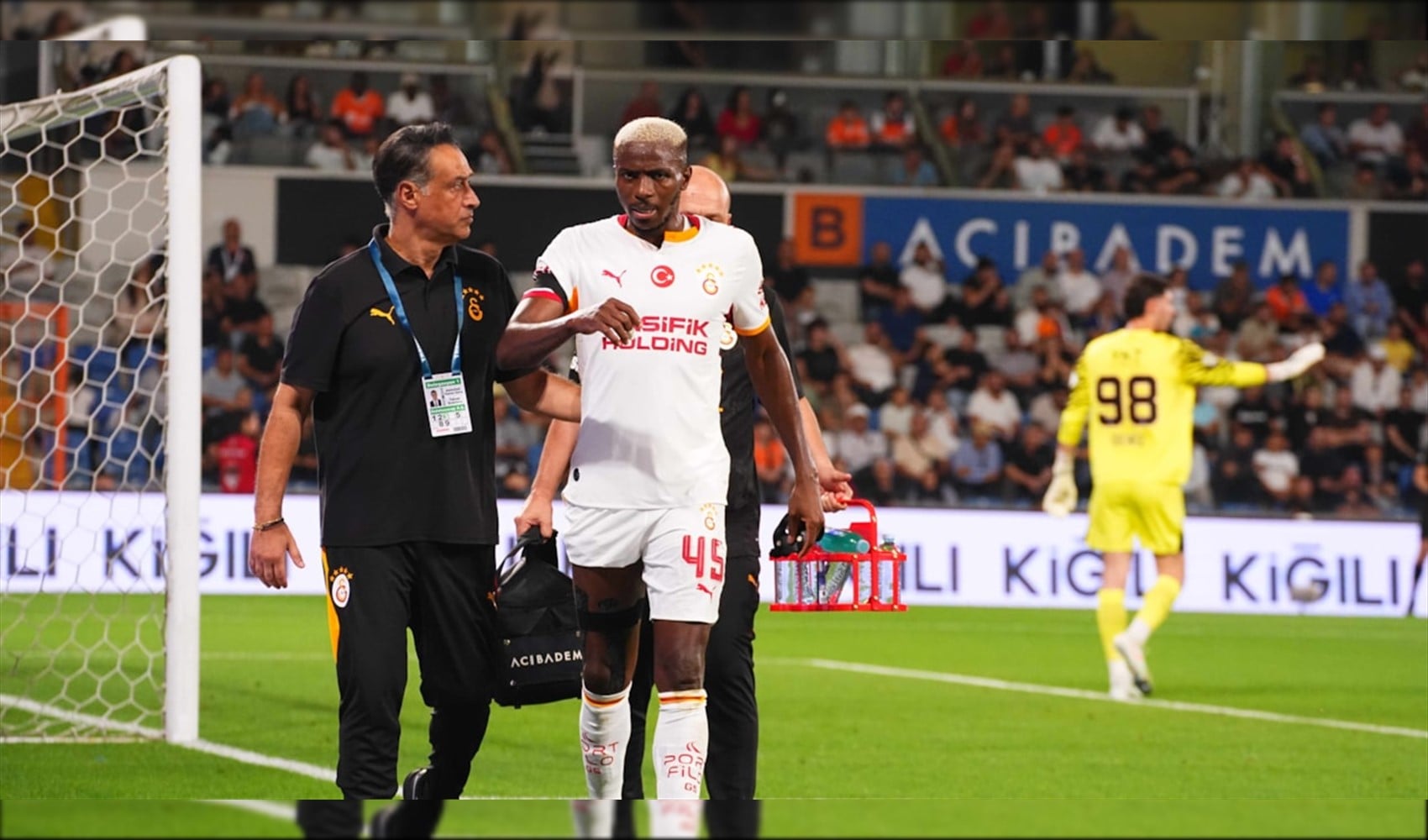
Galatasaray announces injury updates for Osimhen, Lemina, and Singo

Attention online sellers: Tax monitoring expanded
VAR for the Fenerbahçe-Beşiktaş derby has been announced!
Bridges and highways are being privatized: 15 July and FSM are also on the list

Peugeot September 2026 price list is out

New details emerge in 'panel' operation targeting lawyers
Gökçek era detail in ABB investigation
First statement from Osimhen after injury in Başakşehir match

Özlem Şanver: 'He said he would change, I believed him; should I be beaten just because I didn't leave?'

Mourinho explains why he substituted Arda Güler