

Important warning from experts regarding earthquakes in the Aegean Sea!
Prof. Dr. Naci Görür, Prof. Dr. Osman Bektaş, and Prof. Dr. Övgün Ahmet Ercan have issued important warnings regarding the earthquake swarm in the Aegean Sea.



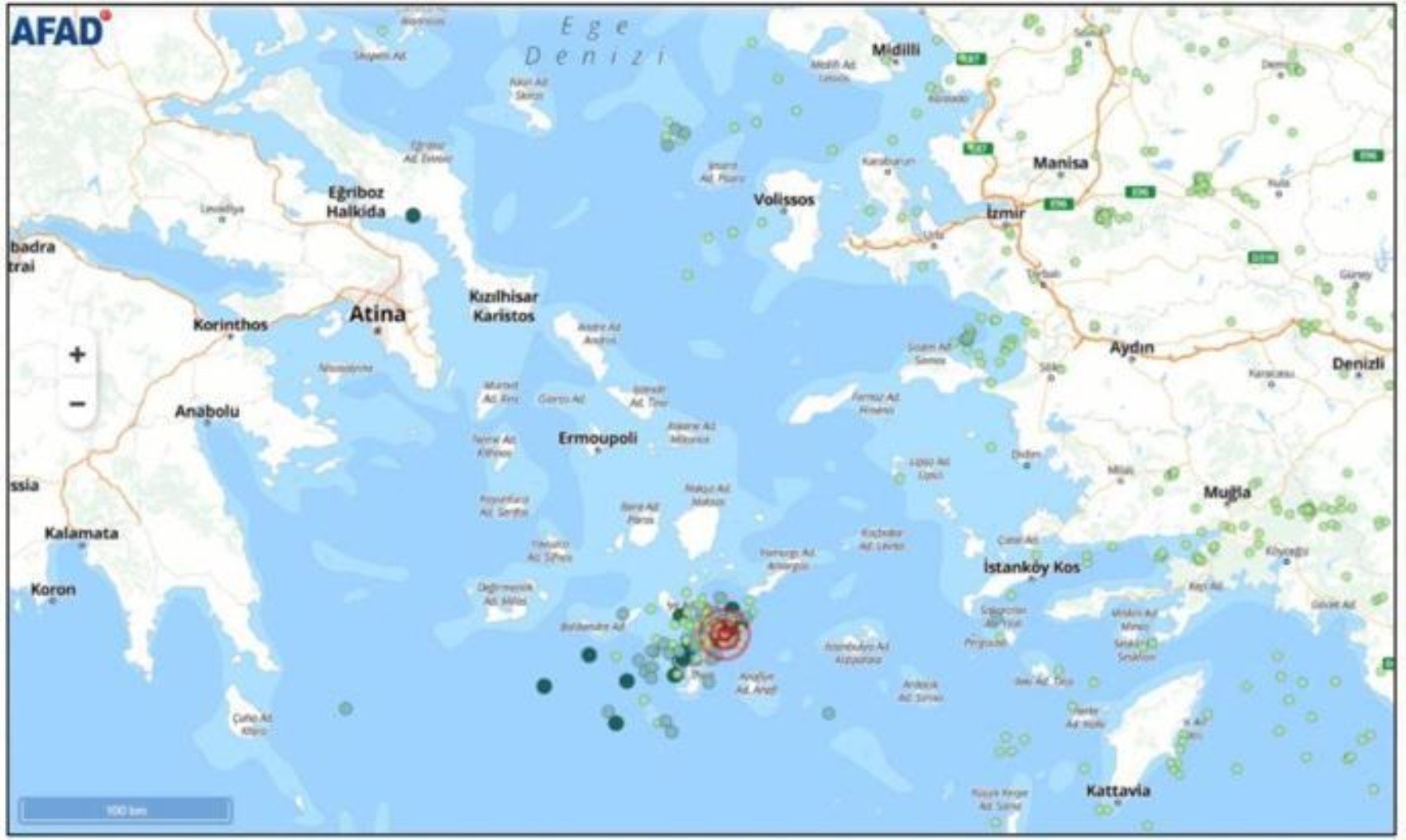
Since January 28, 2025, the number of earthquakes concentrated in the Aegean Sea has exceeded 400. AFAD reported that the largest earthquake measured was 4.8 in magnitude.
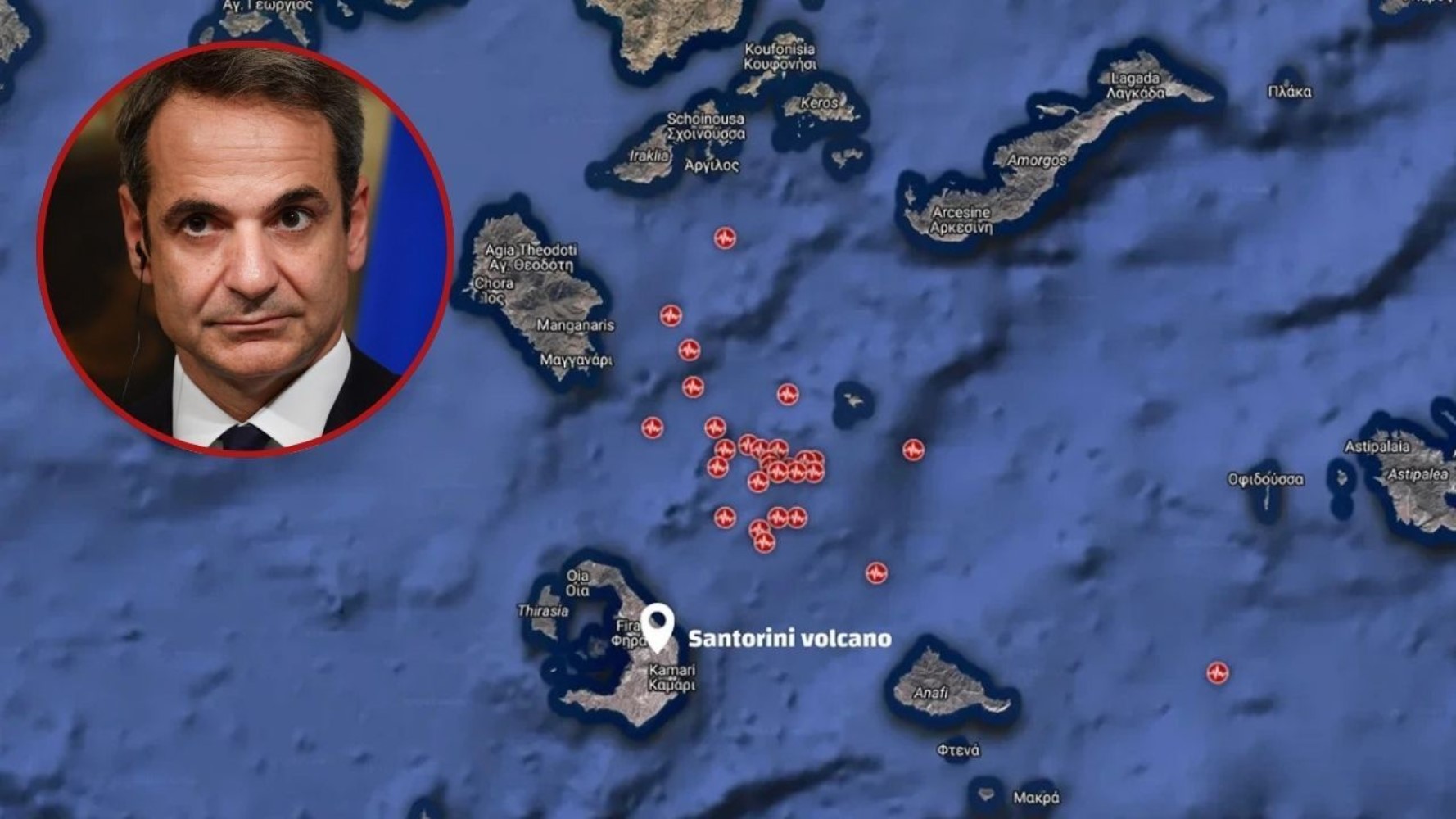
EMERGENCY MEETING DECISION FROM GREECE
Greek Prime Minister Kyriakos Mitsotakis decided to hold an emergency meeting following the series of earthquakes off the coast of Santorini. The Greek government convened to determine the necessary precautions. The meeting was attended by a team including Greece's Minister of Climate Crisis and Civil Protection Vassilis Kikilias, Chief of the Hellenic National Defence General Staff General Dimitris Houpis, and professors Efthymios Lekkas and Kostas Papazachos from the Earthquake Planning and Protection Organization (OASP).
During the meeting held under the leadership of Prime Minister Mitsotakis with the participation of government officials and experts, the seismic activity in the region and possible measures against a potential major earthquake were discussed. In a statement to reporters after the meeting, Minister of Climate Crisis and Civil Protection Vassilis Kikilias stated that the decisions taken so far regarding the matter were precautionary in nature and asked citizens to comply with the decisions and imposed bans.
In its statement, AFAD recalled that similar intense seismic activity occurred in the same region in 2011-2012, and the earthquakes, which lasted for 14 months, did not lead to any volcanic activity.
It was reported that developments are being followed closely and that scientists and researchers are evaluating the seismic activity, potential volcanic activities, and tsunamis in coordination with AFAD.
Citizens were warned not to rely on misinformation circulating on social media and were advised to follow official sources for accurate information.
Important warnings also came from Turkish experts regarding the earthquake swarm in the Aegean Sea. Prof. Dr. Osman Bektaş, a retired professor from the Department of Geological Engineering at Karadeniz Technical University, stated that the Aegean-Santorini earthquakes should not be underestimated. Prof. Dr. Bektaş's post is as follows:
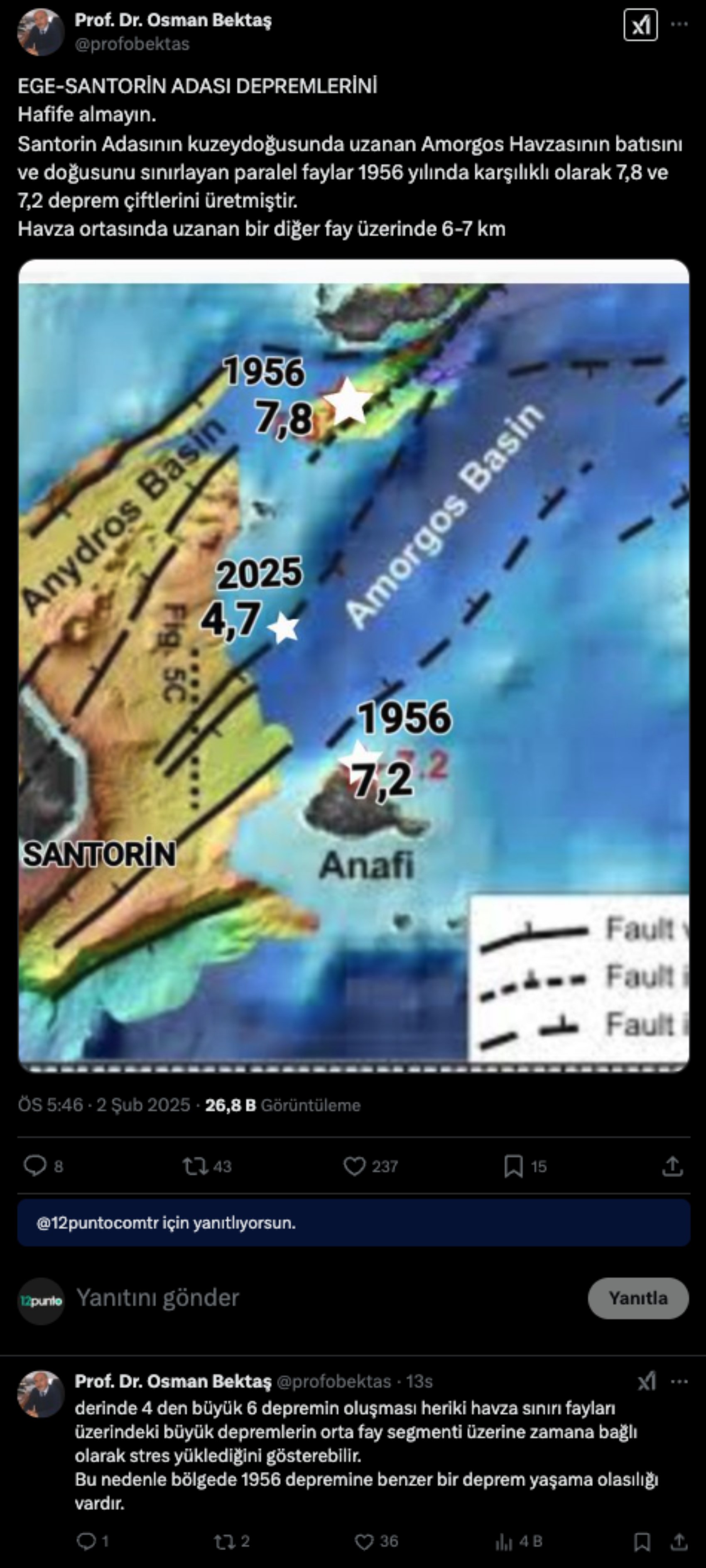
"Do not underestimate the Aegean-Santorini island earthquakes. The parallel faults bounding the west and east of the Amorgos Basin, which extends to the northeast of Santorini Island, produced earthquake pairs of 7.8 and 7.2 in 1956. The occurrence of 6 earthquakes greater than 4 in magnitude at a depth of 6-7 km on another fault extending in the middle of the basin may indicate that the major earthquakes on both basin boundary faults are loading stress onto the middle fault segment over time. Therefore, there is a possibility of experiencing an earthquake in the region similar to the 1956 earthquake.
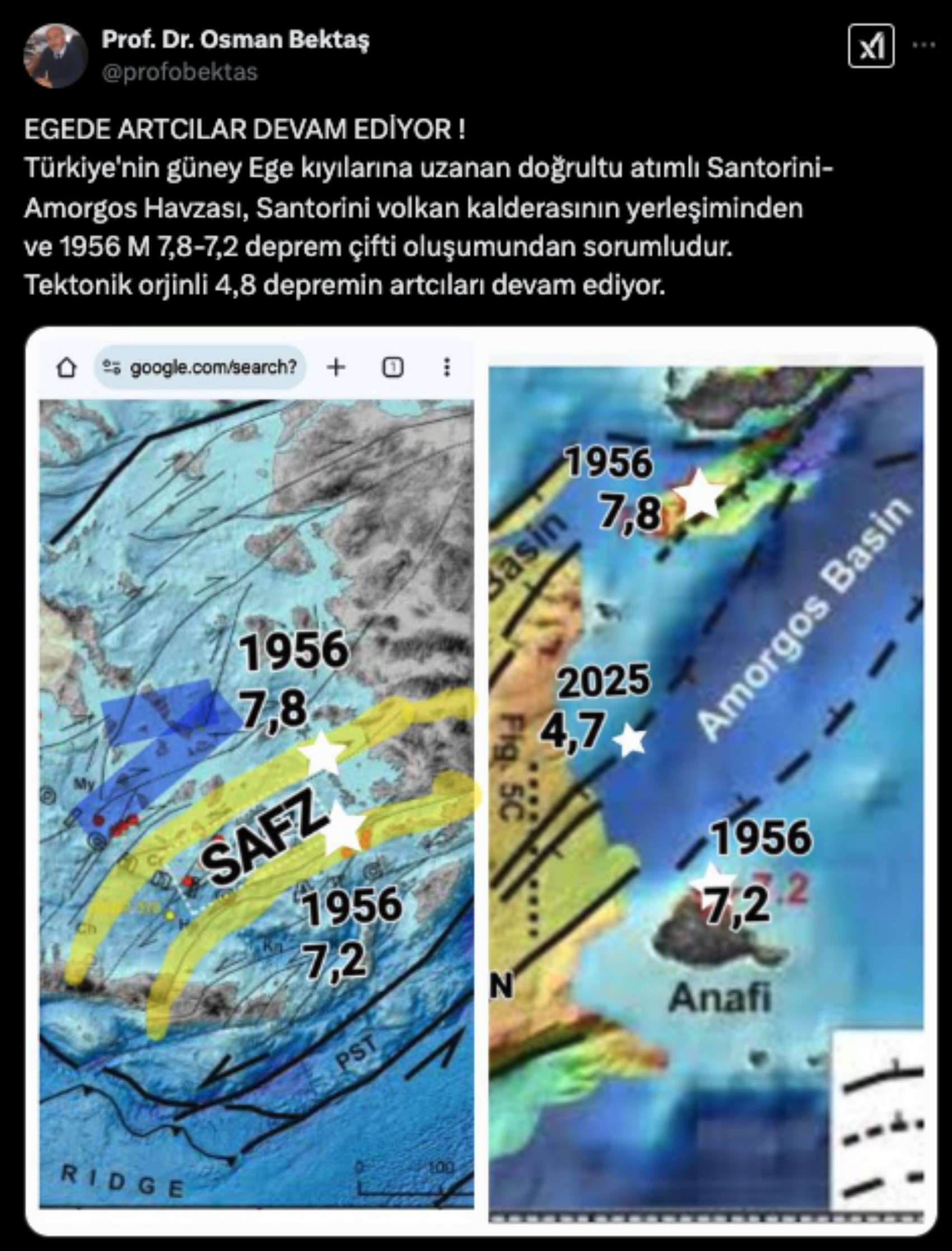
“AFTERSHOCKS CONTINUE IN THE AEGEAN!”
The strike-slip Santorini-Amorgos Basin, which extends to the southern Aegean coasts of Turkey, is responsible for the placement of the Santorini volcanic caldera
and the formation of the 1956 M 7.8-7.2 earthquake pair.
Aftershocks of the 4.8 magnitude tectonic earthquake continue.”

PROF. DR. NACİ GÖRÜR: BE CAREFUL
Prof. Dr. Naci Görür emphasized the need to be careful in a post on his social media account. Görür stated the following:
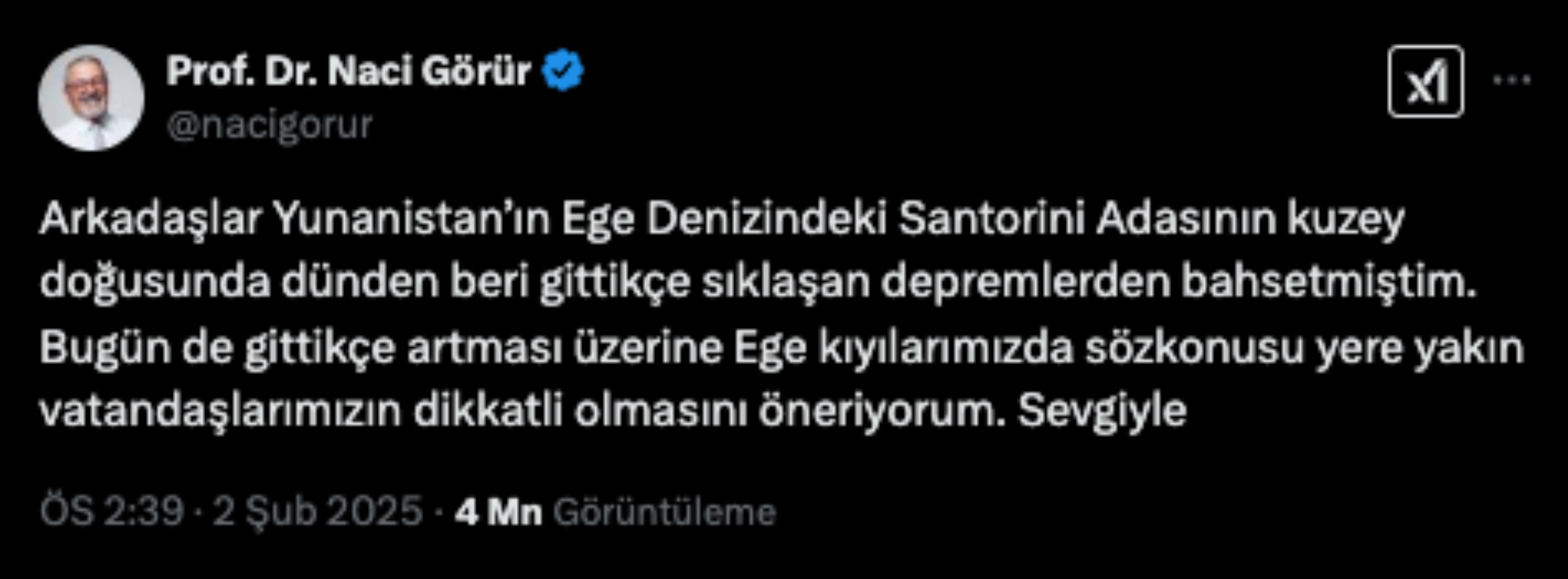
"Friends, I had mentioned the earthquakes that have been becoming increasingly frequent since yesterday to the northeast of Santorini Island in the Aegean Sea in Greece. Given that they are increasing today as well, I recommend that our citizens on our Aegean coasts who are close to the mentioned location be careful. With love."

“IT MAY BE VOLCANIC IN ORIGIN”
Prof. Dr. Övgün Ahmet Ercan also stated that the earthquakes are volcanic in origin. Prof. Dr. Ercan's posts are as follows:
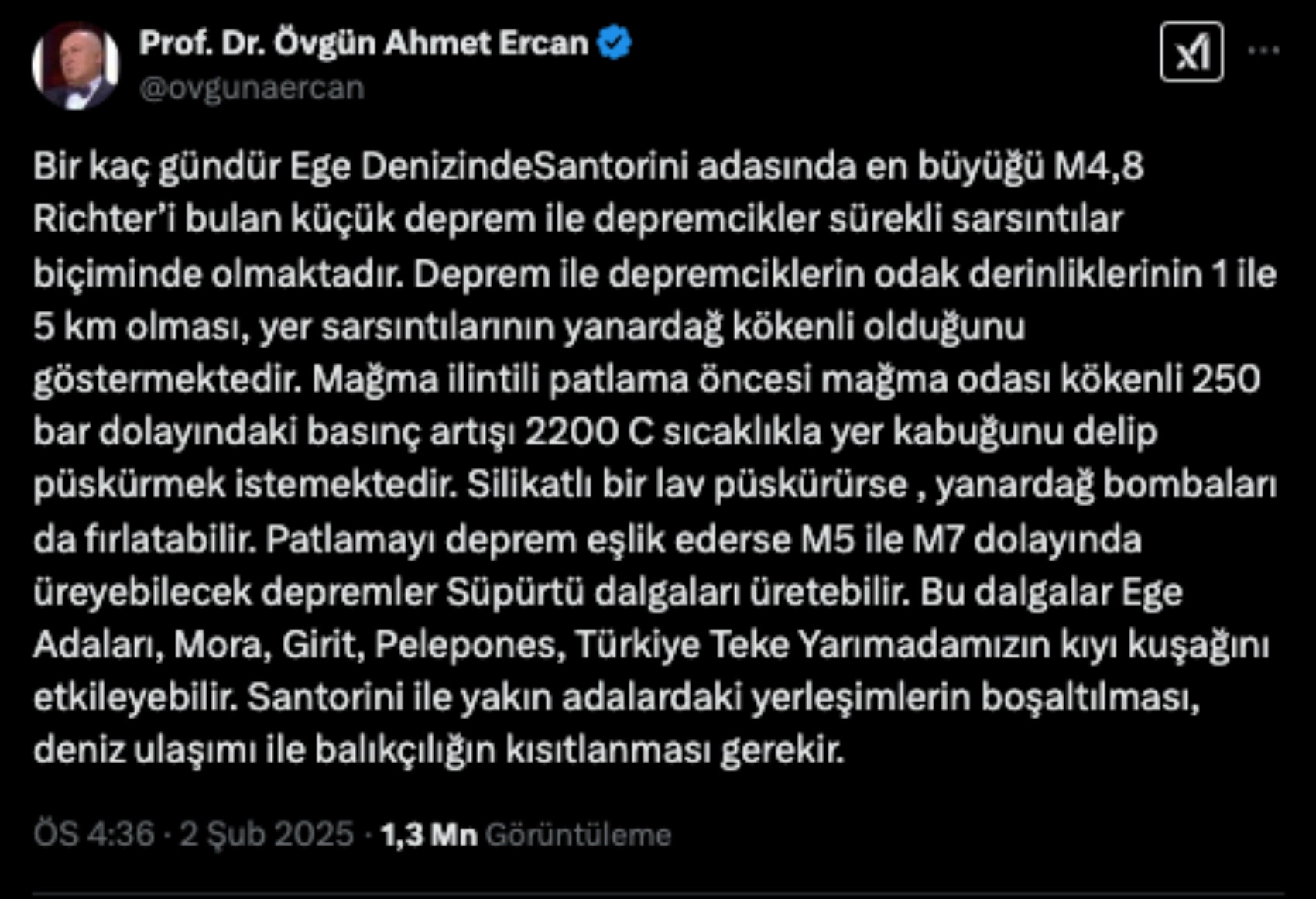
"For a few days, small earthquakes and tremors, the largest of which reached M4.8 on the Richter scale, have been occurring in the form of continuous tremors on Santorini island in the Aegean Sea. The focal depths of the earthquakes and tremors being between 1 and 5 km indicate that the ground tremors are volcanic in origin.
The pressure increase of around 250 bars originating from the magma chamber before a magma-related eruption wants to pierce the earth's crust with a temperature of 2200 C and erupt. If a silicate lava erupts, it can also throw volcanic bombs. If an earthquake accompanies the eruption, earthquakes that could reach M5 to M7 could generate tsunami waves. These waves could affect the Aegean Islands, the Morea, Crete, the Peloponnese, and the coastal belt of our Teke Peninsula in Turkey. Settlements on Santorini and nearby islands should be evacuated, and maritime transport and fishing should be restricted.
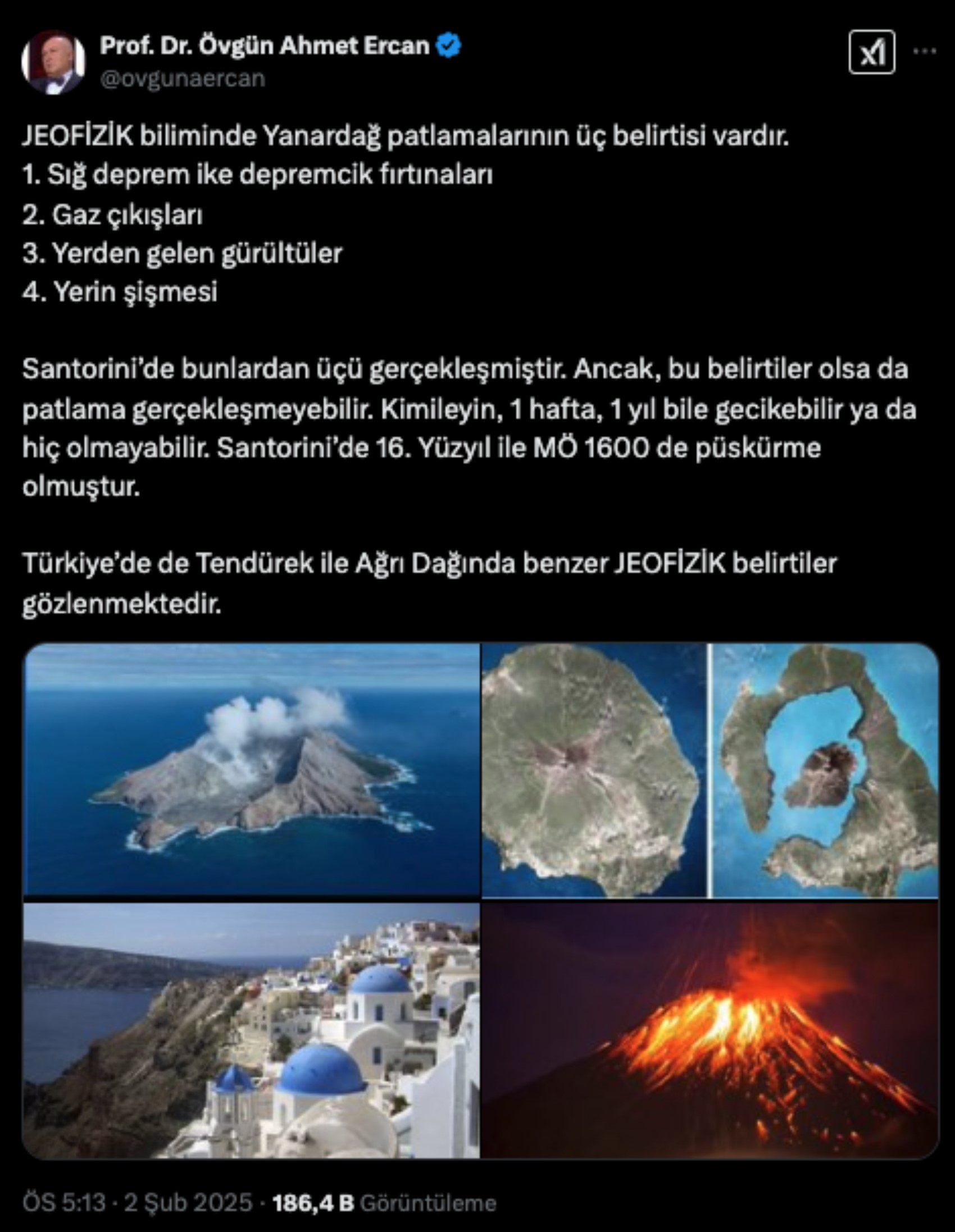
THREE NOTABLE SIGNS...
Stating that "there are three signs of volcanic eruptions in geophysics," he issued the following warnings: "1. Shallow earthquake and tremor swarms 2. Gas emissions 3. Noises coming from the ground 4. Swelling of the ground... Three of these have occurred in Santorini. However, even if these signs exist, an eruption may not occur. Sometimes, it can be delayed by 1 week, 1 year, or may not happen at all. Eruptions occurred in Santorini in the 16th century and in 1600 BC. Similar GEOPHYSICAL signs are also observed in Tendürek and Mount Ararat in Turkey."
News Source : 12punto
Most Read

Galatasaray announces injury updates for Osimhen, Lemina, and Singo

Attention online sellers: Tax monitoring expanded

VAR for the Fenerbahçe-Beşiktaş derby has been announced!
Bridges and highways are being privatized: 15 July and FSM are also on the list

Peugeot September 2026 price list is out

New details emerge in 'panel' operation targeting lawyers

Gökçek era detail in ABB investigation

First statement from Osimhen after injury in Başakşehir match
Özlem Şanver: 'He said he would change, I believed him; should I be beaten just because I didn't leave?'

Mourinho explains why he substituted Arda Güler