In the reasoned decision, written two months after the verdict hearing on July 17, it was noted that some of the defendants confessed to acts of injury, some denied the accusations, and others made indirect confessions by admitting to throwing objects of various characteristics at people on the opposing side.
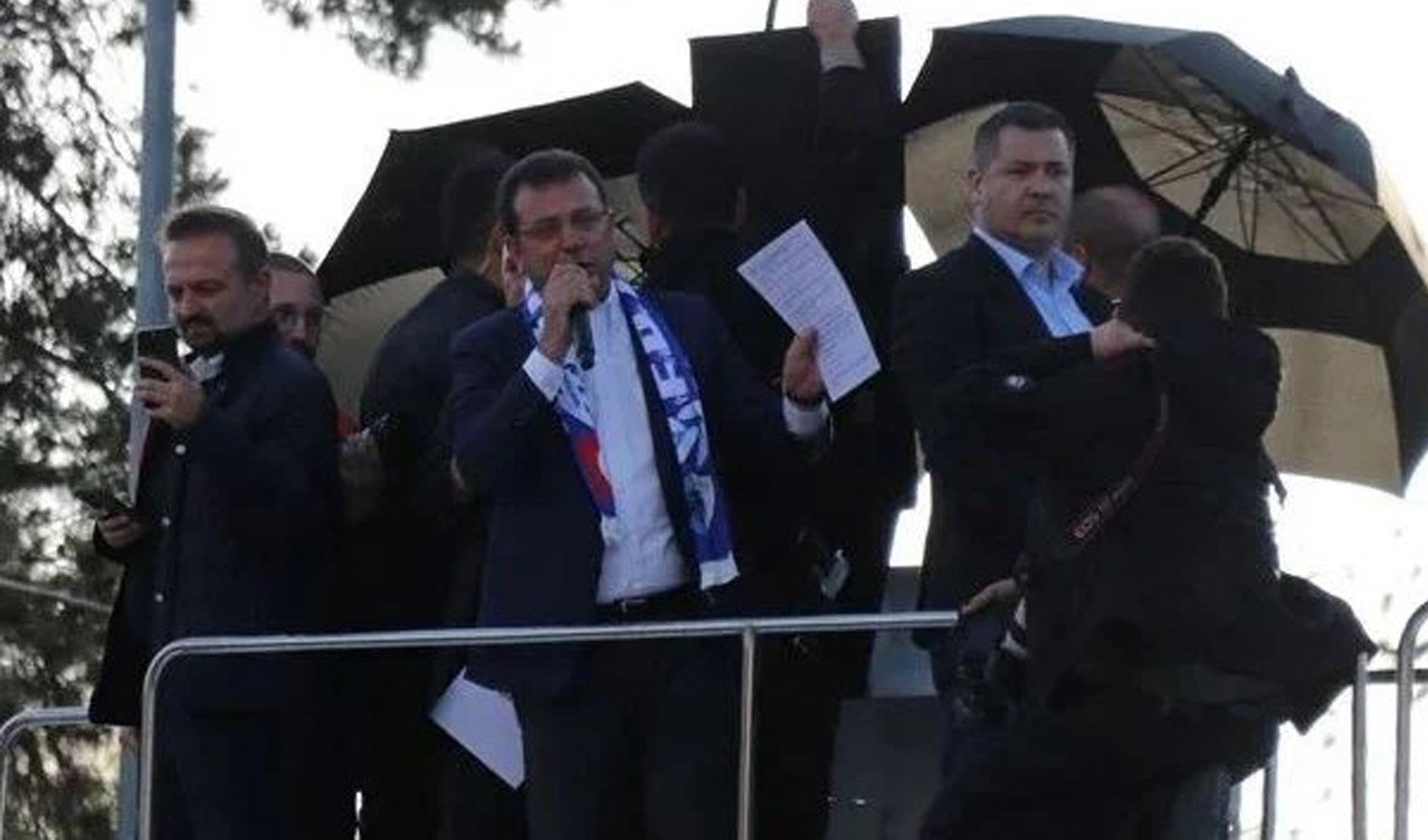
According to the report by Emrullah Bayrak from Gazete Duvar, the reasoned decision has been written for the public case opened regarding the stone attack carried out against Istanbul Metropolitan Municipality (İBB) Mayor Ekrem İmamoğlu during his Erzurum rally. The Erzurum 7th Criminal Court of First Instance stated that it had reached the conclusion that all defendants committed the charged crime of intentional injury. However, it was stated that the legal conditions for the events to have been organized by the defendants were not met.
In the court decision, which argued that the defendants did not act together, it was stated: ''Considering the justification of Article 37 of the Turkish Penal Code (TCK) and the practices of the Court of Cassation, in order for all defendants to be held responsible for the injuries of the victims and for the defendants to be punished for the number of injured victims—that is, for each of the defendants to be held responsible as joint perpetrators—the legal conditions were not met in the incident. It was concluded that the defendants' decision to commit the crime together could not be determined in terms of their roles and contributions in the execution of the injury acts, that the defendants did not establish joint control over the acts of injury, and therefore there was no intent of complicity, and the provisions of complicity were not applied in the incident. In other words, the defendants had to be held responsible only for the crime of intentional injury against one person, which could be determined and proven in the incident, and sentencing was carried out in this direction.''
It was emphasized that the defendants who were within the protesting group initiated the event. It was alleged that they threw objects randomly. It was stated that even though they were within the two groups, it could not be determined which defendants within which group caused the injuries to the victims who were randomly passing through the scene. According to the defendants' defenses and other victim statements, it was argued that although a few defendants knew each other, the majority of the defendants did not know one another.
THOSE WHO CAUSED THE INJURIES COULD NOT BE IDENTIFIED
Stating that no definitive determination or evidence could be obtained regarding objects being thrown with a specific target, the court stated the following in the reasoning of the decision:
''As of the scope of the file, it could not be determined which victim was injured by whom; a very small portion of the victims were injured as a result of the physical attack by the protesting group and the gas fired by law enforcement officers, but the individuals who carried out the physical attack could not be identified; furthermore, it could not be determined which defendants within which group caused the injuries to the victims who were randomly passing through the scene, even though the defendants were within the two groups. According to the defendants' defenses and other victim statements, although a few defendants knew each other, the majority of the defendants did not know one another. Moreover, any doubt that arises must be interpreted in favor of the defendants. The evidence submitted to the file by the attorneys of the complainants, camera footage, expert reports, and social media posts are not of a nature to eliminate the doubt on this matter.
Even if the HTS records of the defendants were obtained, the doubt would not be eliminated. This is because, as explained above, it can be understood from the camera footage that there were many people within the protesting group who did not participate in violent acts. Therefore, it must be accepted that the actions of these individuals who did not participate in violent acts do not constitute a crime and that their actions were in the nature of exercising the right to legal protest. Otherwise, everyone who was present at the scene for protest purposes, chanted slogans, carried banners, hung posters, etc., expressing their opinions collectively or individually, despite not participating in the violent act, would have to be punished, which is not possible under the current criminal law."
ATTEMPTED INJURY
The content of the medical reports prepared for the victims was also included in the reasoned decision. Accordingly, the following statements were included: "Considering the nature of the wounds described in these reports and the nature of the objects that injured the victims according to the camera footage, the objects thrown by the defendants were accepted as items considered weapons within the scope of Article 6 of the TCK, and Article 86/3-e of the TCK was applied to the defendants.
Regarding the assessment of eventual intent; it was evaluated that in the incident, the defendants threw objects at a crowd where many people from the opposing side were present, and considering daily life experiences, the defendants knowingly and willingly realized the material elements in the legal definition of the crime, that is, they acted with direct intent in the incident, and no reduction was made for the defendants pursuant to Article 21/2 of the TCK.
Although it is proven that the defendants threw an object at the opposing side intended to cause injury, it could not be determined with the available evidence whether the thrown object hit any person and therefore whether the act of injury was completed.
Although it was requested that a decision of lack of jurisdiction be issued on the grounds that the defendants' actions would constitute the crime of attempted intentional homicide, in the decisions of the Court of Cassation, criteria such as whether there is hostility between the perpetrator and the victim, the reason and degree of the hostility if any, the nature of the attack tool used by the perpetrator in the crime, the number and intensity of the blows, the location, nature, and quantity of the wounds caused on the victim's body, whether there was an opportunity to select a target, and whether the perpetrator ended their act on their own or due to an obstructive reason are taken as a basis in determining whether an act is considered attempted intentional homicide or intentional injury. When these listed criteria are applied to our case, since it is clear and determinable without the need for discussion that the defendants' action constitutes the crime of attempted injury rather than attempted intentional homicide, a decision of lack of jurisdiction was not issued."
News Source: 12punto