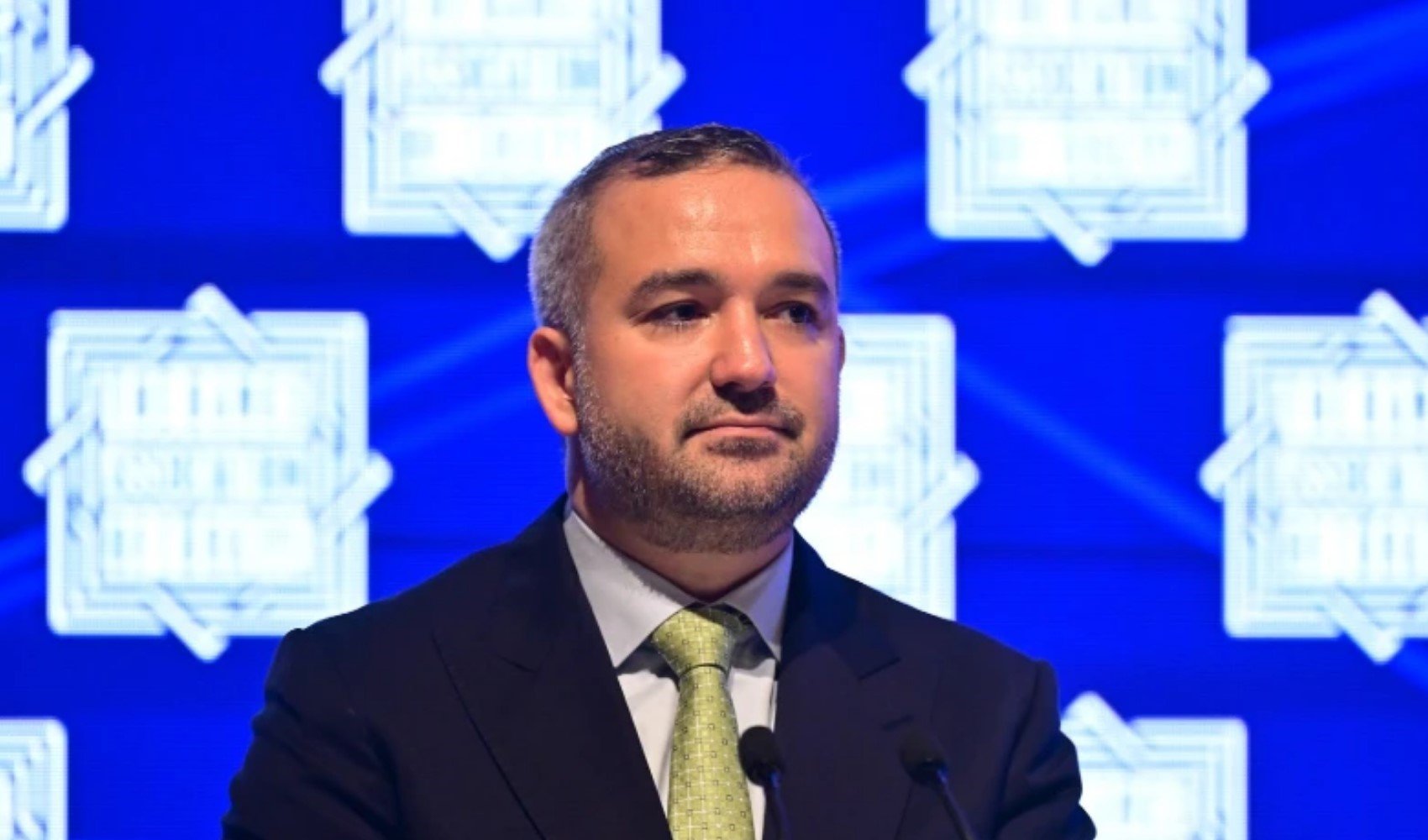
The third Inflation Report meeting of the year was held at the CBRT Campus located at the Istanbul Financial Center.
Central Bank Governor Fatih Karahan made statements at the meeting regarding critical issues, primarily the economy and inflation targets.
Our Governor Dr. Fatih Karahan presents the Inflation Report 2025-III: https://t.co/fK6d1hvkyh
— Central Bank (@Merkez_Bankasi) August 14, 2025
In the previous Inflation Report meeting held on May 22, Governor Karahan had stated, "Inflation expectations show that we must maintain our stance on tight monetary policy."
TARGETS WERE KEPT STEADY IN THE PREVIOUS MEETING
In the last meeting, year-end inflation forecasts were left unchanged and the projections were announced as follows:
2025 Year-End Inflation Forecast: 25%
2026 Year-End Inflation Forecast: 12%
2027 Year-End Inflation Forecast: 8%
STATEMENTS BY FATIH KARAHAN
The Central Bank kept its 2025 year-end inflation forecast steady at 24 percent.
Highlights from Fatih Karahan's statements are as follows:
"We continue to strictly receive the results of our tight monetary policy. The disinflationary effect of demand conditions has increased with the tight monetary policy. We will continue to use all monetary policy tools in the coming period. We attach importance to the progress we have made toward achieving price stability.
Global trade policy uncertainty and geopolitical risks continue to remain high. The global growth outlook remains weak compared to the beginning of the year.
Energy commodity prices have increased slightly compared to the previous reporting period. Industrial metal prices also showed increases due to tariff effects. Interest rate cut processes continued across countries after April.
Due to high indebtedness, the risk perception regarding bonds has increased relatively. We see that portfolio preferences are shifting toward stocks.
The balanced course in the demand composition in Turkey continues. The contribution of private consumption to growth has declined. The normalization in the composition is also visible when growth data is examined on a quarterly basis.
Production indicators generally remained moderate in the second quarter. Although the headline unemployment rate increased slightly in the second quarter, it is below its historical averages.
In the first quarter of 2025, private consumption growth slowed down. We see that the contribution of private consumption to growth has declined significantly. As a result of the tight monetary policy, the demand composition has become more balanced. It is observed that the contribution of private consumption to growth has declined significantly.
Provisional data for July point to an improvement in the foreign trade balance. Under this outlook, we estimate that the ratio of the current account deficit to national income will hover around 1.3% in the second quarter.
The growth of production indicators slowed in the second quarter. Survey-based indicators point to a weakening outlook in industry. The disinflation process, which began in June 2024, continues uninterrupted despite volatility in financial markets and geopolitical developments.
INFLATION
The disinflation process that began in June 2024 continues uninterrupted. Since the last Report period, inflation has occurred within our projected forecast range, although it is above the midpoint we estimated. August leading data point to the continuation of this. When we examine the three-month moving averages of the main inflation trend, we see that the gradual slowing trend continues.
Consumer inflation in July was 42 points lower compared to the May 2024 peak; August leading data point to the continuation of the trend. Although inflation has come in lower than market expectations in the last three months, inertia in services continues to pose risks above our estimates.
In the last 3 months, inflation occurred within our projected forecast range.
Despite agricultural frost, we see a slowdown in food inflation. The slowdown in other food groups was also supportive. Adverse weather conditions increase risks in food prices. Drought increases risks in food inflation.
Items with a high tendency to index to past inflation are slowing down disinflation. In the next two months, we will follow the effects of developments in private university tuition fees. Rent inflation is following a more resilient course than expected. It is projected that rent inflation will continue to decline.
In the first 7 months, education and rent items stand out in inflation. Rent increase rates confirm the downward outlook.
Inflation expectations have declined in all sectors. There is a clear message: We continue to maintain tight monetary policy and remain in the disinflation process.
I can say that the policy rate cut is reflected in deposit and loan pricing in line with our expectations. Individual loan growth accelerated slightly due to credit cards. Half of the TL commercial loan growth comes from exempted areas.
We have decided to make a change regarding the presentation of medium-term forecasts. In addition to our “inflation forecasts” that we can revise depending on data flow, we will present our “intermediate targets” that we will not change unless there are extraordinary developments between reporting periods. For now, we can define the control horizon as being between 12 and 24 months.
Intermediate targets will not be changed unless there are extraordinary developments.
NEW RANGES FOR YEAR-END INFLATION TARGET
2025: 25 Percent - 29 Percent
2026: 13 Percent - 19 Percent
We are maintaining the 24 percent value, which was our 2025 year-end inflation forecast in previous reports, as our 2025 intermediate target. For 2026 and 2027, we have set our inflation intermediate targets at 16 percent and 9 percent, respectively.
We project that inflation will stabilize at the 5 percent level in the medium term after declining to 9 percent in 2027.
We will maintain our tight monetary policy stance until price stability is achieved. I would like to take this opportunity to underline that we take the steps to be taken regarding the policy rate and their magnitude with a cautious and meeting-based approach focused on the inflation outlook.
In the event that we foresee a significant and permanent deterioration in inflation, we will use all monetary policy tools effectively.
I would like to emphasize again in this meeting that price stability is a prerequisite for sustainable growth and an increase in social welfare."
News Source: 12punto