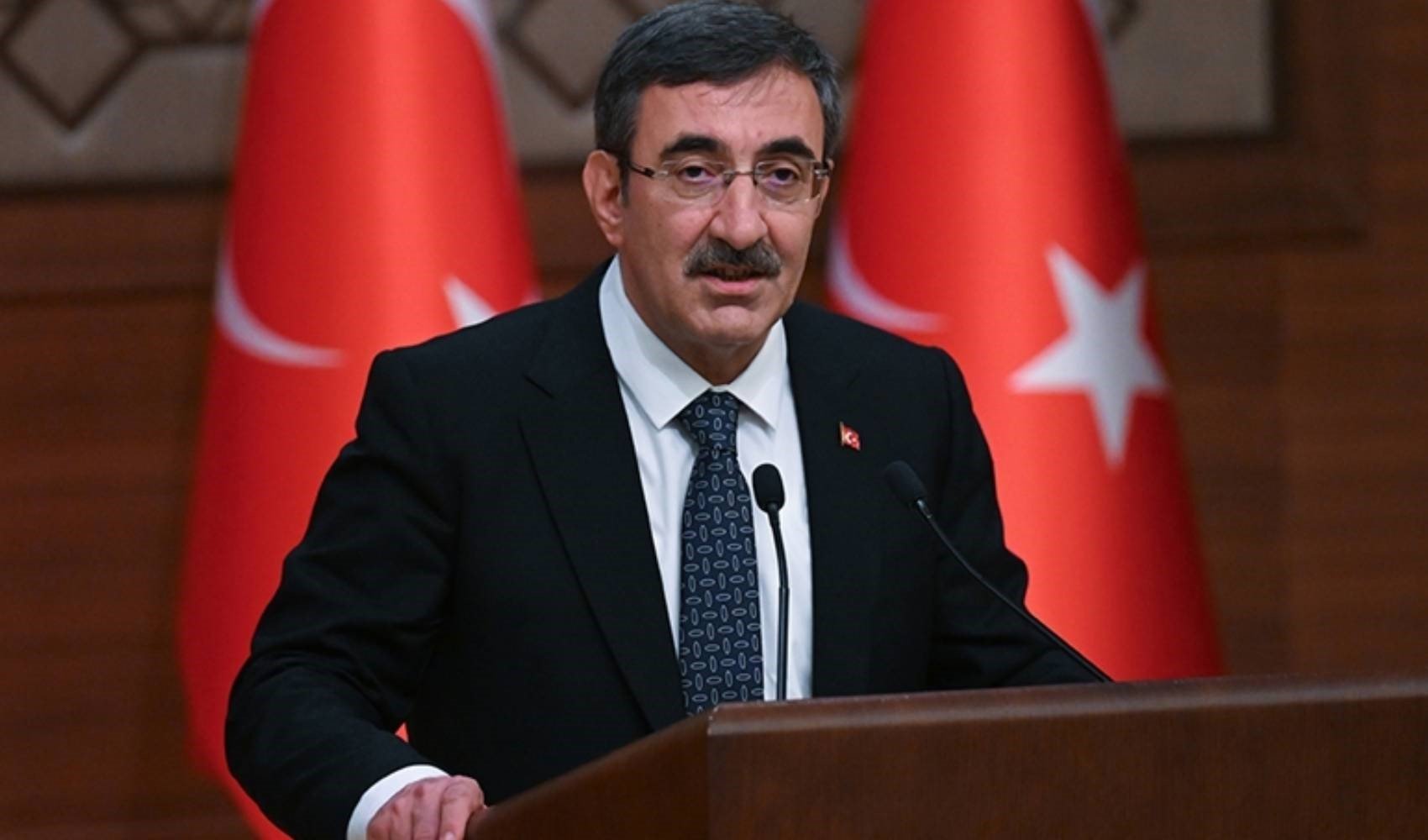
Vice President Cevdet Yılmaz made statements regarding the current agenda.
Speaking to Bloomberg, Yılmaz stated that a stock market tax is not on their agenda for the time being and expressed that no regulation is planned regarding a cryptocurrency tax either.
Reminding that steps have been taken regarding general tax rates, Yılmaz said, “Our main focus in the coming period is to narrow down exceptions and exemptions as much as possible. From now on, one should no longer expect many changes in general tax rates or statutory tax rates.”
When asked, “Will there not be a regulation similar to the first package?” he replied, “We have no such plan this year.”
INFLATION ACCOUNTING DECISION AT YEAR-END
For some time, there have been discussions in the markets that the inflation accounting that banks and financial institutions are set to transition to in 2025 could be postponed.
Answering the question, “Will financial institutions transition to inflation accounting in 2025 or not?” in the interview, Yılmaz said, “After a while, this will fall off Turkey's agenda. Perhaps we will discuss this next year as well, but there will likely be no such discussion in 2026.”
Reminding that the implementation has been postponed for SMEs with a turnover under 50 million TL, Yılmaz stated, “We are conducting a study that protects investments. In order to ensure that ongoing investments are not negatively affected by these processes, our Ministry of Treasury and Finance and the Revenue Administration are specifically focusing on alternatives. If necessary, we may make a legal regulation on this matter in the autumn.”
Yılmaz also said that the decision regarding financial institutions will be clarified at the end of the year.
"NO TL FORMULA FOR PPP"
The fact that Public-Private Partnership (PPP) projects are conducted in foreign currency also creates a burden on the budget. Whether the government will convert these contracts into TL during the process of ensuring budget balance is a subject of occasional debate.
The Vice President stated that PPP projects should not be evaluated solely from a financial perspective and that their economic analyses should also be taken into account. Pointing out that Turkey implemented many projects during periods when investment costs were much lower, Yılmaz added, “I sometimes say, I wish we had done more.” Regarding the renewal of contracts, Yılmaz said, “A study of the kind you mentioned is not on our agenda at the moment.”
"BOTH INFLATION AND INTEREST RATES WILL FALL"
Touching upon comments that the TL is overvalued, Cevdet Yılmaz referred to the floating exchange rate regime and said, “The Central Bank only needs to intervene in manipulative and speculative events. That is already its legal duty. It is a natural result for national currencies to strengthen in countries fighting inflation.”
Yılmaz added, “Many discussions are taking place, but the figures are clear; how is this appreciation in the TL reflecting on our macro balances? Our exports are increasing, our imports are decreasing, our service revenues are rising, and our current account balance is improving. As inflation falls, these discussions will naturally disappear on their own.”
In his statement to Anadolu Agency last week, Cevdet Yılmaz had said, “Our goal is to lower both inflation and interest rates in the medium term.” When asked about the government's current position on this matter following the Fed's decision, Yılmaz emphasized the Central Bank's operational independence and said, “If you recall, both were in the single digits in 2013. Therefore, creating such a picture again is our political goal.”
Yılmaz said, “It would not be right for me to mention a date at this stage. But the coming period will certainly be a process in which both inflation and interest rates will fall.”
INFLATION AND GROWTH SUPPORT EACH OTHER
Regarding the question of how the 4 percent growth and 17.5 percent inflation target set for 2025 in the Medium-Term Program (OVP) can be realized together and whether said growth rate will affect monetary tightening, Yılmaz reminded of the revisions made for this year in the OVP targets.
Stating that “There are, of course, short-term difficulties in the relationship between growth and inflation,” Yılmaz assessed, “But essentially, the decline in inflation increases predictability. It improves confidence and expectations regarding the future, and supports growth through this channel. They are not conflicting processes, especially in the medium and long term.”
Saying that the composition of growth is also important, Yılmaz added, “If you have a growth structure that is consumption-weighted and domestic demand-weighted, this will be inflationary. But if you achieve growth that is investment, production, and export-oriented, and foreign demand-oriented, this will not be inflationary. One of the most important elements of our policies is this balanced growth.”
Stating that the picture that will emerge in the world next year will also positively affect Turkey, Yılmaz noted the following:
“First of all, interest rates are falling globally. Therefore, we expect a certain amount of revival and an increase in liquidity in the world, especially for developing countries. On the other hand, we expect commodity prices to follow a moderate course. Furthermore, our main market, the European Union, and the MENA region are expected to show a more positive, relatively more positive performance. This will also be a dimension that supports our growth through the foreign demand channel.”
Explaining that he does not agree with the views that the set targets could lead to an earlier end to monetary tightening, Yılmaz said, “Monetary policy is being conducted within the framework of our Central Bank and is a policy carried out with operational independence. The main goal of our medium-term policy is to reduce inflation to single-digit figures. Therefore, we are shaping all other parameters around this. As our Central Bank has already set out in its texts, it will make its own decisions by looking at the data, following expectations, and following developments. I do not see a problem there.”
"INSTITUTIONS WILL REMAIN WITHIN THEIR BUDGET ALLOCATIONS"
Answering the question of what additional steps will be taken on the fiscal side to ensure coordination with the Central Bank's policies, Yılmaz argued that the reduction of the budget deficit to GDP ratio to 4.9 percent, despite earthquake expenditures, from the previously projected 6.4 percent, is an indicator of a strong stance on the fiscal side. Yılmaz said that the 3.1 percent target set for next year is also a sign that fiscal policy support will continue.
When asked about the TL equivalent of the savings achieved so far within the framework of the savings program and which budget items will be cut to reduce the budget deficit in the coming period, Yılmaz said, “We do not have anything clear on that. When the end of the year comes, perhaps a calculation can be made by looking at all these items,” while stating that the package focuses on efficiency along with savings.
Explaining that they are prioritizing public investments within this scope, Yılmaz pointed out that they are not launching any new investment projects except in cases of necessity. Yılmaz conveyed that they are also taking care to ensure that public institutions remain within their budget allocations and that they are acting with the logic of replacing only the personnel who have left in the personnel regime.
When asked, “Are you satisfied with the steps you have taken since the day the savings program was announced?” Yılmaz replied, “The ratio of budget expenditure to GDP shows how healthy the trend is. When we were making the 2024 program, we said that the ratio of public expenditures to GDP would be 26.9 percent. Our realization estimate is currently 25.9 percent. Therefore, there is actually a significant improvement here. The ratio of public expenditures to GDP is not increasing; it is decreasing. Although the share of public revenues in GDP seems to have increased, it is the same. The real decline is in expenditures.”
SWAP CHANNELS, SHORT-SELLING BAN
The government had initiated a study on reopening swap channels with London, but this process had not reached a conclusion.
While Vice President Yılmaz said that the process is being evaluated by the relevant units, he stated, “Of course, when the time comes and conditions are met, these will be lifted. However, we see our financial stability as very important here, and a cautious approach is being displayed. In other words, I think these studies will be completed with a timing that will not harm us.”
Regarding the lifting of the short-selling ban on the stock market, Yılmaz said, “Our relevant institutions, primarily the Financial Stability Committee, are conducting impact assessments of these. These are matters that will be decided when the time and place come.”
News Source: 12punto