While producers, who state that the rise will continue due to low yields and high inflation, are satisfied with the price, they are concerned that consumption in the domestic market will decline again.
The producer's suggestion to warn consumers against adulteration is for the government to provide subsidies.
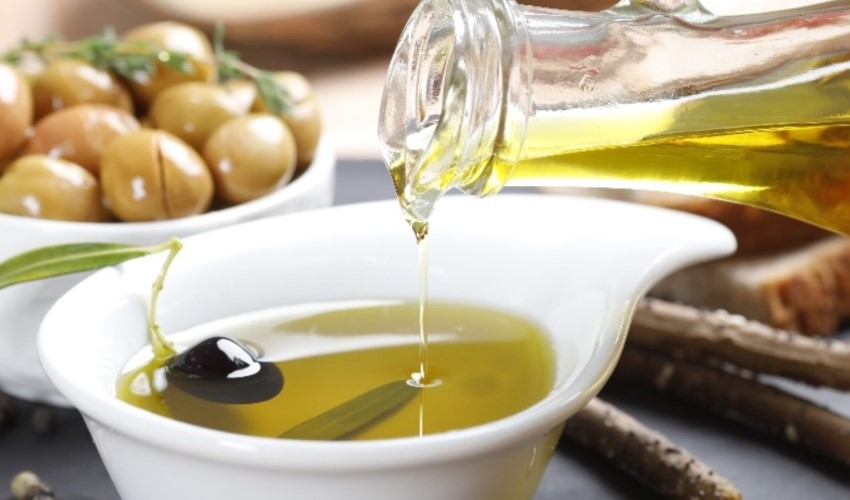
According to the report on Ekonomim.com, a serious drop in yield is expected this season for olive oil, which experienced a golden season last year in terms of both price and yield. Stating that there will be a major increase in olive oil prices due to low production, a high inflationary environment, and the impact of world prices, industry representatives pointed out that the retail price of 1 liter of olive oil, which was around 115 TL at this time last year, has now exceeded 300 TL and could rise up to 600 TL.
The fact that Tariş Olive and Olive Oil Union recently set the purchase price at 295 TL and announced that it could make new price adjustments if necessary also indicates that retail sales prices will increase. Although producers welcome this, there are concerns that the increase in prices could negatively affect olive oil consumption in the domestic market.
Reminding that yields in Spain and Italy, the world's largest olive oil producers, fell by more than half last year due to drought, while Turkey reached its highest yield in history, Aydın Commodity Exchange Chairman of the Board Fevzi Çondur said, “This year, in addition to the world yield, the yield in Turkey will also decline. Despite this, the continued increase in demand for olive oil is driving prices up. Tariş announced the purchase price for 0.3-0.5 acidity olive oil as 295 TL. This shows that the retail price will increase. Our expectation is that retail olive oil prices will not be below 320 TL. At this time last year, the retail price of olive oil was 115 TL.”
İzmir Commodity Exchange Assembly Member Mehmet Alp explained that Tariş's announcement of a price above expectations was not intended to trigger market prices, but because the product is currently scarce in the market, saying, “Producers are also satisfied with these announced prices. In the south, retail prices for extra virgin olive oil are between 280-300 TL. In the northern regions, this figure is approaching 400 TL.
Since it is an 'off-year' for olives, retail prices may increase even further in the coming months.”
Stating that olive oil producers in the Milas region can sell their products wholesale to Tariş after the announced purchase prices, Kamil Gül, Chairman of the Board of the Tariş Milas Olive and Olive Oil Agricultural Sales Cooperative, said, “After the prices announced by Tariş, the retail price of olive oil in our region will not be below 300 TL. Since our producers like to sell their products in bulk, they will sell them wholesale to Tariş for 295 TL rather than selling them at retail for 300 TL. That is why the producer is quite satisfied with the prices announced by Tariş.”
“IF PRICES CONTINUE TO RISE, WE WILL LOSE OUR CONSUMERS”
Stating that the price announced by Tariş corresponds to 300 percent of last year's, Mehmet Hakkı Semercioğlu, President of the Edremit Bay Olive and Olive Oil Producers Federation, said, “When we look at world prices, this is extremely normal. Today, we see that shelf prices in Spain are around 10-15 Euros. We have entered the 2023-2024 season. As stated by the National Olive and Olive Oil Council (UZZK), there is a product shortage of approximately 60-65 percent in Turkey compared to the previous year. Moreover, the quality is much lower than in previous years. There is both less good oil and less production.
If prices continue to rise, we will lose our consumers. The retail price is currently around 400 TL; if this scarcity continues, it will hover at the 500-600 TL level.
This disconnects us producers from our consumers. Turkey's per capita olive oil consumption, which has risen to 1.8 kilograms, will decrease significantly. This poses a danger to the sector in the coming years. For years, olive oil producers sold their products below their value. The only solution is for the government to subsidize it. This is how the decrease in consumption will stop,” he argued.
Reminding that Turkey ranked second in the world last year with an olive oil yield of 421 thousand tons and first with a table olive production of 750 thousand tons, Ayvalık Chamber of Commerce Chairman of the Board Ali Uçar said, “This year, it seems that there will be a 50 percent drop in yield due to the effects of both drought and it being an 'off-year'. Our olive oil yield expectation is around 180 thousand tons. It was announced by the exporters' union that there was a stock carryover of 150 thousand tons from the previous year.
For North Aegean oils, Tariş announced purchase prices between 275 TL/kg and 295 TL/kg. This is expected to rise to 350 TL over time. Because last year, Tariş announced the purchase figure as 74 TL, and the closing figure was 210 TL.
We think that Tariş announced a price at this level because it makes forward payments and expects price increases. Sales prices vary according to the brand, packaging, and region. Even the place where it is sold is important. In our region, the price of first-harvest products in 500-750 ml packages on market shelves is between 350 and 600 TL. A 5-liter tin is sold in the price range of 1,750-2,500 liras,” he said.
“OUR YIELD EXPECTATION IS NOT VERY HIGH”
Pointing out that the yield expectation for olive oil worldwide this year is quite low, Nizip Commodity Exchange President İbrahim Sarı also reminded that demand is high, saying, “Our yield expectation in our region this year is not very high due to the dry season. On the other hand, there is serious demand in exports as well. The price announced by Tariş made the producer and the exporter happy. It is also a reasonable price in terms of exports,” he expressed.
THE SALES PRICE OF A 5-LITER TIN BOX IS 1,550 TL
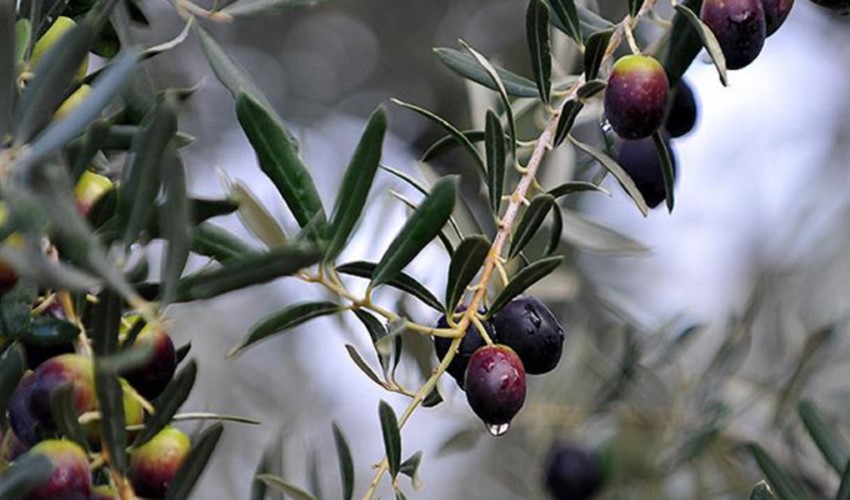
Harvesting has also begun after the Marmara Olive Agricultural Sales Cooperatives Union (Marmarabirlik) announced the olive purchase prices that will be valid for the 2023-2024 business year.
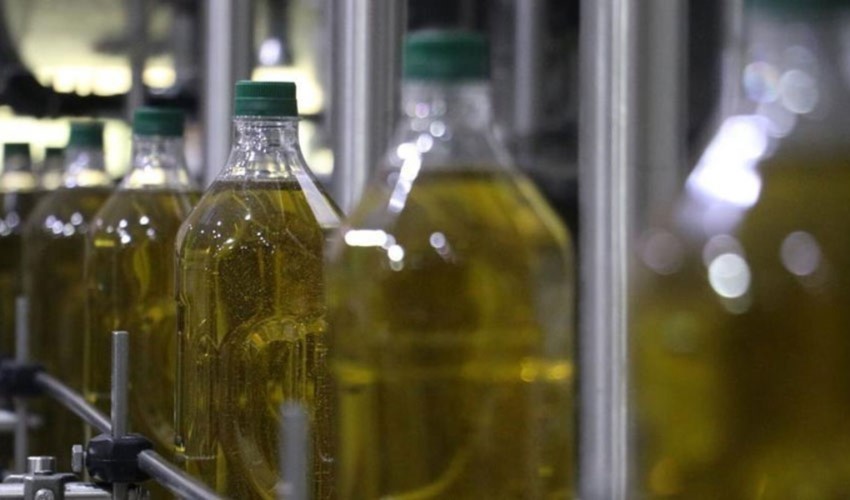
Marmarabirlik, which did not implement a quota this campaign period just like last year, announced the purchase price for oil-producing olives that fall outside the scale as 45 liras. The expectation of a low yield in the region's harvest compared to recent years has also affected the prices of oil-producing olives and olive oil. Marmarabirlik, which currently offers 1 liter of natural extra virgin olive oil for sale in packages for 315 TL, sells the 5-liter tin box version of the same product for 1550 TL.
Emphasizing that the production cost of 1 kg of olives is an average of 30.44 TL in the study conducted by the relevant units, Marmarabirlik Chairman of the Board Hidamet Asa signaled that there would be no update in olive prices with the expressions, “There was a 150% increase in product purchases last year and a 142% increase this year; Marmarabirlik stood by its producer. Now it is the producer's turn to stand by their cooperative. Our partners will be able to provide products to their cooperatives as much as the yield declaration they have given.” However, if there is a change in olive prices during the campaign period due to the shortage of yield, as was the case last year, the resulting difference is expected to be reflected directly in olive oil sales prices.
“AGAINST THE CONSUMER”
Explaining that the price of 295 TL announced by Tariş worries the consumer, Tarsus Commodity Exchange (TTB) Chairman of the Board Mustafa Teke said, “This price is important for our producer to get the reward for their labor and for the product to find its value.
With the decline in yields in the world and in our country, the rise in prices, which is increased by purchases directed to the domestic market, does not seem to be slowing down. The reflection of increasing costs and low yield in olive oil on prices in this way is against the consumer.
In mountainous and rugged areas, the yield in 70-80 percent of Turkey's olive groves has dropped excessively. This year's yield is at the level of 30 percent compared to last year. However, the fact is that nothing is the same as last year. Packaging, production, labor, and harvest costs have changed. Generally, when prices are formed, harvest costs are looked at. Harvest cost is half of the total cost.
In other words, the cost of 1 kilogram of olive oil is almost 300 liras. The announced prices barely cover the cost. If you are asking, ‘How will the consumer eat olive oil at these prices?’, first of all, more deterrent attitudes should be taken against imitation and adulteration. We need to fight against fraudsters who play with the health of the consumer by selling oil in the market under the name of olive oil for half the announced prices, which is produced cheaper than water with olive oil essence and whose contents are unknown. Our hope for the coming years is that yields will be high, producers will earn money, and consumers will consume olive oil that has not been subjected to imitation and adulteration,” he said.
News Source: 12punto